
Posted by Grayson
in blog
Marketing
Updated 2026-08-13
Flame Retardant PVC: Why Strength Drops and How to Rebalance
Read:61
Source:
When a flame retardant PVC compound passes a fire-performance target but loses tensile strength, elongation, impact resistance, or processing stability, the flame retardant itself is not always the only problem. PVC already has useful inherent flame resistance, while flexible and semi-rigid formulations commonly contain plasticizers and other modifiers that change both combustion behavior and mechanical properties.
In practice, the real question is therefore not simply “How much flame retardant should we add?” It is “How do the flame retardant, plasticizer, stabilizer, lubricant, filler, processing aid, resin and extrusion conditions interact?” That distinction is important because increasing one additive to solve a fire-performance problem can unintentionally change PVC fusion, melt behavior, additive compatibility, thermal stability, or the internal structure of the finished compound.
Key Takeaways
- A loss of strength in flame retardant PVC is usually a formulation-balance problem rather than proof that one additive is inherently unsuitable.
- High additive or mineral-filler loading can create weaker interfaces and reduce tensile strength or elongation if dispersion and compatibility are insufficient.
- Plasticizer, stabilizer and lubricant levels may need to be readjusted after changing the flame-retardant package.
- Fire performance and mechanical performance should be evaluated together. A formulation that achieves the required flame result but becomes difficult to fuse, extrude or use is not yet an optimized formulation.
Why Can Flame-Retardant PVC Lose Mechanical Strength?
The most common reason is that the flame retardant PVC compound has moved away from its original balance between polymer continuity, plasticization, filler loading, thermal protection and processing behavior. Several mechanisms can contribute at the same time.
The Flame-Retardant System Adds Too Much Solid Loading
Many flame retardant additives for PVC are solid inorganic materials or are used together with mineral fillers and smoke suppressants. Once the total solid loading increases, the PVC matrix must surround and bind a larger amount of dispersed particles. If those particles are poorly dispersed or have weak interaction with the PVC phase, stress can concentrate around particle interfaces when the finished product is stretched or impacted. This can reduce tensile strength and elongation even when the fire result improves. However, the effect is not universal. Other PVC research has shown that properly designed flame-retardant or smoke-suppressant systems can maintain or even improve some mechanical properties. The chemistry and dispersion therefore matter as much as the nominal additive dosage.
The Plasticizer-to-Flame-Retardant Balance Changes
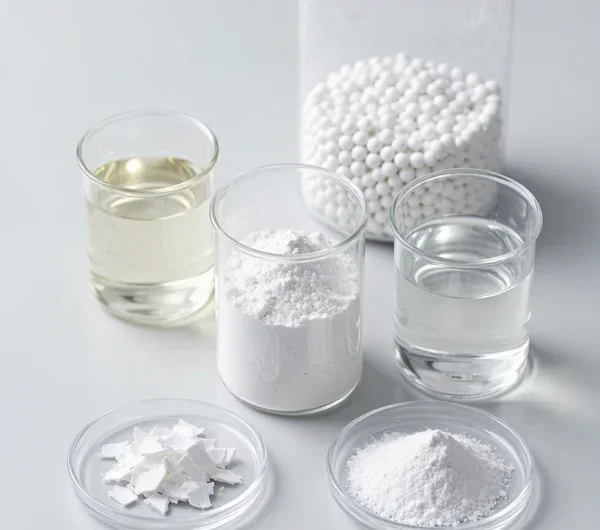
Plasticizers are especially important in flexible PVC because they control flexibility, hardness and polymer-chain mobility. Increasing plasticizer generally makes PVC more flexible, but the type and amount of plasticizer also influence flame behavior. This is one reason flexible PVC often requires a more carefully engineered PVC flame retardant system than unplasticized rigid PVC.
This creates a balancing problem. If plasticizer is reduced too aggressively to improve fire performance, the compound may become too hard or brittle. If more plasticizer is added only to recover flexibility, fire performance or heat behavior may move in the wrong direction. The solution is usually to evaluate the efficiency and compatibility of the entire plasticizer/flame-retardant combination rather than moving one component independently.
The New Additive Package Changes PVC Fusion
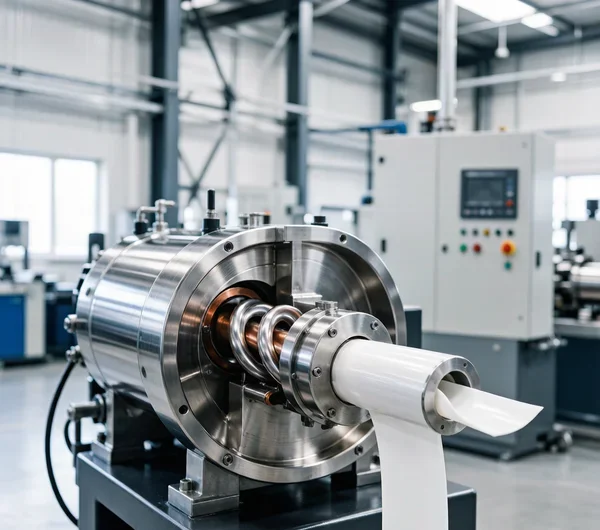
A flame-retardant formulation may look acceptable as a dry blend but behave very differently once it enters an extruder. Adding or replacing fillers, flame retardants, lubricants or stabilizers can change fusion time, fusion torque, equilibrium torque, melt resistance, friction against processing equipment, and dynamic thermal stability.
If the compound does not fuse sufficiently, the finished product can show weak particle bonding. If fusion becomes too aggressive, the formulation may experience excessive shear and thermal stress. Both situations can appear to the formulator simply as “strength loss.” The way stabilizers, lubricants and fillers change the fusion curve is closely related to the practical issues discussed in our PVC pipe extrusion stability guide.
Dispersion Is No Longer Uniform
Adding more PVC flame retardants does not guarantee that the additional material is working efficiently. Agglomerated particles create localized defects. Uneven additive distribution can also cause one portion of the compound to contain a different stabilizer, lubricant or flame-retardant concentration from another. Particle size, surface treatment, mixing sequence, hot-mix conditions and compatibility with the polymer therefore influence the final result. This is one reason reducing total additive loading through a more efficient synergistic system can sometimes be more effective than continuously increasing the primary flame retardant.
Does More Flame Retardant Always Improve PVC Fire Performance?
No. More flame retardant does not automatically mean a better overall PVC formulation. Fire retardants work through different mechanisms, including gas-phase flame inhibition, condensed-phase char formation, heat absorption and smoke suppression. The effectiveness of a particular system depends on the polymer and the other additives present.
A formulation can therefore reach a point where adding more of one component gives only a limited additional fire-performance benefit while creating larger disadvantages in tensile strength, elongation, impact performance, melt flow, extrusion pressure, surface finish, density and cost. The better objective is usually flame-retardant efficiency rather than maximum flame-retardant dosage. That means asking whether a synergist, smoke suppressant, different particle system, different plasticizer or better stabilizer package can achieve the required fire result at a more workable total additive level.
How Do You Know What Is Actually Causing the Strength Loss?
Start from the symptom rather than immediately changing the formula.
| Observed Problem | Possible Formulation Cause | What to Check First |
|---|---|---|
| Tensile strength drops after adding flame retardant | Excessive solid loading, weak filler/PVC interface or poor dispersion | Compare tensile data and dispersion at several controlled additive levels |
| Elongation falls sharply | Plasticizer balance changed or rigid filler loading increased | Hardness, plasticizer level and filler content |
| Product becomes brittle after extrusion | Insufficient fusion, thermal degradation or excessive rigid additive loading | Fusion curve, heat stability and extrusion temperature |
| Extrusion torque rises | Increased internal friction, viscosity or insufficient lubrication | Torque rheometer and lubricant balance |
| Fusion becomes too slow | Excessive external lubrication or formulation change delaying gelation | Fusion time versus qualified control |
| Surface quality deteriorates | Compatibility, lubrication or additive migration problem | Die condition, plate-out and surface inspection |
| Fire result improves but processing window narrows | Flame-retardant package has changed rheology or stability | Full formulation and process comparison |
How to Adjust the Flame-Retardant Additive Balance
The safest way to optimize a formulation is to change variables systematically rather than repeatedly adding or removing materials without a controlled baseline.
Step 1: Define Both the Fire and Mechanical Targets
Before adjusting the formulation, write down the actual requirements. These may include the required flame test, smoke requirements, tensile strength, elongation, impact performance, hardness, heat-aging performance, electrical properties, extrusion stability and surface requirements. A flame retardant PVC formulation should not be considered successful merely because one flame test improves. The finished product has to meet its full application specification.
Step 2: Keep a Qualified Control Formulation
Use the current qualified or best-performing formulation as a baseline. For every trial, record resin batch, additive dosage, mixing conditions, test temperature, rotor or screw conditions, extrusion settings, mechanical results and flame results. A controlled comparison is essential because PVC processing behavior can change with temperature, shear, loading method and complete formulation.
Step 3: Optimize the Flame-Retardant System, Not Only Its Dosage
Instead of immediately increasing the main flame retardant, investigate whether the system can use synergistic components more efficiently. Different combinations can change flame performance, smoke behavior and mechanical properties in different ways. The correct combination depends on the application and regulatory target, so there is no universal flame-retardant ratio that should simply be copied into every PVC formulation.
Step 4: Recheck the Plasticizer System
For flexible compounds, this step is critical. Ask whether the total plasticizer level has changed, whether the new flame retardant is itself affecting plasticization, whether the compound is now harder than the original, whether elongation has changed more than tensile strength, and whether migration or compatibility is changing after aging. The goal is not simply “more” or “less” plasticizer. It is the correct plasticization level for the required fire, mechanical and aging performance.
Step 5: Rebalance the Stabilizer and Lubrication System
A stabilizer package that worked well before the flame-retardant change may not remain optimal afterward. Extrusion, injection molding, calendering and foaming require different stabilization and lubrication balances, and finished-product performance should guide stabilizer selection. If the modified compound shows earlier discoloration, unstable torque, shortened processing stability, delayed fusion, excessive friction or plate-out, the stabilizer-lubricant package may also need adjustment. Practical lubricant-related symptoms are covered in our PVC lubricant balance troubleshooting guide.
Step 6: Improve Dispersion Before Increasing Dosage Again
If a formulation gives inconsistent mechanical results, inspect dispersion. A lower loading that is evenly dispersed can be more useful than a higher loading containing agglomerates. Check dry-blend uniformity, mixing sequence, powder flow, particle distribution, additive compatibility and surface treatment where relevant.
Step 7: Verify the Complete Formulation
A useful development sequence is: formulation change, rheology/fusion test, thermal stability, extrusion trial, mechanical test, flame/smoke test, aging test. Do not optimize these stages independently. A torque curve can show whether a formulation fuses differently, but it cannot independently confirm impact strength, electrical properties, plate-out or finished-product performance.
What Is Different About Flame-Retardant PVC Cable Formulations?
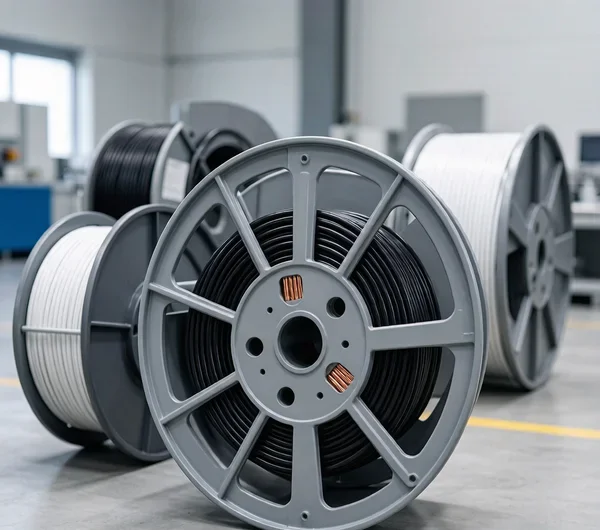
A flame retardant PVC cable compound often has a particularly narrow formulation window because the material may need to satisfy several functions at the same time. Depending on the cable specification, engineers may need to balance flame performance, smoke behavior, flexibility, tensile strength and elongation, thermal aging, insulation performance and extrusion stability. PVC remains widely used in cable insulation and sheathing because it can combine electrical insulation, mechanical performance and useful flame behavior, but plasticizers and fire-safety additives make formulation balance especially important.
Cable-specific Ca-Zn stabilizer and additive selection for these combined requirements is addressed in our AIMSEA PVC application solutions for wire and cable.
When Should You Adjust the Stabilizer Instead of Adding More Flame Retardant?
Consider the stabilizer and processing system when the flame requirement is close to target but the compound develops processing-related symptoms such as unstable fusion, early discoloration or shortened thermal stability. The stabilizer does not replace the flame retardant. Its role is different. But if PVC begins degrading during mixing or extrusion, the resulting loss of polymer integrity can reduce mechanical performance even when the flame-retardant package itself is technically effective. Similarly, an incorrect lubricant balance may delay fusion or create excessive friction. The correct approach is therefore to determine whether the failure is primarily fire-performance related, mechanical, thermal, rheological or compatibility related. Only then should the corresponding part of the formulation be changed.
A Practical Trial Matrix
Instead of making several changes in one trial, a simple comparative matrix can make troubleshooting faster.
| Trial | Flame-Retardant System | Plasticizer | Stabilizer/Lubricant | Purpose |
|---|---|---|---|---|
| Control | Existing | Existing | Existing | Establish baseline |
| Trial A | Adjusted | Existing | Existing | Measure direct flame-retardant effect |
| Trial B | Best Trial A | Adjusted | Existing | Recover mechanical balance |
| Trial C | Best Trial B | Best Trial B | Adjusted | Optimize fusion and processing |
| Final | Selected system | Selected level | Selected package | Validate complete formulation |
If three components are changed simultaneously and tensile strength improves, there is no reliable way to know which change produced the improvement.
How AIMSEA Can Support Flame-Retardant PVC Formulation Adjustment
For manufacturers experiencing strength loss, unstable processing or additive incompatibility, formulation development should begin with the existing compound and the target finished-product requirements, not with a generic dosage recommendation. AIMSEA supplies customized additive packages for recycled and flame-retardant PVC and provides calcium-zinc stabilizers and additive systems for rigid, flexible and cable applications. The customization process includes sample analysis, formulation design, testing and production verification. This approach is especially useful when changing a PVC flame retardant creates secondary problems in fusion, thermal stability, lubrication or finished-product performance.
Rather than asking only “Which flame retardant should we use?”, provide the technical team with the current PVC formulation, existing additive dosages, mechanical test results, flame or smoke target, processing method, extrusion or mixing conditions, current failure symptoms and samples where available.
Frequently Asked Questions
Can flame retardant additives reduce PVC tensile strength?
Yes, they can, particularly when the formulation requires high solid loading or when the additive has poor dispersion or compatibility with the PVC matrix. Experimental research on plasticized PVC has shown tensile-strength reductions after adding certain fire-retardant systems. However, the result is formulation-dependent, and other studies have demonstrated systems capable of maintaining or improving mechanical performance.
Why does flame-retardant PVC become brittle after extrusion?
Brittleness can result from more than the flame retardant. Possible causes include excessive rigid additive loading, insufficient plasticization, poor PVC fusion, thermal degradation or an unsuitable stabilizer-lubricant balance. The extrusion process and complete formulation should therefore be checked together rather than adjusting only the flame retardant.
How can you improve PVC flame retardancy without sacrificing strength?
Focus on flame-retardant efficiency rather than simply increasing dosage. Evaluate synergistic additive combinations, dispersion, plasticizer compatibility, stabilizer performance and lubrication balance, then compare mechanical and flame results against a controlled baseline.
Is flame-retardant PVC fireproof?
No. “Flame retardant” means the material or compound is formulated to improve its behavior under specified fire-test conditions. It does not mean the material cannot burn or that one formulation will meet every fire standard. Performance should always be verified against the test method and requirements of the intended application.
Conclusion
When flame retardant PVC loses strength, adding another modifier immediately is rarely the best first response. Start by identifying what changed: filler loading, dispersion, plasticization, fusion, thermal stability, lubrication or the flame-retardant system itself. Then modify one variable at a time and evaluate fire performance, mechanical properties and processing behavior together. The best flame retardant PVC compound is not the formulation containing the largest amount of flame retardant. It is the formulation that reaches the required fire-performance target while preserving the strength, processability and long-term performance required by the finished product.