
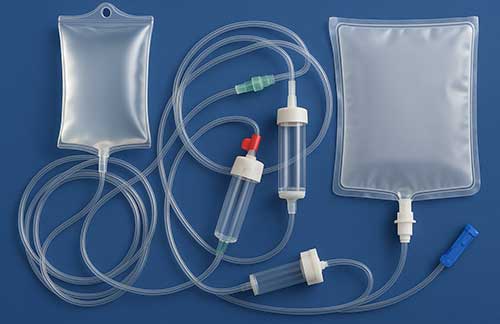
Medical-Supplies

Medical Grade PVC Stabilizer Solutions

Application-specific stabilizer solutions for medical-grade PVC tubing, transparent hose and related soft PVC products, supporting low odor, clear appearance, processing stability and consistent surface quality.

Medical-Grade PVC Processing and Sterilization Requirements

PVC tubing and related medical components require a stabilizer system that supports controlled processing, clear appearance and evaluation under the intended sterilization conditions.

Flexible medical-grade PVC formulations combine PVC resin with plasticizers, lubricants and other additives. Their balance influences fusion, thermal stability, transparency, odor and the finished surface of tubing and molded components.

A suitable PVC stabilizer for medical tubingshould therefore be evaluated as part of the complete formulation. Selection should consider the processing method, required clarity, contact-surface condition, sterilization route and the applicable documentation required by the buyer.

  • Processing stability
  • Clarity and initial color
  • Low-odor formulation direction
  • Sterilization evaluation
Medical-grade PVC formulation and stabilization evaluation
01

Processing and Surface Control

The stabilizer should work with the resin, plasticizer and lubricant system to support consistent fusion and processing. Plate-out, precipitation and surface deposits should be checked under the buyer’s actual production conditions.


02

Clarity, Color and Odor

Transparent medical tubing and hose require evaluation of initial color, haze, odor and appearance after processing. These results depend on the complete formulation rather than the stabilizer alone.

03

Sterilization Compatibility

For ETO or gamma stable PVC tubing, buyers should compare color change, transparency, surface condition and other required properties before and after sterilization. Final suitability must be confirmed through application-specific testing.

Recommended Stabilizers for Medical-Grade PVC Applications

Compare three product options for flexible medical tubing, dry-blended medical PVC compounds and transparent hose or related medical components.

FT
For Flexible Medical Tubing AIMSTA-6111 for paste-compatible tubing and soft PVC formulations
DC
For Dry-Blended Medical PVC Compounds AIMSTA-6809 for production systems using powder additives
TH
For Transparent Hose and Components AIMSTA-6122 where clarity and dispersibility are key priorities
AIMSTA-6111 Paste

Flexible Medical Tubing Formulations

A paste-form stabilizer option for manufacturers evaluating flexible medical-grade PVC tubing, including infusion, respiratory or drainage-tubing formulations where paste handling matches the existing compounding process.

Application Direction Flexible tubing and soft PVC components
Selection Basis Paste dosing and formulation compatibility
AIMSTA-6809 Powder

Dry-Blended Medical PVC Compounds

A powder-form option for compounders producing PVC tubing and related medical components through dry blending. Selection should consider powder feeding, dispersion and compatibility with the resin, plasticizer and lubricant system.

Application Direction Medical PVC compounds and tubing materials
Selection Basis Dry blending and powder dosing process
AIMSTA-6122 Paste

Transparent Medical Tubing and Components

A paste-form product listed for transparent hose, film and related PVC medical devices. It provides an initial option for tubing and components where transparency, dispersibility and consistent visual appearance are important.

Application Direction Transparent hose, film and medical components
Selection Basis Clarity and dispersibility requirements

Product Comparison

Review the application direction, material form and starting dosage range before arranging formulation and line trials.

ProductInitial Application DirectionSelection FocusForm and PackingDosage (PHR)
AIMSTA-6111Flexible medical tubing and soft PVC componentsPaste handling, formulation compatibility and application-specific testingPaste
50 kg/barrel
2–4
AIMSTA-6809Dry-blended medical PVC compounds and tubing materialsPowder dosing, dry blending, dispersion and processing compatibilityPowder
25 kg/bag
1–2
AIMSTA-6122Transparent hose, film and related medical componentsTransparency, dispersibility and visual appearancePaste
50 kg/barrel
2–4

Recommended dosage is a starting reference and should be confirmed according to the complete formulation, intended medical application, sterilization method and actual production conditions.

Need Help Choosing the Right Product?

Share your tubing or component type, PVC resin, plasticizer system, production process, sterilization method and required technical documents. AIMSEA can discuss a suitable product direction for controlled evaluation.

How to Select a Stabilizer for Medical-Grade PVC

Product selection should begin with the finished medical component and its production requirements, then move to the complete formulation, sterilization route and required technical documentation.

01

Define the Finished Component

Identify whether the project involves infusion tubing, respiratory tubing, drainage lines, transparent hose, flexible masks, connectors or another soft PVC component. The component type determines which properties should receive priority during product screening.

Infusion tubing Respiratory tubing Drainage lines Flexible components
02

Confirm the Sterilization Route

Clarify whether the finished component will use ETO, gamma irradiation or another validated sterilization method. For gamma stable PVC tubing, the complete formulation should be checked for post-sterilization color, transparency, surface condition and required physical properties.

ETO Gamma irradiation Post-sterilization color
03

Review the Complete PVC Formulation

PVC resin, K value, plasticizer type and phr, lubricants, pigments and other additives can change the behavior of the stabilizer. Paste and powder products should also be matched to the manufacturer’s dosing, mixing and compounding process.

PVC resin and K value Plasticizer system Lubricant balance Mixing method
04

Verify Documents for the Intended Market

Regulatory and technical requirements vary by finished device, contact type and destination market. Buyers should request the documents available for the selected model and confirm that their scope matches the intended application instead of relying on a general “medical grade” description.

TDS SDS COA format Available compliance documents

Medical PVC Selection Matrix

Use the finished application to determine which information and trial checks should be prioritized before approval.

ApplicationInitial Selection PriorityInformation to ConfirmEvaluation Focus
IV and infusion tubingClear fluid-path visibility and clean surface conditionFormulation, contact requirements and sterilization routeInitial color, haze, deposits and post-sterilization appearance
Respiratory and oxygen tubingLow odor, flexibility and consistent tube appearancePlasticizer system, tube dimensions and sterilization methodOdor, surface condition, color and formulation compatibility
Drainage and catheter-related tubingSmooth surface, dimensional consistency and visibilityExtrusion conditions, formulation and finished-device requirementsSurface quality, deposits, color and processing consistency
Transparent hose and flexible componentsTransparency, dispersibility and visual consistencyThickness, clarity target, pigment use and processing methodHaze, initial color, dispersion and surface appearance

Important:Stabilizer selection alone does not establish the compliance or biocompatibility of a finished medical device. Final suitability should be confirmed using the complete PVC formulation, finished component, intended sterilization process and applicable market requirements.

From Formulation Review to Medical PVC Line Trial

A controlled evaluation process helps determine whether the selected stabilizer works with the complete formulation, production conditions, sterilization route and finished-component requirements.

01

Define the Application

Specify whether the product is infusion tubing, respiratory tubing, drainage tubing, transparent hose, a flexible mask component or another PVC medical device.

02

Review the Formulation

Share the PVC resin and K value, plasticizer type and phr, lubricant system, pigments, fillers and the stabilizer currently used in production.

03

Run a Controlled Trial

Begin with an agreed reference dosage and compare the candidate under equivalent mixing, extrusion or molding conditions rather than changing several formulation variables at once.

04

Verify the Finished Component

Evaluate the processed component before and after the intended sterilization procedure, then confirm the required technical and market documentation separately.

Information to Submit

Provide enough detail to narrow the initial product and trial direction.

  • Finished product:tubing, hose, mask component, connector or other flexible PVC part
  • Formulation:PVC resin, K value, plasticizer, lubricant, pigment and other additives
  • Production process:dry blending, paste dosing, extrusion or molding conditions
  • Appearance target:transparency, initial color, haze and acceptable odor level
  • Sterilization route:ETO, gamma irradiation or another validated method
  • Current problem:discoloration, plate-out, precipitation, odor, haze or unstable processing

What to Compare During the Trial

Record the same evaluation points for the current and candidate formulation.

Processing Behavior

Fusion, flow, pressure stability, deposits and production consistency.

Color and Transparency

Initial color, visible haze and clarity of the finished component.

Surface Condition

Plate-out, precipitation, surface deposits and visual cleanliness.

Odor

Compare odor under the same processing and storage conditions.

After Sterilization

Review color, clarity and surface condition after the intended process.

Finished-Device Requirements

Complete the buyer’s required physical, chemical and regulatory checks.

Trial control:The dosage ranges shown on this page are starting references. Adjustments should be made in controlled steps because the PVC resin, plasticizer, lubricant balance, processing conditions and sterilization method can all affect the result. Finished-device compliance cannot be established from the stabilizer alone.

Prepare Your Medical PVC Trial

Submit your application, formulation, production process, sterilization method and current issue to discuss a suitable sample and evaluation direction.

Medical Grade PVC Stabilizer FAQs

Purchasing questions about medical-grade claims, sterilization, product forms, dosage references and technical documentation.

Does using a medical PVC stabilizer make the finished device medical grade?

No. A stabilizer is one component of the complete PVC formulation. Finished-device suitability depends on the resin, plasticizer, lubricant system, pigments, processing conditions, contact type, sterilization process and applicable market requirements. The finished component must be evaluated and documented by the device manufacturer.

Can gamma stability be confirmed from the stabilizer alone?

No. The performance of gamma stable PVC tubingis influenced by the complete formulation, irradiation dose, exposure conditions, product thickness and acceptable post-sterilization color. Buyers should test the finished tubing before and after irradiation using their intended sterilization conditions.

How should paste and powder stabilizers be compared?

The choice should reflect the manufacturer’s material-handling and compounding process. Paste products may suit systems designed for liquid or paste dosing, while powder products may suit dry-blending operations. Dispersion, feeding accuracy, compatibility, production cleanliness and finished-product results should be compared during the trial.

Can the listed dosage range be used directly in production?

The listed phr range is an initial reference, not a fixed production setting. The appropriate dosage can change with the PVC resin, K value, plasticizer level, lubricant balance, pigments, processing temperature and sterilization method. Final dosage should be confirmed through controlled trials.

What documents should buyers request for a medical PVC project?

Buyers can ask for the available TDS, SDS, COA format and model-specific compliance documents. The document scope, issuing organization, test conditions and applicable product should be checked carefully. A general reference to FDA or medical-grade use should not be treated as approval of the finished medical device.

What information is needed before requesting a sample?

Provide the finished component, PVC resin and K value, plasticizer system, stabilizer currently used, processing method, sterilization route, target appearance and current production issue. This information helps narrow the initial sample direction and prevents unrelated products from being tested.

Discuss Your Medical PVC Application

Share your tubing or component type, formulation, sterilization method and required documents to request a suitable product direction and sample for controlled evaluation.