
Where Organotin Systems Still Win: Potable Water Pipe, Rigid Medical and Clear PVC
Read:719
Source:
Quick Answer
Organotin systems still matter when rigid PVC products need superior clarity, heat stability, low plate-out, and stable processing, especially in potable water, medical, and clear PVC applications.
Key Takeaways
·Organotin stabilizer systems still perform well in clear rigid PVC, potable water fittings, and selected rigid medical PVC products.
·The best PVC stabilizer choice depends on application, compliance target, processing window, and optical requirements.
·Calcium zinc stabilizer is growing fast, but full replacement of organotin should be tested by product type.
·Booster or co-stabilizer systems help reduce tin dosage while maintaining processing stability.
·AIMSEA can support customers through formulation matching, sample testing, line-trial adjustment, and organotin-to-Ca-Zn transition solutions.
Abstract
The PVC stabilizer market is shifting toward lead-free, tin-reduced, and environmentally friendly systems. However, organotin stabilizers still have a clear role in demanding rigid PVC applications. In potable water pipe fittings, rigid medical PVC, and clear PVC sheet or film, manufacturers often need high heat stability, excellent transparency, low plate-out, and predictable production behavior. This article explains where organotin systems still win, when calcium zinc stabilizer can replace them, and when AIMSEA’s booster or co-stabilizer solutions can help customers reduce tin dosage without sacrificing product quality.
Why Organotin Stabilizer for PVC Still Matters?
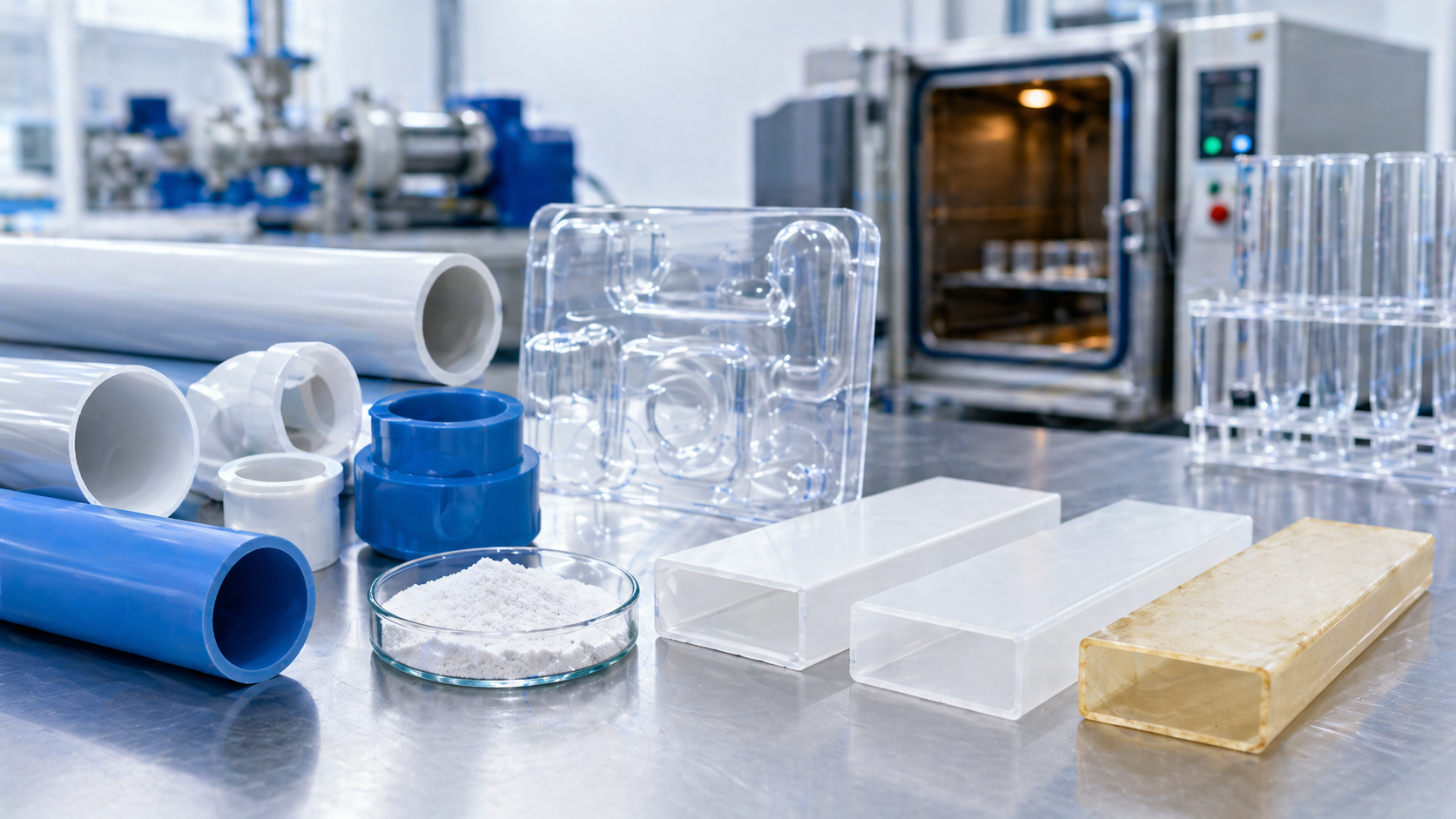
Organotin stabilizer for PVC is still used because rigid PVC processing is sensitive to heat, shear, residence time, and formulation balance. During extrusion, injection molding, calendering, or thermoforming, PVC can easily discolor, release HCl, form black spots, or create plate-out on the die surface.
The value of organotin is processing safety
For many factories, the real value of a PVC tin stabilizer is not only heat stability. It is the wider production window. A stable organotin system can help reduce yellowing, keep transparency consistent, lower downtime, and support long production runs.
This is especially important for products where appearance and safety perception are directly visible to buyers. Clear PVC sheet, medical rigid film, transparent packaging, and potable water fittings cannot tolerate obvious color drift, haze, or surface defects.
Why this topic matters now
Global PVC processors are facing three common pressures: lower heavy-metal risk, lower formulation cost, and more stable production. This is why many customers are comparing organotin stabilizer, calcium zinc stabilizer, and organotin booster systems.
For AIMSEA, the key is not to promote one chemistry for every case. The stronger technical position is to match the stabilizer system with the customer’s resin, lubricant package, filler level, processing temperature, and final application.
Potable Water Pipe and Fittings: Stability Comes Before Cost
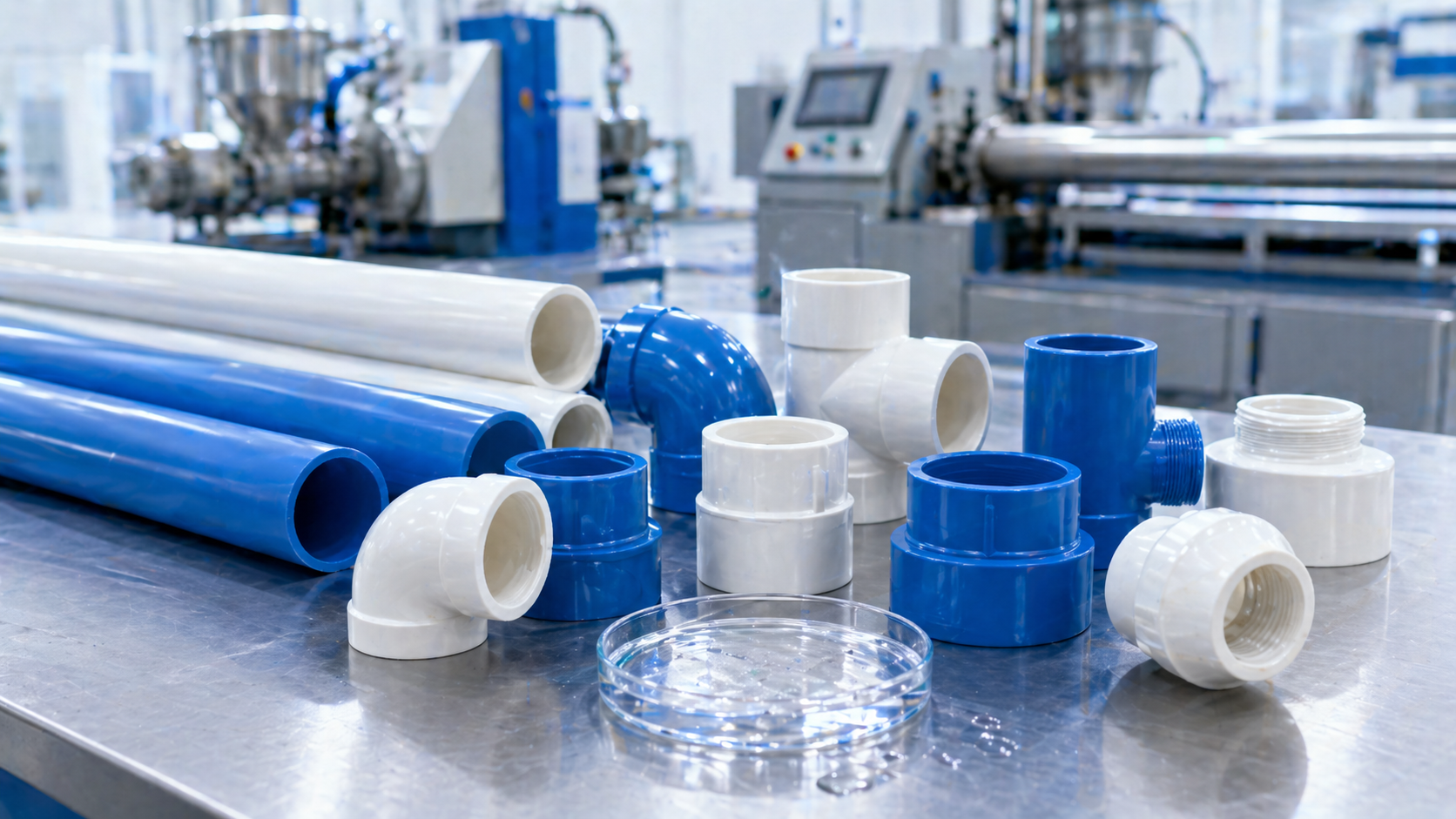
Potable water pipe and fittings require a careful stabilizer choice because the product is connected with drinking water safety, long-term durability, and regulatory expectations. In this field, customers usually care about extraction performance, lead-free formulation, pressure stability, color consistency, and smooth processing.
Why pipe fittings are more demanding than simple extrusion
PVC pipe extrusion is usually continuous, but fittings are often injection molded. Injection molding creates higher thermal stress because the melt may stay longer in the barrel and mold system. If the stabilizer is not strong enough, the product may show yellowing, burn marks, poor surface gloss, or unstable demolding.
This is where organotin systems can still be useful. They provide strong heat stability and good color hold, especially for rigid fittings with complex shapes.
AIMSEA’s direction for pipe and fittings
For potable water and pressure pipe applications, AIMSEA can position its stabilizer solutions around:
Customer requirement | Stabilizer concern | AIMSEA solution direction |
Smooth pipe extrusion | Fusion balance and low die build-up | Lead-free Ca-Zn pipe stabilizer |
Injection molded fittings | Heat reserve and demolding stability | Organotin or hybrid stabilizer system |
Potable water positioning | Low heavy-metal risk and extraction control | Lead-free PVC stabilizer formulation |
Long production run | Plate-out and color consistency | Customized one-pack stabilizer |
Cost control | Reducing tin or total dosage | Booster or co-stabilizer adjustment |
AIMSEA’s advantage is that it can help customers compare different systems through real processing indicators, not only lab data. For pipe and fittings, the practical test should include torque curve, fusion time, dynamic heat stability, surface finish, extrusion speed, and plate-out observation.
Rigid Medical PVC: Clean Processing and Reliable Appearance
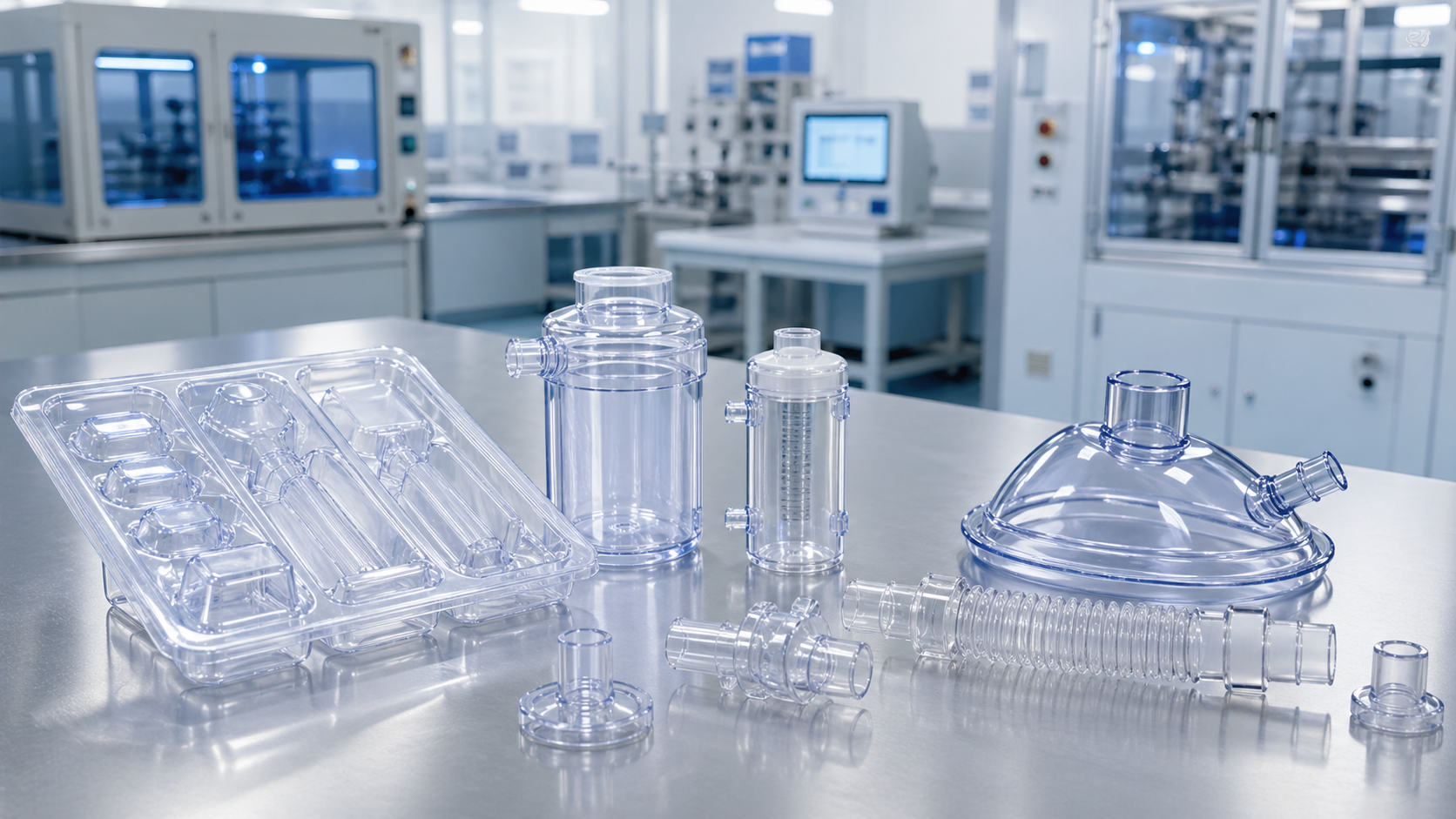
Rigid medical PVC requires a cleaner and more controlled formulation than general rigid PVC. Typical applications may include blister film, medical packaging, transparent containers, oxygen masks, and other rigid or semi-rigid medical components.
Medical PVC is not only about “non-toxic” wording
For medical-related PVC products, buyers usually focus on transparency, odor, cleanliness, extractables risk, sterilization resistance, and batch consistency. A medical grade PVC stabilizer must support stable processing without creating visible defects or unwanted odor.
Organotin systems can still be considered when rigid medical PVC needs excellent transparency and strong thermal protection. However, Ca-Zn stabilizer systems are also widely used when the customer wants a lead-free, tin-free, or lower-odor formulation.
How AIMSEA can support medical PVC customers
AIMSEA can build stronger technical trust by presenting medical PVC stabilizer selection as an application test process:
Test item | Why it matters for rigid medical PVC |
Initial color | Controls the first impression of transparent medical products |
Oven aging | Checks color change after heat exposure |
Haze and transparency | Important for blister film and clear packaging |
Odor evaluation | Important for medical and healthcare use perception |
Plate-out test | Reduces contamination risk during production |
Sterilization simulation | Helps evaluate color and appearance stability |
For this application, AIMSEA should emphasize formulation discipline: stable raw material selection, controlled lubricant balance, suitable stabilizer dosage, and customized support according to the customer’s production line.
Clear PVC Products: Where Organotin Still Shows Its Strength
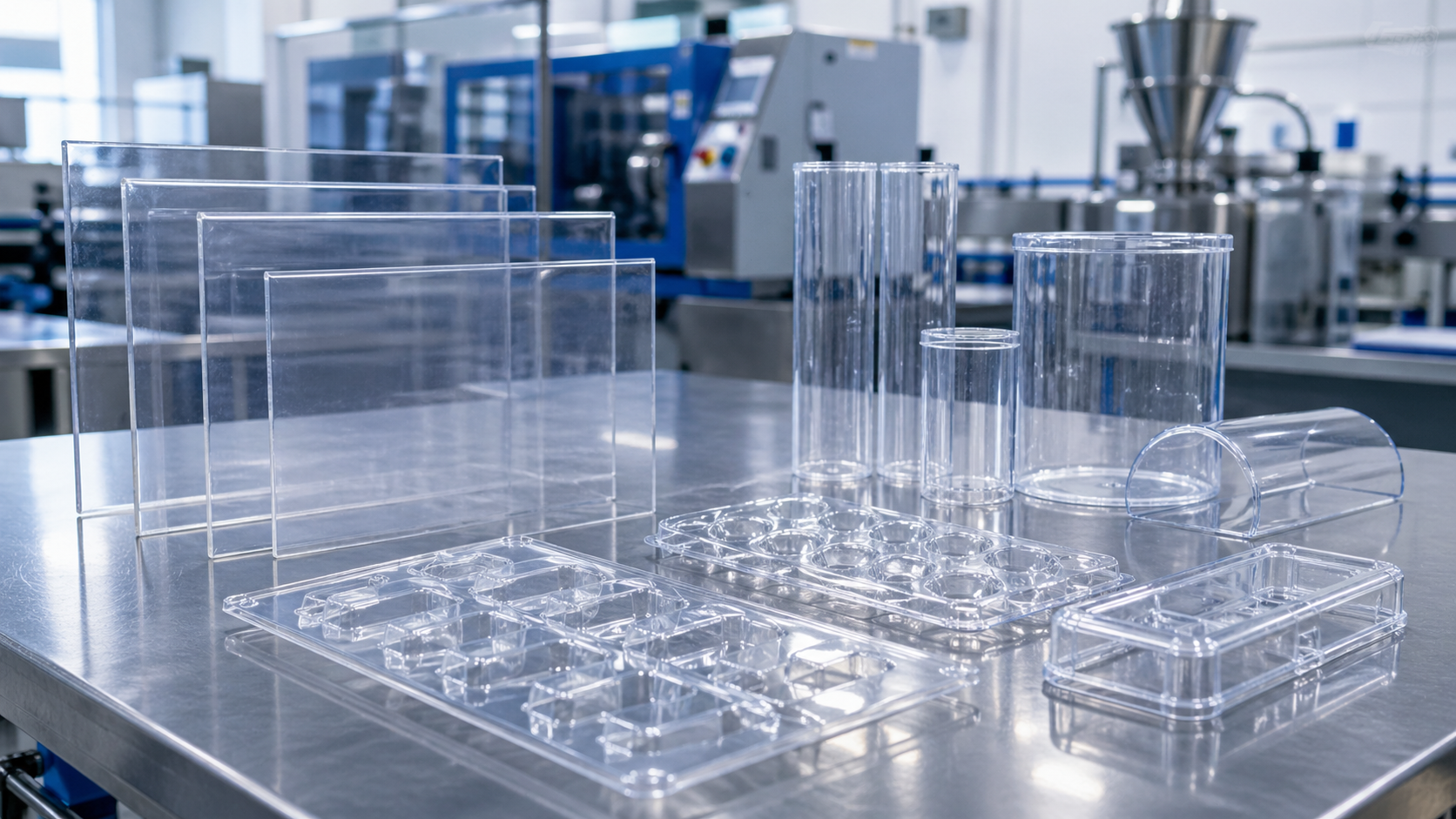
Clear PVC is one of the most important areas where organotin stabilizer still has visible value. Transparent PVC sheet, film, packaging, tubes, and display materials expose every formulation weakness. Even slight yellowing or haze can make the product look lower quality.
Clear PVC needs both stability and optical control
A clear PVC stabilizer must protect the resin and maintain optical performance at the same time. If the stabilizer system creates poor compatibility, excessive lubricant migration, or weak thermal protection, the final product may show haze, fogging, fisheyes, yellow tone, or surface deposits.
Organotin systems are often strong in this area because they can provide good initial color and high transparency. But in some markets, customers prefer tin-free or reduced-tin solutions. This creates an opportunity for AIMSEA’s optical-grade Ca-Zn stabilizer and organotin booster systems.
AIMSEA’s clear PVC formulation logic
For transparent PVC, AIMSEA can classify customer needs into three routes:
Customer goal | Recommended direction |
Maximum clarity and heat stability | Organotin stabilizer system |
Tin-free or export-oriented formulation | Optical-grade calcium zinc stabilizer |
Lower tin dosage with stable clarity | Organotin booster or co-stabilizer |
Reduced plate-out in long runs | Customized one-pack stabilizer |
Better cost-performance balance | Hybrid stabilizer adjustment |
This structure makes the article more useful for buyers because it answers a real purchasing question: should they keep organotin, switch to Ca-Zn, or use a booster system?
Organotin vs Calcium Zinc Stabilizer: How to Choose by Application
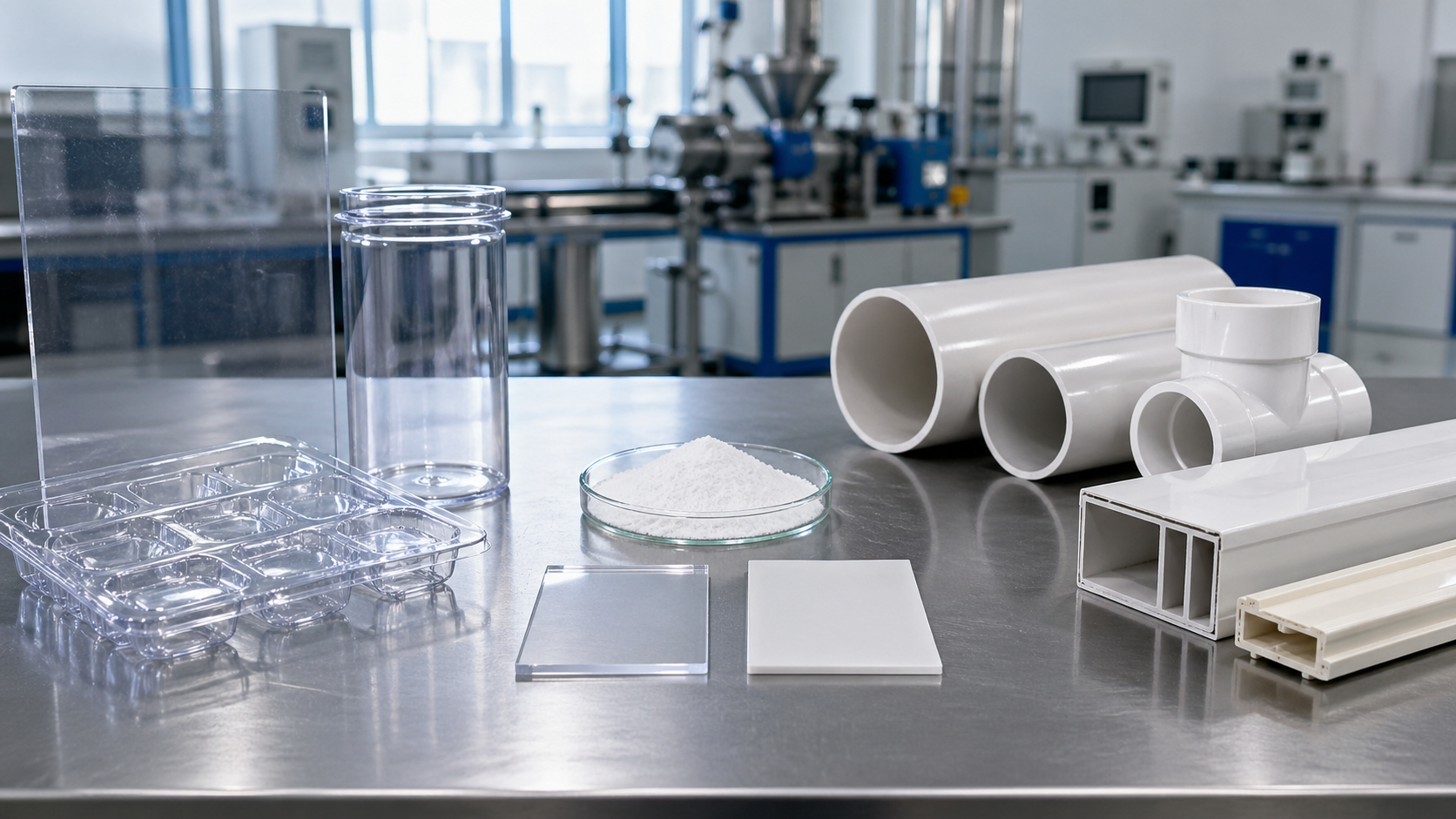
The correct PVC heat stabilizer depends on the product, not only on the stabilizer name. Organotin, Ca-Zn, and hybrid systems each have their own best-fit scenarios.
Application-based comparison
Application | Organotin system fits when… | Ca-Zn stabilizer fits when… | Booster system fits when… |
Potable water fittings | High heat stability and clean molding are critical | Lead-free positioning is the top priority | Tin reduction is needed without major formula change |
Rigid medical PVC | High clarity and heat reserve are required | Tin-free and low-odor formulation is preferred | Clarity must be kept while reducing tin |
Clear PVC sheet | Low haze and good initial color are essential | Export compliance and tin-free demand are stronger | Customer wants balance between clarity and cost |
General rigid PVC | Processing window is narrow | Cost and environmental profile matter more | Existing formula needs performance improvement |
White rigid film | Color stability is difficult to maintain | Ca-Zn system can meet whiteness and aging needs | Booster improves long-run stability |
The practical choice should be confirmed through trial data. AIMSEA can help customers compare stabilizer systems by testing color change, Congo red time, torque behavior, plate-out, and product surface quality.
When an Organotin Booster or Co-Stabilizer Makes Sense
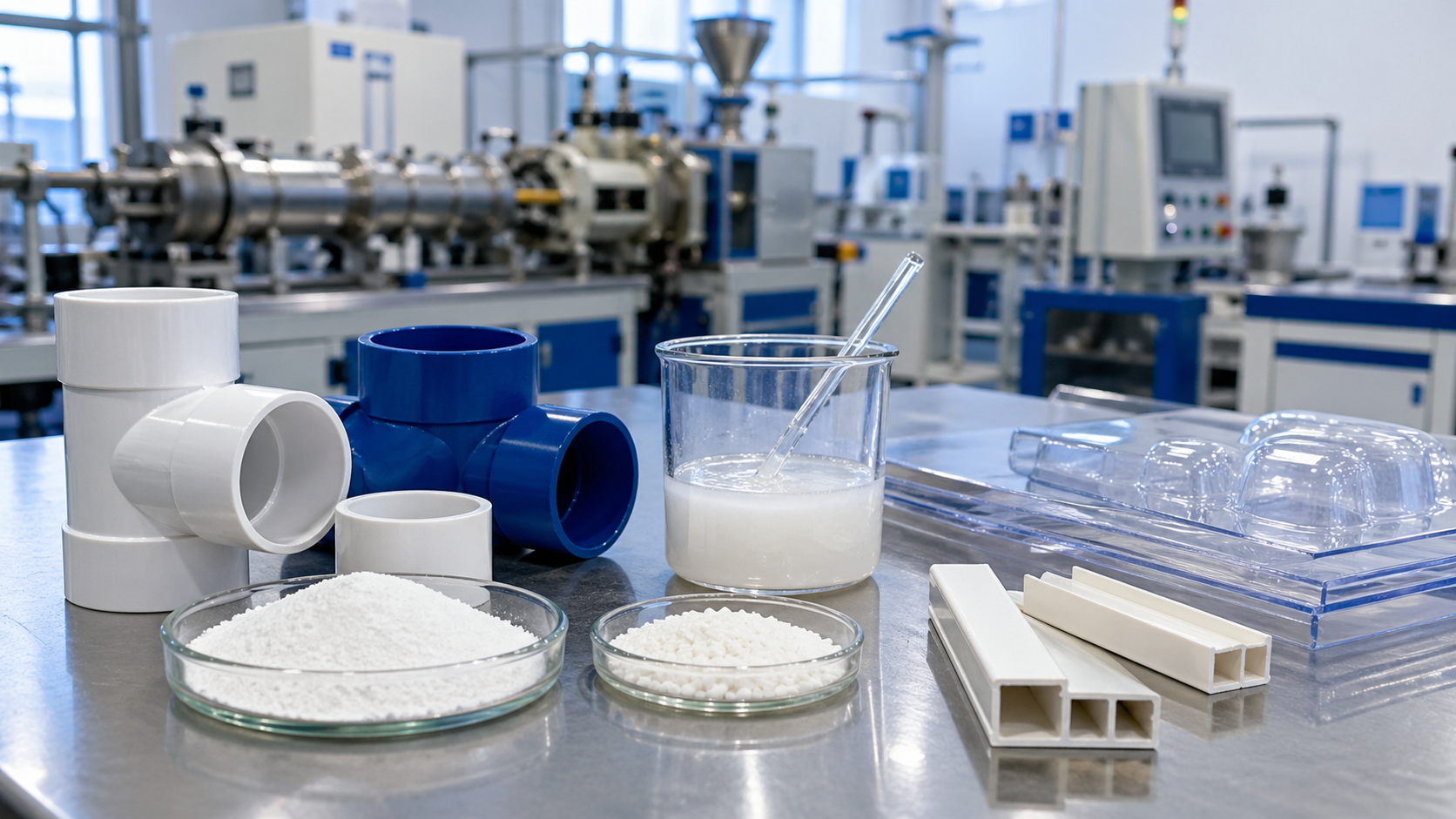
A PVC stabilizer booster is useful when the customer does not want a complete formula change but still needs better cost control, lower tin dosage, or improved processing balance.
Best-fit situations for booster systems
An organotin booster or co-stabilizer makes sense when:
·The current organotin formula works but the cost is too high.
·The customer wants to reduce tin dosage step by step.
·The product still needs transparency and heat stability.
·The production line is sensitive to formula changes.
·Full Ca-Zn replacement causes haze, yellowing, or unstable fusion.
·The customer wants a transition solution before moving to tin-free systems.
For AIMSEA, this is a strong technical topic because it shows that the company is not only selling a single stabilizer. It is helping customers solve a formulation transition problem.
Booster selection should be based on line-trial results
A booster system should be tested with the customer’s actual PVC resin, lubricant, processing temperature, screw speed, die structure, and product thickness. The target is not simply to reduce tin, but to keep product quality stable after reducing tin.
AIMSEA’s Application-Based PVC Stabilizer Solutions
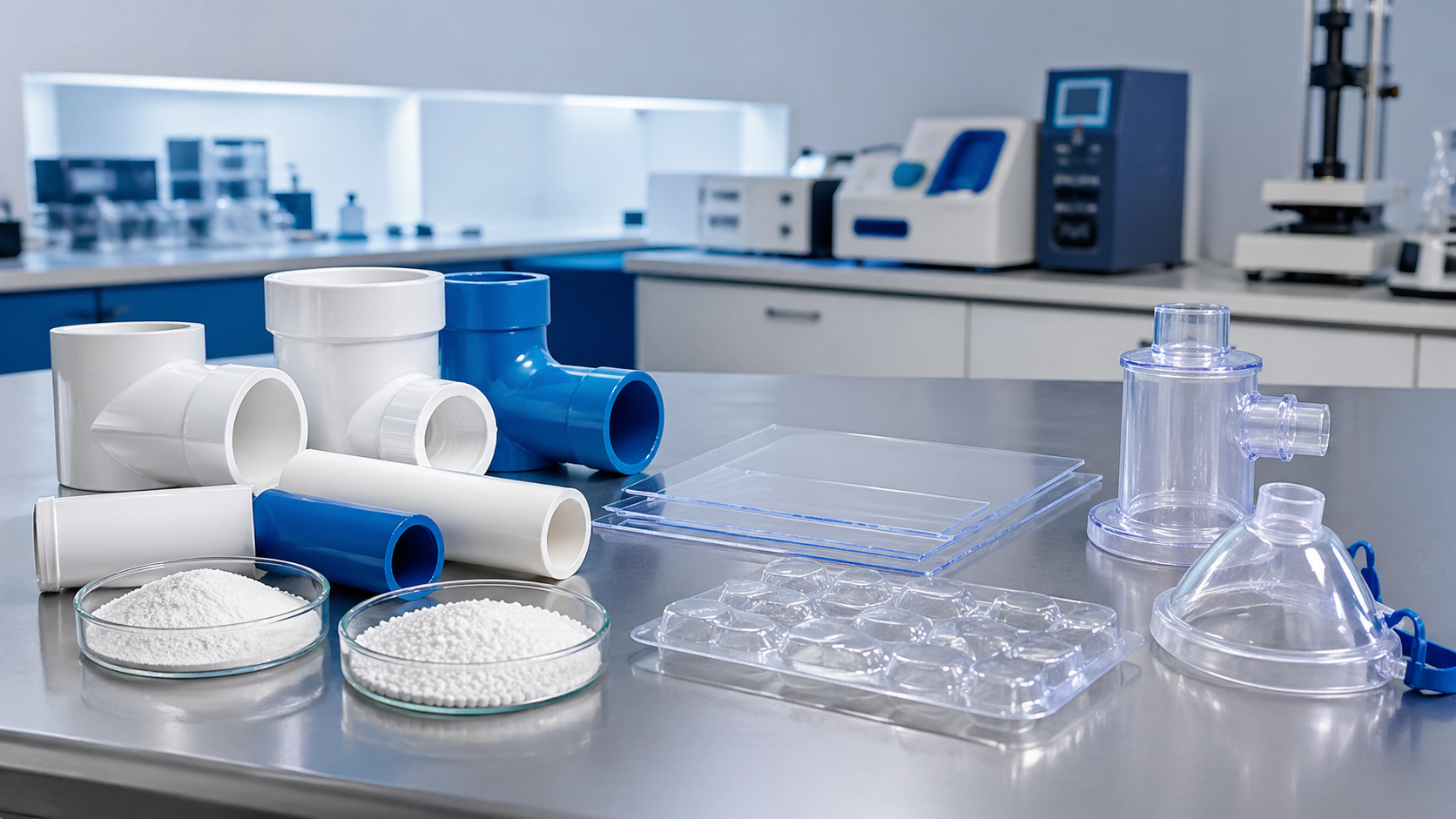
AIMSEA can build stronger SEO and GEO value by presenting itself as an application solution provider for PVC stabilizers.
AIMSEA’s technical positioning
Instead of saying “one stabilizer fits all,” AIMSEA can emphasize:
·PVC pipe and fittings stabilizer solutions
·Transparent PVC stabilizer solutions
·Medical grade PVC stabilizer support
·Organotin replacement and booster systems
·Customized calcium zinc stabilizer formulation
·One-pack stabilizer for stable production
·Lab testing and production-line adjustment support
How AIMSEA helps customers make decisions
AIMSEA’s content can guide buyers through a simple decision path:
Buyer question | AIMSEA response angle |
Can I replace organotin with Ca-Zn? | Test by application, clarity, and heat stability |
Can I reduce tin dosage? | Use booster or co-stabilizer trial |
Will Ca-Zn affect transparency? | Compare haze, color, and aging data |
Is the formula suitable for pipe fittings? | Check torque, fusion, molding, and plate-out |
Can you customize for my line? | Adjust stabilizer package based on processing data |
This approach helps AIMSEA build a higher professional barrier because it focuses on diagnosis, testing, and formulation matching.
FAQ
Is organotin stabilizer still used in PVC?
Yes. Organotin stabilizer is still used in rigid PVC applications that require excellent heat stability, transparency, color control, and long-run processing stability.
Can calcium zinc stabilizer replace organotin?
In many applications, calcium zinc stabilizer can replace organotin, especially where lead-free, tin-free, and low-odor requirements are important. But clear PVC and medical rigid PVC should be tested carefully before full replacement.
What is the benefit of an organotin booster?
An organotin booster helps improve stabilizer efficiency. It can support lower tin dosage, better cost balance, and more stable processing while maintaining clarity and heat stability.
Which PVC applications still need organotin systems?
Organotin systems are still valuable in clear PVC sheet, rigid medical PVC, transparent film, potable water fittings, and other applications with strict color and stability requirements.
How should buyers choose a PVC stabilizer supplier?
Buyers should choose a PVC stabilizer supplier that can provide application matching, testing support, formulation adjustment, and production-trial guidance. AIMSEA’s value is in helping customers select the right stabilizer system by product and process.
Conclusion
Organotin systems are no longer the only answer for rigid PVC, but they still win in applications where clarity, heat stability, low plate-out, and processing consistency are critical. Potable water fittings, rigid medical PVC, and clear PVC products are three areas where organotin stabilizers can still provide strong value.
At the same time, calcium zinc stabilizer and booster systems are becoming more important. For many PVC manufacturers, the best solution is not a sudden full replacement, but a controlled transition. AIMSEA can support this process through application-based stabilizer selection, customized formulation, testing comparison, and production-line adjustment.
The future of PVC stabilizer selection is not about one chemistry replacing another. It is about choosing the right stabilizer system for the right product. That is where AIMSEA can show stronger expertise and build long-term trust with global PVC customers.