
Ultra-Clear PVC Sheet Stabilizer: Improving Transparency, Gloss and Initial Color
Read:268
Source:
Abstract
For transparent PVC sheet manufacturers, visual quality is the product. If the sheet turns slightly yellow, becomes hazy, loses gloss or shows unstable surface quality, buyers can see the defect immediately. This is why rigid transparent PVC sheet, clear PVC rolls, transparent packaging sheet and clear PVC boards need a stabilizer system designed specifically for clarity, heat stability, initial color and processing consistency.
An ultra clear PVC sheet stabilizer is not only used to prevent PVC from degrading during heating. It also helps protect transparency, reduce haze, maintain surface gloss, control early color tone, lower odor and support stable production. This guide explains why transparent PVC sheet develops yellowing, haze, dullness and processing instability, and how AIMSEA ultra-clear Ca-Zn stabilizer solutions can support sample-based testing for high-transparency PVC sheet applications.
Why Transparent PVC Sheet Is Difficult to Keep Clear?
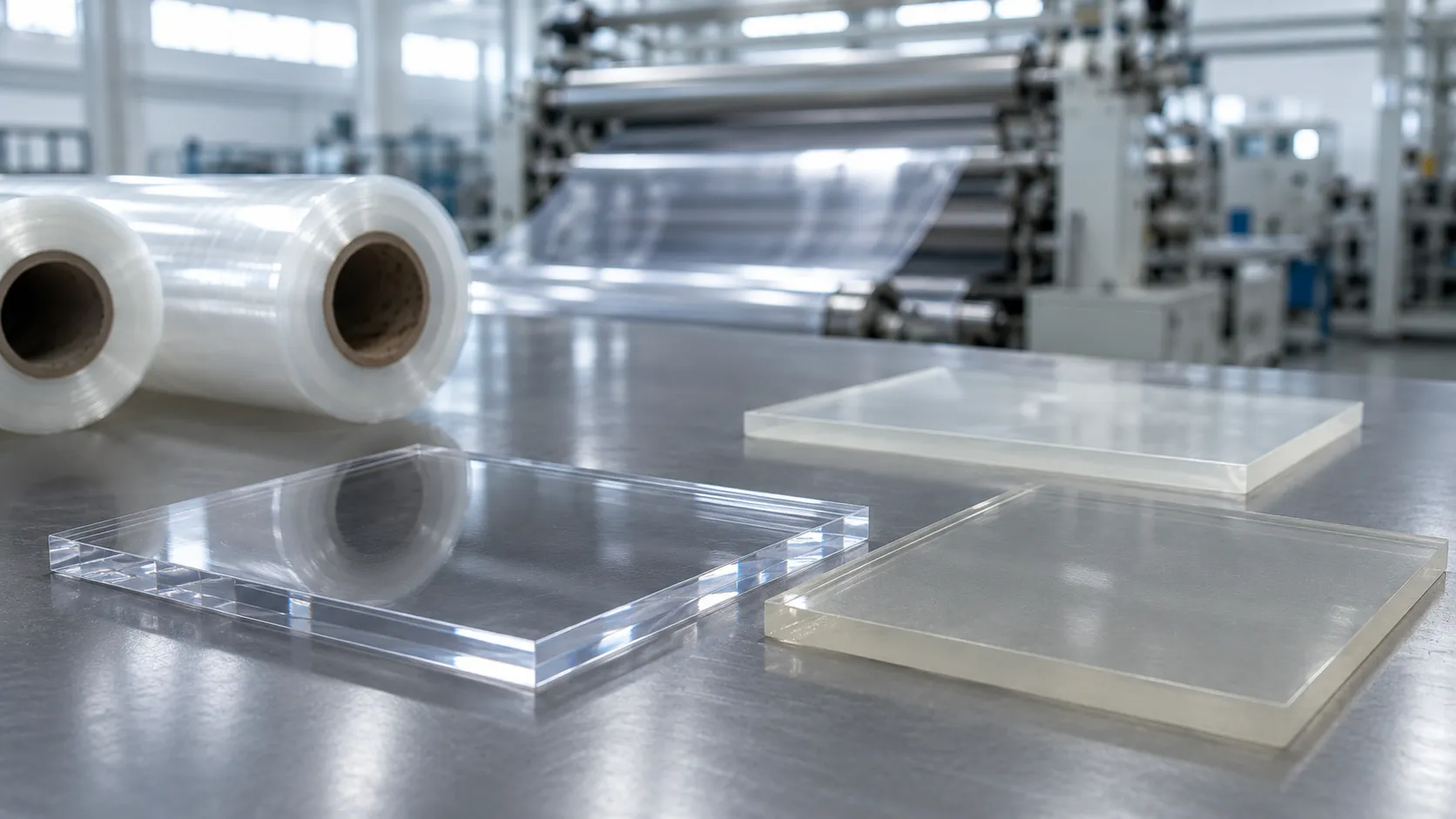
Transparent PVC sheet looks simple, but it is technically demanding. Unlike opaque products, transparent sheet cannot hide defects behind pigment or filler. A small amount of haze, yellowing, poor dispersion, plate-out or gloss loss can lower the perceived grade of the final product.
AIMSEA’s PVC stabilizer page identifies clear PVC sheet, rigid sheet, shrink film, transparent film, white film, hose and packaging as transparent PVC applications, with performance targets such as high clarity, low haze, yellowing control, low odor and stable Ca-Zn processing.
Quick Answer
An ultra clear PVC sheet stabilizer should help transparent PVC sheet maintain high clarity, low haze, bright initial color, clean surface gloss, heat resistance, low odor and stable processing during extrusion, calendering or sheet forming.
Main Buyer Pain Points
Buyer Pain Point | What It Usually Means |
Sheet turns yellow | Heat stability or processing temperature issue |
Haze increases | Additive compatibility, dispersion or surface problem |
Surface looks dull | Lubrication imbalance, roughness or roller contamination |
Gloss is unstable | Fusion, processing or batch variation problem |
Plate-out appears | Additive migration or low compatibility |
Odor is noticeable | Volatile components or unsuitable stabilizer system |
Batch performance changes | Production control or raw material variation |
For buyers, the real challenge is not only to make one clear sample. The challenge is to keep the product clear and glossy during repeated production.
What an Ultra Clear PVC Sheet Stabilizer Should Do?
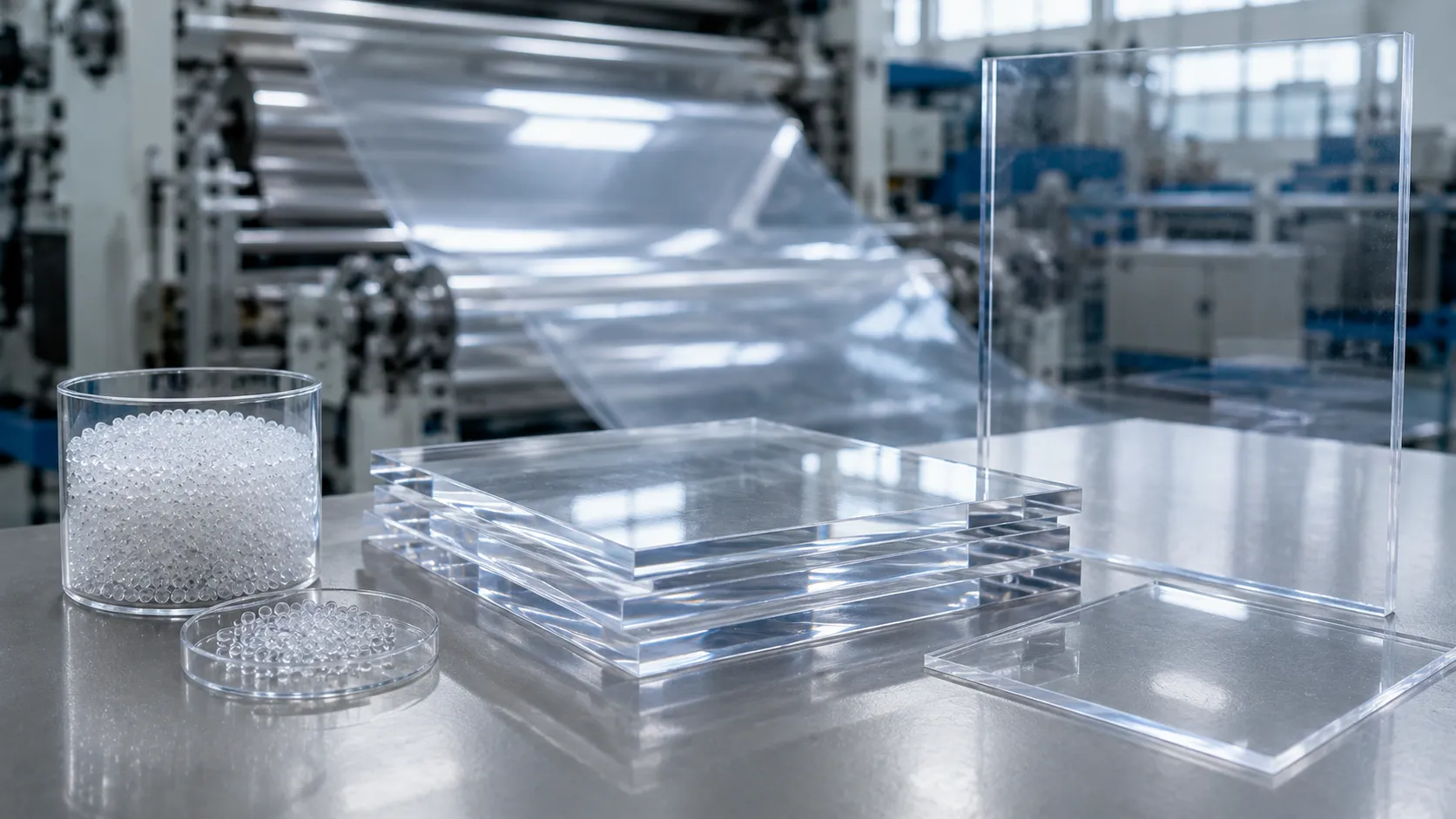
An ultra clear PVC sheet stabilizer must perform in several ways at the same time. If it only gives heat stability but increases haze, it is not suitable. If it gives good first color but plates out during production, it can still cause quality problems.
Core Functions for Transparent Sheet
Stabilizer Function | Why It Matters for Clear Sheet |
Heat stabilization | Prevents PVC degradation and yellowing |
Initial color control | Keeps early sheet color bright and clean |
Haze reduction | Supports high transparency and see-through quality |
Gloss protection | Helps maintain a premium surface appearance |
Low plate-out | Reduces deposits, fogging and surface defects |
Low odor | Important for packaging and consumer-facing applications |
Processing consistency | Supports stable sheet thickness, appearance and output |
Lead-free direction | Helps meet export and environmental requirements |
AIMSEA’s internal rigid transparent Ca-Zn stabilizer material describes CZ-188 as a no-organotin, low-odor, non-toxic stabilizer direction with good initial whiteness, long-term heat stability, no precipitation/fogging tendency, self-lubricating behavior and good transparency for crystal-clear products.
Why PVC Clear Sheet Turns Yellow During Processing?
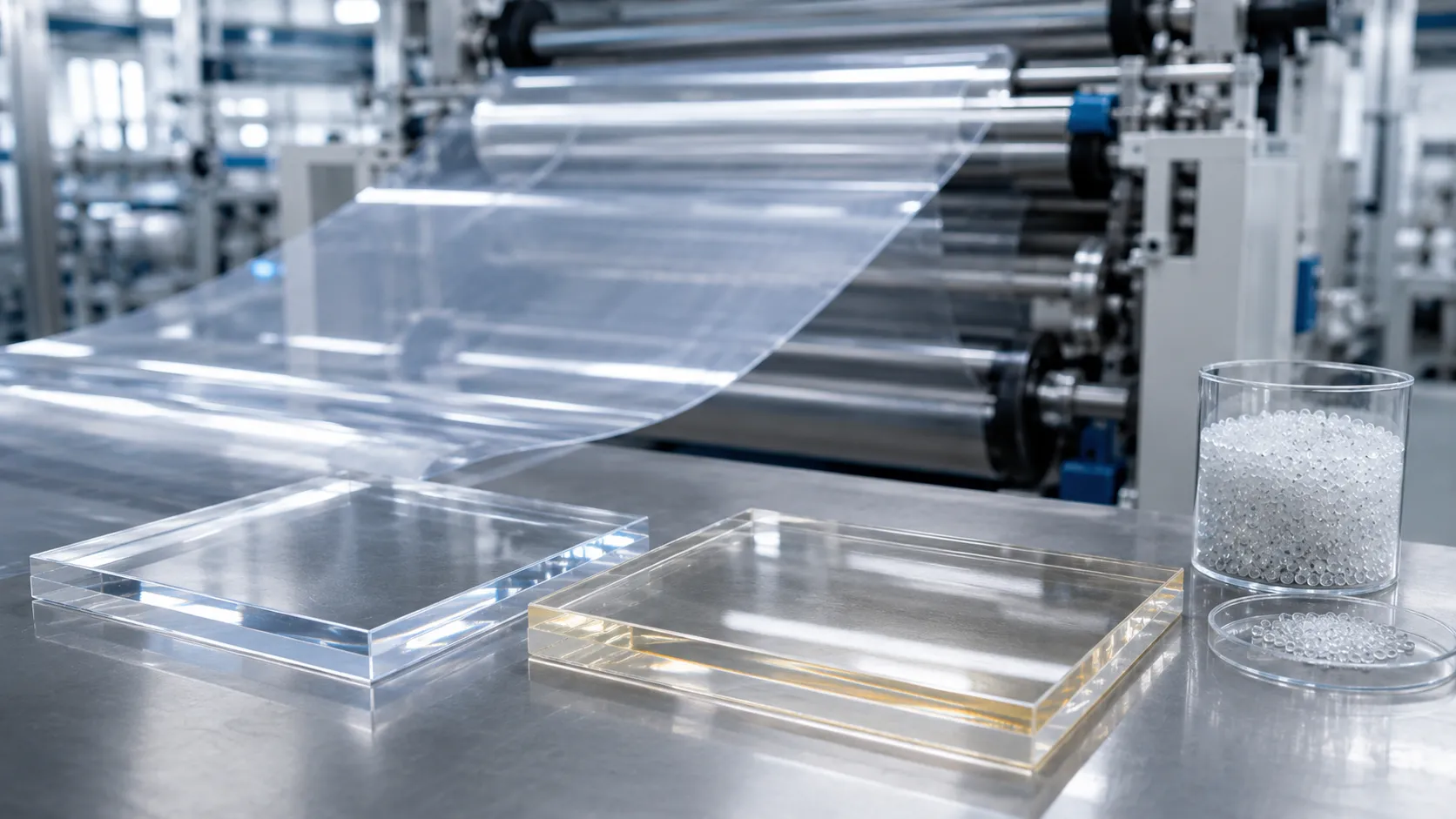
Yellowing is one of the most common complaints in transparent PVC sheet production. PVC is sensitive to heat. During processing, heat and shear can cause dehydrochlorination, producing HCl and conjugated structures that deepen color.
AIMSEA’s internal PVC stabilizer overview explains that PVC begins dehydrochlorination when heated, and that color can deepen as conjugated polyene sequences form during thermal degradation. It also notes that heat stabilizers help replace unstable chlorine structures, absorb HCl and interrupt further degradation.
Common Causes of Yellowing in Transparent PVC Sheet
Cause | Production Impact | What to Review |
Insufficient heat stability | Yellow sheet or color deepening | Stabilizer grade and dosage direction |
Excessive processing temperature | Early discoloration | Barrel, roll or die temperature |
Long residence time | Heat history becomes too strong | Machine settings and line speed |
Poor lubrication balance | Friction heat rises | Internal/external lubrication |
Unstable batch quality | Color varies by batch | Supplier quality control |
Metal contamination or impurity | Local discoloration | Raw material and equipment cleanliness |
A high-transparency PVC stabilizer should not only delay yellowing in a lab oven. It should help maintain clean color during real sheet production.
How a Rigid Transparent PVC Stabilizer Helps Reduce Haze?
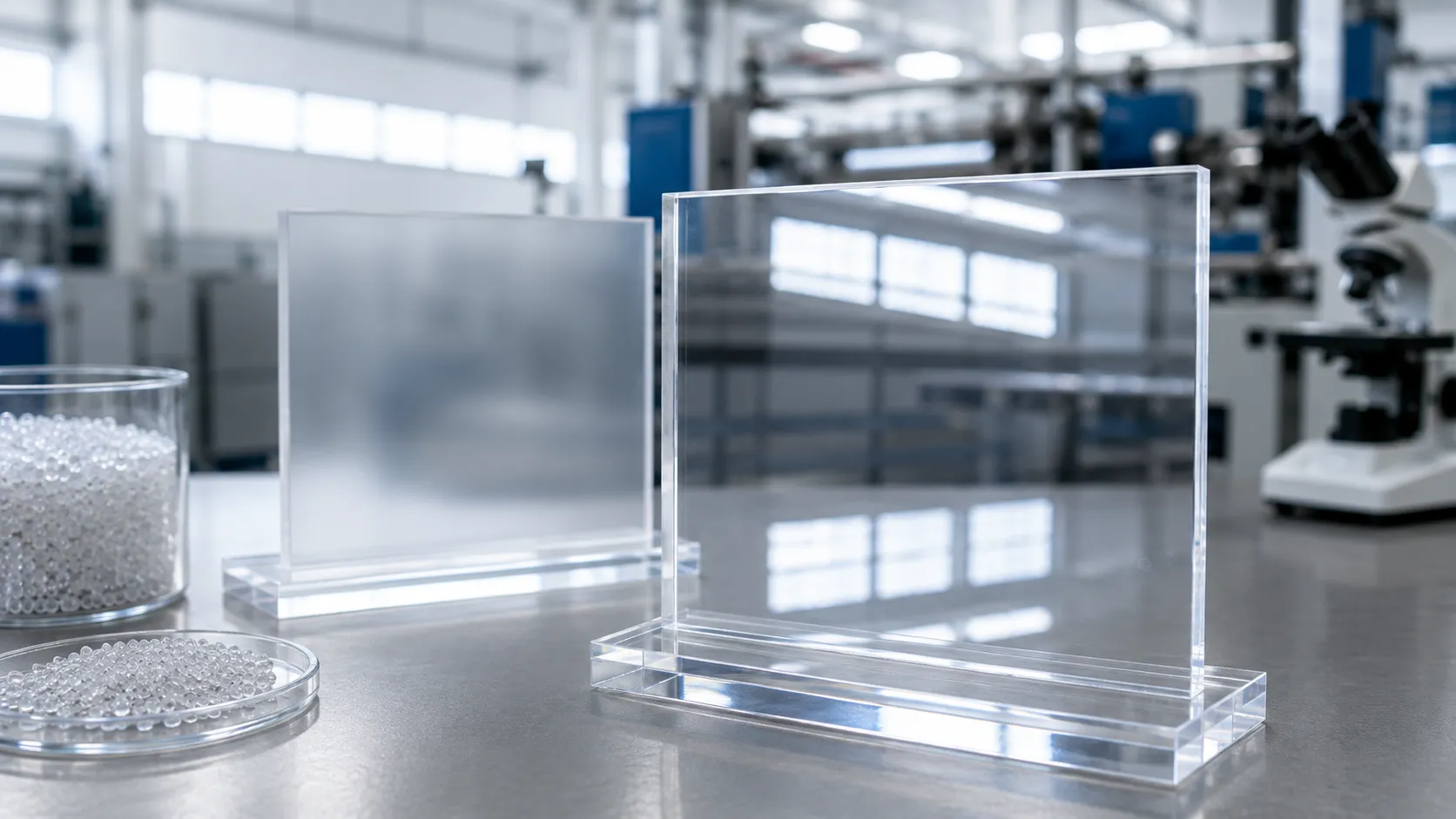
Haze is different from yellowing. A sheet can be colorless but still look cloudy. Haze may come from poor additive compatibility, weak dispersion, surface roughness, moisture, processing defects or plate-out.
Intertek explains that haze is the scattering of light as it passes through a transparent material, while luminous transmittance measures how much light passes through a sample. These two measurements are important for transparent plastics development and quality control. ASTM D1003 covers the evaluation of light-transmitting and wide-angle light-scattering properties of planar transparent materials, making it relevant for clear PVC sheet and film evaluation.
What to Measure for Clear PVC Sheet?
Test Item | Why It Matters |
Light transmittance | Measures how much light passes through the sheet |
Haze | Measures cloudiness or light scattering |
Yellowness index | Quantifies yellow tone |
Surface gloss | Shows visual brightness and premium appearance |
Static heat aging | Checks color stability under heat |
Dynamic processing test | Shows heat and shear resistance |
Plate-out observation | Checks deposits and fogging risk |
AIMSEA’s CZ-188 test material reports a comparison in which an organotin stabilizer showed 86.7% transmittance and 2.7% haze, while CZ-188 showed 86.3% transmittance and 2.8% haze under the tested conditions. This supports the article’s point that transparent PVC sheet stabilizers should be evaluated using transmittance and haze, not only by visual judgment.
Surface Gloss: Why Clear PVC Sheet Can Look Dull?
For transparent packaging sheet, rigid clear sheet and clear PVC rolls, gloss affects product value. A sheet may be transparent but still look low grade if the surface is dull or uneven.
Gloss loss can come from:
① Poor fusion
② Roller contamination
③ Lubrication imbalance
④ Plate-out
⑤ Surface micro-roughness
⑥ Inconsistent cooling
⑦ Additive incompatibility
A PVC clear sheet stabilizer should support clean processing and stable surface formation. It must work with the lubricant system, not fight against it.
Gloss Problems and Stabilizer-Related Causes
Surface Problem | Possible Stabilizer-Related Cause |
Dull sheet surface | Poor fusion or excessive external lubrication |
Uneven gloss | Processing instability or batch variation |
Fine surface streaks | Roller deposits or plate-out |
Foggy appearance | Additive migration or low compatibility |
Poor release | Lubrication balance not suitable |
Local yellow marks | Heat concentration or degradation |
This is why transparent sheet buyers should ask suppliers about processing stability, not only optical clarity.
Initial Color and Heat Stability for High-Transparency PVC Sheet
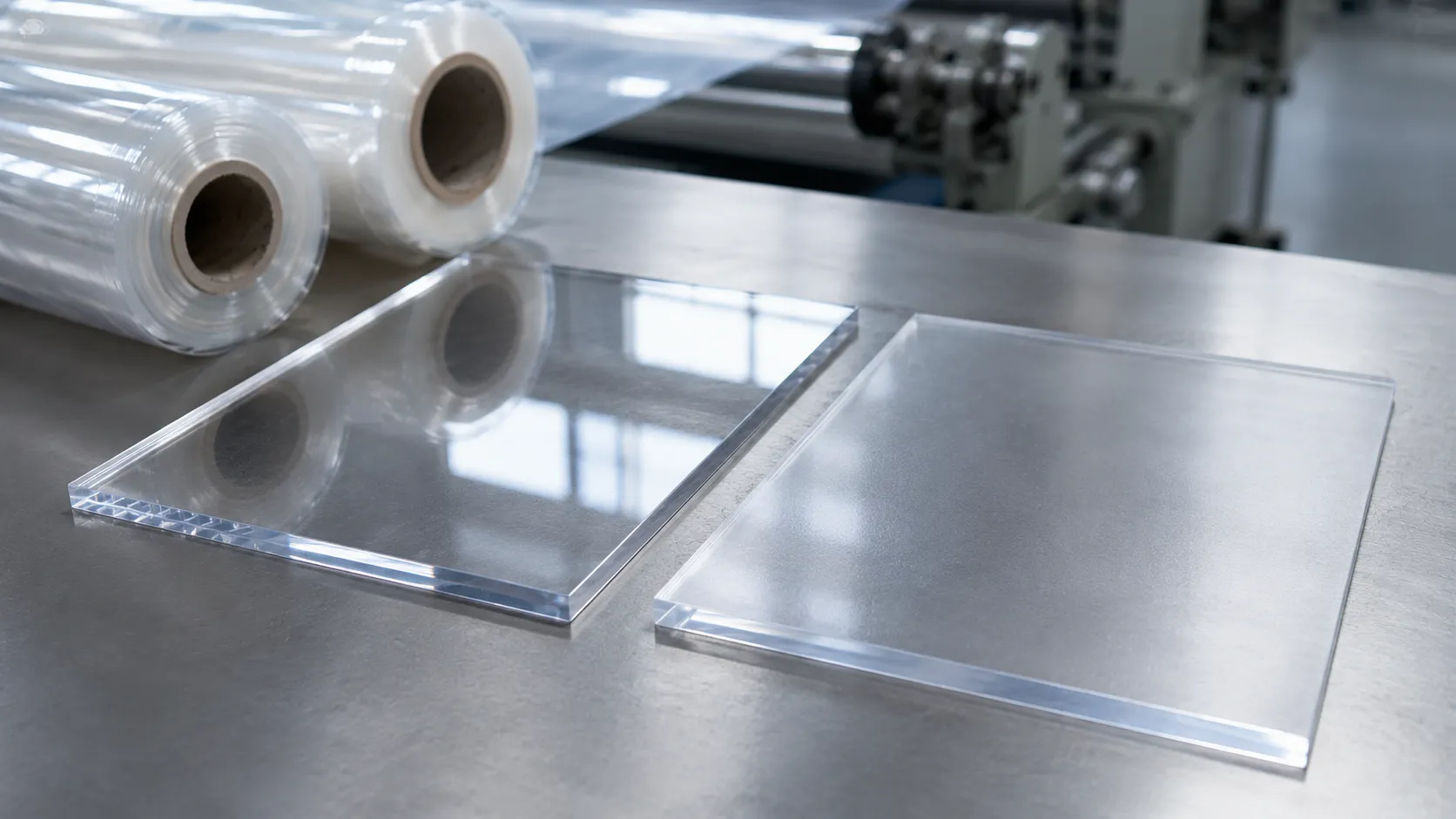
Initial color is the first impression of transparent PVC sheet. In high-transparency applications, buyers often prefer a bright, clean, low-yellow tone. If the initial color is not good, later production improvements may not fully solve the appearance problem.
A high-transparency PVC stabilizer should help control initial color and resist color drift during processing.
Initial Color vs Long-Term Stability
Performance Area | What It Means | Why It Matters |
Initial color | Sheet color at the beginning of processing | Determines first visual acceptance |
Early heat stability | Color during the first stage of heating | Prevents quick yellowing |
Long-term heat stability | Resistance over longer heating time | Supports continuous production |
Residual stability | Stability after sheet forming | Helps later use and storage performance |
Color consistency | Batch-to-batch visual stability | Reduces customer complaints |
AIMSEA’s internal PVC stabilizer overview identifies initial heat stability, long-term heat stability, residual heat stability, static heat stability and dynamic heat stability as important evaluation dimensions for PVC stabilizers.
Processing Stability and Low Plate-Out in Clear PVC Rolls
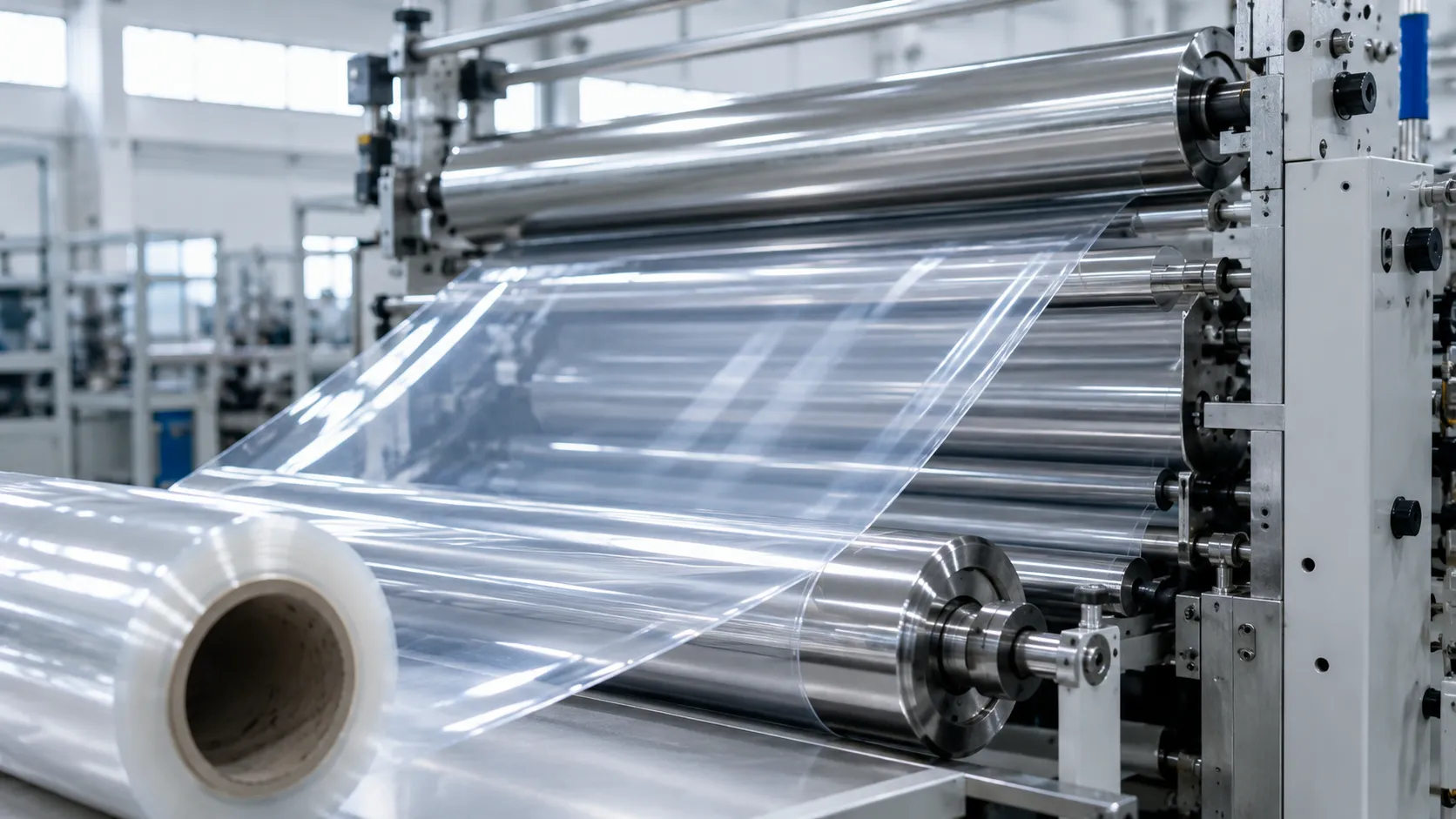
Clear PVC rolls and transparent sheet production require stable line behavior. Even when the formulation looks good in a small trial, long-run production can reveal plate-out, deposits, odor or surface instability.
AIMSEA’s PVC stabilizer overview defines plate-out as additive components separating during processing and adhering to metal surfaces such as rollers or mold walls. It also describes blooming as additive migration from the product interior to the surface during use.
Why Low Plate-Out Matters?
Production Area | Impact of Plate-Out |
Roller surface | Deposits create marks or uneven gloss |
Sheet surface | Fogging, streaks or visible defects |
Production line | More frequent cleaning and downtime |
Quality control | Higher scrap and rework rate |
Customer approval | Visual defects reduce buyer confidence |
A stable rigid transparent PVC stabilizer should support low migration, clean processing and consistent roll appearance.
How to Test a PVC Clear Sheet Stabilizer Before Bulk Use?
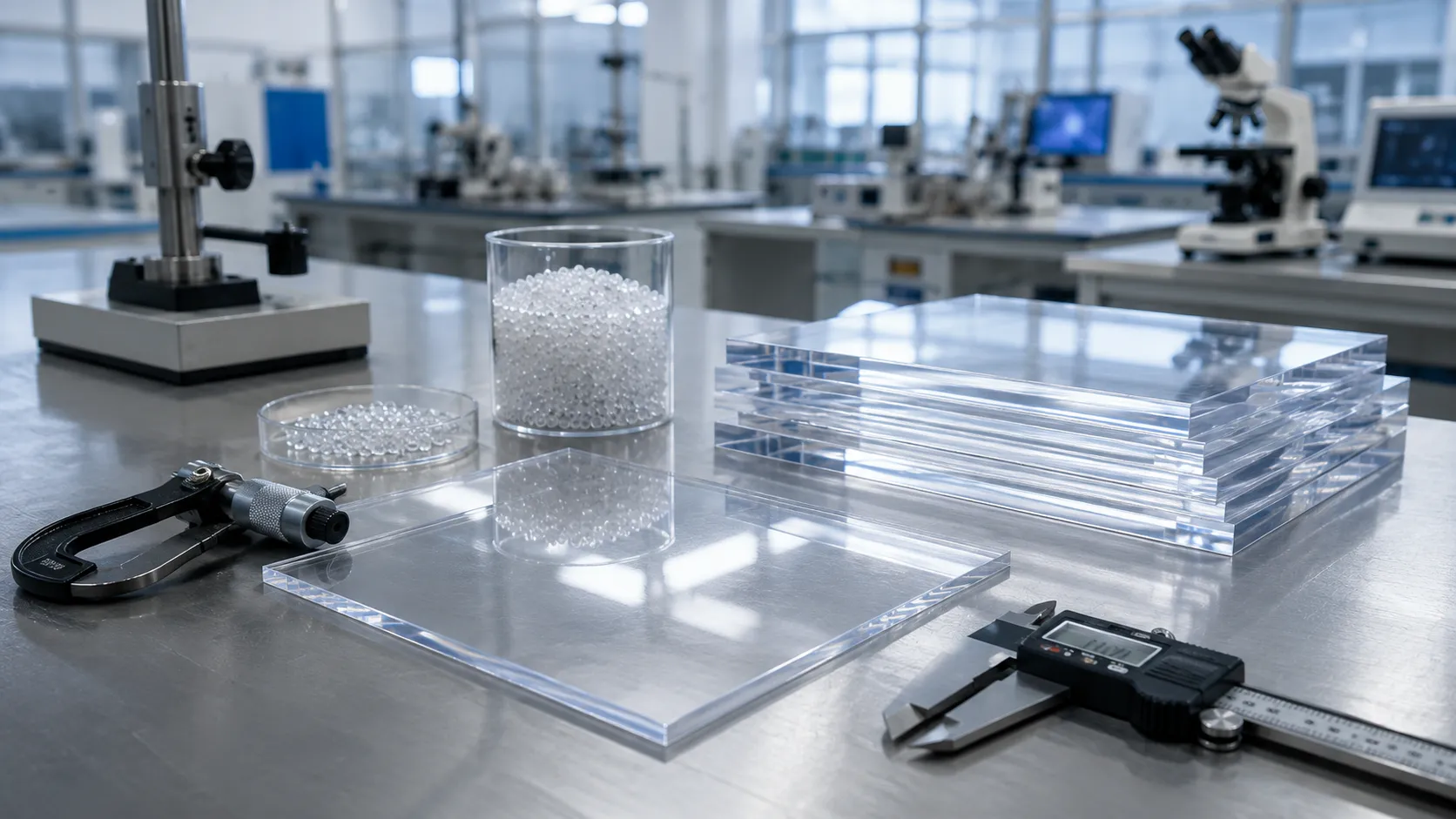
A stabilizer should never be approved only because one sample looks clear. Transparent PVC sheet requires both lab testing and production validation.
Recommended Test Plan
Test Stage | Test Item | Purpose |
Lab screening | Haze and transmittance | Confirms optical quality |
Lab screening | Static heat aging | Checks yellowing resistance |
Lab screening | Color Lab / yellowness index | Quantifies initial color and color drift |
Dynamic test | Open-mill or torque rheology | Checks heat and shear behavior |
Surface check | Gloss and surface defects | Confirms premium appearance |
Plate-out test | Roller or mold deposit observation | Checks migration tendency |
Odor test | Sensory or internal standard evaluation | Important for packaging and consumer-facing sheet |
Production trial | Actual sheet line test | Confirms real processing stability |
Batch comparison | Repeat trial across batches | Confirms consistency |
AIMSEA’s organotin partner material uses static aging, impact, heat shrinkage, transmittance, haze and tensile testing to evaluate transparent PVC sheet performance, which is a useful reference for transparent sheet stabilizer evaluation.
AIMSEA Ultra-Clear Ca-Zn Stabilizer as a Sample Solution
AIMSEA’s ultra-clear Ca-Zn stabilizer solutions can be positioned for buyers producing transparent rigid sheet, transparent rolls, rigid transparent packaging sheet and clear PVC boards. The focus is not price or formula disclosure. The focus is sample testing, application matching and stable appearance.
AIMSEA Value for Clear PVC Sheet Manufacturers
Buyer Need | AIMSEA Support Direction |
Higher transparency | Ultra-clear Ca-Zn stabilizer sample evaluation |
Lower haze | Optical testing direction with haze and transmittance |
Better initial color | Heat aging and color comparison support |
Improved gloss | Processing and lubrication balance review |
Lower odor | Eco-friendly low-odor Ca-Zn direction |
Less plate-out | Low precipitation/fogging stabilizer direction |
Lead-free positioning | Ca-Zn stabilizer solution for export-oriented buyers |
Stable production | Sample trial and application-based recommendation |
For export markets, lead-free material direction is becoming increasingly important. SGS reports that the EU expanded the restriction of lead to PVC articles under REACH, and the restriction became effective on November 29, 2024. BEAMA also states that from November 29, 2024, lead is no longer allowed in PVC products at a concentration of 0.1% or higher by weight, with certain transition periods for specific applications.
Information to Provide When Requesting a Sample
To get an accurate stabilizer recommendation, buyers should provide:
① Product type: rigid transparent sheet, clear roll, packaging sheet or clear board
② Processing method: extrusion, calendering, pressing or forming
③ Sheet thickness and transparency target
④ Resin grade and K value
⑤ Plasticizer and lubricant system if used
⑥ Current stabilizer type
⑦ Current issue: yellowing, haze, dull surface, odor, plate-out or instability
⑧ Required market compliance documents
⑨ Test requirements: haze, transmittance, heat aging, gloss, odor or production trial
The more complete the technical information, the more useful the sample recommendation.
FAQs About Ultra-Clear PVC Sheet Stabilizers
What is an ultra clear PVC sheet stabilizer?
An ultra-clear PVC sheet stabilizer is a stabilizer system designed for transparent PVC sheet, rigid sheet, rolls and clear packaging sheet. It helps protect transparency, reduce haze, improve initial color, support heat stability and maintain surface appearance.
Why does transparent PVC sheet turn yellow?
Transparent PVC sheet may turn yellow because of insufficient heat stability, high processing temperature, long residence time, friction heat, poor stabilizer selection or raw material impurities.
What causes haze in clear PVC sheet?
Haze may come from poor additive compatibility, weak dispersion, moisture, surface roughness, plate-out, processing defects or unsuitable stabilizer-lubricant balance.
How can a rigid transparent PVC stabilizer improve gloss?
A suitable stabilizer can support stable fusion, clean processing, low plate-out and better surface formation. These factors help the sheet maintain a cleaner and glossier appearance.
What is the difference between high transparency and low haze?
High transparency means more light passes through the sheet. Low haze means less light is scattered. A good clear sheet should have both high transmittance and low haze.
What tests should be done before switching stabilizers?
Recommended tests include haze, light transmittance, static heat aging, yellowness index, surface gloss, plate-out observation, odor evaluation, dynamic processing and production-line trial.
Can Ca-Zn stabilizer be used for rigid transparent PVC sheet?
Yes, when the Ca-Zn stabilizer is designed for transparent PVC. General-purpose Ca-Zn stabilizers may not meet the clarity, gloss and low-haze requirements of rigid transparent sheet.
Conclusion
Transparent PVC sheet quality depends on more than basic heat stability. Buyers producing rigid transparent sheet, clear PVC rolls, transparent packaging sheet and clear boards need a stabilizer system that protects transparency, gloss, initial color and processing consistency.
An ultra clear PVC sheet stabilizer should help reduce yellowing, lower haze, maintain a bright surface, control odor, reduce plate-out and support stable production. The right choice should be based on actual sheet application, not only on a general stabilizer name.
AIMSEA’s ultra-clear Ca-Zn stabilizer solutions provide a practical sample direction for high-transparency PVC sheet manufacturers. For buyers, the best next step is to share product type, processing method, current quality issue and target test items, then evaluate the stabilizer through haze, transmittance, heat aging, gloss and production-trial performance.
References
1.AIMSEA PVC Stabilizer Manufacturer page: transparent PVC applications include clear PVC sheet, rigid sheet, shrink film, transparent film, white film, hose and packaging, with high clarity, low haze, yellowing control and low-odor processing.
2.AIMSEA rigid transparent Ca-Zn stabilizer material: CZ-188 is positioned for high-clarity products with low odor, long-term heat stability, no precipitation/fogging tendency and transmittance/haze testing.
3.AIMSEA PVC stabilizer overview: PVC heat degradation, stabilizer functions, heat stability evaluation and plate-out/blooming concepts.
4.AIMSEA organotin partner material: transparent sheet testing includes static aging, transmittance, haze, impact, heat shrinkage and tensile performance.
5.ASTM D1003 and Intertek: haze and luminous transmittance testing are relevant for transparent plastics and planar transparent materials.
6.SGS and BEAMA summaries of EU REACH lead restriction in PVC articles: lead in PVC is restricted at 0.1% or higher by weight from November 29, 2024, with certain transition periods.