
Calcium-Zinc vs Organotin Stabilizer for Clear Rigid PVC
Read:102
Source:
Article Excerpt:
Can calcium-zinc stabilizer replace organotin in clear rigid PVC? Compare transparency, haze, heat stability, lubrication, processing cost and replacement testing before changing your formulation.
Organotin stabilizers remain an established performance benchmark for clear rigid PVC because they usually provide excellent initial color, optical clarity and a relatively wide processing window. However, advances in ultra-clear calcium-zinc stabilizer technology mean that selected Ca-Zn systems can now approach organotin-level transmittance and haze in properly optimized formulations.
This does not mean that every calcium zinc stabilizer can directly replace a PVC tin stabilizer. The result depends on the stabilizer grade, PVC resin, impact modifier, lubricant balance, processing temperature, residence time and optical requirements of the finished product.
For clear PVC sheet, transparent rigid tubing, packaging, fittings and decorative products, the correct decision should be based on formulation-specific laboratory testing and production-line validation—not on the stabilizer name alone.
Quick Comparison: Calcium-Zinc vs Organotin for Clear Rigid PVC
Comparison Factor | Ultra-Clear Calcium-Zinc Stabilizer | Organotin Stabilizer |
Optical clarity | Can be excellent with a specialized grade and optimized formulation | Common industry benchmark for high transparency |
Initial color | Good to excellent when the stabilizer and lubricant system are balanced | Usually excellent |
Long-term heat stability | Depends strongly on co-stabilizers and formulation balance | Generally strong |
Processing window | More sensitive to formulation and processing conditions | Generally wider |
Lubrication | May include integrated lubrication, but usually requires adjustment | Often requires a separately optimized lubricant package |
Haze control | Depends on dispersion, compatibility and additive selection | Usually reliable in well-balanced clear PVC formulations |
Plate-out risk | Can be low with compatible raw materials and suitable lubrication | Generally low when the complete formulation is balanced |
Odor | Generally lower | Some mercaptide organotin grades may produce noticeable odor |
Regulatory suitability | Must be verified for the specific grade and final application | Must be verified by organotin type, concentration and end use |
Cost-in-use | Depends on dosage, auxiliaries and line performance | Higher material cost may sometimes be offset by processing efficiency |
Best use case | Projects seeking organotin reduction, low odor or a specialized Ca-Zn solution | Applications requiring a proven wide processing window and highly consistent clarity |
The table provides a general comparison. It should not be treated as a universal formulation rule. Two stabilizers from the same chemical family can perform very differently because of active content, co-stabilizer design, lubricant composition and compatibility with other PVC additives.
Why Clear Rigid PVC Is Difficult to Stabilize?
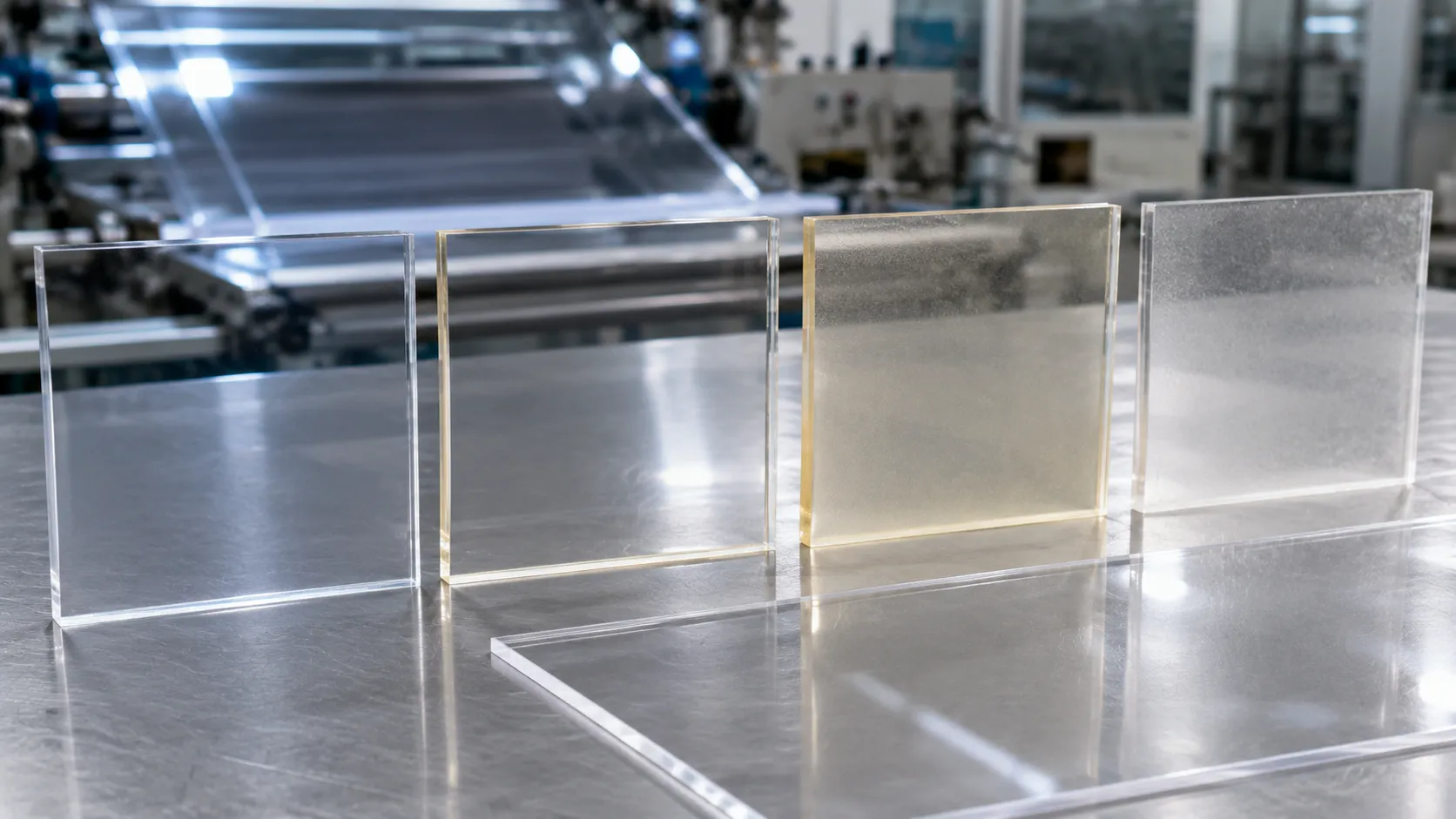
Clear rigid PVC places stricter demands on a heat stabilizer than opaque PVC products. In a colored pipe or profile, a small change in yellowing or additive dispersion may not be immediately visible. In transparent PVC, the same change can directly affect appearance, haze, gloss and perceived product quality.
PVC resin itself can provide good transparency. The final optical performance, however, is influenced by every additive introduced into the formulation.
When the refractive index of an additive differs significantly from that of PVC, or when the additive is not dispersed uniformly, visible light may be scattered. This increases haze and reduces visual clarity. Poor compatibility, undispersed particles, lubricant migration and plate-out may create similar optical problems.
Clear rigid PVC also experiences several sources of thermal stress:
① Heating during dry blending and fusion
② Shear inside the extruder or calender
③ Residence time in the barrel, adapter and die
④ Reheating during thermoforming or secondary processing
⑤ Production interruptions and restart cycles
⑥ Recycled material passing through an additional heat history
Because yellowing is more visible in a transparent product, a clear PVC stabilizer must control both initial appearance and color retention throughout the processing cycle.
How Calcium-Zinc and Organotin Stabilizers Work?
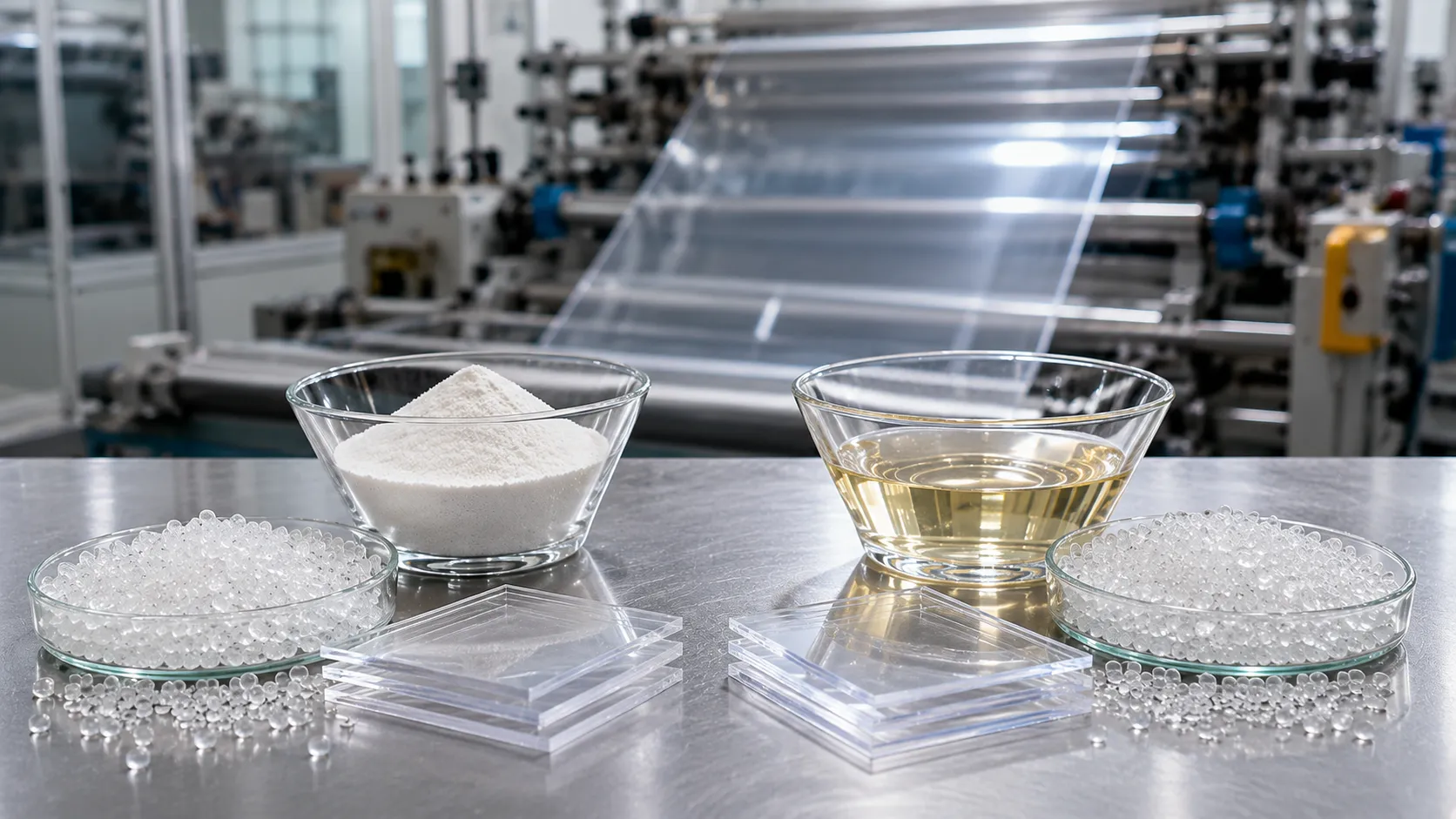
PVC begins to release hydrogen chloride when exposed to heat and shear. The released HCl can accelerate further degradation, while conjugated polyene structures gradually develop in the polymer chain. As these structures increase, the PVC changes from a light initial color to yellow, brown and eventually black.
A heat stabilizer is designed to slow this process by replacing unstable chlorine atoms, absorbing released HCl, interrupting the formation of conjugated structures and reducing further degradation.
Organotin Stabilizer
Organotin stabilizers, particularly mercaptide systems, are widely recognized for their ability to control initial color and provide strong thermal stability in rigid PVC. Their high compatibility with PVC also contributes to reliable clarity in transparent formulations.
However, organotin should not be evaluated separately from the lubricant package. Some organotin stabilizers provide limited self-lubrication, so internal and external lubricants must still be balanced around fusion, metal release and surface quality.
Odor, formulation cost and market-specific material requirements may also encourage manufacturers to evaluate an organotin replacement for PVC.
Calcium-Zinc Stabilizer
A calcium zinc stabilizer for PVC normally combines calcium and zinc compounds with selected co-stabilizers, antioxidants, polyols, phosphites, β-diketones or other auxiliary components.
Zinc-containing components can support good initial color, while calcium compounds and co-stabilizers help absorb HCl and extend stability. If the system is not properly balanced, the formation of zinc chloride may accelerate PVC degradation during the later stage of heating. This is commonly associated with sudden darkening or “zinc burning.”
For that reason, a transparent PVC stabilizer based on Ca-Zn must be engineered as a complete stabilization package. It is not enough to mix basic calcium and zinc soaps and expect organotin-level optical and processing performance.
Optical Clarity: Transmittance, Haze and Initial Color
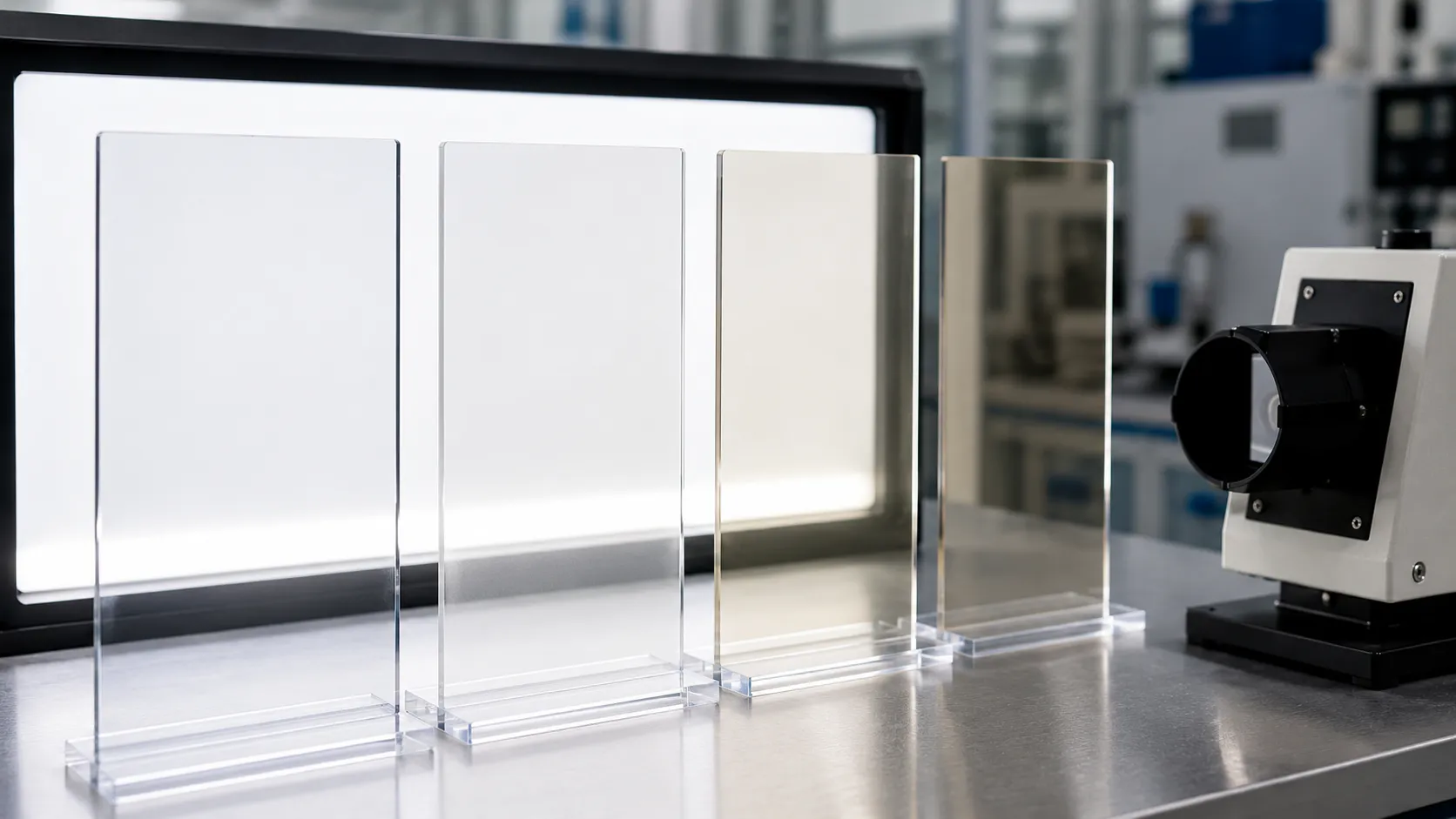
Optical clarity is one of the most important differences considered in a calcium zinc vs tin stabilizer comparison.
Organotin is often described as providing “excellent transparency,” while calcium-zinc is described as providing “good transparency.” These descriptions are too general for a technical purchasing decision.
A useful comparison should evaluate at least three separate properties.
Light Transmittance
Light transmittance measures how much visible light passes through the PVC specimen. A higher value generally indicates that more light is transmitted, but it does not automatically mean that the sample appears perfectly clear.
Sample thickness must remain consistent. A thin sample and a thick sample cannot be compared directly, even when they use the same formulation.
Haze
Haze measures the proportion of transmitted light that is scattered. A sample may have relatively high transmittance but still look cloudy because of excessive light scattering.
Haze can be affected by:
① Additive refractive index
② Additive dispersion
③ Stabilizer compatibility
④ Lubricant migration
⑤ Undispersed impact modifier
⑥ Contamination
⑦ Surface texture
⑧ Sample thickness
⑨ Processing history
For this reason, both transmittance and haze should be recorded during a clear rigid PVC stabilizer comparison.
Initial Color
Initial color determines whether the newly processed PVC appears neutral, blue-white, yellowish or reddish. A formulation may be transparent but still have an unacceptable initial tone.
Instrumental color measurements such as L*, a*, b*, yellowness index or ΔE provide more useful information than visual inspection alone. Color should be measured immediately after processing and again after controlled thermal aging.
Heat Stability and Color Retention During Processing
The best stabilizer for transparent rigid PVC must provide more than an attractive initial sample. It must also maintain acceptable color during continuous processing.
Organotin generally provides a strong combination of early color control and longer-term thermal stability. This is one reason it remains widely used as a reference stabilizer for demanding clear rigid PVC products.
An optimized ultra-clear Ca-Zn stabilizer can also provide good initial color and useful heat stability, but its performance is often more sensitive to the complete formulation.
Important factors include:
① PVC resin grade and structural defects
② Stabilizer dosage
③ Ratio of calcium, zinc and co-stabilizers
④ Type and dosage of impact modifier
⑤ Internal and external lubricant balance
⑥ Processing temperature
⑦ Screw speed and shear
⑧ Residence time
⑨ Recycled material content
⑩ Fillers, pigments and other additives
A short laboratory sheet test cannot fully represent a long production run. A stabilizer may perform well during the first few minutes but show color drift after extended residence time or repeated heat exposure.
A proper PVC heat stability test should therefore include both static and dynamic evaluation.
Static oven aging helps compare progressive color development at fixed temperature intervals. Dynamic testing with a torque rheometer, two-roll mill or production extruder provides additional information about fusion, shear stability and decomposition behavior.
Processing Window, Fusion and Lubrication Balance
A calcium zinc stabilizer should not automatically be used as an equal-weight drop-in replacement for organotin.
Changing the stabilizer may change:
① Fusion time
② Fusion torque
③ Equilibrium torque
④ Melt viscosity
⑤ Internal friction
⑥ Metal release
⑦ Die pressure
⑧ Extrusion speed
⑨ Surface gloss
⑩ Plate-out behavior
⑪ Long-term color stability
Some Ca-Zn stabilizer grades contain part of the required lubricant system. Others require separate adjustment of internal and external lubrication. The actual change depends on the product design and the existing PVC formulation.
Excessive external lubrication may delay fusion and reduce surface quality. Insufficient external lubrication may increase friction, die pressure and metal adhesion. Excessive internal lubrication may reduce melt strength, while insufficient internal lubrication may increase shear heat.
When replacing a PVC tin stabilizer, the development team should first keep the base formulation as consistent as possible. The lubricant package can then be adjusted in controlled steps while monitoring fusion time, torque, pressure, surface quality and color.
This approach makes it easier to identify whether a change comes from the stabilizer itself or from the surrounding formulation.
Plate-Out, Roll Cleanliness and Surface Gloss
Plate-out is particularly important in clear rigid PVC sheet, film and calendering applications.
It occurs when additives migrate from the compound and deposit on rolls, dies, screws or other hot metal surfaces. Even when plate-out does not immediately stop production, it may gradually affect:
① Sheet transparency
② Surface gloss
③ Roll cleanliness
④ Thickness consistency
⑤ Die lines
⑥ Color uniformity
⑦ Cleaning frequency
⑧ Production efficiency
A stabilizer may show good transmittance in a small laboratory sample but still cause deposits during continuous production. Therefore, a clear PVC stabilizer should be evaluated over a realistic production period.
Plate-out is not controlled by the stabilizer alone. Low-molecular-weight waxes, unsuitable metal stearates, excessive lubricant dosage, poor compatibility and insufficient dispersion can all contribute to deposits.
When comparing calcium-zinc and organotin stabilizers, record the time before visible deposits appear, the location of the deposits, cleaning frequency and any changes in gloss or haze.
These production observations often provide more purchasing value than a simple initial color comparison.
Regulatory and Environmental Considerations
Calcium-zinc systems are frequently selected to support lead-free, cadmium-free or organotin-reduction strategies. They may also help manufacturers respond to customer-specific sustainability policies or restricted-substance requirements.
However, the term “calcium-zinc stabilizer” does not automatically confirm compliance for every application or market.
The regulatory suitability of a stabilizer depends on:
① Exact chemical composition
② Impurities and restricted substances
③ Stabilizer dosage
④ Other ingredients in the PVC compound
⑤ Finished-product application
⑥ Migration or extraction results
⑦ Destination country or region
⑧ Customer-specific standards
The same caution applies to organotin. Organotin stabilizers cannot be treated as one single chemical category with one universal regulatory status. Different organotin compounds, concentrations and final uses may be subject to different requirements.
Before selecting a rigid PVC heat stabilizer, manufacturers should request the relevant documentation for the exact product grade, such as:
① Technical Data Sheet
② Safety Data Sheet
③ Composition or restricted-substance declaration
④ Applicable RoHS or REACH information
⑤ Market-specific compliance documentation
⑥ Food-contact or medical-related supporting documents where applicable
Food-contact, medical or toy suitability should always be confirmed for the complete finished formulation. It should never be assumed from the stabilizer family alone.
Cost per Kilogram vs Total Processing Cost
Comparing only the price per kilogram may lead to the wrong stabilizer decision.
The first calculation should be based on actual dosage:
Stabilizer cost per tonne of PVC compound = stabilizer unit price × actual dosage per tonne
However, even this calculation does not show the complete cost-in-use.
A more accurate comparison should include:
① Stabilizer dosage
② Additional co-stabilizers
③ Internal and external lubricants
④ Impact on extrusion speed
⑤ Scrap and rejected material
⑥ Start-up waste
⑦ Cleaning frequency
⑧ Plate-out and die maintenance
⑨ Production interruptions
⑩ Energy consumption
⑪ Requalification and compliance testing
An organotin stabilizer with a higher purchase price may remain competitive if it supports a lower dosage, wider processing window or higher production efficiency.
A Ca-Zn system may provide better overall value when it delivers acceptable optical performance, lower odor, reduced organotin use and stable production without requiring excessive auxiliary additives.
The lowest-cost solution is therefore the formulation that achieves the required product quality at the lowest total production cost—not necessarily the stabilizer with the lowest unit price.
Can Ultra-Clear Ca-Zn Stabilizer Replace Organotin?
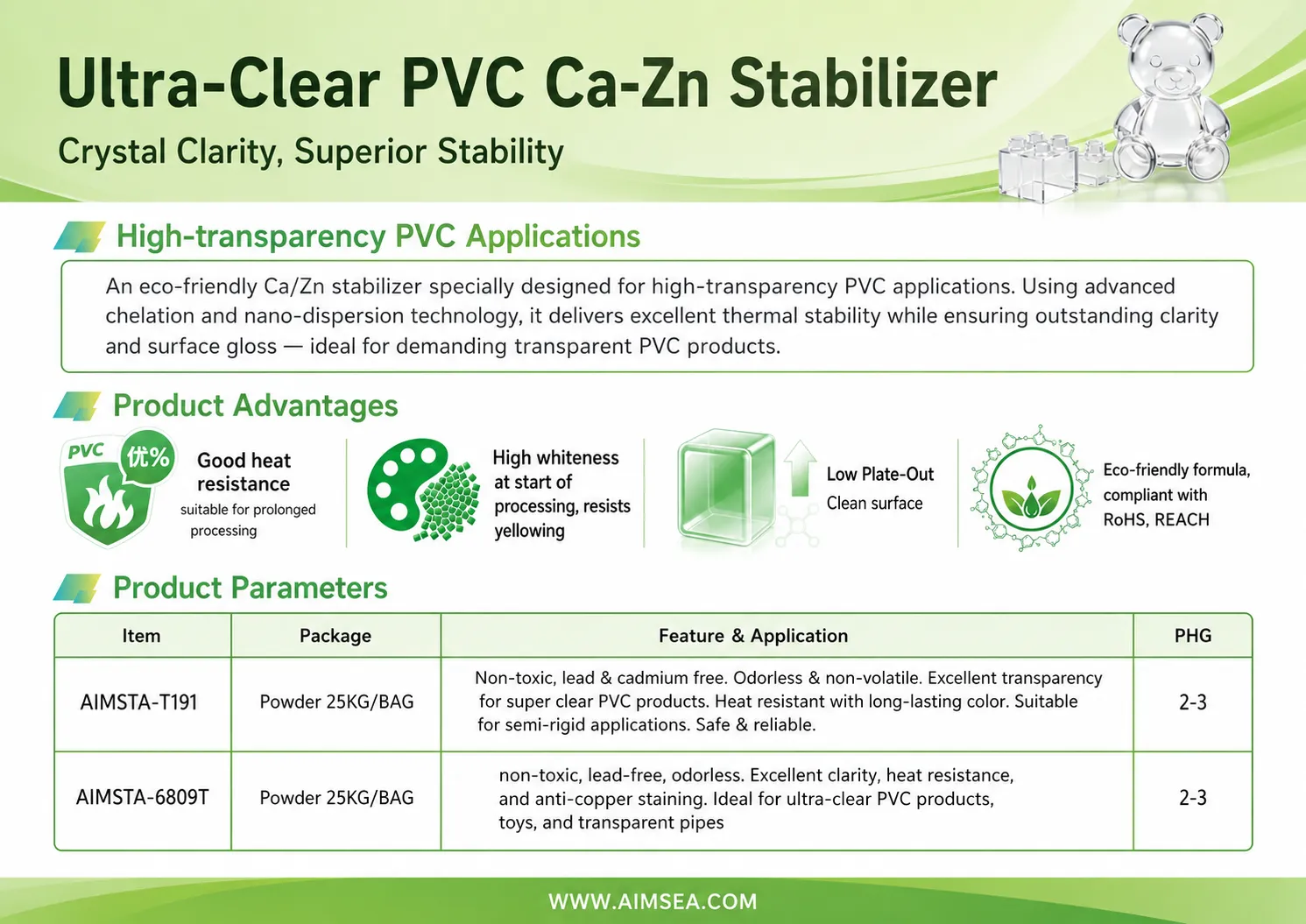
The answer is yes in selected clear rigid PVC formulations, but not automatically in every application.
There are three practical routes.
Full Organotin Replacement
A full replacement may be suitable when:
① Target transmittance and haze are achieved
② Initial color meets the product standard
③ Static and dynamic heat stability are sufficient
④ Fusion and torque remain within the acceptable range
⑤ Plate-out is controlled
⑥ Surface gloss remains stable
⑦ Production speed is commercially acceptable
⑧ The final formulation satisfies the required market documentation
⑨ Reduced odor or organotin-free material selection is a project priority
A specialized ultra-clear Ca-Zn stabilizer is normally required. A general-purpose calcium-zinc grade may not provide the same result.
Partial Organotin Replacement
Partial replacement may be considered when a manufacturer wants to reduce organotin usage while retaining part of the established processing performance of the existing system.
In this approach, an organotin-compatible Ca-Zn package is used together with the current organotin stabilizer.
Potential objectives include:
① Reducing organotin dosage
② Lowering formulation odor
③ Adjusting stabilizer cost
④ Maintaining optical clarity
⑤ Reducing the technical risk of a one-step full conversion
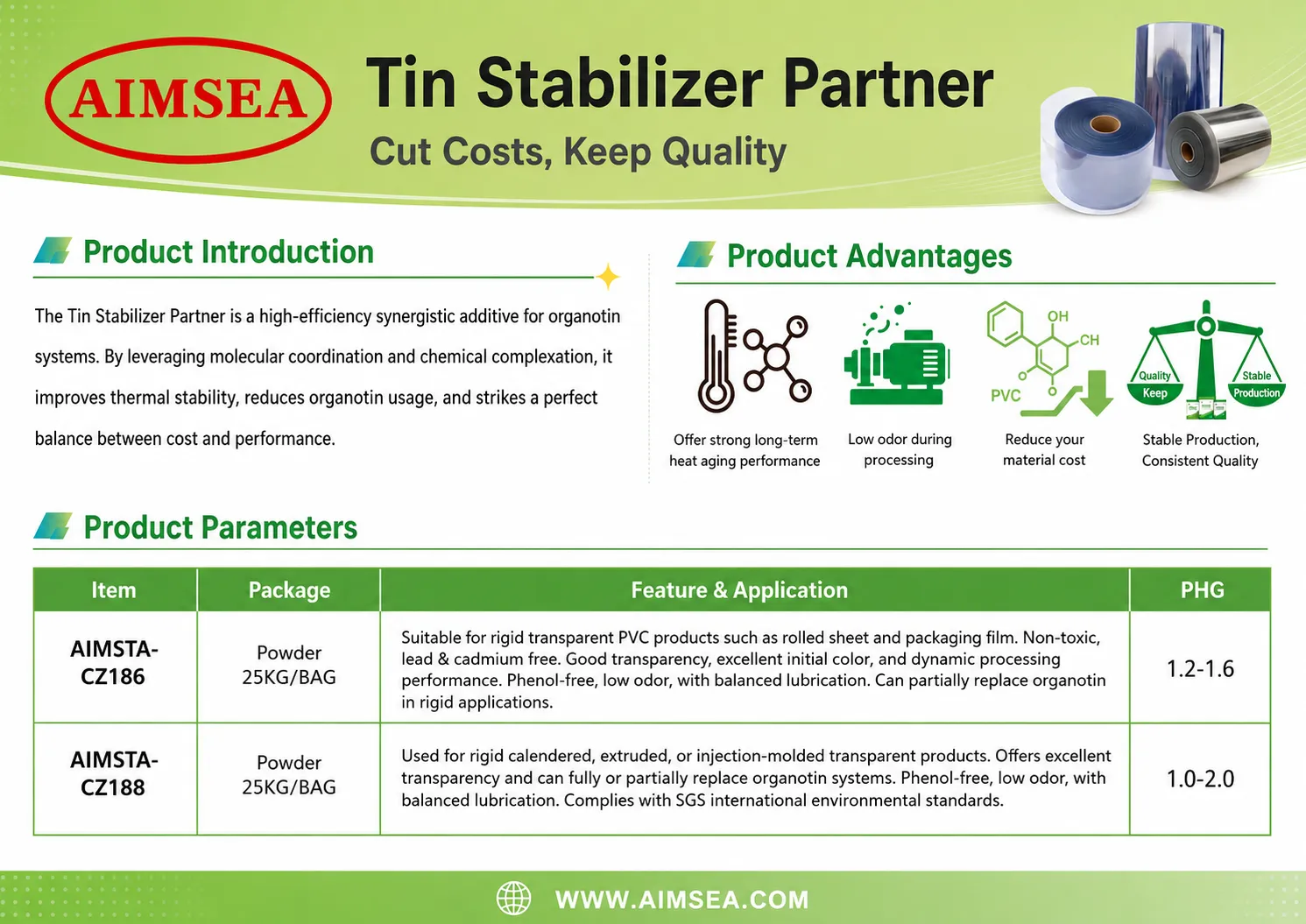
AIMSEA has tested this approach using its CZ-186 organotin companion system. In one internal formulation, part of the organotin dosage was replaced with CZ-186 while the remaining formulation was kept consistent.
This does not mean that one mixing ratio will work for every factory. The ratio must be validated for the specific organotin grade, Ca-Zn package, PVC resin, lubricant system and processing line.
Continuing With Organotin
Organotin may remain the preferred choice when:
① Optical tolerances are extremely narrow
② The product has a long or severe thermal history
③ The processing line requires a very wide operating window
④ The existing product qualification is tied to the current formulation
⑤ The manufacturer has not completed Ca-Zn formulation development
⑥ A failed transition would create a high production or certification risk
The goal of a stabilizer comparison is not to declare one chemistry universally superior. It is to identify the most suitable solution for a particular product and production line.
AIMSEA CZ-188 Comparative Test for Clear Rigid PVC
AIMSEA conducted a laboratory comparison between an organotin stabilizer and its CZ-188 ultra-clear calcium-zinc stabilizer.
The purpose of the test was to evaluate whether a specialized Ca-Zn system could approach the optical performance of organotin in the same clear rigid PVC base formulation.
Comparative Formulation
Material | Organotin Formulation | CZ-188 Formulation |
PVC | 100 phr | 100 phr |
PA-20 | 1.5 phr | 1.5 phr |
MBS | 6 phr | 6 phr |
Internal lubricant | 0.6 phr | 0.6 phr |
External lubricant | 0.4 phr | 0.4 phr |
Organotin stabilizer | 1.2 phr | — |
AIMSEA CZ-188 | — | 1.5 phr |
The stabilizer dosage was not identical because active composition and product design differ. Stabilizer systems should not be compared by dosage alone.
Test Conditions
The compounds were mixed on an open two-roll mill at 190 ± 1°C for three minutes.
For static heat aging, specimens measuring approximately 16 mm × 16 mm were placed in an aging oven at 190 ± 1°C. One specimen was removed every ten minutes, and the color sequence was observed for up to 100 minutes.
For optical evaluation, the milled material was pressed into sheets and tested for light transmittance and haze under consistent preparation and instrument conditions.
Transmittance and Haze Results
Stabilizer System | Light Transmittance | Haze |
Organotin stabilizer | 86.7% | 2.7% |
AIMSEA CZ-188 | 86.3% | 2.8% |
In this formulation and laboratory setup, the difference was:
0.4 percentage points in light transmittance
0.1 percentage points in haze
The results indicate that the specialized CZ-188 system approached the optical performance of the organotin reference in the tested formulation.
These figures should not be interpreted as universal values for all clear rigid PVC products. Sample thickness, resin grade, processing history, instrument conditions and other additives can significantly affect transparency and haze.
For independent reproduction or customer qualification, the final test report should also record sample thickness, instrument model, test standard, number of specimens and average deviation.
How to Run a Production-Line Replacement Trial?
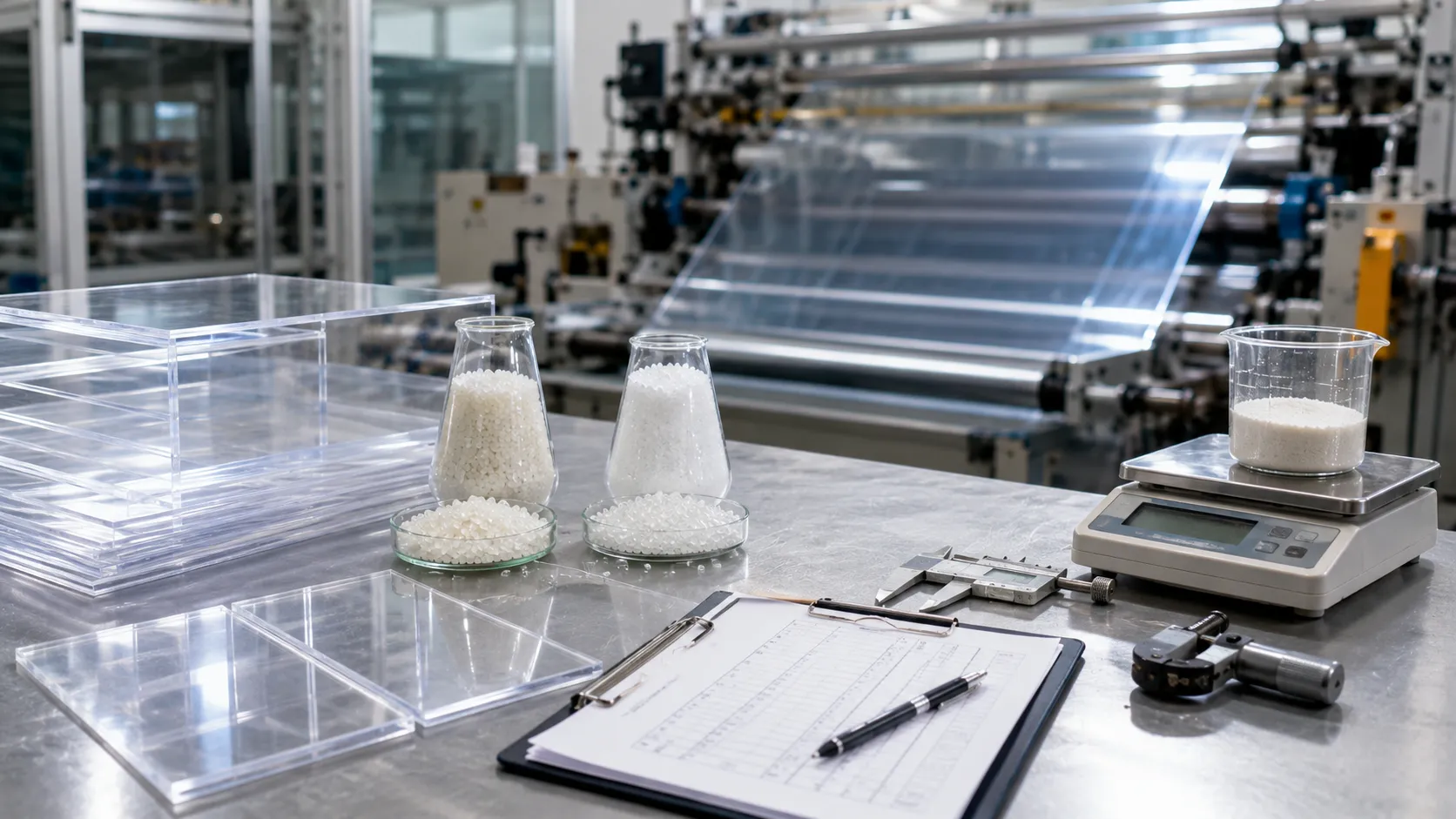
A laboratory comparison is the first step, not the final decision. A structured production trial reduces the risk of replacing organotin with a calcium zinc stabilizer.
1. Define the Required Performance
Before testing, set measurable targets for:
Light transmittance
Haze
Initial color
Yellowness index
Static heat stability
Dynamic processing stability
Surface gloss
Plate-out
Mechanical performance
Production speed
Without clear targets, it is difficult to determine whether a test is successful.
2. Record the Existing Formulation
Document the complete current formulation, including:
PVC resin grade
Organotin type and dosage
Impact modifier
Processing aid
Internal lubricant
External lubricant
Other additives
Recycled material content
The existing organotin formulation should be used as the control.
3. Keep the First Trial Controlled
In the first trial, avoid changing several raw materials at the same time. Replace the stabilizer and keep other variables as consistent as possible.
This allows the technical team to identify the real effect of the new clear PVC stabilizer.
4. Evaluate Fusion and Torque
Use a torque rheometer or production data to compare:
Fusion time
Maximum torque
Equilibrium torque
Melt temperature
Pressure
Decomposition behavior
A difference in fusion may indicate that the lubricant balance needs adjustment.
5. Adjust Lubrication Gradually
Modify internal and external lubricants in small controlled steps. Avoid making large changes before understanding the initial rheological behavior.
Monitor surface gloss, fusion, die pressure, metal release and plate-out after each adjustment.
6. Test Optical Performance
Prepare samples with the same thickness and surface condition. Measure:
Light transmittance
Haze
L*, a* and b* values
Yellowness index
Color after thermal aging
Visual comparison can support the evaluation but should not replace instrumental testing.
7. Check Long-Term Processing Behavior
Run the line long enough to evaluate:
Color drift
Black specks
Die deposits
Roll contamination
Restart behavior
Cleaning interval
Surface quality
Production stability
A short start-up sample cannot represent a complete production shift.
8. Confirm Finished-Product Performance
Depending on the application, test mechanical properties, dimensional stability, impact resistance, chemical resistance and any applicable migration or market-specific requirements.
9. Calculate Total Cost-in-Use
Compare the complete stabilizer system rather than only the stabilizer price. Include dosage, auxiliary additives, scrap, throughput, cleaning and downtime.
10. Approve the Final Formulation
Only approve full production after both laboratory and line results meet the agreed specification. Retain reference samples and production data for future batch comparison.
Final Selection Guide
Production Requirement | Recommended Direction |
Highest optical consistency with an established process | Organotin may remain the lower-risk choice |
Organotin-free formulation required | Test a specialized ultra-clear Ca-Zn stabilizer |
Lower odor is a major priority | Ultra-clear Ca-Zn is worth evaluating |
Manufacturer wants to reduce organotin gradually | Consider a validated partial-replacement system |
Existing line has a narrow and unstable process window | Optimize the complete formulation before full replacement |
Plate-out is the main production problem | Review stabilizer compatibility, lubricant quality and low-molecular-weight components |
Product must meet a specific market requirement | Verify the exact stabilizer grade and complete finished formulation |
Initial laboratory clarity is acceptable but long-run stability is unknown | Conduct an extended production-line trial |
Purchase price is the only apparent advantage | Calculate total processing cost before changing |
For most manufacturers, the best approach is not to select a stabilizer only from a product data sheet. It is to compare systems under the same PVC formulation, sample thickness, processing conditions and test methods.
Frequently Asked Questions
Can calcium-zinc stabilizer fully replace organotin in clear rigid PVC?
A specialized calcium-zinc stabilizer can fully replace organotin in selected clear rigid PVC formulations when the required transparency, haze, heat stability, processing window and surface quality are confirmed through testing. A general-purpose Ca-Zn stabilizer should not be assumed to provide the same result.
Which stabilizer provides better transparency in rigid PVC?
Organotin remains a common benchmark for clear rigid PVC. However, an optimized ultra-clear Ca-Zn stabilizer can approach organotin-level light transmittance and haze in suitable formulations.
Why does clear rigid PVC turn yellow during processing?
PVC releases HCl when exposed to heat and shear. This promotes the formation of conjugated polyene structures, which cause the material to change from its initial color to yellow, brown and eventually black.
Does Ca-Zn stabilizer require a different lubricant system?
Often, yes. A change from organotin to calcium-zinc can affect fusion, torque, metal release and melt flow. The internal and external lubricant balance should be checked instead of assuming the original system will remain optimal.
How should haze and light transmittance be tested?
Use specimens with the same thickness, surface condition, preparation method and processing history. Both transmittance and haze should be measured under the same instrument conditions.
Can calcium-zinc and organotin stabilizers be used together?
They can be used together in a partial-replacement strategy when the products are compatible. The ratio must be validated for the specific stabilizer grades, formulation and production process.
Is calcium-zinc stabilizer automatically suitable for food-contact PVC?
No. Food-contact suitability must be confirmed for the specific stabilizer grade, dosage, complete PVC formulation, finished article and destination market.
What should be tested before switching from organotin to Ca-Zn?
The trial should evaluate initial color, light transmittance, haze, static and dynamic heat stability, fusion, torque, lubrication, plate-out, surface gloss, mechanical properties, production speed and total processing cost.
Conclusion
In the comparison of calcium-zinc vs organotin stabilizer for clear rigid PVC, organotin remains a mature benchmark for clarity, initial color and processing stability. It may still be the preferred solution for products with extremely narrow optical tolerances or a demanding thermal history.
At the same time, modern ultra-clear Ca-Zn stabilizer systems have expanded the available options for transparent rigid PVC manufacturers. In a properly optimized formulation, a specialized calcium-zinc system can approach organotin-level transmittance and haze while supporting lower odor, organotin reduction or organotin-free material strategies.
Partial replacement provides a third route for manufacturers that want to reduce organotin use without immediately rebuilding the entire formulation.
The final decision should be based on measurable optical data, heat-aging results, rheological behavior, long-run plate-out performance and total production cost.
AIMSEA develops calcium-zinc stabilizer solutions for clear rigid PVC sheet, transparent tubing, packaging and other PVC applications. Provide your current stabilizer type, formulation, processing temperature, product thickness and target transmittance or haze. Our technical team can evaluate whether full replacement, partial replacement or continued organotin use is the most practical route for your production line.
CTA: Submit Your PVC Formulation for Stabilizer Evaluation