
Transparent PVC Products: How to Choose the Right Ca-Zn Stabilizer by Application
Read:279
Source:
Abstract
Transparent PVC products are not one single category. A clear PVC sheet, rigid transparent PVC sheet, PVC shrink film, white film, clear PVC tube, transparent toy and clear packaging product may all look “transparent,” but each one places different demands on the stabilizer system.
For overseas buyers, the right question is not simply “Which Ca-Zn stabilizer is best?” The better question is: Which Ca-Zn stabilizer matches my product type, processing method, clarity target, odor requirement, plate-out risk, thermal stability demand and compliance market?
This guide explains how to choose a pvc heat stabilizer for transparent products by application. It also shows how AIMSEA supports transparent PVC manufacturers with ultra-clear Ca-Zn stabilizer solutions, low-haze testing, yellowing control, low-odor formulation direction and sample-based technical evaluation.
Transparent PVC Products Need Application-Based Stabilizer Selection
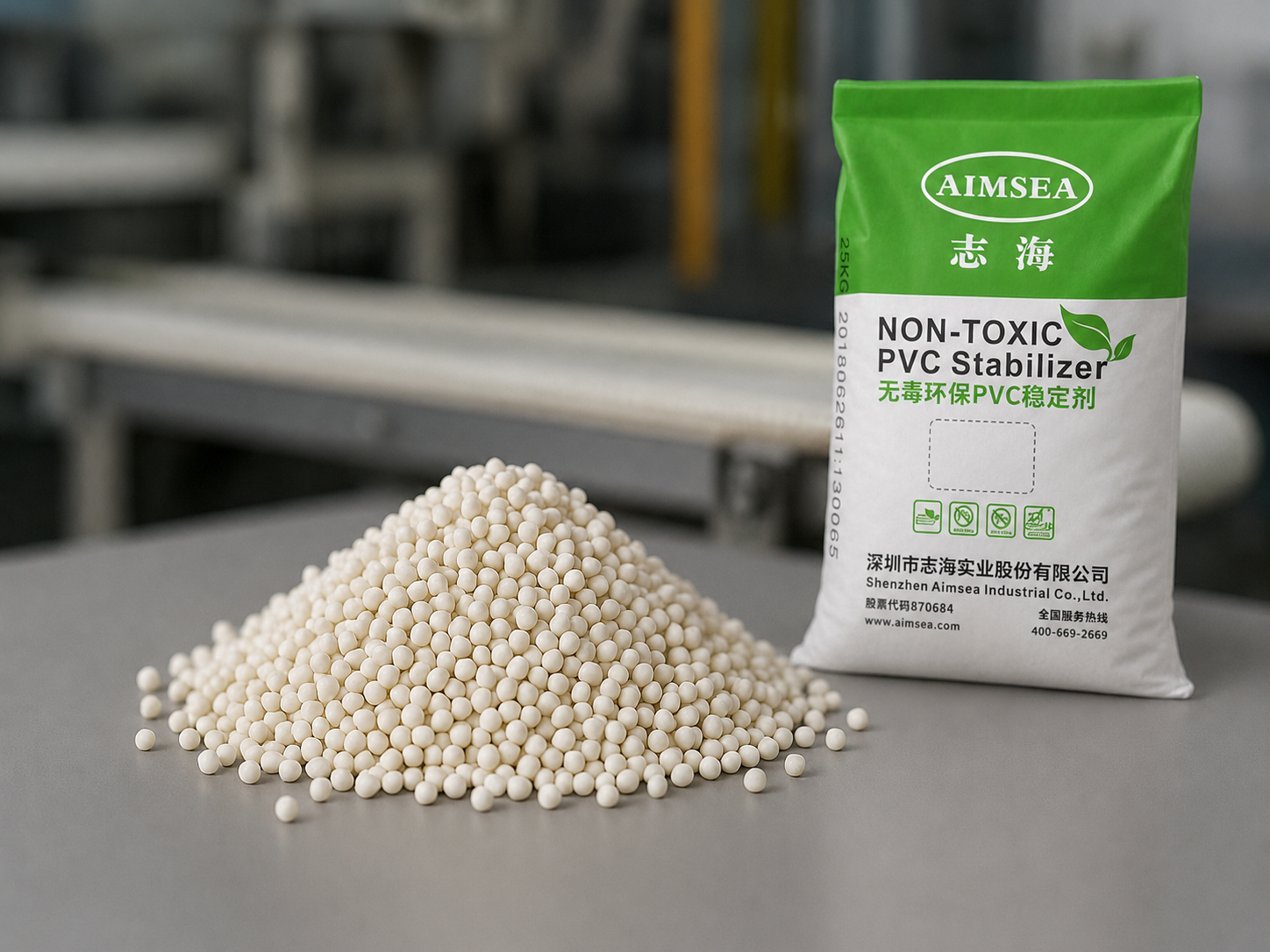
Transparent PVC products are difficult because every defect is visible. In opaque PVC, a small color shift, slight plate-out or minor dispersion issue may be hidden by pigment or filler. In transparent PVC, the same issue can become haze, yellow tone, fogging, surface marks or inconsistent gloss.
AIMSEA’s official PVC stabilizer page identifies transparent PVC products as a dedicated application group, including clear PVC sheet, rigid sheet, shrink film, transparent film, white film, hose and packaging, with performance targets such as high clarity, low haze, yellowing control, low odor and stable Ca-Zn processing.
That is why stabilizer selection should start from the finished product, not from the stabilizer name.
Quick Answer
The right Ca-Zn stabilizer for transparent PVC depends on the product type, processing method and quality target. Clear sheet requires optical clarity and heat aging resistance. Film and shrink film require low haze, clean rollers and low plate-out. Transparent tubing, toys and packaging require low odor, good transparency and compliance support.
Why One Transparent Stabilizer Cannot Fit All Products?
A clear PVC tube, a calendered white film and a rigid transparent sheet may all need clarity, but their processing stresses are different. Tubing is extrusion-sensitive. Film is roller- and plate-out-sensitive. Rigid sheet is heat-aging- and impact-balance-sensitive. Toys and packaging add odor and regulatory concerns.
For this reason, a pvc heat stabilizer for transparent products should be selected by application rather than treated as a universal transparent-grade additive.
PVC Heat Stabilizer for Transparent Products: Start with Processing Method
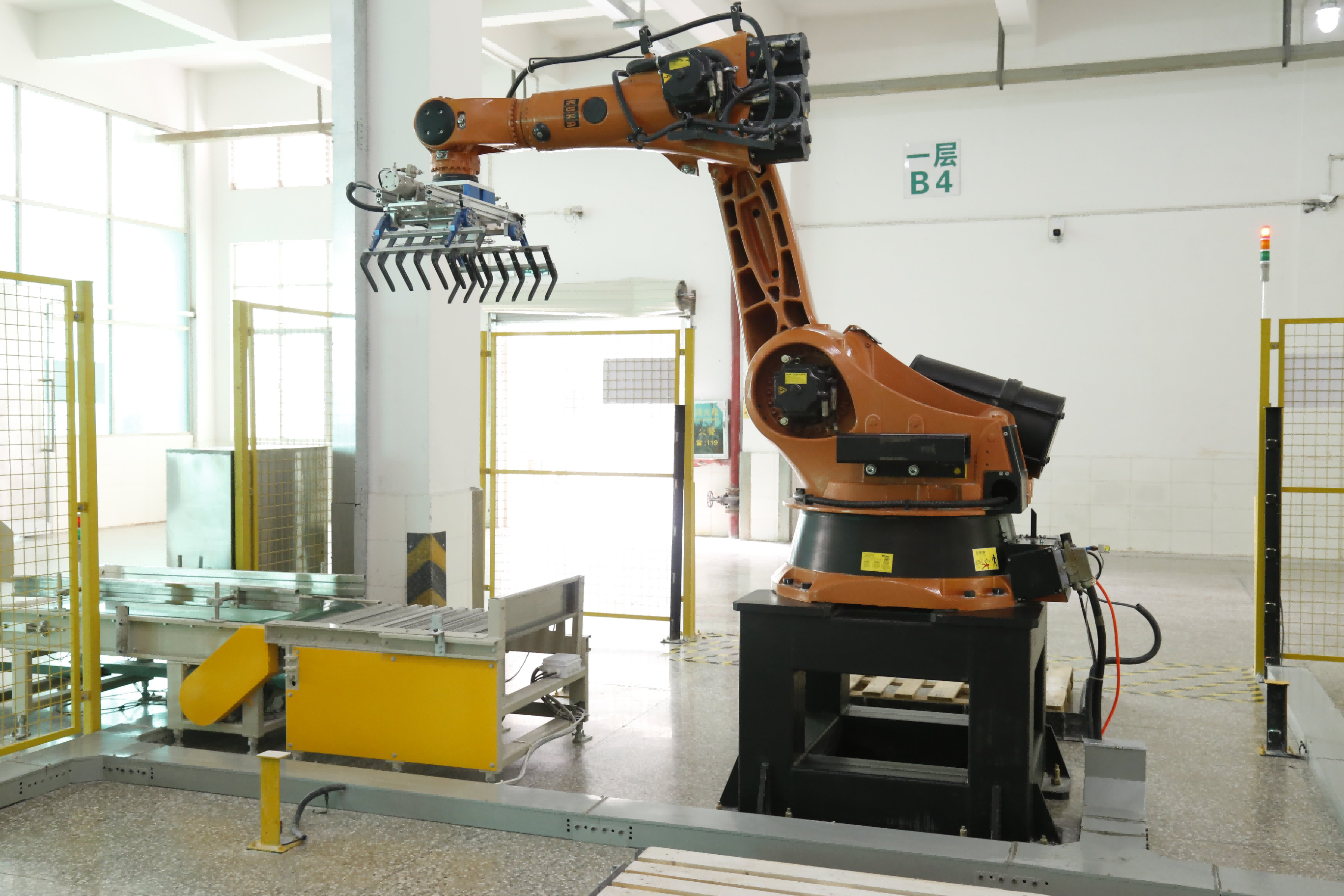
Processing method determines the stabilizer balance. The same resin and stabilizer may behave differently in extrusion, calendering, injection molding or film production.
Processing Method | Common Transparent PVC Products | Stabilizer Selection Focus |
Extrusion | Clear PVC tube, transparent hose, rigid sheet | Heat stability, smooth flow, low odor, low plate-out |
Calendering | Transparent PVC film, white film, shrink film, flexible sheet | Roll cleanliness, haze control, initial color, lubrication balance |
Injection molding | Transparent toys, clear fittings, protective items | Initial color, mold release, odor, low fogging |
Sheet pressing / forming | Rigid transparent PVC sheet, packaging sheet | Clarity, yellowing control, thermal stability, surface gloss |
Medical-related extrusion | Transparent tubing, soft PVC components | Low extraction tendency, clean color, odor control, stable processing |
AIMSEA’s internal medical PVC stabilizer material separates extrusion-grade transparent PVC stabilizer and injection-grade transparent PVC stabilizer. It describes AIMSTA-6111 for transparent extrusion products such as infusion tubes and medical tubes, and AIMSTA-6122 for transparent injection products such as protective eyewear, oxygen masks and syringe-related items. The same material emphasizes long-term thermal stability, transparency, low precipitation and low ash requirements for medical-related transparent PVC.
This reflects a key principle: transparent PVC stabilizer design should follow processing reality.
Clear PVC Sheet and Rigid Transparent PVC Sheet: Focus on Clarity and Heat Aging
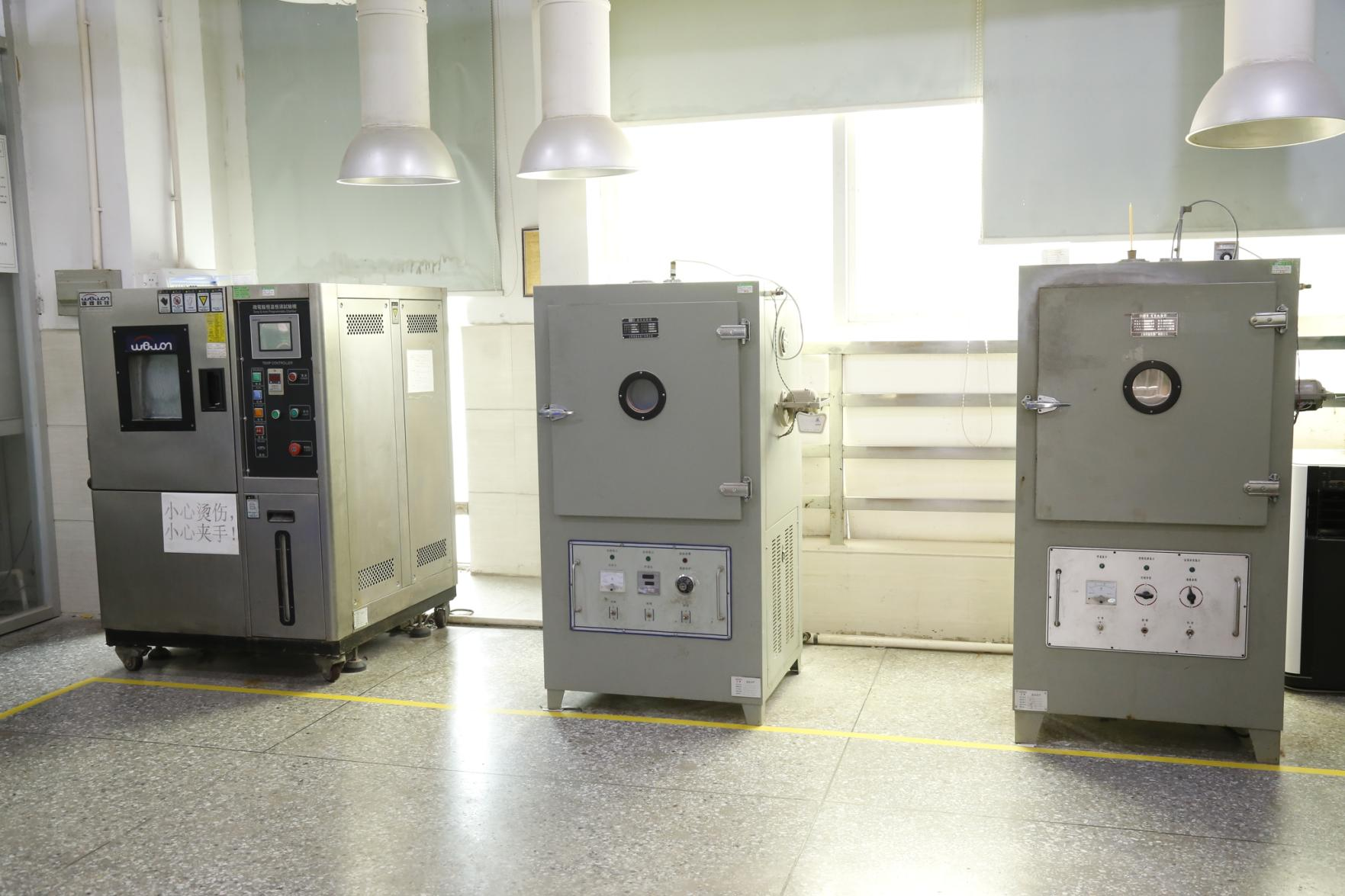
For clear PVC sheet and rigid transparent PVC sheet, buyers usually care about transparency, haze, yellowing after heating, surface gloss and mechanical stability. These products are often used in packaging, protective panels, display materials, rigid clear applications and formed components.
The stabilizer must support both optical quality and heat resistance. If the heat stabilizer is too weak, the sheet may turn yellow during processing or aging. If additive compatibility is poor, haze increases. If lubrication is not balanced, sheet surface quality and roller cleanliness may suffer.
What to Prioritize for Clear PVC Sheet?
Requirement | Why It Matters |
High light transmittance | Maintains clear, premium appearance |
Low haze | Prevents cloudy or milky visual defects |
Good initial color | Avoids yellow tone at the start of processing |
Long-term thermal stability | Supports continuous production and later heat exposure |
Low plate-out | Keeps rollers, dies and surfaces cleaner |
Stable surface gloss | Improves visual quality and buyer acceptance |
AIMSEA’s internal CZ-188 rigid transparent Ca-Zn stabilizer material positions CZ-188 as an organotin-free, low-odor, non-toxic stabilizer with good initial whiteness, long-term thermal stability, low precipitation/fogging tendency and good transparency for high-clear rigid PVC products. In the reported comparison, organotin showed 86.7% transmittance and 2.7% haze, while CZ-188 showed 86.3% transmittance and 2.8% haze under the tested conditions.
The practical message for buyers is simple: rigid transparent PVC should be tested by both transmittance and haze, not only by visual inspection.
Transparent PVC Film, White Film and PVC Shrink Film: Focus on Roll Cleanliness
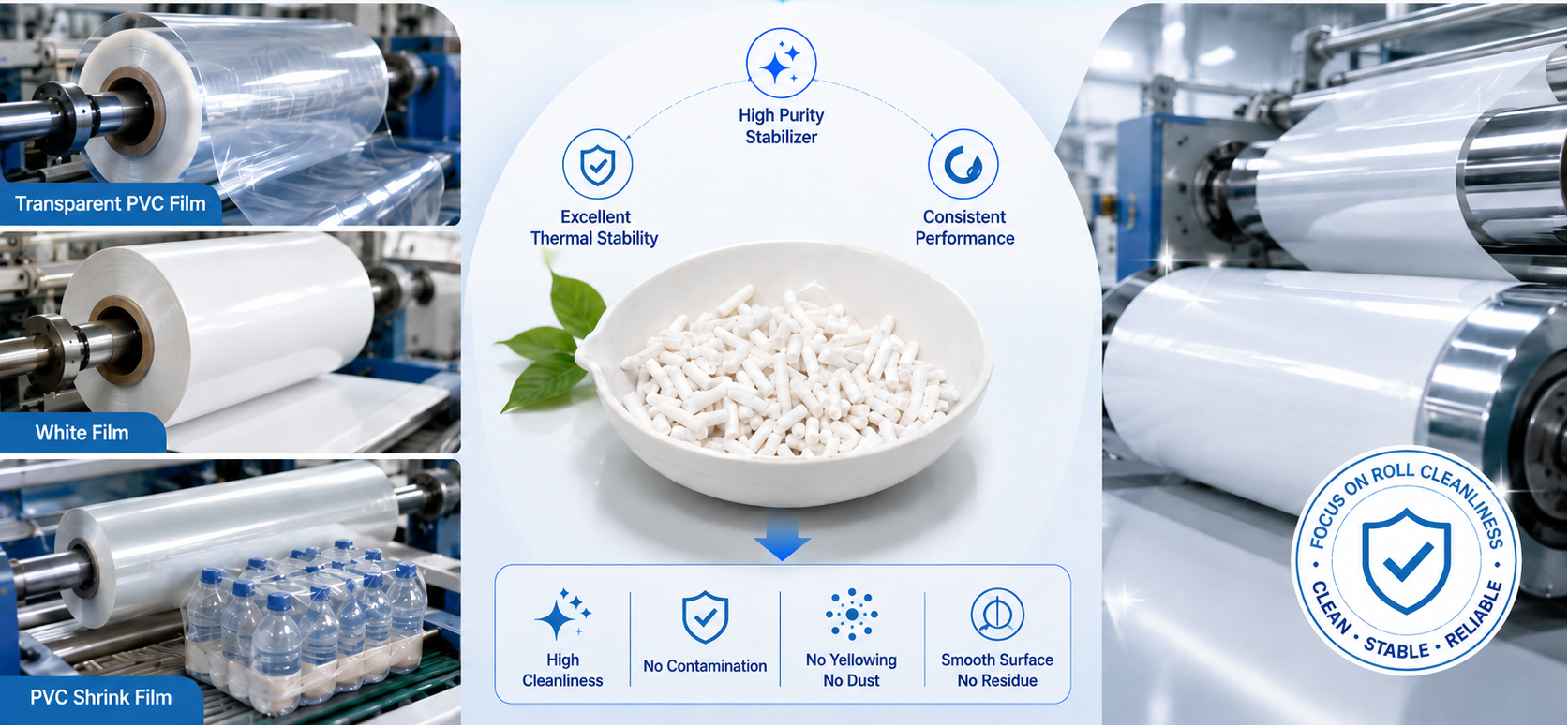
Transparent PVC film, white film and PVC shrink film are especially sensitive to plate-out and processing stability. Because film is thin, even small haze, yellowing or surface contamination can affect appearance.
In calendering, the stabilizer must work with lubricants and processing additives to keep the rollers clean. If low-molecular materials migrate, operators may see roller deposits, fogging, surface marks or uneven gloss.
Selection Priorities for Film Applications
Product | Main Buyer Concern | Ca-Zn Stabilizer Direction |
Transparent PVC film | Haze, clarity, roll cleanliness | Low-haze Ca-Zn system with balanced lubrication |
White film | Initial whiteness, color consistency | Strong initial color control and clean processing |
PVC shrink film | Heat stability, clarity, shrink behavior | Transparent-grade stabilizer with thermal and processing balance |
Flexible clear film | Odor, migration, low fogging | Low-odor, low-precipitation stabilizer direction |
Calendered sheet | Surface gloss, plate-out, continuous run | Ca-Zn system designed for roller cleanliness |
For film manufacturers, the best stabilizer is not always the one with the longest static aging time. It is the one that keeps the line clean, the film transparent and the color stable during actual continuous production.
Clear PVC Tube, Transparent Toys and Clear Packaging: Focus on Odor and Compliance
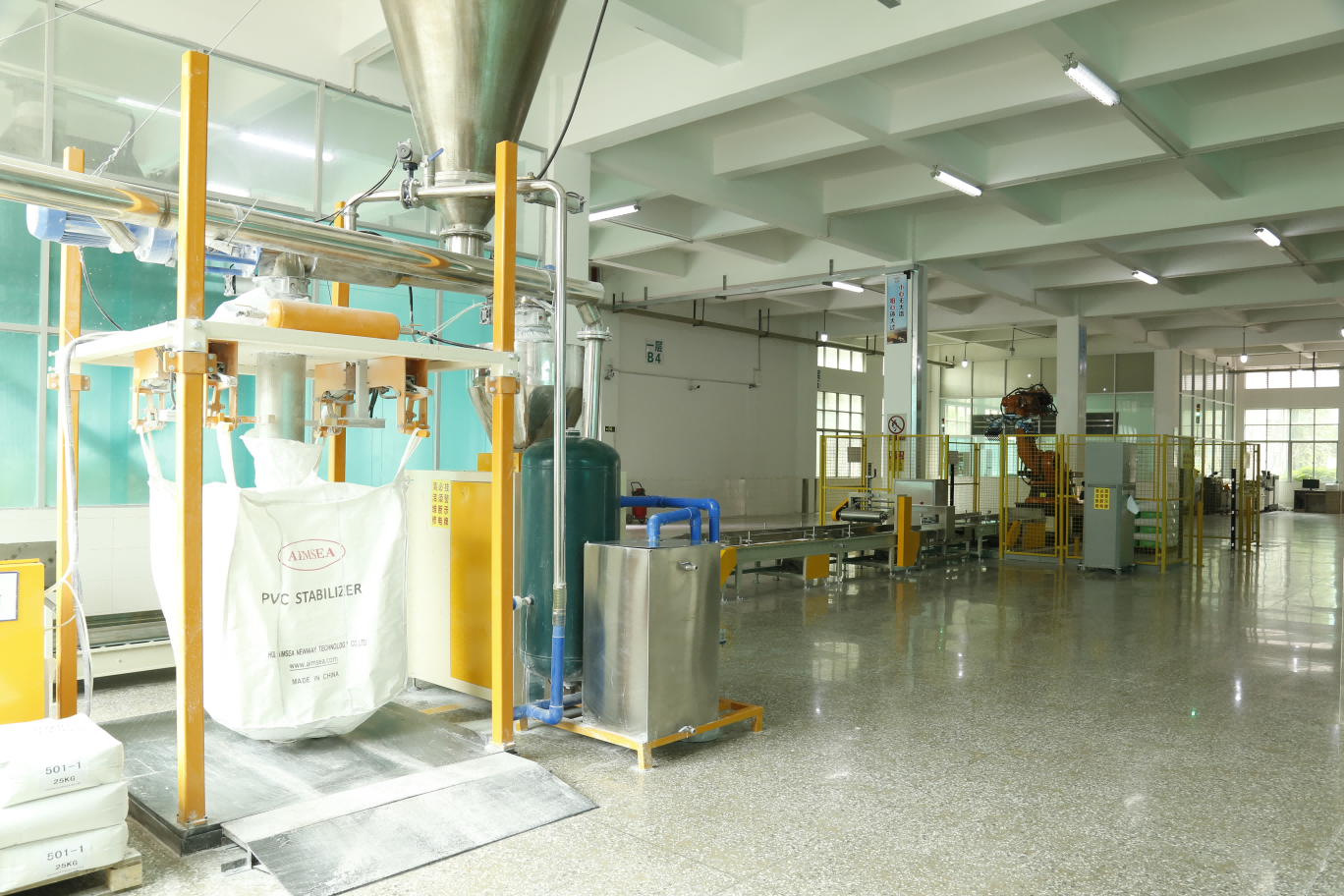
For clear PVC tube, transparent toys and clear packaging, overseas buyers often care about more than appearance. Odor, safety positioning, regulatory documents and customer acceptance become important.
Transparent toys and packaging are consumer-facing. Clear tubing and medical-related PVC may require stricter extraction, odor and material cleanliness expectations. A low-odor Ca-Zn system is more suitable for these applications than a general-purpose stabilizer that only passes basic heat stability.
Application Priorities for Daily-Use Transparent PVC
Application | Key Concern | Stabilizer Selection Logic |
Clear PVC tube | Transparency, low odor, smooth extrusion | Choose extrusion-grade transparent Ca-Zn stabilizer |
Transparent toys | Odor, color stability, non-toxic direction | Choose low-odor, lead-free Ca-Zn system with compliance support |
Clear packaging | Haze, visual cleanliness, odor | Choose low-haze stabilizer with low volatile tendency |
Medical-related transparent PVC | Clean processing, low precipitation, optical quality | Choose tested medical-related transparent stabilizer system |
Daily-use clear PVC | Appearance and user experience | Prioritize odor control, low fogging and color consistency |
For regulated markets, lead-free direction is becoming more important. TÜV Rheinland’s summary of the EU REACH lead restriction states that lead shall not be placed on the market or used in PVC articles at concentrations above 0.1% by weight of the PVC material, effective November 29, 2024, with certain derogations.
This compliance trend strengthens the commercial logic of Ca-Zn stabilizers for transparent PVC products, especially for exporters.
Ca-Zn Stabilizer Selection Matrix for Transparent PVC Applications
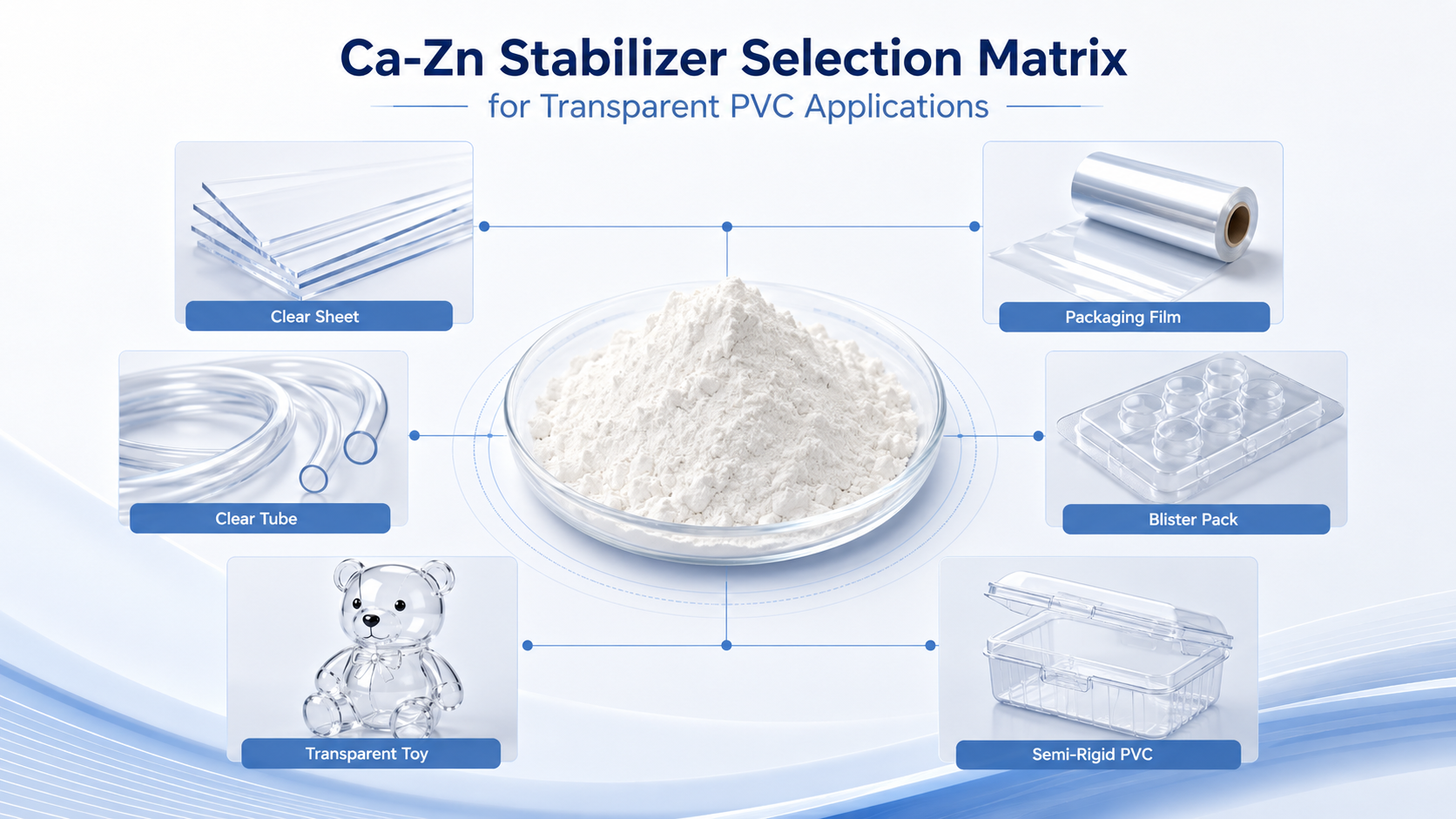
A clear selection matrix helps buyers avoid using one stabilizer grade across all transparent products.
Transparent PVC Product | Processing Method | Main Risk | Suggested Stabilizer Focus | Key Tests |
Clear PVC sheet | Extrusion / pressing | Yellowing, haze | Ultra-clear Ca-Zn stabilizer with strong heat stability | Haze, transmittance, oven aging |
Rigid transparent PVC sheet | Extrusion / calendering | Poor clarity, brittle balance | Rigid transparent Ca-Zn with optical and mechanical balance | Haze, tensile, aging, impact |
Transparent PVC film | Calendering | Roll deposits, cloudy film | Low-haze stabilizer with low plate-out tendency | Roll observation, haze, color |
White film | Calendering | Yellow tone, unstable whiteness | Strong initial color control | Color Lab, heat aging |
PVC shrink film | Film production | Heat distortion, haze | Stable transparent-grade Ca-Zn system | Shrink behavior, haze, aging |
Clear PVC tube | Extrusion | Odor, surface marks | Low-odor extrusion-grade transparent stabilizer | Odor, surface, extrusion trial |
Transparent toys | Injection / extrusion | Odor, compliance, color | Lead-free low-odor Ca-Zn stabilizer | Odor, heavy metal documents, color |
Clear packaging | Sheet / film | Haze, odor, visual defects | Low-haze, low-fogging stabilizer | Haze, transmittance, odor |
Medical-related clear PVC | Extrusion / injection | Low precipitation, cleanliness | Medical-related transparent stabilizer | Haze, extraction direction, aging |
This matrix is useful for overseas buyers because it converts “transparent PVC” into real purchasing categories. It also helps sales and technical teams communicate more accurately.
How AIMSEA Tests Transparent PVC Stabilizer Performance?
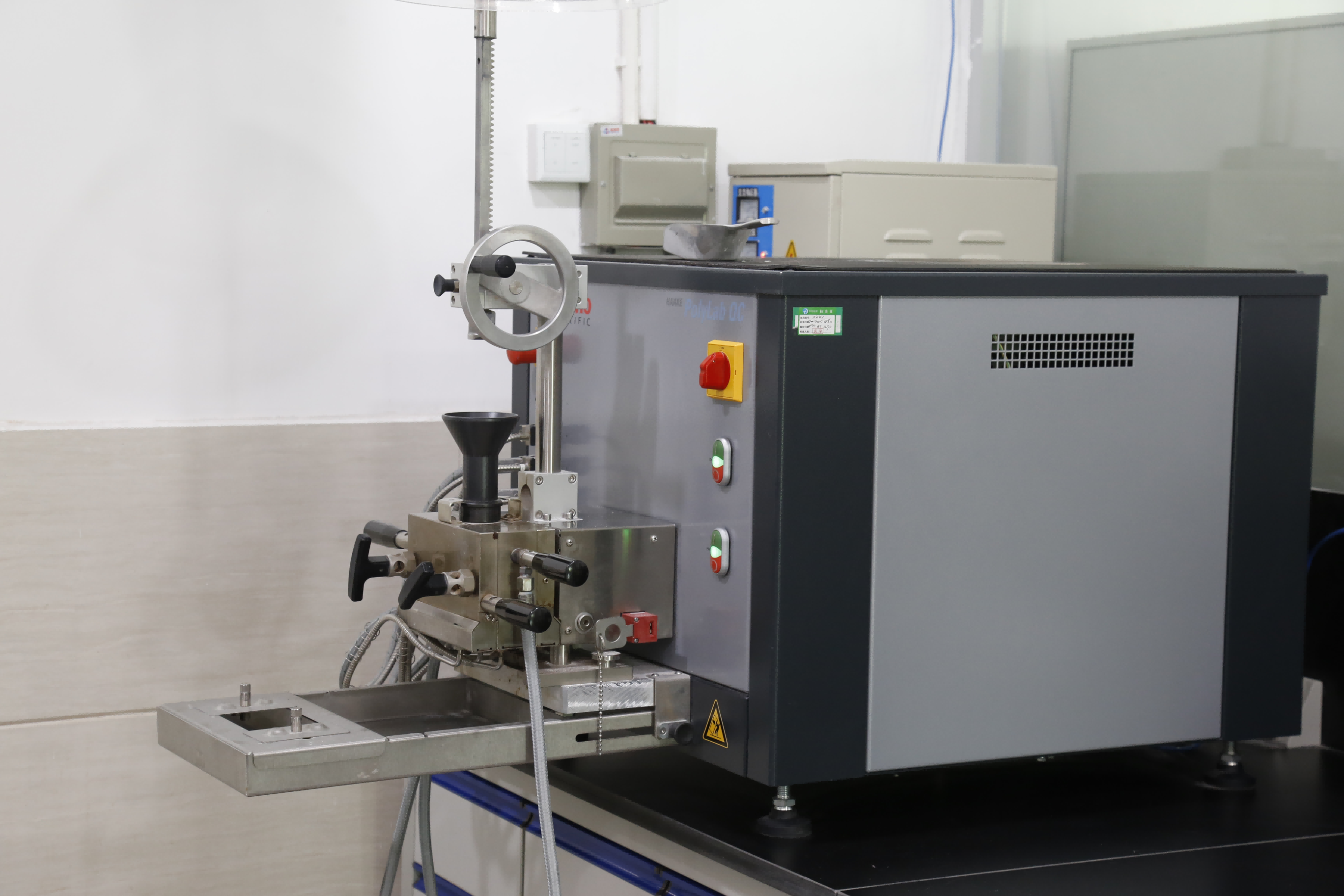
Transparent PVC stabilizer selection should be confirmed through sample testing. A stabilizer that looks acceptable in a short lab sample may still fail during longer production.
AIMSEA’s official PVC stabilizer page states that it provides lead-free calcium-zinc stabilizers and customized heat stabilizer solutions for transparent PVC products, with high clarity, low haze, yellowing control, low-odor processing and high thermal stability as key performance directions. AIMSEA’s homepage also highlights rapid custom formulations from in-house R&D and 50+ advanced testing facilities.
Recommended Test Items for Transparent PVC
Test Item | What It Shows |
Haze | Whether the product looks cloudy or clear |
Light transmittance | How much light passes through the sample |
Static heat aging | Resistance to yellowing under heat |
Dynamic processing test | Performance under heat and shear |
Plate-out observation | Whether additives migrate to rollers or dies |
Color Lab / yellowness index | Measurable color change, not just visual judgment |
Odor evaluation | Suitability for toys, packaging and daily-use products |
Production trial | Real-line stability and processing window |
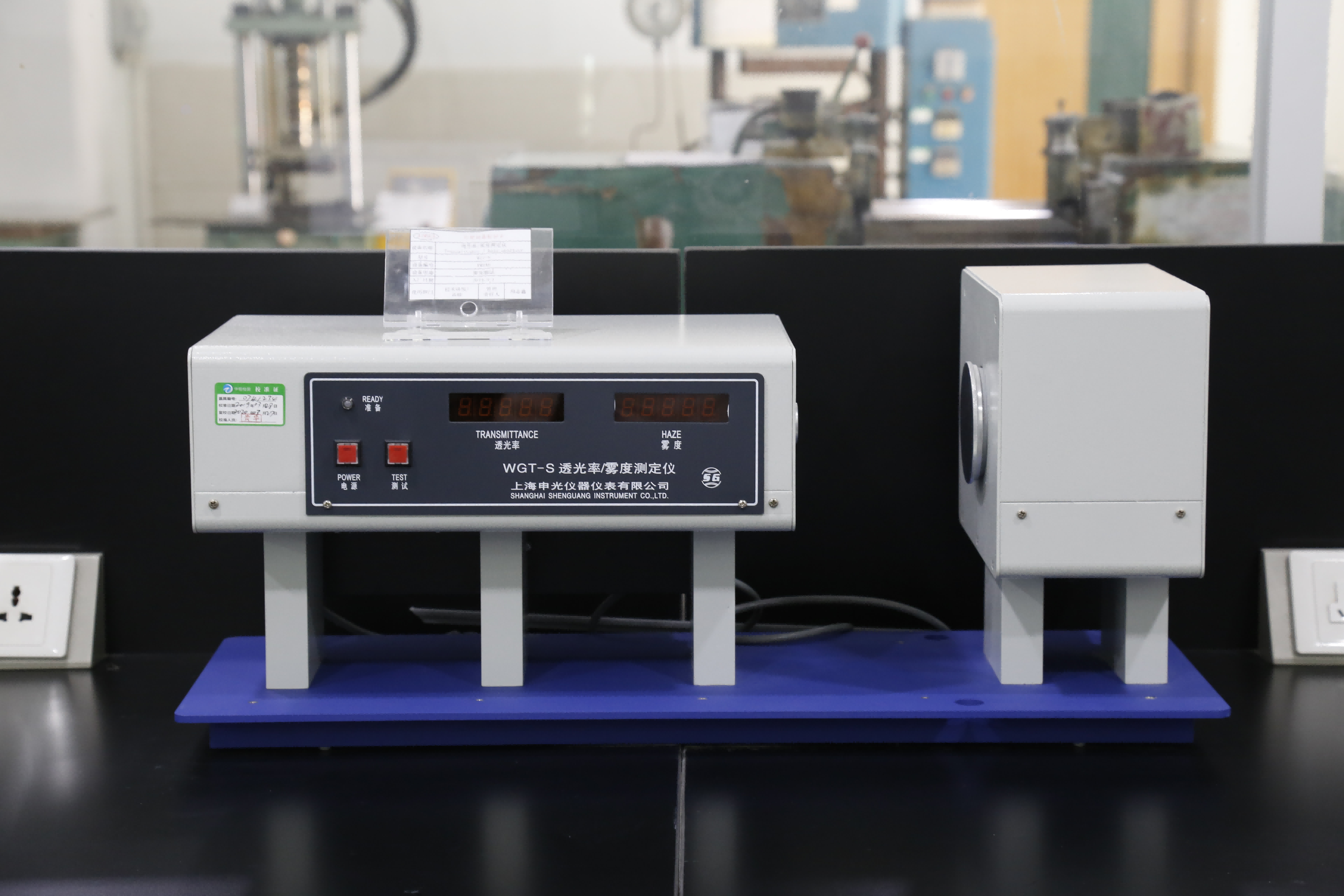
Intertek explains that haze is the scattering of light through transparent material and that luminous transmittance measures the amount of light passing through a sample; such measurements are useful in product development, process development and end-use performance testing.
For a serious transparent PVC project, these optical tests should be included before bulk purchase.
How to Request the Right Transparent PVC Stabilizer Sample?
A sample request should not simply say “send transparent stabilizer.” That usually leads to a general recommendation. The better approach is to describe the product, formula and issue clearly.
Information Buyers Should Provide
1.Product type: clear sheet, rigid sheet, film, shrink film, tube, toy, packaging or white film
2.Processing method: extrusion, calendering, injection molding or pressing
3.Rigid or flexible PVC system
4.Resin grade and K value
5.Plasticizer type and dosage if used
6.Current stabilizer type
7.Current lubricant system
8.Current problem: haze, yellowing, odor, plate-out, fogging or poor initial color
9.Required compliance direction
10.Current processing temperature
11.Target clarity, haze or color requirement
12.Whether sample testing is for lab trial or production trial
Practical Selection Workflow
Step | Action | Purpose |
1 | Define transparent PVC product type | Avoid wrong stabilizer grade |
2 | Confirm processing method | Match heat and shear conditions |
3 | Identify top failure risk | Focus on haze, yellowing, odor or plate-out |
4 | Run lab sample test | Screen optical and heat performance |
5 | Run production trial | Confirm real-line stability |
6 | Review compliance documents | Support export and buyer approval |
7 | Finalize stabilizer grade | Reduce risk before bulk order |
This is how a pvc heat stabilizer for transparent products becomes a technical solution rather than a commodity additive.
FAQs About Transparent PVC Products and Ca-Zn Stabilizers
What is the best Ca-Zn stabilizer for transparent PVC products?
There is no universal best grade. The best choice depends on the product type, processing method, clarity target, odor requirement, plate-out risk and compliance market. Clear sheet, film, tubing and toys often need different stabilizer balances.
Which stabilizer is suitable for clear PVC sheet?
Clear PVC sheet usually needs an ultra-clear Ca-Zn stabilizer with high light transmittance, low haze, good initial color and long-term heat stability. Haze, transmittance and heat aging tests are essential.
What should manufacturers consider for transparent PVC film?
Transparent PVC film requires low haze, stable color and clean calendering behavior. Low plate-out is especially important because roller deposits can affect film surface quality.
Is Ca-Zn stabilizer suitable for PVC shrink film?
Yes, if the stabilizer is designed for transparent film applications. The selected grade should support clarity, thermal stability, processing consistency and shrink-performance requirements.
What stabilizer should be used for clear PVC tube?
Clear PVC tube should use an extrusion-grade transparent stabilizer with smooth processing, low odor, low haze and good thermal stability. Medical-related tubing requires stricter evaluation.
Why does transparent PVC become hazy?
Haze may come from poor additive compatibility, weak dispersion, excessive plate-out, surface texture, moisture, volatile components or inappropriate stabilizer-lubricant balance.
How can buyers reduce trial risk before bulk order?
Buyers should provide their product type, formulation, processing method and target performance, then test sample stabilizers for haze, transmittance, heat aging, odor, plate-out and real-line processing stability.
Conclusion
Transparent PVC products should not be treated as one single stabilizer category. A clear PVC sheet, rigid transparent PVC sheet, transparent PVC film, PVC shrink film, clear PVC tube, transparent toy, clear packaging product and white film all have different production risks.
For overseas buyers, the right Ca-Zn stabilizer should be selected by application. Sheet products need clarity and heat aging resistance. Film products need low haze and clean rollers. Tubing requires smooth extrusion and low odor. Toys and packaging require visual quality plus safer formulation direction. Medical-related transparent PVC needs even more careful testing.
AIMSEA’s strength in transparent PVC is not only offering an ultra-clear Ca-Zn stabilizer. It is the ability to connect transparent PVC applications with sample testing, optical evaluation, low-odor formulation direction, low plate-out control and lead-free processing support.
For manufacturers seeking a pvc heat stabilizer for transparent products, the most reliable path is simple: define the product, identify the real production risk, test the sample under actual conditions, and choose the stabilizer that delivers stable clarity—not just a good first impression.
References
1.AIMSEA PVC Stabilizer Manufacturer page: transparent PVC product applications, high clarity, low haze, yellowing control, low-odor processing and customized Ca-Zn solutions.
2.AIMSEA homepage: Ultra-Clear Ca-Zn Stabilizer positioning, in-house R&D, 50+ advanced testing equipment and global service support.
3.AIMSEA internal CZ-188 rigid transparent Ca-Zn stabilizer material: organotin-free positioning, low odor, transparency, haze and transmittance comparison data.
4.AIMSEA internal medical PVC stabilizer material: transparent extrusion and injection stabilizer application notes, including tubing, protective eyewear, oxygen mask and syringe-related products.
5.Intertek ASTM D1003 summary: haze and luminous transmittance testing principles for transparent plastics.
6.TÜV Rheinland: EU REACH lead restriction in PVC articles, 0.1% concentration limit effective November 29, 2024.