
Ultra-Clear Ca-Zn Stabilizer for Transparent PVC: AIMSEA Solutions for High-Transparency Applications
Read:340
Source:
Abstract
Transparent PVC products need more than basic heat stability. They need clarity, low haze, clean initial color, stable processing, low plate-out, low odor and safer formulation support. For manufacturers of clear sheet, rigid sheet, transparent film, white film, shrink film, clear tubing, toys and transparent packaging, the stabilizer system directly affects whether the product looks premium or cloudy, clean or yellow, stable or inconsistent.
AIMSEA’s ultra-clear Ca-Zn stabilizer solutions are designed for high-transparency PVC applications where visual quality and production reliability must work together. This guide explains what an ultra-clear calcium-zinc stabilizer does, why transparent PVC is difficult to stabilize, how it compares with traditional organotin systems, and how manufacturers can use sample testing to select a suitable PVC heat stabilizer for transparent products.
What Is an Ultra-Clear Ca-Zn Stabilizer for Transparent PVC?
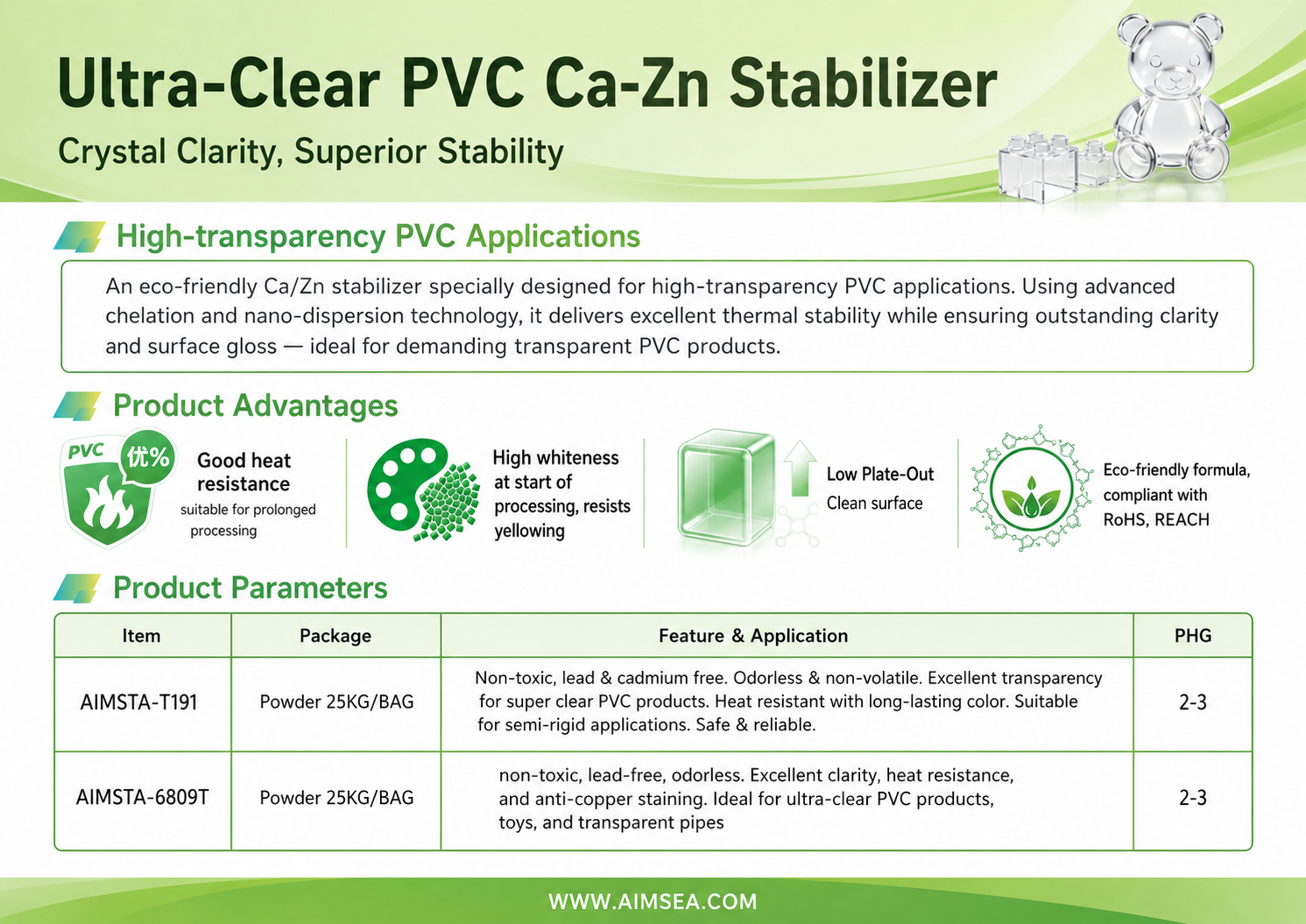
An ultra-clear Ca-Zn stabilizer is a calcium-zinc based heat stabilizer system designed for transparent PVC products. Its role is to protect PVC during heating and processing while keeping the finished product clear, bright and visually clean.
In ordinary PVC products, a stabilizer is often judged by thermal stability, output stability and basic color control. In transparent PVC, the requirement is higher. The stabilizer must perform without introducing haze, cloudiness, odor, plate-out or visible color drift.
AIMSEA positions ultra-clear Ca-Zn stabilizer as an eco-friendly calcium-zinc solution for demanding transparent PVC products, with focus on thermal stability, clarity and surface gloss.
Quick Answer
An ultra-clear Ca-Zn stabilizer helps transparent PVC resist heat degradation, yellowing and haze while supporting clear appearance, stable processing, low odor and lead-free formulation direction.
Why Calcium-Zinc Matters?
Calcium-zinc stabilizers are increasingly used as manufacturers move toward lead-free and lower-odor PVC systems. For transparent products, Ca-Zn stabilizer development is more demanding because the additive package must stay compatible with PVC and avoid light scattering.
A transparent PVC stabilizer should not only prevent degradation. It should also protect optical quality.
Why Transparent PVC Stabilizer Selection Is Different?
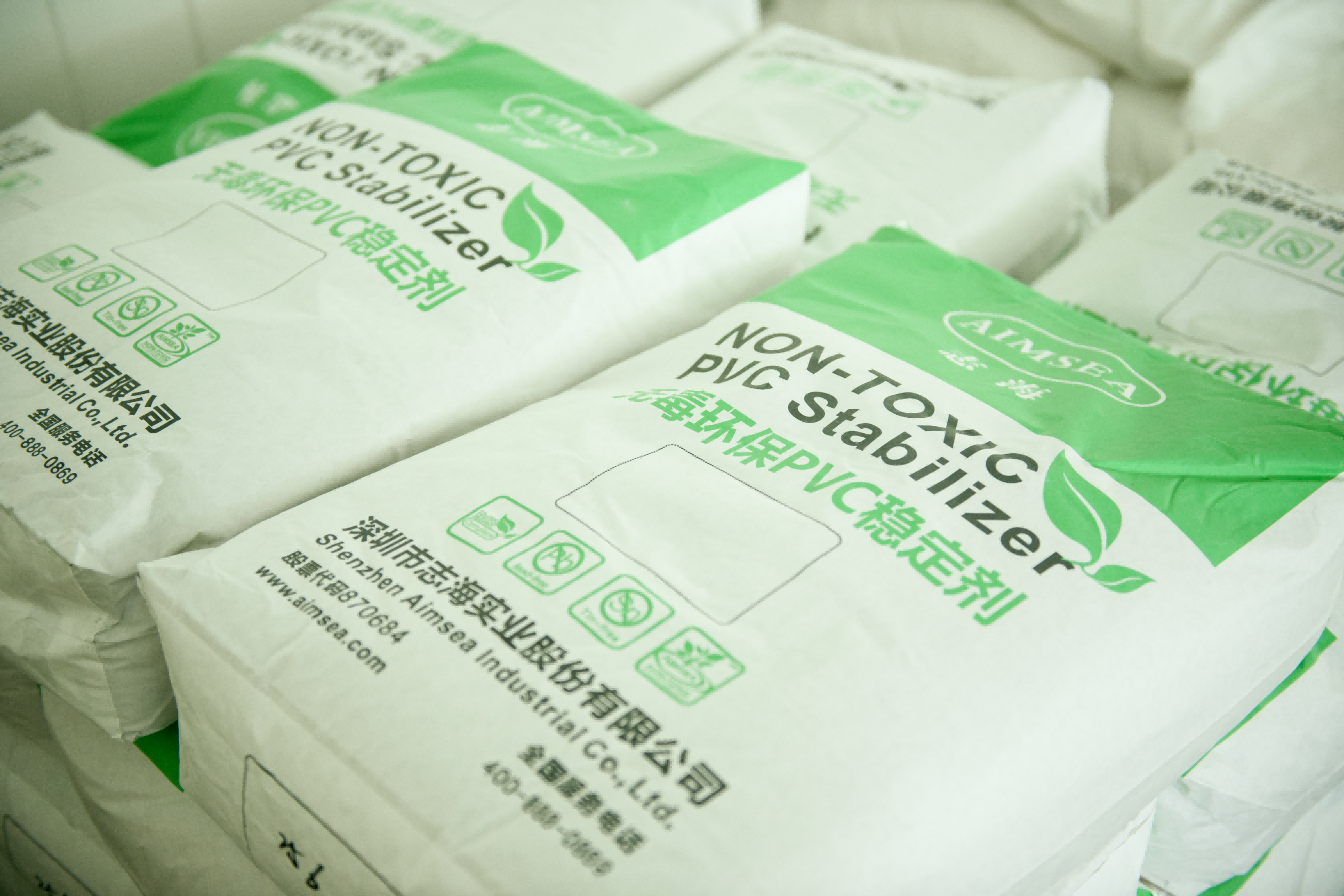
PVC resin itself can have good transparency. The problem begins when resin is processed with heat, shear, stabilizers, lubricants, plasticizers, impact modifiers and other additives. If these additives do not match PVC well, the product can become cloudy or yellow.
AIMSEA’s internal transparent PVC technical material explains that the transparency of finished PVC products is affected by the refractive index and dispersion state of additives. When the refractive index of additives is close to PVC and dispersion is fine enough, visible-light scattering is reduced and transparency is better.
For manufacturers, this means transparency is not decided by one material alone. It is the result of the whole formulation.
Main Reasons Transparent PVC Loses Clarity
Cause | What Happens in Production | Visible Result |
Poor additive compatibility | Additives do not disperse well in PVC | Haze, cloudiness, uneven appearance |
Heat degradation | PVC releases HCl and forms conjugated structures | Yellowing and color deepening |
Lubrication imbalance | Fusion and metal release are not controlled | Plate-out, rough surface, roller deposits |
High processing temperature | Thermal history becomes too strong | Early discoloration |
Excessive volatile or low-molecular substances | Components migrate or evaporate | Odor, fogging, surface defects |
Wrong stabilizer grade | General-purpose stabilizer used in clear PVC | Poor clarity or unstable color |
This is why a PVC heat stabilizer for transparent products must be evaluated by optical performance, not only by heat stability time.
PVC Heat Stabilizer for Transparent Products: Key Performance Targets
For clear PVC manufacturers, the right stabilizer should meet several performance targets at the same time. Good transparency alone is not enough if the sheet yellows after continuous production. Strong heat stability is not enough if the product becomes hazy. Low price is not helpful if the line suffers from plate-out and scrap.
A practical transparent PVC stabilizer should be evaluated by the following points:
Performance Target | Why It Matters |
High clarity | Keeps the finished product visually clean and premium |
Low haze | Reduces cloudiness and improves see-through quality |
Good initial color | Prevents early yellow tone during processing |
Long-term thermal stability | Supports continuous extrusion, calendering or molding |
Low plate-out | Keeps rollers, dies and molds cleaner for longer runs |
Low odor | Important for toys, packaging, daily-use and indoor products |
Lead-free formulation direction | Supports export and environmental compliance needs |
Stable processing window | Reduces production fluctuation and trial cost |
AIMSEA’s official product direction highlights high clarity, low haze, yellowing control, low-odor processing and stable Ca-Zn processing for clear PVC sheet, rigid sheet, shrink film, transparent film, white film, hose and packaging.
What Buyers Usually Ask?
Transparent PVC buyers often ask:
1.Will the product stay clear after processing?
2.Will the sheet turn yellow during heat aging?
3.Will the stabilizer create odor or fogging?
4.Will it cause plate-out on rollers or dies?
5.Can it support lead-free or environmentally safer production?
6.Can the supplier test with our actual formulation?
The best answer is not a generic claim. It is a sample-tested result.
High-Transparency PVC Applications AIMSEA Supports
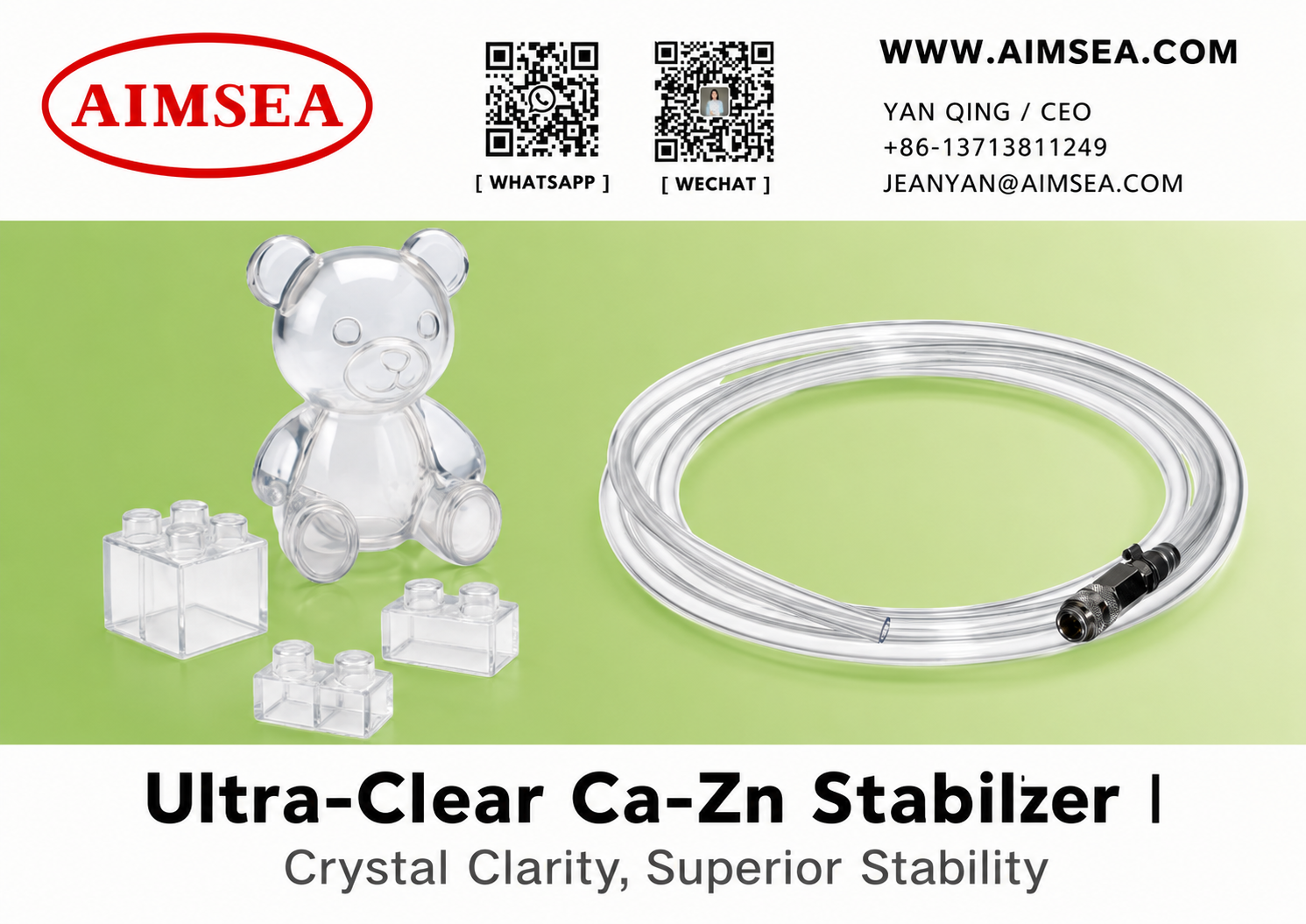
Transparent PVC appears in many product forms. Each application has a different processing method, thickness, optical requirement and buyer expectation.
Application | Common Processing Method | Main Stabilizer Requirement |
Transparent PVC sheet | Calendering, extrusion, pressing | Clarity, haze control, yellowing resistance |
Rigid clear sheet | Extrusion, calendering | Heat stability, impact balance, surface gloss |
Transparent film | Calendering, blowing, casting | Low haze, flexibility, low plate-out |
White film | Calendering | Initial whiteness, clean color tone, stable processing |
Shrink film | Calendering, orientation process | Heat stability, clarity, shrink performance |
Transparent tube and hose | Extrusion | Clarity, low odor, smooth extrusion |
Toys | Injection molding, extrusion | Non-toxic direction, color stability, odor control |
Transparent packaging | Sheet and film production | Optical quality, low odor, compliance support |
Medical-related transparent PVC | Extrusion or injection molding | Clean processing, low extraction risk, high clarity |
AIMSEA’s transparent PVC focus should be presented as an application-based solution rather than a single product claim. A stabilizer for transparent tubing may not behave the same way in rigid sheet. A formulation for shrink film may need a different lubrication and processing balance than transparent packaging sheet.
Why One Transparent PVC Stabilizer Cannot Fit Every Product?
Transparent PVC products differ in:
1.Resin grade
2.Plasticizer type and dosage
3.Impact modifier
4.Processing temperature
5.Residence time
6.Sheet or film thickness
7.Transparency target
8.Haze limit
9.Odor requirement
10.Market compliance requirement
For this reason, manufacturers should request a PVC heat stabilizer for transparent products based on their real process, not only by asking for a model name.
Ca-Zn Stabilizer vs Organotin for Clear PVC Products
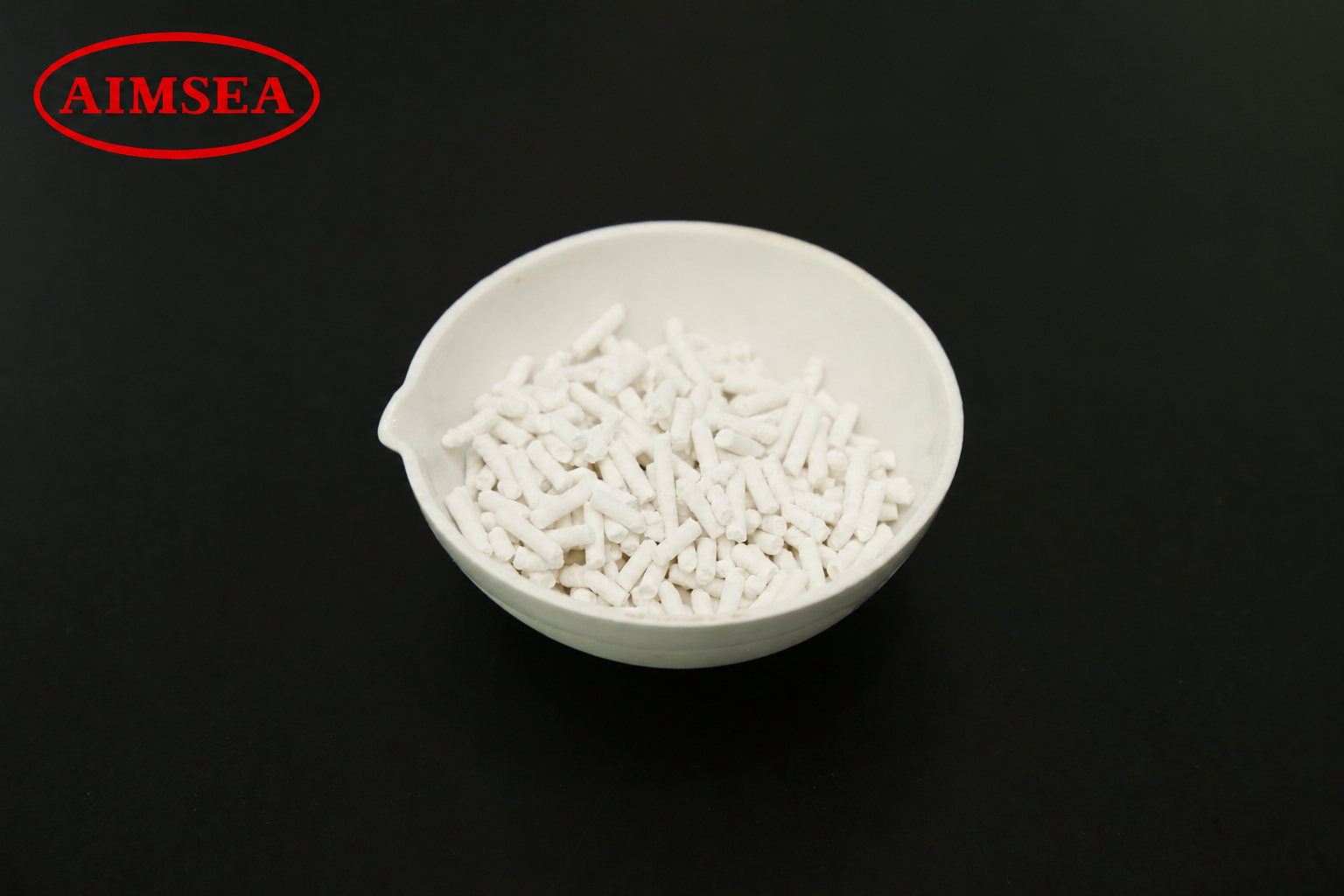
Organotin stabilizers have long been used in transparent PVC because of their strong transparency and thermal stability. However, many manufacturers now want alternatives or partial replacement routes because of odor, cost, environmental requirements and buyer preference.
AIMSEA’s internal organotin companion material describes CZ-186 as a non-toxic calcium-zinc stabilizer used together with organotin. In transparent sheet testing, the material showed that partial replacement could maintain similar transparent sheet performance while helping reduce odor and improve environmental positioning.
For some clear PVC applications, AIMSEA also provides full calcium-zinc transparent stabilizer solutions such as CZ-188. Internal CZ-188 testing compared a rigid transparent Ca-Zn stabilizer with an organotin stabilizer and reported similar transparency and haze results: organotin at 86.7% transmittance and 2.7% haze, CZ-188 at 86.3% transmittance and 2.8% haze under the tested conditions.
Practical Comparison
Item | Organotin Stabilizer | Ultra-Clear Ca-Zn Stabilizer |
Transparency | Traditionally excellent | Can achieve high clarity when designed for transparent PVC |
Heat stability | Strong | Strong when formulation is optimized |
Odor | May be noticeable depending on type | Lower-odor direction |
Environmental positioning | Depends on organotin type and market requirement | Lead-free and eco-friendly direction |
Processing behavior | May need lubrication adjustment | Can be customized for stable Ca-Zn processing |
Best use case | High-clarity rigid PVC where organotin is accepted | Transparent PVC requiring clarity, low odor and greener positioning |
The goal is not to claim that one system always replaces another. The better message is that manufacturers now have more options: full Ca-Zn systems, Ca-Zn organotin companion systems, and application-specific testing routes.
How AIMSEA Tests Transparent PVC Stabilizer Performance?
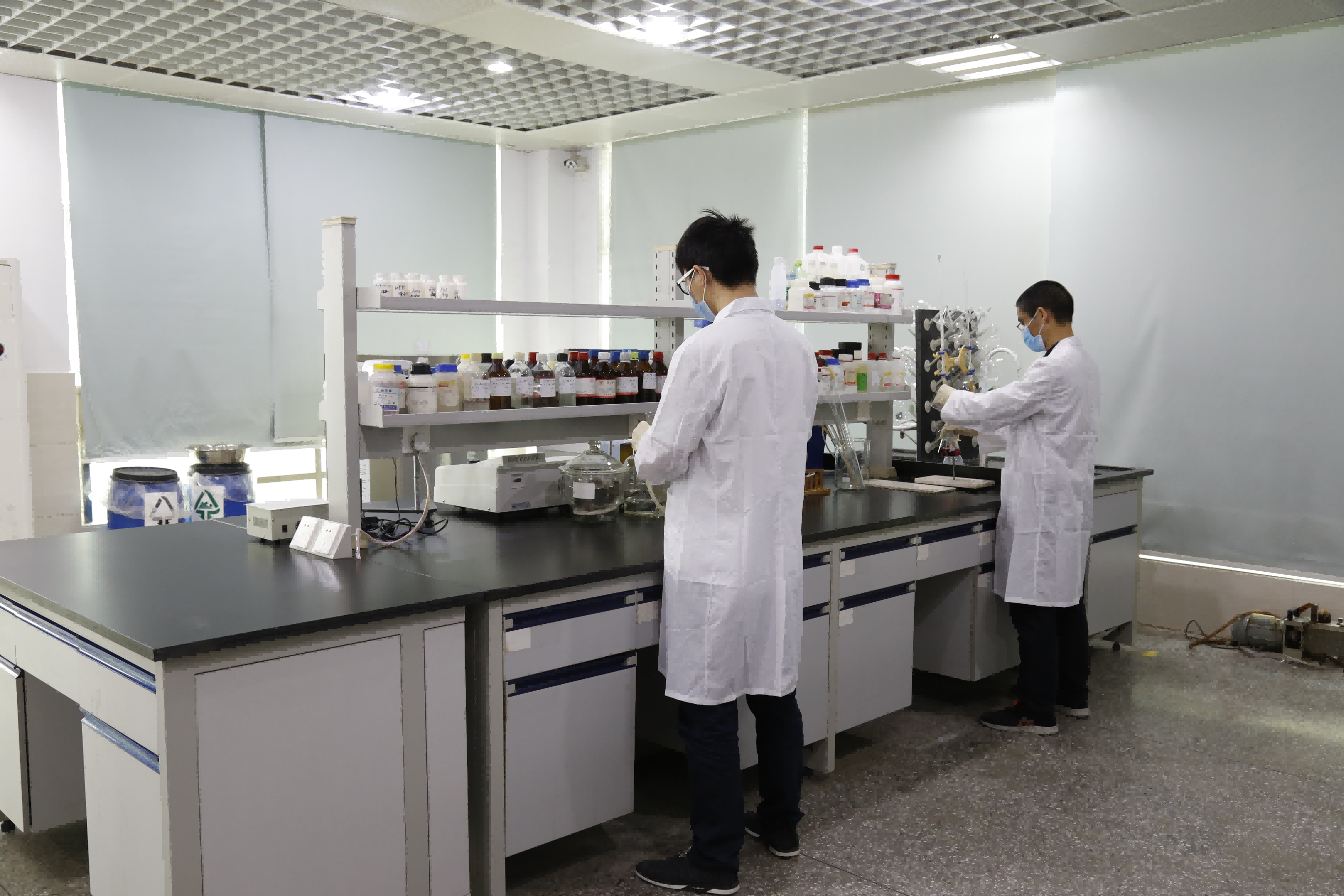
For transparent PVC, visual inspection is not enough. A professional supplier should test both optical quality and production behavior.
AIMSEA’s internal transparent PVC testing includes static aging, transmittance, haze, impact, heat shrinkage and tensile performance evaluation. The company’s broader product positioning also emphasizes custom formulation support, sample reports and testing support before bulk ordering.
Recommended Testing Items
Test Item | Purpose |
Static heat aging | Checks color stability under heat exposure |
Dynamic processing test | Simulates heat and shear in real production |
Light transmittance | Measures how much light passes through the sample |
Haze test | Measures scattering and cloudiness |
Yellowness index | Quantifies yellowing rather than relying only on eyes |
Plate-out observation | Checks whether additives migrate to metal surfaces |
Surface gloss | Evaluates finished-product appearance |
Odor evaluation | Important for toys, packaging and daily-use products |
Production trial | Confirms real-line performance |
Haze and luminous transmittance are standard optical concerns for transparent plastics. Haze measures light scattering through a transparent material, while luminous transmittance measures how much light passes through the sample.
What AIMSEA Needs Before Recommending a Sample?
To recommend the right transparent PVC stabilizer, the supplier should know:
1.Product type: sheet, film, hose, packaging, toy or medical-related product
2.Rigid or flexible PVC formulation
3.Resin grade and K value
4.Plasticizer type and dosage if used
5.Current stabilizer system
6.Lubricant package
7.Processing method and temperature
8.Current issue: haze, yellowing, odor, plate-out or color drift
9.Target market and compliance needs
10.Required test items
The more specific the production information, the more accurate the stabilizer recommendation.
How to Choose a Transparent PVC Stabilizer Supplier?
A transparent PVC stabilizer supplier should be evaluated by technical capability, not only price. The cheapest stabilizer can become expensive if it causes haze, repeated trials, line cleaning, customer complaints or unstable production.
AIMSEA positions itself as a PVC stabilizer manufacturer with ultra-clear Ca-Zn stabilizer solutions, one-pack systems, custom formulations, in-house R&D and advanced testing facilities.
Supplier Evaluation Checklist
Evaluation Point | Why It Matters |
Transparent PVC application experience | Clear PVC is more demanding than opaque PVC |
Ca-Zn formulation capability | Full Ca-Zn or tin-reduction systems require technical balance |
Optical testing support | Transmittance and haze must be measured |
Static and dynamic heat testing | Confirms thermal stability under different conditions |
Low plate-out control | Protects continuous production quality |
Low-odor direction | Important for packaging, toys and indoor applications |
Compliance documentation | Supports export and buyer approval |
Sample trial support | Reduces risk before bulk ordering |
Customization ability | Different transparent PVC products need different solutions |
For export manufacturers, lead-free and safer material positioning are also becoming more important. The EU’s lead restriction in PVC under REACH applies to PVC articles at or above 0.1% lead by weight of PVC material from November 29, 2024, with certain exemptions and transition periods. This trend makes lead-free Ca-Zn stabilizer systems more relevant for manufacturers targeting regulated markets.
FAQs About Ultra-Clear Ca-Zn Stabilizers
What is an ultra-clear Ca-Zn stabilizer?
It is a calcium-zinc based heat stabilizer designed for transparent PVC products. It helps protect PVC from heat degradation while supporting high clarity, low haze, color stability and low-odor processing.
Is Ca-Zn stabilizer suitable for transparent PVC?
Yes, but only when the grade is designed for transparent PVC. General-purpose Ca-Zn stabilizers may not deliver the required clarity, haze control or surface quality.
What is the best PVC heat stabilizer for transparent products?
The best stabilizer depends on the product, formulation and process. Transparent sheet, rigid sheet, shrink film, transparent tubing, toys and packaging may need different stabilizer-lubricant balances. Sample testing is essential.
Can Ca-Zn stabilizer replace organotin in transparent PVC?
In some applications, yes. Full Ca-Zn replacement or partial organotin replacement can be considered, but it should be verified by haze, light transmittance, heat aging, plate-out and production-line tests.
Why does transparent PVC become hazy?
Haze can come from additive incompatibility, poor dispersion, wrong lubricant balance, surface texture, weathering or processing conditions. A transparent PVC stabilizer should be designed to reduce scattering and maintain optical quality.
What should manufacturers test before switching stabilizers?
Manufacturers should test heat aging, yellowness index, haze, light transmittance, odor, plate-out, surface gloss, processing stability and final product performance.
Conclusion
Transparent PVC requires a stabilizer system that protects both processing stability and visual quality. For manufacturers, crystal clarity is not only a marketing claim. It depends on thermal stability, additive compatibility, dispersion, lubrication balance, low plate-out behavior and optical testing.
AIMSEA’s ultra-clear Ca-Zn stabilizer solutions are designed for transparent PVC applications where high clarity, low haze, yellowing control, low odor and lead-free formulation direction matter. The most reliable selection method is not to copy a general formula or choose only by price. It is to test the stabilizer with the actual PVC resin, processing method, application and quality target.
For clear sheet, rigid sheet, transparent film, white film, shrink film, transparent tube, toys and transparent packaging, AIMSEA can support application-based sample testing to help manufacturers move toward cleaner, more stable and more premium transparent PVC production.
References
1.AIMSEA PVC Stabilizer Manufacturer page: ultra-clear Ca-Zn stabilizer, transparent PVC products, high clarity, low haze, yellowing control, low odor and sample support.
2.AIMSEA official homepage: ultra-clear Ca-Zn stabilizer positioning, international market support, custom formulations and testing capability.
3.AIMSEA internal CZ-188 rigid transparent calcium-zinc stabilizer material: transparent PVC testing, transmittance, haze and organotin comparison.
4.AIMSEA internal CZ-186 organotin companion material: Ca-Zn and organotin combined use for transparent sheet performance.
5.ASTM D1003 haze and luminous transmittance testing principles for transparent plastics.
6.EU / REACH lead restriction in PVC articles, effective from November 29, 2024 with defined concentration limits and exemptions