
How to Reduce PVC Stabilizer Cost Without Narrowing the Processing Window?
Read:354
Source:
Abstract
Reducing PVC stabilizer cost does not always mean choosing the lowest-price stabilizer. A cheaper stabilizer may increase real production cost if it causes higher dosage, more scrap, more frequent cleaning, unstable output, narrower processing tolerance or customer complaints. For PVC processors, the better approach is to calculate stabilizer ROI by comparing unit price, dosage, production stability, scrap rate, downtime and finished-product acceptance.
This guide explains how to reduce PVC stabilizer cost without sacrificing the PVC processing window. It also includes a simplified calculation table and a customer information checklist to help buyers submit current dosage, output, scrap rate and major production problems before requesting a cost reduction assessment.
Why Low-Price PVC Stabilizer May Increase Total Cost?
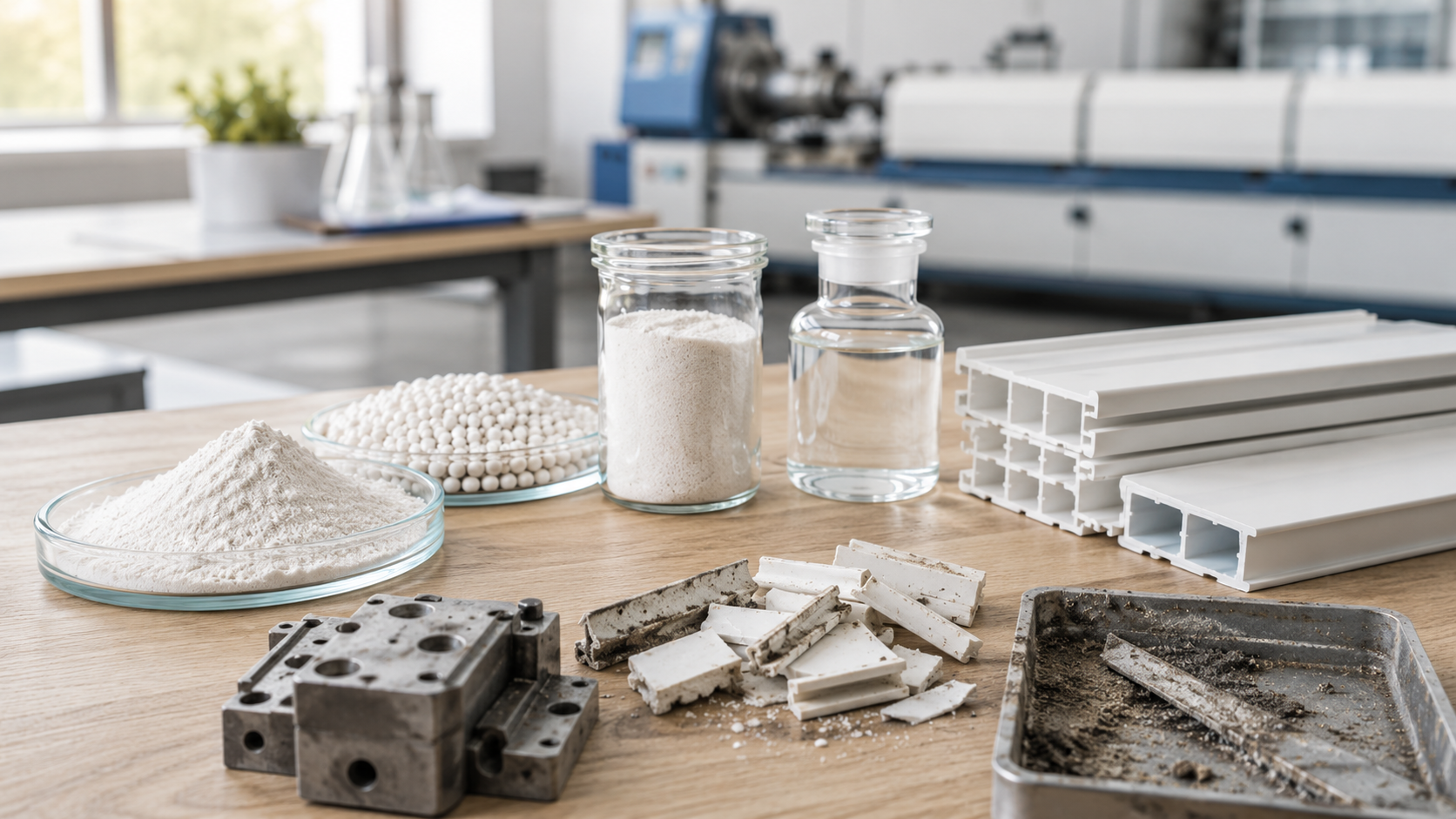
Many PVC processors compare stabilizer options by price per kilogram. This is understandable, but it can be misleading. The real PVC stabilizer cost depends on how much stabilizer is used, how stable the line is, how much scrap is produced and how often production must stop for adjustment or cleaning.
A lower unit price may look attractive during purchasing, but it may create hidden costs during production. If the stabilizer causes yellowing, plate-out, rough surface, unstable torque or poor fusion, the factory may lose more through waste and downtime than it saves on material price.
Why PVC stabilizer cost should not be judged by unit price only?
A stabilizer with a lower unit price may need a higher dosage to reach the same heat stability. It may also create more plate-out, yellowing, unstable torque, rough surface or poor fusion. These problems can increase scrap, slow the line and reduce usable output.
A higher-quality PVC heat stabilizer may look more expensive per kilogram, but if it lowers scrap rate, extends cleaning intervals and keeps the line stable, the cost per ton of finished PVC may be lower.
How a narrow PVC processing window creates hidden production losses?
A narrow PVC processing window means the formula is sensitive to small changes in temperature, screw speed, filler variation, line speed or residence time. When the window is too narrow, operators must frequently adjust the process to avoid burning, yellowing, rough surface, die build-up or unstable dimensions.
Hidden losses usually include:
More off-spec products
More start-up scrap
More cleaning downtime
Lower line speed
Higher operator workload
More customer complaints
More rejected batches
These losses are often larger than the visible difference in stabilizer price.
ROI View: What Should Be Included in PVC Stabilizer Cost Reduction?
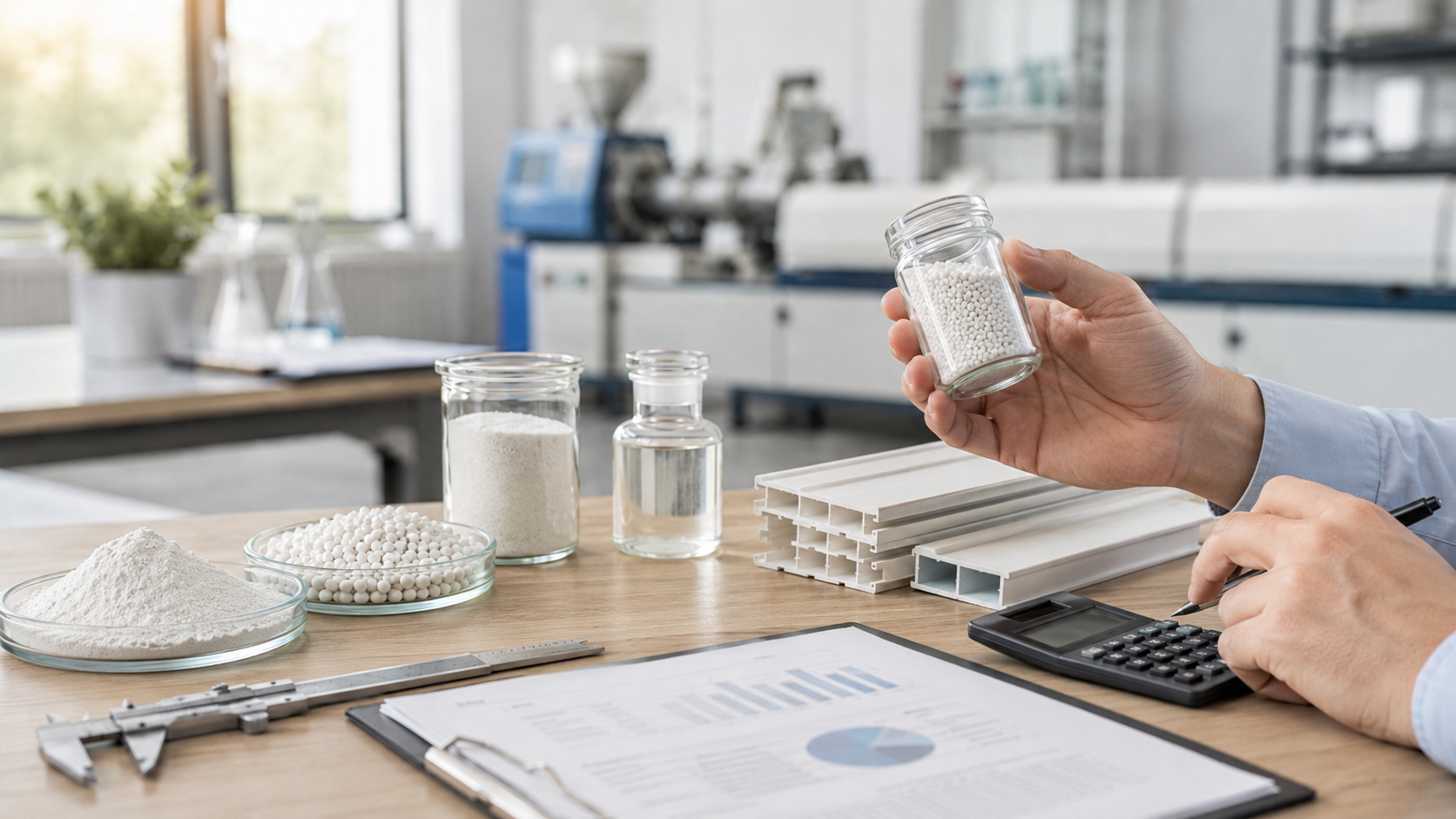
A practical PVC stabilizer ROI review should include direct material cost and indirect production cost. The goal is not simply to reduce stabilizer price, but to reduce the cost of producing one ton of qualified PVC product.
A stable stabilizer package should support heat resistance, lubrication balance, surface quality, output stability and finished-product approval. If one of these areas becomes worse after switching to a cheaper stabilizer, the real saving should be recalculated.
How PVC stabilizer dosage, scrap rate and downtime affect real cost?
PVC stabilizer dosage directly affects formula cost. However, dosage must be evaluated with output quality. If a low-price stabilizer requires more dosage, the real saving may disappear. If it also increases scrap rate, the total cost may rise.
For example, if a factory saves a small amount on stabilizer but loses more material during start-up, color adjustment or cleaning, the result is not true cost reduction. The same applies if the stabilizer causes more frequent shutdowns for cleaning.
Why cleaning frequency and customer returns should be included?
PVC cleaning frequency is often ignored in cost calculations. If the stabilizer package causes die build-up, roll deposits, plate-out or surface defects, the factory may need to stop production for cleaning. Each stop means lost output, labor cost and more start-up waste.
Customer return risk should also be included. A stabilizer that barely passes internal testing may fail during customer use, storage, welding, installation or outdoor exposure. This creates a much higher cost than the original stabilizer saving.
Simplified PVC Stabilizer ROI Calculation Table
The following table can help PVC processors compare an existing stabilizer with a new option. It is simplified for quick assessment, but it helps buyers move from unit price thinking to total cost thinking.
Cost Item | Current Stabilizer | New Stabilizer | How to Calculate |
Stabilizer price per kg | A | B | Supplier quotation |
Dosage per ton of PVC | A kg/t | B kg/t | Actual formula dosage |
Stabilizer cost per ton | A × dosage | B × dosage | Price × dosage |
Monthly PVC output | A tons | B tons | Qualified production volume |
Scrap rate | A% | B% | Scrap / total output |
Scrap cost | Material cost × scrap | Material cost × scrap | Include resin, filler, additives and labor |
Cleaning frequency | A times/month | B times/month | Die, mold, roll or screw cleaning |
Downtime cost | Hours × line cost | Hours × line cost | Lost production value |
Rework cost | A | B | Regrinding, reprocessing or labor |
Customer return risk | Low/Medium/High | Low/Medium/High | Based on complaint history |
Real cost per ton | Total cost / qualified tons | Total cost / qualified tons | Best comparison indicator |
How to compare old and new PVC heat stabilizer systems?
When comparing two PVC heat stabilizer systems, buyers should run both under similar conditions. The test should include the same resin, filler, lubricant system, production line, temperature profile, output rate and product specification.
A proper comparison should record:
Initial color
Long-run color stability
Fusion behavior
Torque or melt pressure
Plate-out tendency
Surface quality
Cleaning interval
Scrap rate
Line speed
Finished-product acceptance
Why cost per ton of finished product is more useful than price per kilogram?
Price per kilogram is only a purchase number. Cost per ton of qualified finished product is a production number. The second one is more useful because it reflects dosage, process stability and real output.
For cost reduction, the main question should be: how much does it cost to produce one ton of accepted PVC product? This gives a more realistic comparison than only checking which stabilizer quotation is lower.
How to Reduce Stabilizer Cost Without Narrowing the Processing Window?
A successful PVC stabilizer cost reduction project should reduce cost while keeping production stable. If cost is reduced but the line becomes harder to run, the saving is not sustainable.
Use one-pack PVC stabilizer to improve dosing and batch consistency
A one-pack PVC stabilizer can combine heat stabilizer, lubricant and processing-support functions in one pre-balanced package. This can reduce weighing errors and improve batch consistency.
For factories with frequent batch changes, multiple operators or complex formulas, one-pack systems can reduce hidden errors that lead to scrap or unstable output. They can also make cost control easier because the factory evaluates one integrated additive package instead of several separate components.
Adjust stabilizer, lubricant and processing support together
Cost reduction should not be done by reducing stabilizer dosage alone. A lower dosage may narrow the processing window, especially in high-filler, high-speed or long-residence-time production.
A better approach is to optimize the whole PVC stabilizer package, including:
Heat stability
Internal and external lubrication
Fusion speed
Plate-out control
Color protection
Surface quality
Processing aid compatibility
Compliance requirements
When the full package is balanced, the factory may reduce total cost while keeping stable extrusion, calendering, injection molding or compounding performance.
Where Cost Reduction Usually Fails?
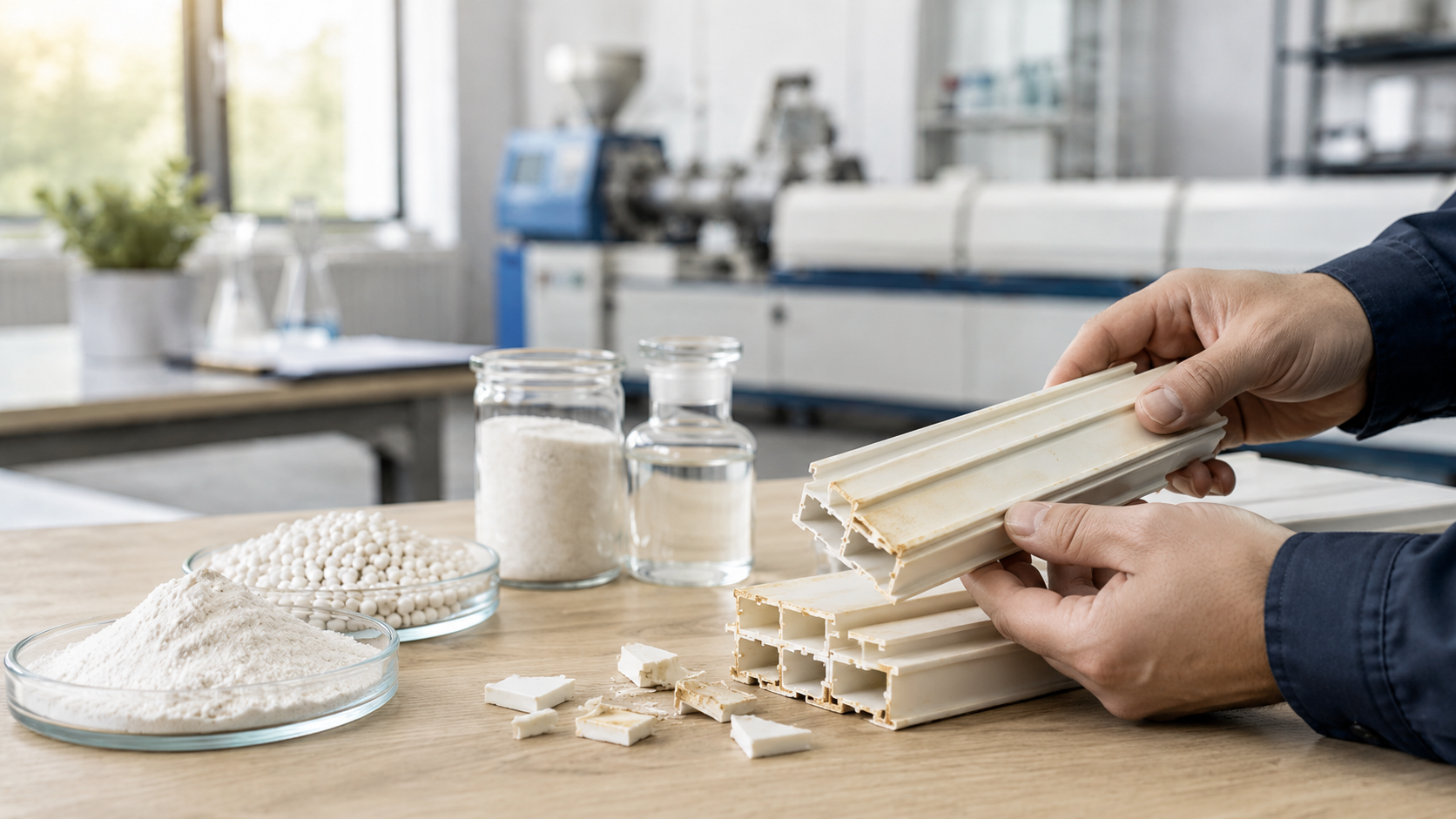
Many cost reduction trials fail because the factory focuses only on the quotation. A stabilizer change affects the whole production system, including fusion, lubrication, color, surface quality and equipment cleanliness.
Cutting dosage without checking heat stability
Reducing dosage may look like a quick saving, but if the product yellows faster, the die builds up more quickly or the finished product fails aging tests, the saving becomes a loss.
Dosage reduction should be supported by heat aging, dynamic stability and real production testing.
Ignoring lubricant balance and plate-out
A lower-cost stabilizer may have a different lubricant balance. If this creates plate-out, rough surface or die deposits, the factory may face more cleaning and lower line efficiency.
A stable formula should keep the die, roll or mold clean for the required production time.
Testing only in the lab, not on the production line
A lab sample may look acceptable, but continuous production may reveal problems such as pressure fluctuation, surface defects, color drift or cleaning difficulty. A cost reduction trial should include machine testing under real operating conditions.
Customer Information Checklist for Cost Reduction Assessment
A PVC stabilizer supplier can only calculate meaningful savings when the buyer provides real production data. Before requesting a cost reduction plan, buyers should prepare the following information.
Information to Provide | Why It Matters |
PVC product type | Pipe, fitting, profile, board, cable, film, flooring or compound |
Current stabilizer type | Ca-Zn, lead, tin, Ba-Zn, one-pack or other system |
Current stabilizer dosage | Basis for cost comparison |
Stabilizer price | Helps calculate current cost per ton |
Monthly production output | Shows possible saving scale |
Scrap rate | Identifies hidden cost |
Main scrap reason | Yellowing, rough surface, plate-out, poor fusion or dimension issue |
Cleaning frequency | Shows downtime and maintenance cost |
Average downtime per cleaning | Helps estimate lost output |
Current line speed | Indicates production efficiency |
Processing temperature | Defines heat stability requirement |
Current formulation | Resin, filler, lubricant, pigment and other additives |
Customer complaints | Shows return risk and quality priority |
Target saving goal | Helps balance cost and performance |
This information helps the supplier judge whether the saving should come from dosage reduction, one-pack integration, lubricant balance, processing window improvement or formula optimization.
How AIMSEA Supports PVC Stabilizer Cost Optimization?

AIMSEA can support PVC formulation optimization by matching stabilizer selection with real production conditions, instead of recommending only by product name or unit price. For cost-sensitive projects, the key is to reduce cost without sacrificing production stability.
Calcium zinc stabilizer for lead-free and cost-balanced formulas
A calcium zinc stabilizer can support lead-free formulation direction and stable processing performance. For manufacturers replacing older systems or improving compliance positioning, a lead-free PVC stabilizer should still be tested by real cost per ton, not only environmental claims.
AIMSEA can help buyers compare stabilizer systems by dosage, heat stability, color control, surface quality and processing tolerance.
One-pack systems for easier cost control
A one-pack direction can help factories reduce daily weighing variation and stabilize the formula. This is useful when production problems come from inconsistent lubricant balance, operator error or frequent batch changes.
For cost reduction projects, one-pack systems can also make trial comparison clearer because the buyer can evaluate one integrated package against the existing additive system.
Trial-based cost reduction instead of blind substitution
AIMSEA can help buyers compare current and proposed stabilizer systems by checking dosage, heat stability, processing window, scrap rate, cleaning frequency and finished-product quality.
The most reliable saving plan is based on trial data. Blind substitution may reduce purchase price temporarily, but it can create higher production cost if the processing window becomes too narrow.
FAQ About PVC Stabilizer Cost Reduction
Is the cheapest PVC stabilizer always the lowest-cost option?
No. The cheapest stabilizer may increase total cost if it requires higher dosage, causes more scrap, increases cleaning frequency or narrows the processing window.
How do I calculate real PVC stabilizer cost?
Calculate stabilizer price × dosage first, then add scrap cost, cleaning downtime, rework, reduced output and customer return risk. Compare cost per ton of qualified finished product.
Can a one-pack PVC stabilizer reduce cost?
Yes, in many cases. A one-pack PVC stabilizer can reduce weighing errors, improve batch consistency and combine stabilization with lubrication support. It should still be tested in the actual formula.
Why does a low-cost stabilizer narrow the processing window?
It may have weaker heat stability, poor lubricant balance or lower compatibility with the formula. This makes the process more sensitive to temperature, residence time and raw material variation.
What data should buyers send before asking for cost reduction?
Buyers should send current dosage, stabilizer price, monthly output, scrap rate, cleaning frequency, downtime, current formula and main production problems.
Conclusion
The best way to reduce PVC stabilizer cost is not to choose the lowest-price stabilizer, but to lower the real cost of producing qualified PVC products. A reliable cost reduction plan should include stabilizer unit price, dosage, scrap rate, cleaning frequency, downtime, line stability and customer return risk.
For PVC processors, the goal is to reduce cost without narrowing the PVC processing window. This requires a balanced stabilizer package, good lubricant compatibility, stable production and data-based trial comparison.
AIMSEA’s calcium zinc stabilizer, customized PVC heat stabilizer and one-pack PVC stabilizer solutions can support cost reduction projects when buyers provide current usage, production output, scrap rate and major processing issues before sample testing.