
PVC Wall Panel and Decorative Board Stabilizer: Odor, Surface Spots and Indoor Use
Read:315
Source:
Abstract
PVC wall panels and decorative boards are widely used in interior decoration, so buyers care about more than basic heat stability. A suitable PVC wall panel stabilizer should support low odor, clean surface, stable whiteness, smooth processing and reliable indoor use. When panels show odor, surface spots, yellowing, plate-out or unstable extrusion, the cause may come from the stabilizer, lubricant system, filler ratio, processing temperature or raw material dispersion.
This guide explains how to select a PVC decorative board stabilizer by looking at indoor-use requirements, wall panel extrusion or calendering conditions, surface quality and customer feedback. It also provides a checklist to help buyers submit board thickness, filler ratio, current odor and surface problems before requesting a stabilizer recommendation.
Why PVC Wall Panel Stabilizer Selection Starts from Indoor Use?
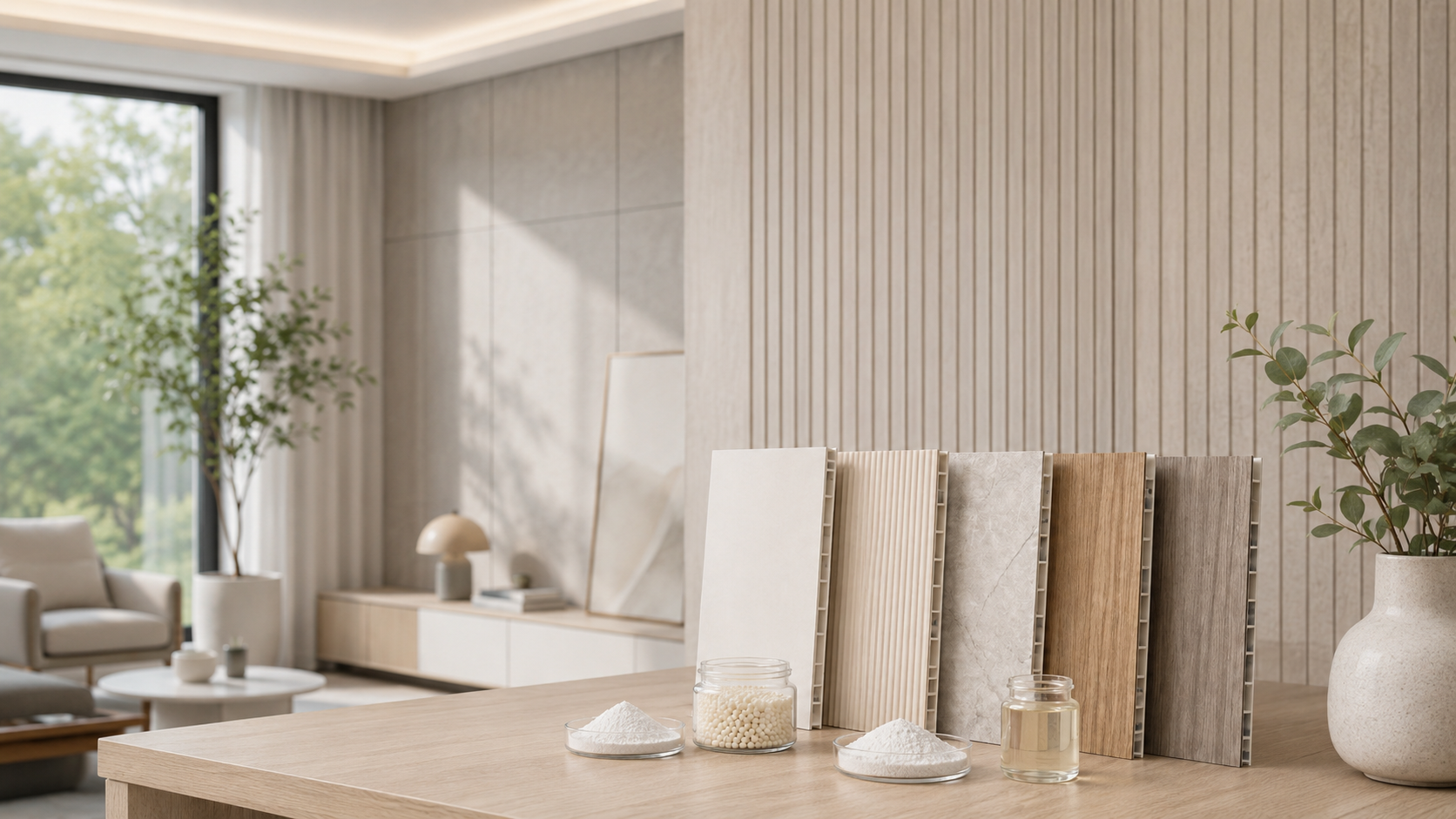
A PVC wall panel stabilizer should be selected according to how the finished board is used. Unlike some outdoor or hidden PVC components, wall panels and decorative boards are installed in visible indoor spaces. Customers may judge the product by odor, whiteness, surface smoothness, color consistency, stain resistance and installation experience.
For indoor decoration products, stabilizer selection should not focus only on heat stability. It should also consider low odor, surface quality, whiteness retention, processing smoothness and customer-required compliance documents.
Why PVC Wall Panel Odor Matters for Decoration Customers?
PVC wall panel odor may come from stabilizer residues, lubricants, plasticizers, recycled material, processing overheating, coating layers or adhesives used in later decoration. Even when the panel looks acceptable, odor can affect customer approval for home, office, hotel or commercial interior projects.
A low odor PVC stabilizer should therefore be evaluated together with the whole formulation. The stabilizer alone cannot solve odor if the formula includes high-odor plasticizers, recycled feedstock, poor-quality lubricants or overheated material.
How PVC Decorative Board Stabilizer Affects Surface Quality and Whiteness?
A PVC decorative board stabilizer protects PVC during extrusion or calendering and helps maintain stable color under heat. However, it also interacts with fillers, lubricants, pigments, foaming agents, processing aids and recycled materials.
If the stabilizer package is not balanced, the board may show yellowing, white spots, black specks, uneven gloss, die lines, surface stains or plate-out. For decorative products, these defects are easy to see and may directly affect customer acceptance.
Key Performance Indicators for PVC Wall Panel and Decorative Board Stabilizer
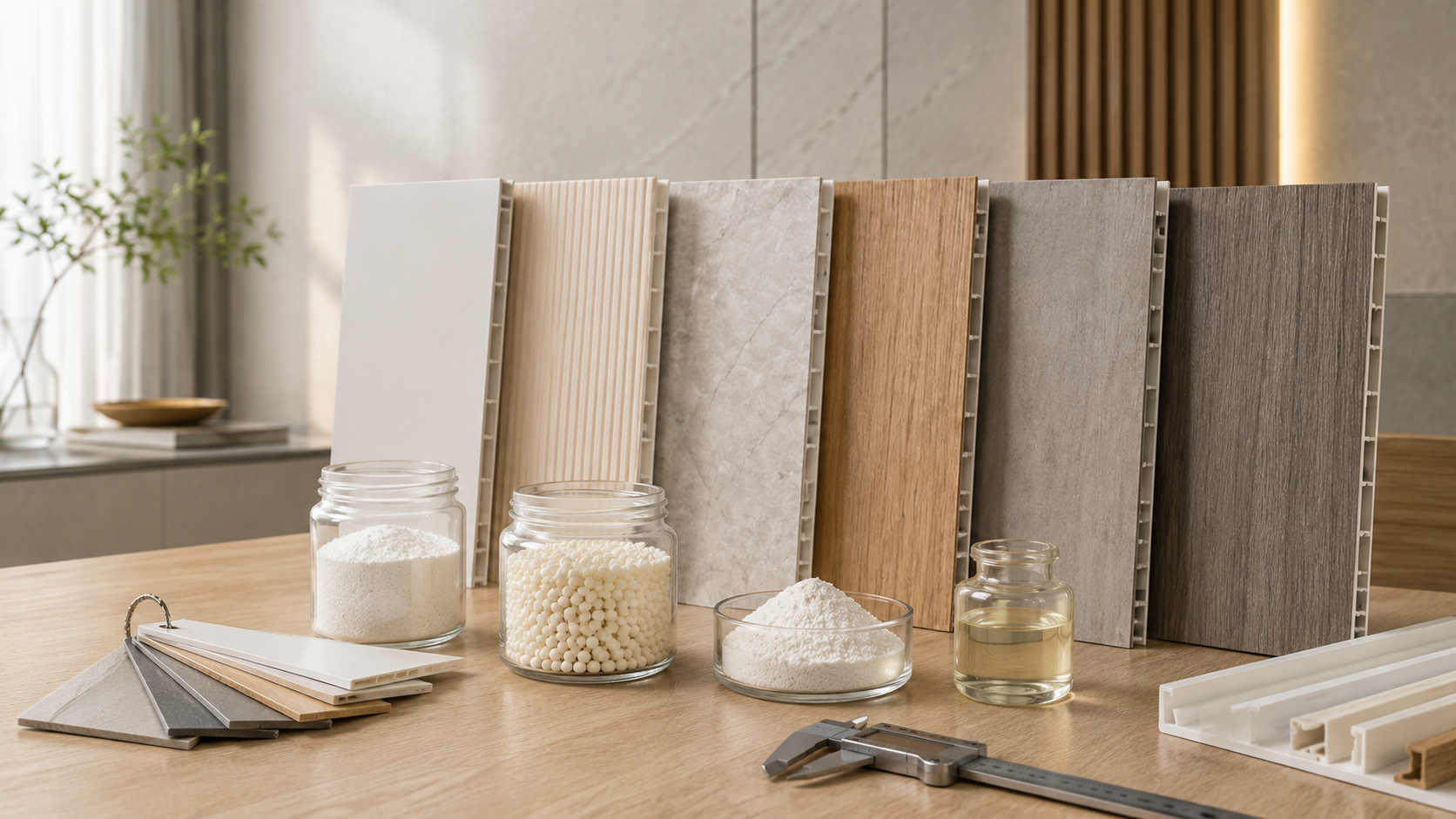
A good stabilizer choice should be measured by finished-board performance, not only by the stabilizer’s unit price or heat stability claim. For wall panels and decorative boards, the most practical indicators are odor, whiteness, heat stability, surface cleanliness and processing smoothness.
Low Odor, White Appearance and Smooth Processing
For indoor panels, buyers should test the stabilizer by checking several practical indicators.
Indicator | Why It Matters | What to Check |
Low odor | Important for indoor decoration acceptance | Fresh odor, odor after heating, odor after storage |
Whiteness | Affects visual quality and customer impression | Initial whiteness, yellowing after aging |
Heat stability | Prevents burning and color drift | Oven aging, long-run extrusion color |
Surface cleanliness | Reduces rejection from spots and stains | Specks, streaks, die lines, plate-out |
Processing smoothness | Supports stable output and lower scrap | Torque, melt pressure, die build-up, output stability |
A suitable PVC heat stabilizer should help the board maintain stable color and smooth processing during continuous production. However, the final result also depends on filler quality, lubricant balance and processing temperature.
Why PVC Surface Spots Should Be Checked with Formula and Process Together?
PVC surface spots may be caused by many factors. Some spots come from poor stabilizer dispersion. Others come from filler agglomeration, pigment contamination, lubricant precipitation, recycled material impurities, moisture or overheating.
This means spot troubleshooting should not stop at changing the stabilizer grade. The processor should also review raw material quality, mixing uniformity, filler ratio, screw condition, melt temperature and die cleanliness.
How Stabilizer and Lubricant Systems Affect Surface Spots?
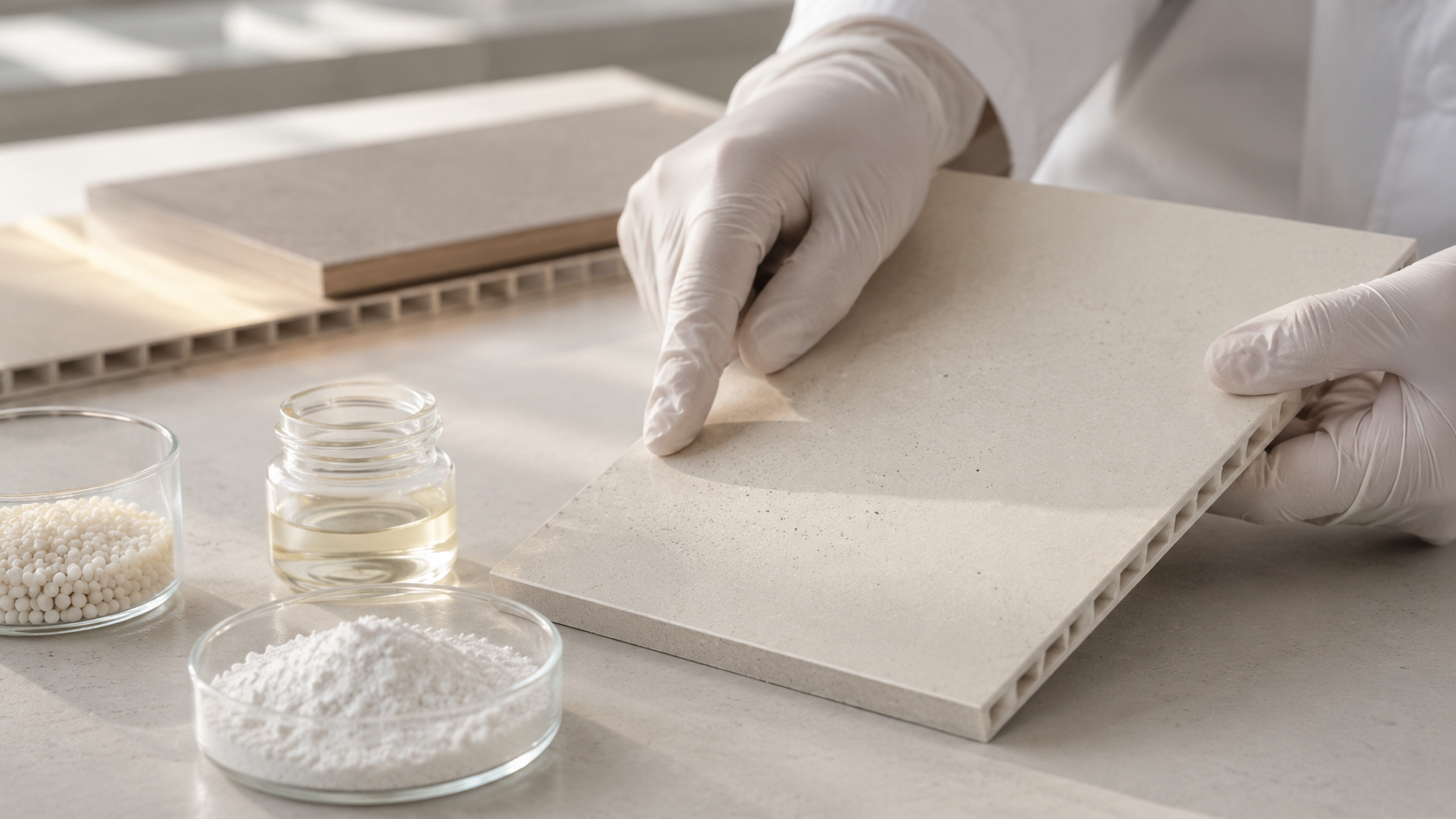
The stabilizer and lubricant system must work together. In wall panel and decorative board production, high filler loading is common. This increases the need for good dispersion, proper lubrication and stable fusion.
A balanced PVC lubricant system can help the material flow smoothly, release from metal surfaces and maintain a clean board surface. If the balance is wrong, the panel may show stains, streaks, spots, die build-up or unstable gloss.
How PVC Lubricant System Imbalance Causes Plate-Out and Stains?
A PVC lubricant system includes internal and external lubrication. Internal lubrication helps melt flow and fusion. External lubrication helps release from metal surfaces and reduces sticking. If the balance is wrong, the panel may show plate-out, die build-up, streaks or surface stains.
Surface Problem | Possible Cause | Stabilizer/Lubricant Direction |
White spots | Filler agglomeration or poor dispersion | Improve mixing and dispersion support |
Yellow stains | Local overheating or insufficient heat stability | Adjust heat stabilizer and temperature |
Black specks | Burned material or contamination | Check dead corners, filtration and cleaning |
Streaks | Die build-up or lubricant migration | Rebalance external lubricant and stabilizer |
Uneven gloss | Poor fusion or surface deposit | Adjust fusion and roll/die release |
Plate-out | Compatibility or excessive lubrication issue | Optimize stabilizer and lubricant package |
PVC plate-out is especially important for decorative boards because it can create visible surface marks and increase cleaning frequency during production.
How Filler Ratio and Board Thickness Change Stabilizer Demand?
Wall panels and decorative boards often contain calcium carbonate, pigments and other fillers. A higher filler ratio can lower cost, but it also affects melt flow, surface smoothness, impact performance and lubricant demand.
Board thickness also matters. Thicker boards usually experience more heat history and may need stronger heat stability. Thin decorative sheets may require better surface finish and more stable gloss. Foam boards may need a different balance between stabilization, foaming control and melt strength.
Extrusion and Calendering Checklist for PVC Decorative Boards
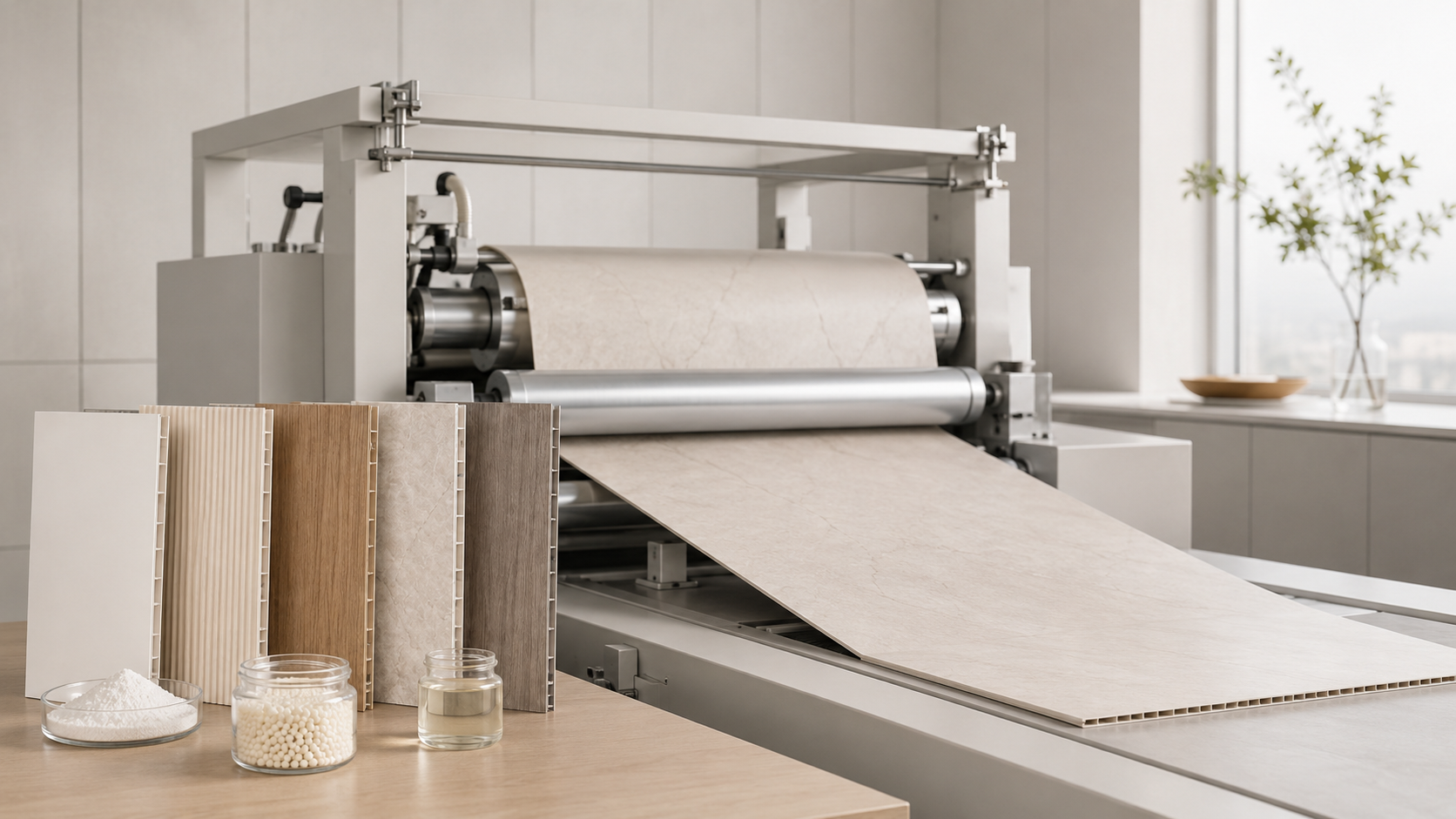
PVC wall panels and decorative boards may be made by extrusion, calendering, lamination or composite processes. The stabilizer should match the actual process instead of being selected only by product name.
How PVC Extrusion Stabilizer Selection Supports Wall Panel Production?
A PVC extrusion stabilizer for wall panels should support heat stability, smooth fusion, die release and surface cleanliness. During extrusion, the formula experiences shear, pressure and continuous heat. If the stabilizer is weak, the board may yellow or show burned specks. If lubrication is excessive, fusion may be delayed and the surface may become dull or unstable.
Processors should record:
Barrel temperature
Die temperature
Screw speed
Output rate
Melt pressure
Surface defects
Time before die build-up appears
Odor during and after extrusion
This information helps the stabilizer supplier judge whether the issue is related to heat stability, lubrication, dispersion or processing conditions.
When to Adjust PVC Calendering Stabilizer and Lubricant Balance?
For decorative sheets or laminated board surfaces made by calendering, a PVC calendering stabilizer should support roll release, surface smoothness, color stability and low plate-out. Roll deposits can create spots, streaks, gloss differences and unstable surface quality.
When calendering problems appear, buyers should check roll temperature, line speed, sheet thickness, lubricant type, filler content and stabilizer compatibility before increasing dosage.
Customer Information Checklist for Stabilizer Recommendation
A PVC stabilizer supplier can recommend a more accurate solution when the buyer provides complete production information. For wall panels and decorative boards, the most useful information is board structure, thickness, filler ratio, processing method and current defects.
Information to Provide | Why It Matters |
Product type | Wall panel, decorative board, foam board, sheet or laminated panel |
Board thickness | Affects heat history and stabilizer demand |
Production process | Extrusion, calendering, lamination or coating |
PVC resin grade | Affects fusion and processing window |
Filler type and ratio | Strongly affects surface spots and flow |
Current stabilizer type | Helps compare Ca-Zn, lead-free or one-pack options |
Current dosage | Supports cost and performance comparison |
Lubricant system | Affects fusion, plate-out and surface finish |
Pigment or whitening system | Affects whiteness and color consistency |
Processing temperature | Defines heat stability requirement |
Current odor issue | Fresh odor, heated odor or storage odor |
Current surface problem | Spots, specks, stains, streaks, gloss loss or plate-out |
Target market | Defines low odor, RoHS, REACH or customer-specific requirements |
Photos and samples | Helps identify defect type and location |
This checklist helps reduce trial errors and makes formula adjustment more efficient.
How AIMSEA Supports PVC Wall Panel and Decorative Board Applications?
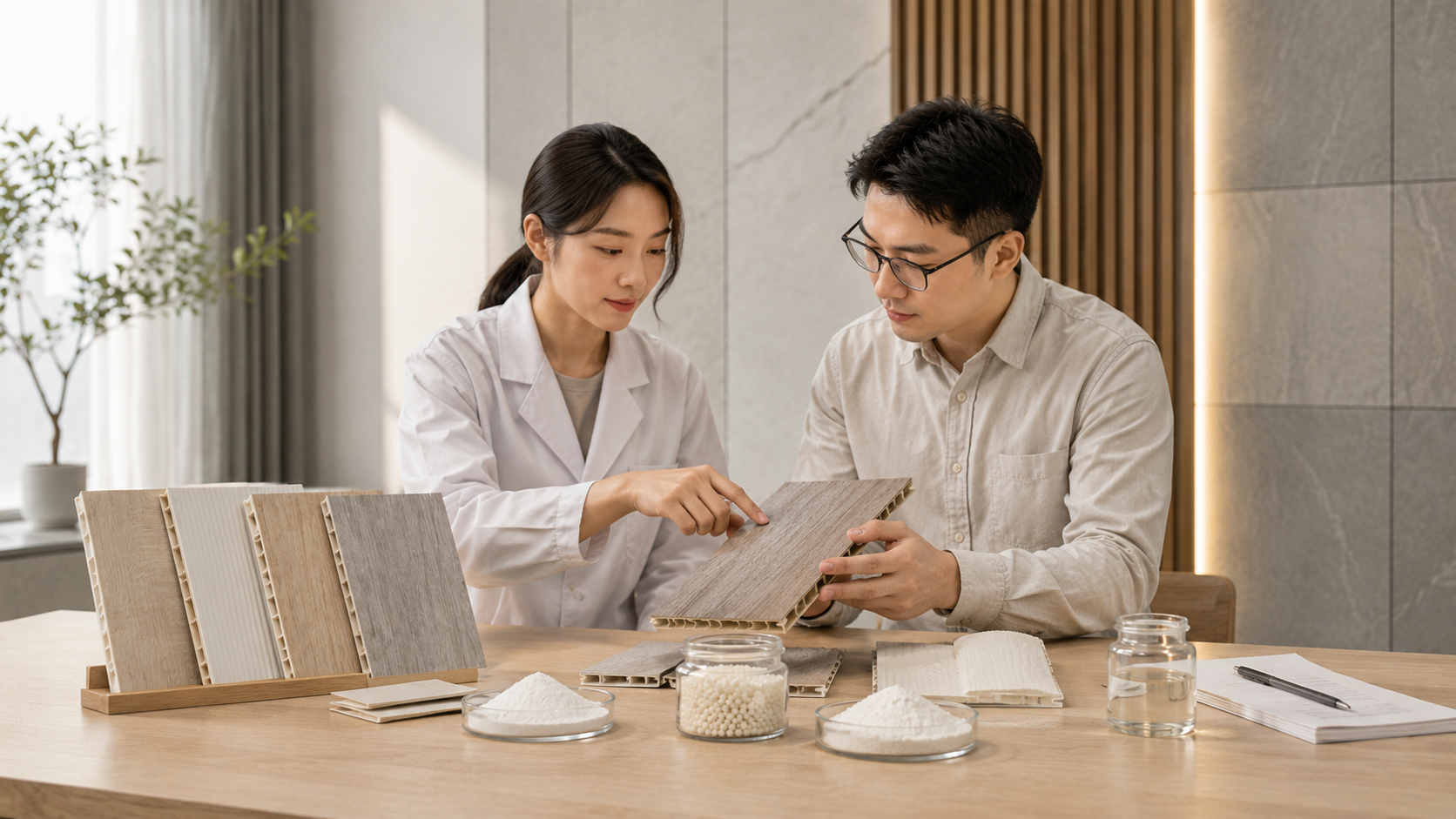
AIMSEA can support wall panel and decorative board manufacturers with calcium zinc stabilizer, customized PVC heat stabilizer and one-pack PVC stabilizer solutions. For indoor decorative products, the focus should be on low odor, stable whiteness, smooth processing and surface defect control.
Lead-Free Ca-Zn Stabilizer for Indoor PVC Panel Additives
A Ca-Zn stabilizer is often selected when buyers need a lead-free direction for indoor PVC panels. It can support heat stability and environmental positioning, but the final formula still needs to be checked with fillers, lubricants, pigments and processing conditions.
For wall panels, AIMSEA can help evaluate whether the stabilizer package should emphasize early color, long-run stability, plate-out control, odor reduction or smoother extrusion.
One-Pack PVC Stabilizer for Processing Consistency
A one-pack PVC stabilizer may help factories simplify dosing and reduce batch variation. For wall panels and decorative boards, this can be useful when the formula contains multiple additives and the factory wants more stable processing control.
Instead of adjusting the stabilizer alone, a one-pack direction can combine heat stability, lubrication and processing support in one system. This is helpful for factories that want cleaner surfaces, more stable output and easier daily production control.
FAQ About PVC Wall Panel Stabilizer
What Causes Odor in PVC Wall Panels?
Odor may come from the stabilizer system, lubricants, plasticizers, recycled material, overheating, coatings or adhesives. A low odor PVC stabilizer helps, but the full formula and process should be reviewed.
What Causes Surface Spots on PVC Decorative Boards?
PVC surface spots may be caused by filler agglomeration, poor dispersion, pigment contamination, lubricant precipitation, plate-out, moisture, burned material or recycled material impurities.
Can Calcium Zinc Stabilizer Improve PVC Panel Whiteness?
A calcium zinc stabilizer can support lead-free heat stability and initial color, but PVC panel whiteness also depends on TiO₂, filler quality, resin grade, processing temperature and residence time.
Is One-Pack PVC Stabilizer Suitable for Wall Panels?
Yes, a one-pack PVC stabilizer can be suitable when the formula needs combined stabilization, lubrication and processing support. It should still be tested in the actual wall panel formula.
What Should Buyers Send Before Requesting a Stabilizer Sample?
Buyers should send board thickness, filler ratio, current formula, stabilizer dosage, lubricant system, processing temperature, odor description, surface defect photos and target market requirements.
Conclusion
For PVC wall panels and decorative boards, stabilizer selection should be based on indoor-use performance rather than heat stability alone. A suitable PVC wall panel stabilizer should support low odor, clean surface, stable whiteness, smooth processing and reliable long-run production.
When odor, surface spots, yellowing or plate-out appears, buyers should check the stabilizer, lubricant system, filler ratio, processing temperature and board thickness together. Randomly increasing stabilizer dosage may not solve the real problem.
AIMSEA’s lead-free Ca-Zn stabilizer, customized PVC heat stabilizer and one-pack PVC stabilizer solutions can support indoor PVC panel manufacturers when buyers provide clear formula data, processing conditions and defect descriptions before sample testing.