
Calcium-Zinc One Pack Stabilizer vs Lead Stabilizer: Replacement Checklist for Export PVC Products
Read:402
Source:
Abstract
Replacing a PVC lead stabilizer with a calcium zinc one pack stabilizer is no longer only an environmental decision. For many PVC exporters, it is also linked to REACH/RoHS compliance, customer audits, heavy
metal restrictions, production stability and long-term market access. However, replacement should not be done by equal dosage only. A successful transition needs formula review, lubricant adjustment, processing-window testing, performance validation and complete compliance documents.
This guide provides a practical replacement checklist for PVC export products, including pipes, profiles, fittings, cables, boards, flooring and other rigid or flexible PVC applications. It also explains what buyers should prepare before requesting samples from AIMSEA.
Why Export PVC Products Are Replacing Lead Stabilizers?
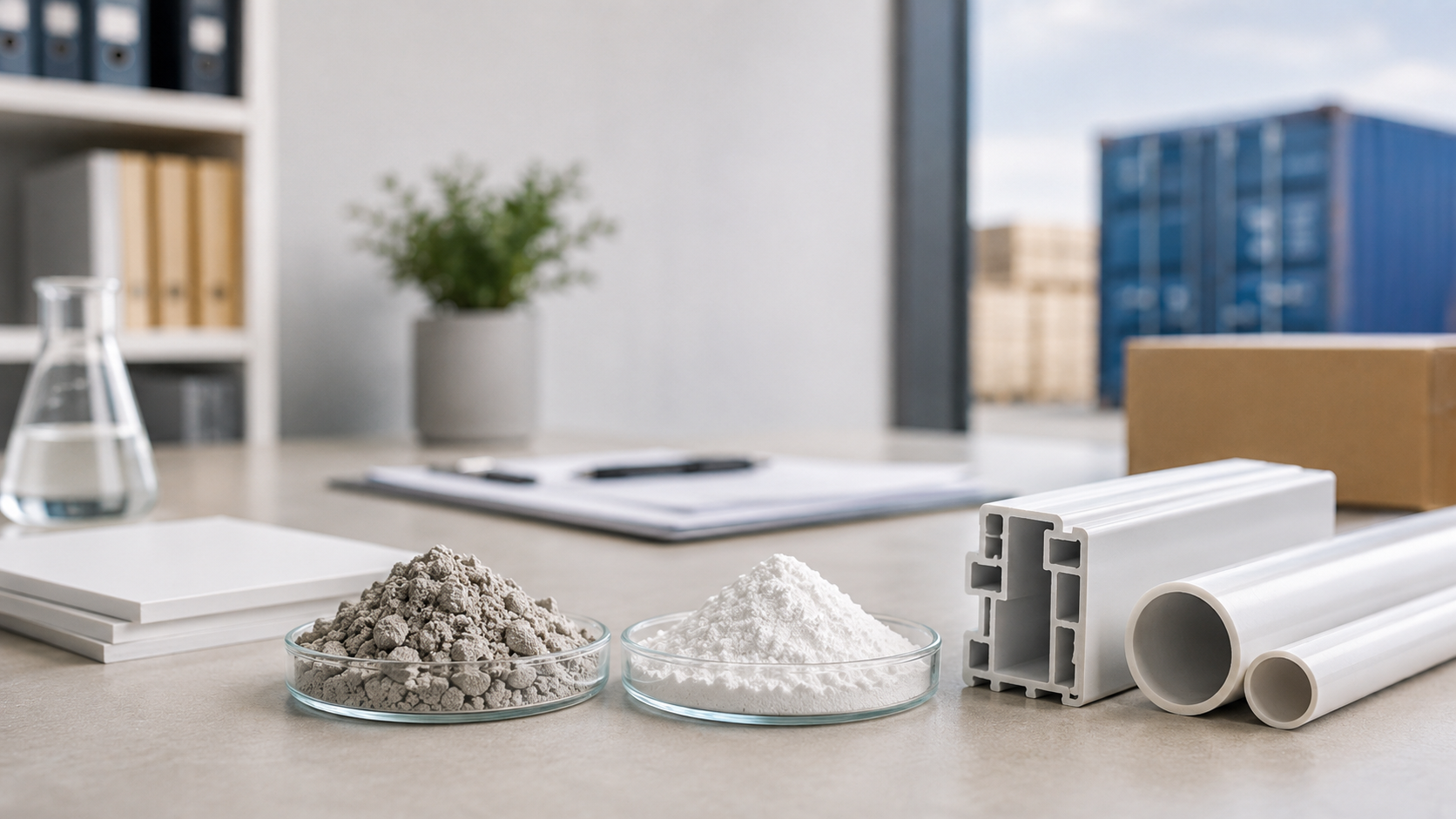
For many years, lead-based stabilizers were used in PVC because they provided strong heat stability and cost advantages. However, export-oriented PVC manufacturers now face stricter customer requirements, heavy metal control and regulatory pressure. This is why lead stabilizer replacement has become a practical topic for PVC processors.
For exporters, replacing lead is not only about changing one additive. It is a full technical and compliance project. The new stabilizer should maintain processing stability, product performance, surface quality and documentation readiness.
Why lead stabilizer replacement is becoming urgent for export markets?
Export customers usually do not only ask whether a product can be produced smoothly. They also ask for heavy metal reports, RoHS documents, REACH/SVHC declarations and product-specific compliance support.
If a finished PVC article contains restricted lead levels, the product may face customer rejection, delayed approval or market access problems. For exporters, switching from PVC lead stabilizer to a lead-free PVC stabilizer is often part of a broader supplier qualification strategy.
How calcium zinc one pack stabilizer supports lead-free PVC production?
A calcium zinc one pack stabilizer combines heat stabilization, lubrication and processing support in one pre-balanced system. Compared with adding several separate additives, a one-pack system can simplify dosing, reduce operator error and improve batch consistency.
For manufacturers producing pipes, profiles, fittings, cables, boards, flooring or compounds, this can make daily production easier to control. However, one-pack does not mean one formula fits all products. The system still needs to match resin grade, filler ratio, lubricant demand, processing method and finished-product requirements.
REACH and RoHS Impact on PVC Lead Stabilizer Replacement
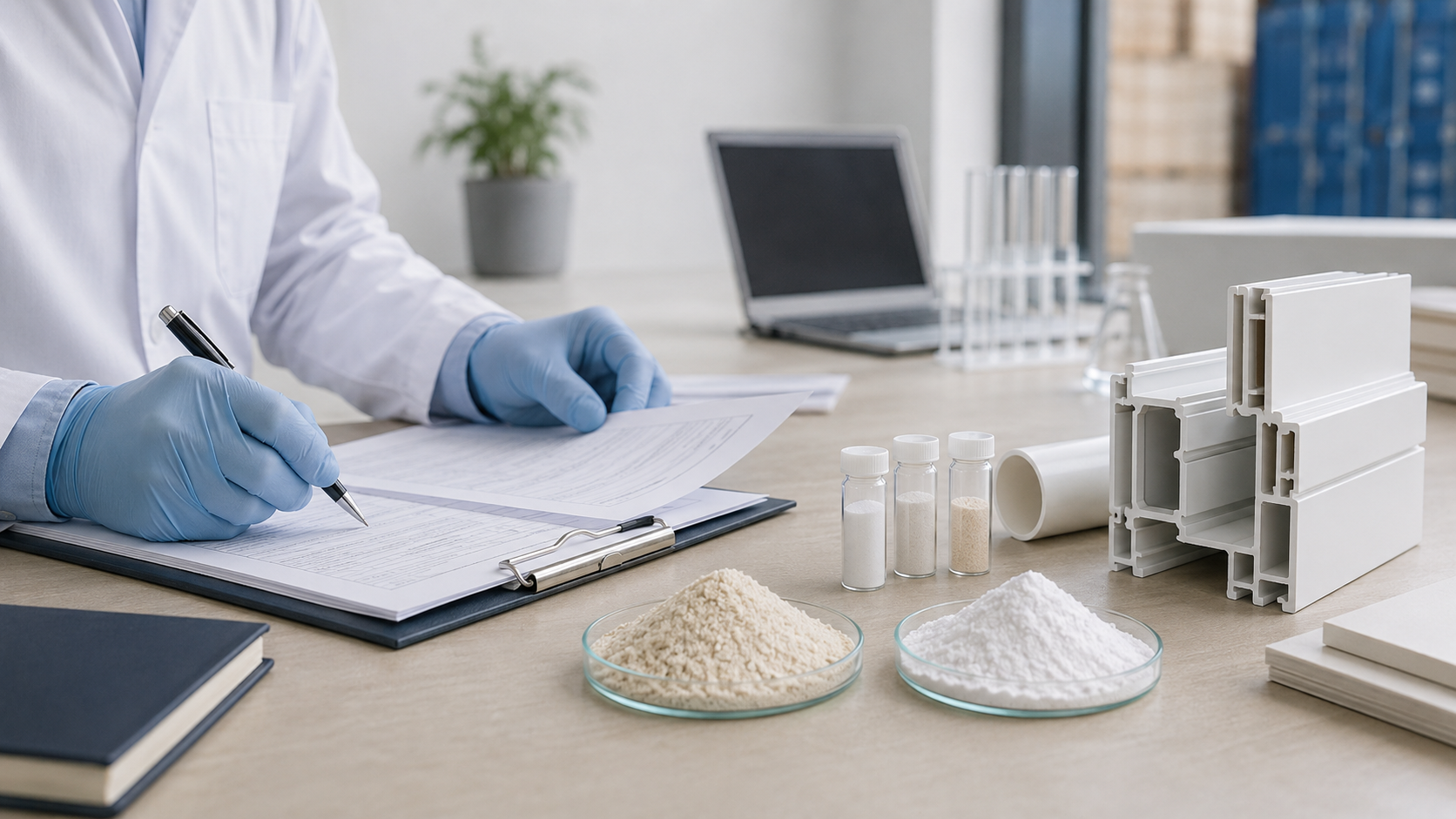
For PVC export products, replacement is not only a technical formula change. It is also a compliance preparation process. Buyers should review REACH, RoHS, heavy metal limits and customer-specific restricted substance lists before approving a new stabilizer.
What REACH means for PVC export products?
REACH compliance may involve restricted substances, SVHC communication and customer declarations. For PVC exporters, a REACH compliant PVC stabilizer should be supported by updated documents, not only a verbal claim.
Buyers should check whether the stabilizer supplier can provide SDS, TDS, REACH/SVHC declaration, heavy metal data and product-specific compliance support. The declaration should match the actual stabilizer grade being used.
Why RoHS review matters for cables, profiles and electrical PVC parts?
RoHS review is especially important when PVC products are used in electrical and electronic equipment, such as cable insulation, cable sheathing, plugs, connectors, sleeves and related components.
A RoHS compliant PVC stabilizer does not automatically make the whole PVC formula compliant. Plasticizers, pigments, flame retardants, fillers and recycled materials should also be checked. For export projects, buyers should evaluate the full PVC compound, not only the stabilizer.
Calcium-Zinc One Pack Stabilizer vs Lead Stabilizer: Practical Comparison
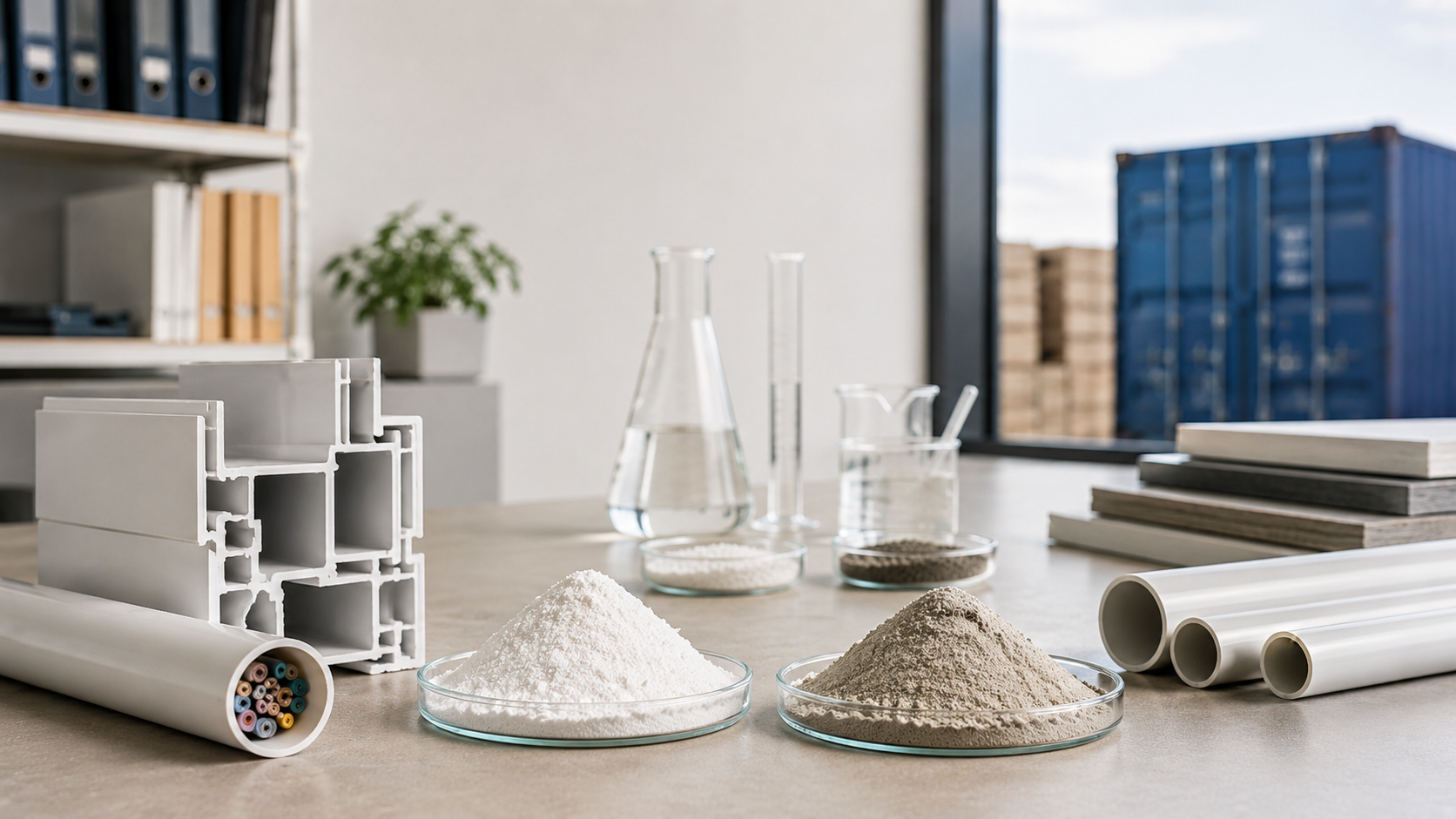
The following table helps buyers compare lead stabilizers and calcium-zinc one-pack systems from a practical export-production perspective.
Evaluation Point | Lead Stabilizer | Calcium-Zinc One Pack Stabilizer | Buyer Should Check |
Heavy metal risk | Contains lead | Lead-free direction | Pb, Cd, Hg, Cr(VI) reports |
Export compliance | More difficult for strict markets | Easier to support REACH/RoHS direction | Product-specific documents |
Heat stability | Often strong and forgiving | Needs proper formula matching | Oven aging, Congo red, dynamic stability |
Lubrication balance | Different from Ca-Zn systems | Pre-balanced but still needs process testing | Fusion, torque, plate-out |
Initial color | Stable in many rigid PVC systems | Can be optimized by formula design | Whiteness, yellowing index |
Processing window | Often wide in traditional formulas | Can be wide if adjusted correctly | Temperature, speed, residence time |
Dosing convenience | May require separate additives | One-pack dosing simplifies operation | Weighing accuracy and batch consistency |
Replacement method | Existing baseline | Should not be equal-dosage substitution only | Trial formulation and machine test |
How one-pack PVC stabilizer changes dosing and production control?
A one-pack PVC stabilizer can help factories reduce daily weighing errors. This is useful for PVC products with multiple additives, frequent batch changes or strict production consistency requirements.
Because heat stabilization and lubrication support are integrated, the factory can reduce the risk of imbalance caused by separate additive weighing. This can support more stable batch quality and easier production management.
Why replacement should not be based on equal dosage only?
A common mistake is replacing lead stabilizer with Ca-Zn stabilizer at the same dosage. This may cause poor fusion, plate-out, yellowing, torque changes or insufficient heat stability.
Calcium-zinc systems have different stabilization and lubrication behavior. Therefore, replacement should start from trial design, not simple one-to-one substitution.
Formula and Lubrication Adjustment Checklist
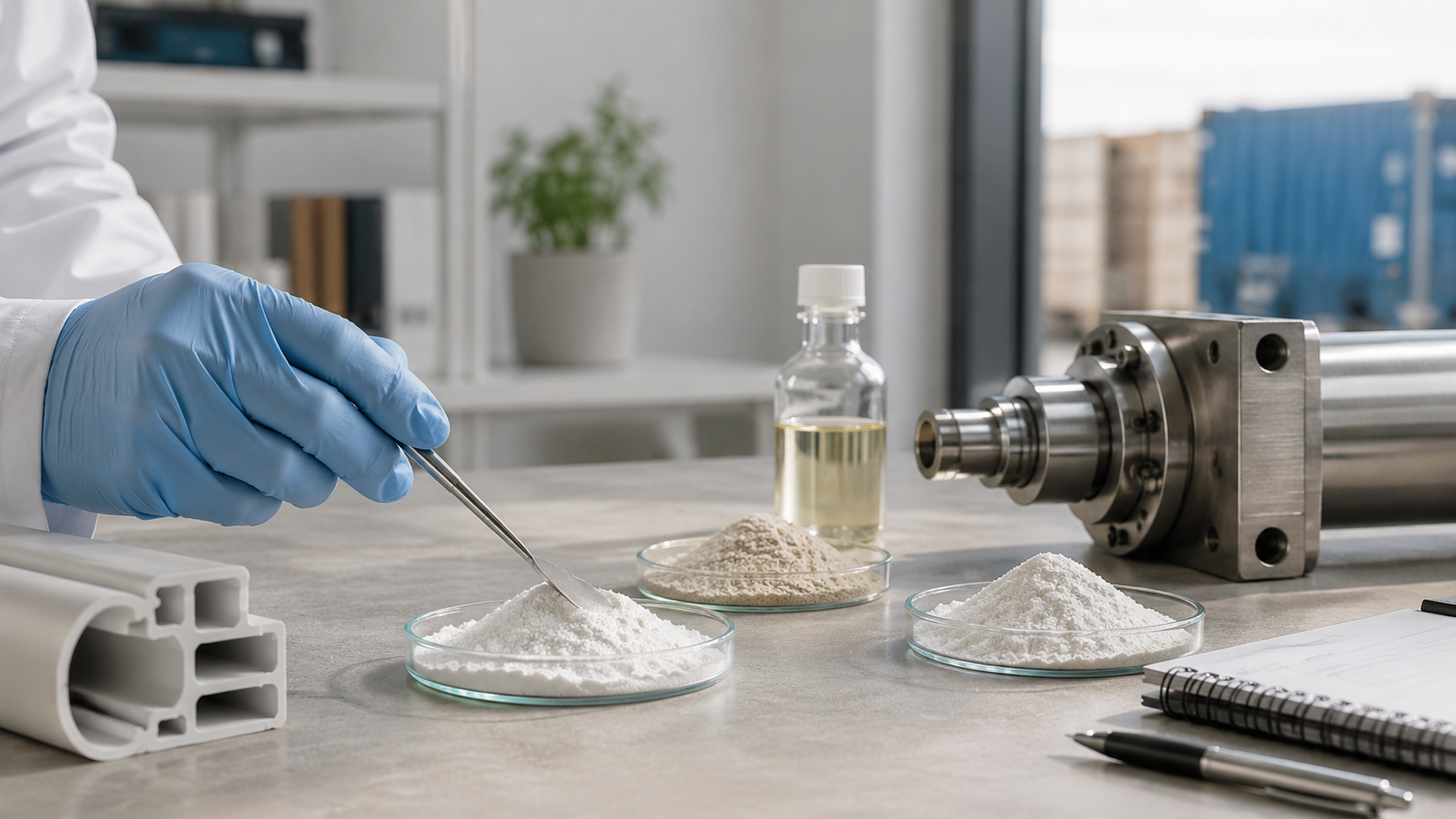
A successful PVC formulation adjustment should review the whole formula. Stabilizer replacement affects lubrication, fusion, heat stability, surface quality and processing tolerance.
How PVC formulation adjustment affects fusion, plate-out and color?
When moving from lead stabilizer to calcium zinc stabilizer, buyers should check each part of the formula.
Formula Area | Why It Matters | What to Adjust |
Stabilizer dosage | Defines heat stability and cost | Start with supplier recommendation |
Internal lubricant | Affects fusion and melt flow | Avoid under-fusion or delayed gelation |
External lubricant | Affects release and plate-out | Control die build-up and surface defects |
Filler content | Changes viscosity and heat demand | Adjust lubricant and processing aid |
TiO₂ / pigment | Affects color and weatherability | Check whiteness and aging |
Processing aid | Affects fusion and surface | Match with product type |
Recycled material | May bring lead or heat history | Screen heavy metals and stability |
How to protect the PVC processing window during replacement?
The PVC processing window should remain wide enough for real production. A formula that only works under perfect lab conditions may fail during long runs, high output or machine stoppage.
During replacement, buyers should test:
Low, normal and high processing temperature
Normal and slow line speed
Start-up and restart behavior
Long-run color stability
Plate-out after continuous operation
Torque or melt pressure fluctuation
Surface quality after several hours
Performance Testing Before Bulk Approval
A lead-free PVC stabilizer should be approved by both lab testing and production-line trials. The test plan should match the finished product, because pipes, profiles, cables, boards and transparent products do not share the same performance priorities.
Key tests for lead-free PVC stabilizer sample trials
Test Item | Why It Matters |
Static oven aging | Checks heat stability and color change |
Dynamic heat stability | Simulates real processing stress |
Congo red test | Evaluates HCl release and thermal stability |
Initial whiteness / color | Important for profiles, boards and fittings |
Plate-out observation | Checks die, roll or mold cleanliness |
Torque / fusion curve | Shows processing stability |
Impact or tensile strength | Confirms mechanical performance |
Weld strength | Important for PVC profiles |
Haze / transmittance | Important for transparent products |
Odor test | Important for indoor products |
Heavy metal screening | Confirms lead-free direction |
Match testing to the final PVC product
A pipe project may focus on heat stability, pressure performance and long-term processing consistency. A profile project may focus on whiteness, weld strength and weatherability. A cable project may focus on heat aging, electrical properties and RoHS support. A wall panel or decorative board project may focus on low odor, surface spots and whiteness.
The replacement test plan should follow the final application instead of using only one general lab test.
Compliance Document Checklist for PVC Export Products
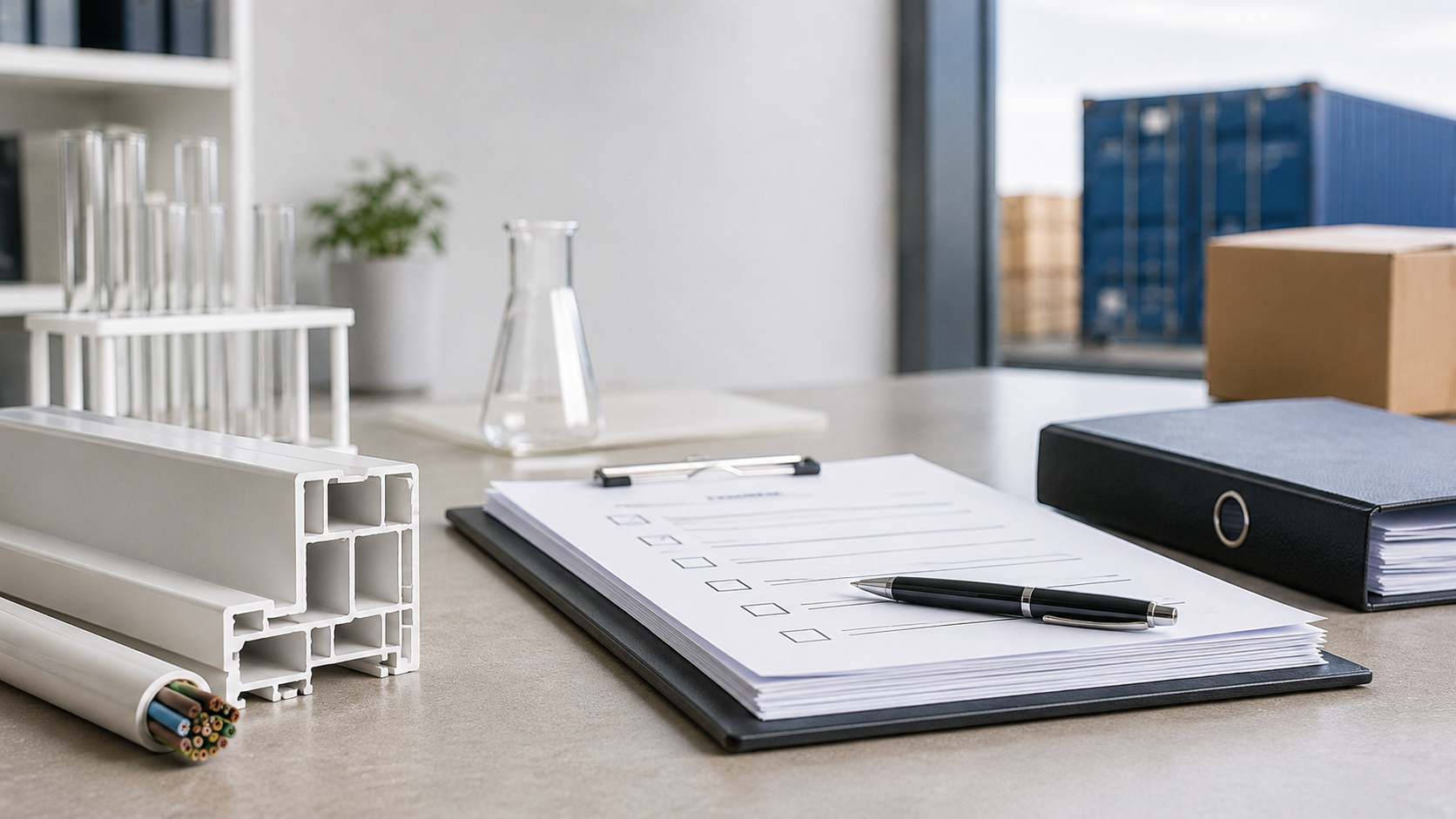
Before approving bulk orders, exporters should request PVC stabilizer documents that match the actual stabilizer grade and shipment batch.
Document | Purpose | Buyer Should Check |
SDS | Safety, handling and storage | Product name, revision date, hazard information |
TDS | Technical guidance | Application, dosage, appearance, storage |
COA | Batch quality confirmation | Batch number, test values, production date |
REACH/SVHC declaration | EU compliance communication | Candidate List reference and product scope |
RoHS report/declaration | Restricted substance review | Ten RoHS substances and tested sample |
Heavy metal report | Lead and cadmium control | Pb, Cd, Hg, Cr(VI) values |
Trial report | Processing and performance support | Test method, formula, results |
Customer RSL support | Brand/customer compliance | Restricted substance list matching |
Why documents must match the actual product grade?
A generic document is not enough for export approval. Buyers should confirm that the stabilizer code, supplier name, sample description and report date match the product being used.
If a document covers a product family, the supplier should explain which grades are included and why the document applies.
Sample Trial Process for Lead Stabilizer Replacement
Replacing lead stabilizer should follow a structured process. This reduces trial errors and protects production stability.
Step | Action | Output |
1 | Share current formula and product type | Baseline information |
2 | Confirm export market and compliance needs | REACH/RoHS/document target |
3 | Review current lead stabilizer dosage | Replacement reference |
4 | Design calcium-zinc one-pack trial | Suggested dosage and adjustment |
5 | Run lab heat stability test | Initial screening |
6 | Run small machine trial | Fusion and surface check |
7 | Run production trial | Processing window validation |
8 | Compare product performance | Mechanical, color, aging and surface data |
9 | Review documents | SDS, COA, REACH, RoHS, heavy metals |
10 | Approve bulk formula | Final product and process confirmation |
What buyers should send before requesting a sample?
To help a PVC stabilizer supplier recommend the right solution, buyers should provide:
Product type and application
Current lead stabilizer dosage
Full formula if available
PVC resin grade
Filler type and dosage
Lubricant system
Processing method and temperature
Current production problems
Target market and compliance requirement
Required test reports or documents
Sample trial plan and expected output
How AIMSEA Supports Calcium-Zinc One Pack Replacement?

AIMSEA can support PVC manufacturers with lead-free PVC stabilizer, calcium zinc stabilizer and customized PVC heat stabilizer solutions for different applications.
Application-based replacement support
Different PVC products need different replacement logic. Pipes may focus on pressure performance and long-term heat stability. Profiles may focus on whiteness, weld strength and weatherability. Cables may need heat aging and RoHS support. Boards may need low odor and surface cleanliness.
AIMSEA’s calcium-zinc and one-pack systems can be evaluated according to product application, processing method and export-market requirement.
One-pack solutions for easier daily production
A calcium-zinc one-pack direction is useful when factories want simpler dosing and more stable batch control. It can combine heat stabilization and lubrication support, but the formula must still be verified under real machine conditions.
For export PVC products, the final target is not only lead replacement. The new system should also support stable production, acceptable cost, reliable performance and complete documentation.
FAQ About Calcium-Zinc One Pack Stabilizer vs Lead Stabilizer
Can calcium-zinc one pack stabilizer replace lead stabilizer directly?
Not by equal dosage only. A calcium zinc one pack stabilizer can replace lead stabilizer in many PVC products, but the formula and lubrication system should be adjusted and tested.
Why does Ca-Zn replacement sometimes cause plate-out?
Plate-out may occur if the lubricant balance, filler level, processing temperature or stabilizer compatibility is not adjusted correctly. The whole PVC stabilizer package should be reviewed.
Is calcium-zinc stabilizer suitable for export PVC products?
Yes, calcium zinc stabilizer is widely used as a lead-free direction for export PVC products. Buyers should still request product-specific REACH, RoHS and heavy metal documents.
What tests are needed before replacing lead stabilizer?
Buyers should run heat aging, dynamic stability, Congo red, color, plate-out, fusion, mechanical performance and product-specific tests such as weld strength, impact or haze.
What documents should I request from the stabilizer supplier?
Request SDS, TDS, COA, REACH/SVHC declaration, RoHS report or declaration, heavy metal report and sample trial report.
Conclusion
Replacing PVC lead stabilizer with a calcium zinc one pack stabilizer is a technical and compliance project. For export PVC products, the goal is not only to remove lead. The new stabilizer must also maintain heat stability, processing window, surface quality, mechanical performance and customer approval.
The best replacement process is clear: confirm compliance needs, review the formula, adjust lubrication, run lab and production trials, compare performance data and prepare complete export documents.
AIMSEA’s lead-free PVC stabilizer, Ca-Zn stabilizer, one-pack PVC stabilizer and customized PVC heat stabilizer solutions can support manufacturers who want to replace lead stabilizers while keeping stable production and export-ready documentation.