

Posted by Ms.Yan
in blog
Technical Engineer
Updated 2026-10-27
PVC Processing Aid vs Stabilizer vs Lubricant: Key Differences
Read:30
Source:
PVC processing aids, heat stabilizers, and lubricants are often used in the same formulation, but they perform different functions. Processing aids influence PVC fusion and melt behavior, heat stabilizers protect against thermal degradation, and lubricants control friction and material release during manufacturing.
Confusion arises because all three can affect extrusion performance. A formulation may have adequate heat stability but still fuse poorly. Changing a stabilizer package may alter lubrication, while certain polymeric processing aids can provide both fusion-related and lubricating effects.
Understanding these differences helps manufacturers avoid unnecessary additive changes and identify which formulation component needs attention. This guide compares the three additive categories, explains their effects on PVC processing, and outlines practical methods for evaluating formulation adjustments.
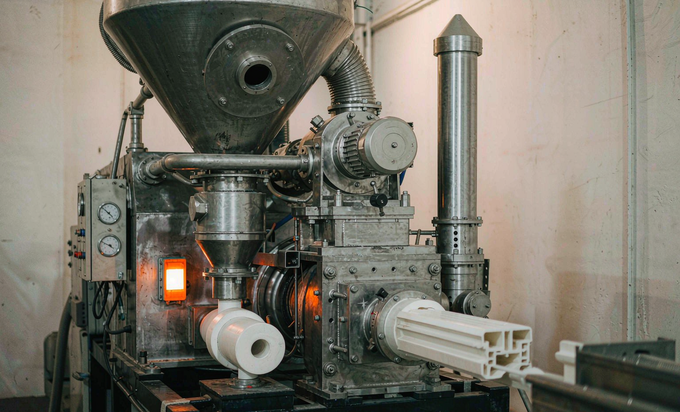
A twin-screw extruder processes PVC with stabilizers, processing aids and lubricants added at the hopper.
>Quick AnswerPVC processing aids primarily modify fusion, melt strength, and processing behavior. PVC heat stabilizers protect against thermal degradation, while PVC lubricants control friction and equipment release. Although some functions overlap, these additives are not generally interchangeable. Selection depends on the formulation, processing conditions, and performance requirements.
Key Differences Between PVC Processing Aids, Stabilizers and Lubricants
The main difference lies in the property each additive is designed to control.
| Comparison | PVC Processing Aid | PVC Heat Stabilizer | PVC Lubricant |
|---|---|---|---|
| Primary function | Modify fusion and melt behavior | Limit thermal degradation | Control friction and release |
| Typical materials | Acrylic polymers and specialized processing additives | Calcium-zinc, organotin and other stabilizer systems | Waxes, fatty acid derivatives and metallic soaps |
| Main processing effect | Fusion, melt strength and rheology | Thermal stability and color retention | Friction, flow, fusion timing and metal release |
| Common applications | Profiles, sheets, foam and selected PVC compounds | Most heat-processed PVC products | Many rigid and flexible PVC formulations |
| Main limitation | Cannot replace thermal stabilization | Does not automatically correct poor fusion | Cannot replace thermal protection |
These are functional categories rather than completely separate chemical families. Some processing aids provide lubricating effects, while certain stabilizer packages already include internal or external lubricants.
For manufacturers, the important question is not simply which additive is present, but what function it performs in the complete PVC formulation.
What Are Plastic Processing Aids and How Do They Work in PVC?
Plastic processing aids are additives used to modify polymer processing behavior. Their chemical structures and functions vary according to the polymer and manufacturing process.
In PVC applications, many processing aids are acrylic polymers designed to influence fusion, melt rheology, and processing consistency.
During rigid PVC processing, heat and mechanical shear progressively transform the powder compound into a fused melt. Suitable processing aids can promote this development and help establish the melt characteristics required for extrusion, calendering, and other manufacturing operations.
Acrylic Processing Aids for Fusion and Melt Strength
Acrylic processing aids are commonly used in rigid PVC formulations because suitable grades are compatible with PVC and can influence melt development.
Fusion-promoting grades help PVC particles develop into a more uniform fused structure. Higher-molecular-weight processing aids may provide additional melt strength, which can be useful in selected foam, profile, or sheet applications.
These effects depend on the processing aid's polymer chemistry, molecular characteristics, dosage, and the complete formulation.
Technical research published by the American Institute of Chemists explains how acrylic processing aids influence PVC fusion, melt rheology, surface finish, and extrusion performance [1].
However, adding more processing aid does not always improve production. A grade that promotes fusion may also change processing torque and melt elasticity. Excessive addition can increase cost or shift processing behavior away from the desired operating range.
Manufacturers should therefore evaluate the specific function of a processing aid for plastics, rather than assuming that all products in this category will provide the same benefits.
Not All Processing Aids Promote Fusion in the Same Way
One important distinction is the difference between fusion-promoting additives and processing additives developed for lubrication or hot-metal release.
Some specialized polymeric processing aids can improve release from processing equipment while also affecting surface finish or melt behavior.
For example, a processing aid selected to increase melt strength should not automatically be considered suitable for correcting sticking at an extrusion die.
Similarly, a lubricating processing aid may not provide the same fusion-promoting effect as a conventional acrylic grade.
The product's technical data, intended applications, and performance under actual processing conditions should determine its role in the formulation.
How Do PVC Heat Stabilizers and Lubricants Differ from Processing Aids?
Heat stabilizers and lubricants influence processing performance, but they do not have the same primary functions as acrylic processing aids.
PVC Heat Stabilizers Protect Against Thermal Degradation
PVC can undergo thermal degradation when exposed to processing heat. This may lead to yellowing, progressive discoloration, and deterioration of material properties.
A PVC heat stabilizer helps protect the polymer during the temperature and residence-time conditions of manufacturing.
calcium-zinc PVC stabilizers are widely used in lead-free PVC formulations, including pipes, fittings, profiles, flooring, and cables.
The appropriate grade depends on the application, resin characteristics, processing conditions, and required performance.
However, better thermal stability does not automatically solve poor fusion.
A PVC compound may demonstrate acceptable heat-aging behavior yet still show delayed melt development, unstable extrusion pressure, or surface defects.
These problems may involve processing aids, lubricants, equipment conditions, or interactions among several formulation components.
Commercial stabilizer systems may also contain lubricants and co-stabilizers. This becomes particularly important when manufacturers change stabilizer grades or switch to integrated one-pack systems.
PVC Lubricants Control Friction and Equipment Release
PVC lubricants influence friction within the compound and between the material and processing equipment.
Internal lubricants mainly affect friction and flow within the PVC system. External lubricants primarily reduce adhesion to metal surfaces and influence material release.
The distinction is useful, although the effects can overlap depending on lubricant chemistry and the complete formulation.
Excessive external lubrication may delay PVC fusion under certain processing conditions. Insufficient lubrication can contribute to sticking, excessive equipment load, or difficult material release.
For example, increasing wax content may improve release from a die but also change the fusion behavior of a rigid PVC compound.
If the original surface problem was caused by inadequate fusion, adding more external lubricant could make the situation worse.
This is why lubricants should be selected according to their actual processing effects rather than simply to make the compound flow more easily.
How Do These Additives Affect PVC Fusion, Torque and Surface Quality?
The practical differences become clearer when manufacturers evaluate the formulation during processing.
A processing aid influences how the PVC compound develops into a fused melt. The lubricant system affects friction and material release, while the heat stabilizer must provide adequate protection under the resulting processing conditions.
A suitable formulation balances these functions without creating excessive mechanical load or unnecessary thermal exposure.
Why Can More Processing Aid Increase Torque?
Some acrylic processing aids promote fusion and change the rheological behavior of the PVC melt.
Depending on the grade and formulation, increasing the processing aid level may produce a higher torque response during laboratory mixing or industrial processing.
A higher torque reading does not automatically indicate better or worse performance.
The result must be considered alongside fusion time, temperature, equipment load, melt behavior, and finished-product properties.
Controlled comparisons are more useful than interpreting a single torque value in isolation.
Why Can More Wax Delay PVC Fusion?
External lubricants can reduce friction and shear transfer during PVC processing.
When the external lubricating effect becomes excessive for the formulation and equipment, the compound may require more time or energy to reach the desired fusion state.
However, different lubricants behave differently. Their effects depend on chemistry, concentration, resin characteristics, and processing conditions.
The appropriate lubrication system must therefore be evaluated together with the processing aid and stabilizer package.
Why Doesn't Better Heat Stability Guarantee Better Extrusion?
Thermal stability and processing behavior are connected, but they are not the same property.
A compound can resist thermal discoloration while still suffering from poor fusion, inadequate melt strength, or inconsistent material release.
Conversely, a formulation that fuses quickly may still lack sufficient protection against prolonged thermal exposure.
A successful formulation must satisfy both processing and finished-product requirements.
Which Additive Should You Check for Common PVC Processing Problems?
When a processing defect appears, manufacturers may be tempted to increase the additive most closely associated with the visible symptom.
Yellowing may lead to more stabilizer, while rough surfaces may lead to additional processing aid.
However, the same problem can have several possible causes.
| Processing Problem | Additive Function to Review | Other Factors to Check |
|---|---|---|
| Yellowing during extrusion | Heat stabilization | Temperature, residence time, contamination |
| Delayed fusion | Processing aid and lubrication balance | Resin grade, shear, equipment temperature |
| Excessive torque | Processing aid and lubricant system | Filler loading, fusion behavior, equipment conditions |
| Material sticking to tooling | External lubrication or release function | Tooling condition, temperature, degradation |
| Poor melt strength | Processing aid characteristics | Resin properties and processing conditions |
| Rough or inconsistent surfaces | Fusion and lubrication behavior | Filler dispersion and die condition |
| Plate-out or surface deposits | Lubricant compatibility and additive package | Other ingredients, contamination, operating duration |
These are starting points for technical investigation rather than confirmed diagnoses.
Consider a PVC profile extrusion line that begins experiencing delayed fusion after switching to a different stabilizer grade.
Adding more acrylic processing aid may appear to be the logical response.
However, the replacement stabilizer may already contain a different lubricant package. If the total external lubrication has increased, the delayed fusion could be related to the new stabilization system rather than insufficient processing aid.
A meaningful investigation should compare the original and replacement packages, including their stabilizing and lubricating contributions.
Similarly, yellowing and surface deposits may occur together without sharing one underlying cause.
The discoloration could involve thermal degradation, while deposits may be related to additive compatibility, lubrication, or processing conditions.
Separating these possibilities is more effective than immediately increasing stabilizer dosage.
Can PVC Processing Aids, Stabilizers and Lubricants Replace One Another?
In most formulations, these three additive groups are not directly interchangeable.
A conventional acrylic processing aid cannot replace the thermal protection provided by a heat stabilizer. A lubricant cannot automatically deliver the melt-strength effects of a suitable processing aid, and a stabilizer does not necessarily correct fusion or equipment-release problems.
Some functional overlap does exist.
For example, calcium stearate is commonly used as a lubricant and may also form part of certain calcium-zinc stabilization systems.
Specialized polymeric processing additives can provide lubricating or hot-metal-release effects.
These examples demonstrate why additive function depends on the actual chemistry and product formulation rather than the general category name.
A one-pack PVC stabilizer may integrate stabilizing components with lubricants, co-stabilizers, and selected processing-support ingredients.
Such a product may replace certain separately dosed additives, but it does not necessarily contain every ingredient required by a complete PVC compound.
Before changing the formulation, manufacturers should confirm which functions are included in the supplied package and whether additional processing aids or lubricants are still required.
How to Test Additive Changes in a PVC Formulation
A useful formulation trial begins with a qualified reference recipe and a clearly defined performance target.
If delayed fusion is the primary concern, the evaluation should focus on processing aid and lubrication effects. If yellowing is the main problem, heat stabilization and processing conditions require greater attention.
The existing resin, additive dosages, mixing procedure, and equipment settings should be documented before testing alternative formulations.
Candidate changes can then be evaluated under comparable conditions.
| Test Area | What to Evaluate | Decision Value |
|---|---|---|
| Fusion behavior | Fusion time and torque curve | Processing aid and lubricant effects |
| Thermal stability | Heat aging and color change | Stabilizer performance |
| Processing load | Torque, motor current, melt pressure | Equipment and formulation response |
| Metal release | Sticking and tooling condition | Lubrication effectiveness |
| Surface finish | Roughness, gloss, visible defects | Fusion and compatibility |
| Finished-product quality | Relevant mechanical and appearance tests | Suitability for the intended product |
Changing several additives and processing parameters simultaneously can make the results difficult to interpret.
Where practical, manufacturers should make controlled adjustments and document the effect of each change.
Torque-rheometer testing can help compare fusion behavior, but laboratory results should be confirmed under representative production conditions.
Longer processing trials may be necessary to identify issues such as plate-out or surface deposits that develop gradually during continuous manufacturing.
Technical product information from Arkema also demonstrates that acrylic processing aid performance should be evaluated against the specific formulation, application, and processing requirements [2].
The most reliable decision combines laboratory results, production observations, and finished-product acceptance criteria.
How AIMSEA Supports PVC Stabilizer and Additive Selection
Selecting between a processing aid, heat stabilizer, and lubricant often raises a broader formulation question: does the compound need a change in one ingredient, or should the stabilizer and lubrication system be reviewed together?
AIMSEA, established in 1997, specializes in calcium-zinc PVC stabilizers, application-specific one-pack systems, and customized stabilizer solutions for different manufacturing requirements.
Its product portfolio supports PVC pipes, fittings, profiles, flooring, cables, and other applications with different thermal stability and processing demands.
AIMSEA's technical approach focuses on matching stabilizer performance to the complete formulation and production process.
Calcium-Zinc Stabilizers for PVC Profiles and Pipes
For PVC profile extrusion, AIMSEA offers PVC profile stabilizer solutions, an application-specific calcium-zinc stabilizer positioned for thermal stability, cost-performance balance, and reduced plate-out.
AIMSTA-5096 is designed for high-output profile extrusion where suitable thermal protection and consistent processing are important.
For pipe and fitting applications, AIMSEA also provides PVC pipe and fitting stabilizers developed for continuous extrusion and injection molding.
These products illustrate why the selection of a PVC stabilizer should consider both heat stability and the processing requirements of the finished product.
A stabilizer suited to profile extrusion should not automatically be treated as interchangeable with a grade designed for injection-molded fittings.
The final selection should account for the PVC resin, filler content, lubrication system, processing equipment, and required finished-product properties.
One-Pack Stabilizers and Lubrication Balance
AIMSEA's one-pack PVC stabilizer systems can combine calcium-zinc stabilizing components with selected lubricants, co-stabilizers, and other functional additives.
These integrated systems can simplify part of the dosing and formulation-management process.
However, changing a one-pack system may also change the total contribution of lubricating components.
For example, if a PVC compound develops delayed fusion after switching stabilizer grades, the manufacturer should review the composition and functional balance of the replacement package before increasing the amount of separate processing aid.
Similarly, if a compound begins developing surface deposits after increasing one-pack dosage, the total lubricant contribution should be evaluated together with the processing conditions and other ingredients.
This approach helps manufacturers focus on the actual formulation balance rather than treating each symptom as an isolated additive problem.
Formulation Evaluation and Technical Support
AIMSEA supports manufacturers in evaluating stabilizer options for different PVC formulations and processing conditions.
For a productive technical review, customers can provide their PVC product type, resin grade, current stabilizer and lubricant dosages, filler content, equipment parameters, and observed processing problems.
These details help identify whether the primary concern involves thermal stability, additive compatibility, lubricant balance, or another part of the formulation.
AIMSEA can then discuss appropriate stabilizer grades and sample testing based on the customer's application requirements.
Need help evaluating your PVC stabilizer or one-pack formulation?
Contact AIMSEA with your existing recipe and processing conditions to discuss suitable stabilizer options and a practical evaluation plan.
Frequently Asked Questions
Is a PVC processing aid the same as a heat stabilizer?
No. Processing aids primarily influence fusion and melt behavior, while heat stabilizers protect PVC against thermal degradation. Both affect processing performance, but their main functions are different.
Are all acrylic processing aids designed to accelerate fusion?
No. Acrylic processing aids vary in chemistry, molecular characteristics, and intended function. Some promote fusion, others improve melt strength, and specialized grades may provide additional processing effects.
Is calcium stearate a stabilizer or a lubricant?
Calcium stearate is commonly used as a lubricant and may also be included in certain calcium-zinc stabilizer systems. Its contribution depends on the complete formulation.
Can a PVC one-pack stabilizer replace a separate processing aid?
Only when the specific one-pack provides the required processing function. Many PVC formulations still need separately selected processing aids. The product composition and technical performance should be confirmed before removing ingredients.
What should manufacturers test after changing a PVC stabilizer?
They should compare heat stability, color retention, fusion behavior, lubrication effects, surface quality, and relevant finished-product properties under controlled conditions.
Conclusion
PVC processing aids, heat stabilizers, and lubricants perform different but connected functions during manufacturing.
Processing aids influence fusion and melt behavior, stabilizers provide thermal protection, and lubricants control friction and material release. Although certain products offer overlapping functions, the three categories are not generally interchangeable.
Understanding these differences helps manufacturers avoid unnecessary additive changes and identify the most relevant areas for technical evaluation.
The most effective approach is to review the complete formulation, compare candidate adjustments through controlled testing, and confirm their performance during production.
AIMSEA supports PVC manufacturers with application-specific calcium-zinc stabilizers, integrated one-pack systems, and formulation evaluation for different processing requirements.
Contact AIMSEA to discuss stabilizer selection, formulation compatibility, and sample testing for your PVC application.
References
[1] Abate, K. — Formulating for Extruding Rigid PVC Fenestration Products
The Chemist, Volume 84, Issue 2, American Institute of Chemists, 2007.
Technical discussion of rigid PVC formulation, acrylic processing aids, fusion behavior, melt rheology, stabilization, and lubrication requirements.
https://www.theaic.org/publications/archives/thechemist/The_Chemist_Vol_84_Issue_2_2007/formulating_for_extruding.html
[2] Arkema — Plastistrength 550 Acrylic Process Aid Technical Data Sheet
Technical product information describing acrylic processing aid applications, fusion promotion, melt-strength characteristics, and formulation evaluation.
https://www.arkema.com/files/live/sites/shared_arkema/files/downloads/products-documentations/organic-peroxides/functional-additives-acrylic-modifiers/plastistrength/plastistrength-550-tds.pdf