
PVC Blooming vs Plate-Out: Differences, Causes and Solutions
Read:135
Source:
A white powder, waxy film or oily layer on a PVC product is often described as blooming. When a similar material collects on a die, screw, calibrator or calender roll, it is usually called plate-out.
Although PVC blooming and plate-out can involve some of the same additives, they are not the same problem.
Blooming forms on the finished PVC product after processing or during storage. Plate-out forms on processing equipment while PVC is being manufactured.
This distinction determines what should be inspected, which tests should be used and how the formulation should be adjusted. Reducing PE wax, changing the PVC stabilizer or lowering the processing temperature without identifying the actual problem may create new defects without removing the original cause.
This guide explains the difference between PVC blooming and plate-out, why they are often confused and how manufacturers can diagnose and solve each problem.
Quick Comparison: PVC Blooming vs Plate-Out
Comparison | PVC Blooming | PVC Plate-Out |
Where it appears | Finished PVC surface | Die, screw, barrel, calibrator or roll |
When it appears | After processing or during storage | During continuous processing |
Main mechanism | Additives migrate from inside PVC to the product surface | Formulation components separate and deposit on equipment |
Typical appearance | White powder, waxy film, oily layer or sticky surface | Waxy deposit, white scale, yellow residue or black material |
Common impact | Low gloss, poor printing, weak adhesion and surface contamination | Short cleaning intervals, streaks, unstable output and scrap |
Main validation | Storage aging and surface analysis | Extended production trial and deposit analysis |
First inspection | Finished-product surface and storage history | Deposit location, processing data and equipment condition |
The quickest initial test is to check both the product and the processing equipment. If the finished product develops a surface layer after storage while the equipment remains clean, blooming is more likely. If deposits accumulate on rolls or dies during production, plate-out should be investigated.
What Is PVC Blooming?
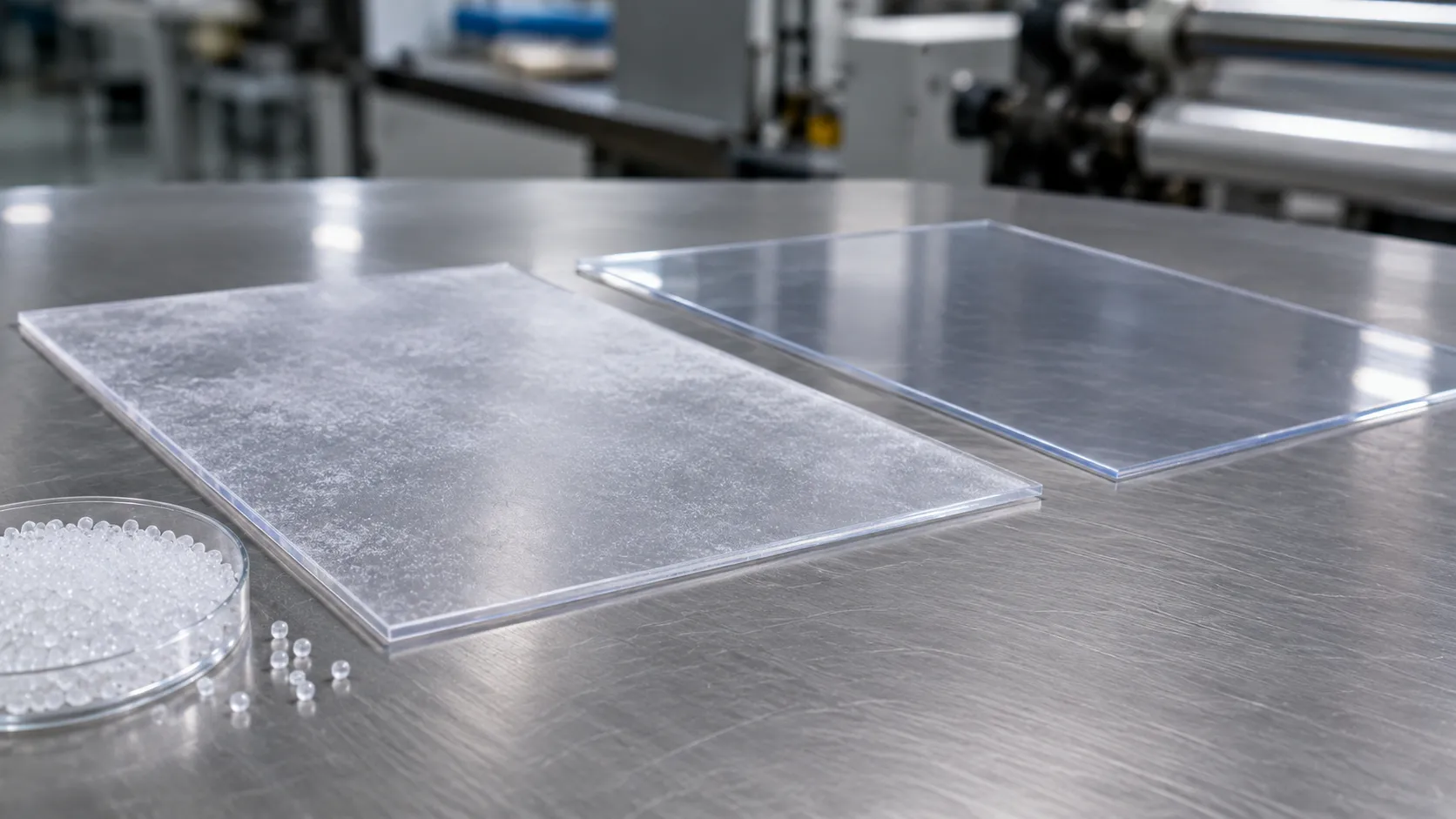
PVC blooming is the migration of an additive or formulation component from inside the PVC material to the finished-product surface.
The migrated material may appear as:
· A white or grey powder
· A dry waxy coating
· A transparent cloudy film
· An oily or sticky surface
· Reduced gloss
· Surface contamination that returns after cleaning
Blooming may begin shortly after cooling, but it can also appear days or weeks after production. Storage temperature, sunlight, humidity, contact materials and formulation compatibility can affect how quickly it develops.
Blooming occurs when an additive has limited compatibility with PVC, is used above the level the polymer can retain, or has sufficient mobility to diffuse toward the surface.
Common substances involved include:
· PE wax and paraffin wax
· Fatty acid esters
· Calcium or zinc stearates
· Stabilizer components
· Plasticizers
· Antioxidants
· Processing additives
· Other low-molecular-weight materials
In flexible PVC, plasticizer migration is a major concern. In rigid PVC, lubricant, metal-soap or stabilizer-component blooming is more common.
What Is PVC Plate-Out?
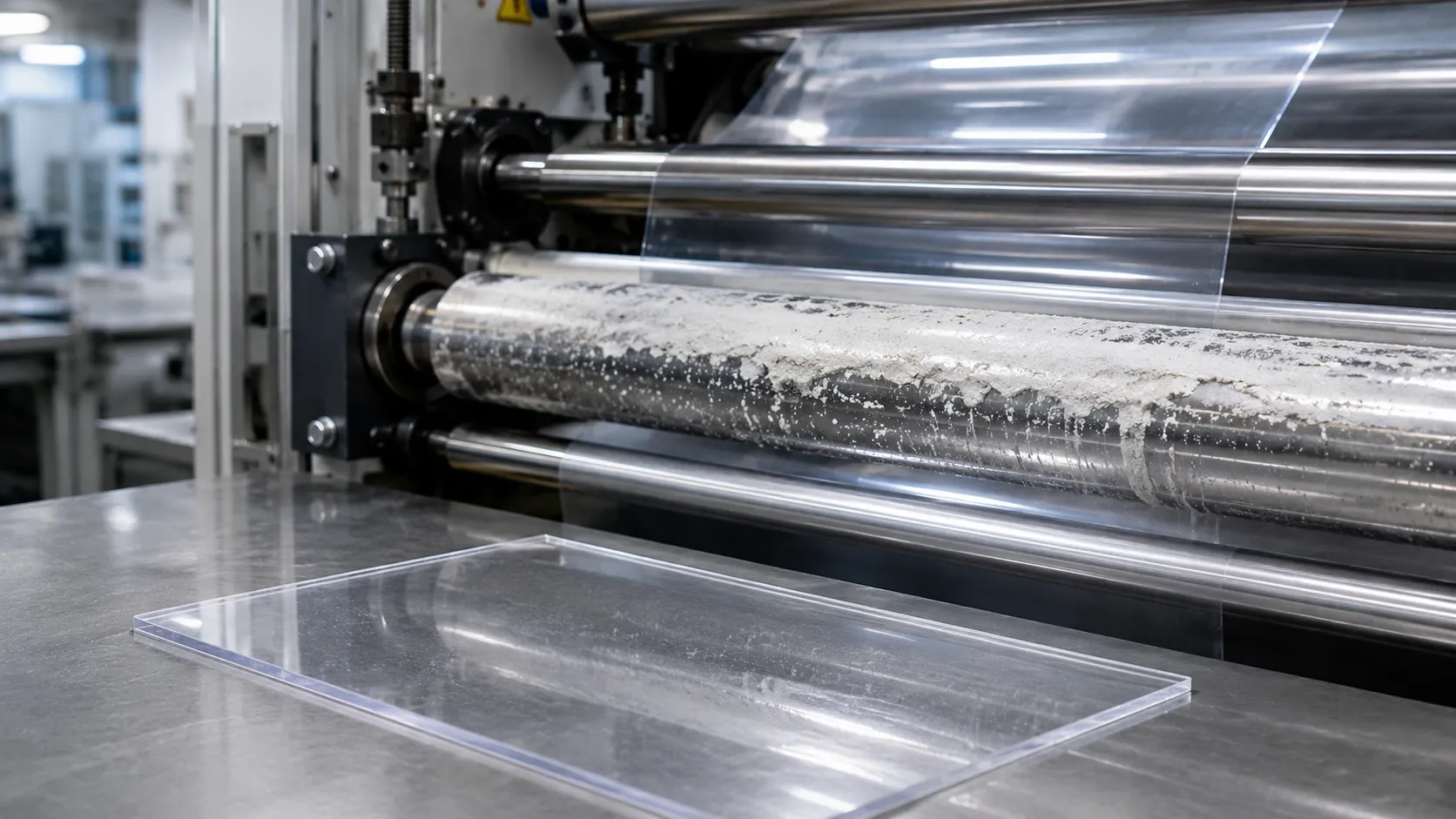
PVC plate-out is the accumulation of formulation components or degradation residues on processing equipment.
It may form on:
· Screws and barrels
· Vent openings
· Adapters
· Die channels
· Die lips
· Calibrators
· Calender rolls
· Embossing rolls
Plate-out develops while the material is being processed. It may begin as a thin film and gradually build into a visible waxy layer, hard scale or carbonized deposit.
As the deposit grows, it can transfer back onto the product and cause:
· Surface streaks
· Black specks
· Low gloss
· Haze
· Die lines
· Thickness variation
· Color inconsistency
· Higher scrap rates
Plate-out is often linked to lubricant imbalance, but the deposit may also contain calcium carbonate, titanium dioxide, metal salts or partially degraded PVC. A white deposit should therefore not automatically be identified as excessive PE wax.
Why Blooming and Plate-Out Are Often Confused?
The two problems can produce similar visual symptoms.
A white PVC surface may result from:
· Lubricant blooming after storage
· Plasticizer migration
· Plate-out transferred from a calender roll
· Inorganic deposits transferred from a die
· Poor filler dispersion
· Moisture-related contamination
· Thermal degradation
The confusion becomes greater because the same low-compatibility component may contribute to both problems.
For example, an unsuitable lubricant may migrate from the PVC melt and form plate-out on a die during processing. The portion retained in the finished product may later migrate toward the product surface and form blooming.
Plate-out and blooming can therefore occur in the same formulation, but they need to be evaluated separately.
How to Identify Which Problem You Have?
A reliable diagnosis should follow a fixed sequence rather than beginning with a formulation change.
1. Check Where the Material Appears
Look at:
· Die lips
· Calibrator surfaces
· Screws and adapters
· Calender rolls
· Finished PVC surfaces
A deposit found primarily on equipment indicates plate-out. A layer developing only on stored products suggests blooming.
If both equipment and products are affected, collect separate samples from each location. Their compositions may not be identical.
2. Record When It Appears
Timing is an important clue.
Time of Appearance | More Likely Direction |
Immediately after start-up | Contamination, incorrect formulation or retained material |
After several hours of production | Plate-out, migration or gradual deposit accumulation |
Immediately after product cooling | Lubricant imbalance, poor compatibility or deposit transfer |
After several days of storage | Blooming or plasticizer migration |
After high-temperature storage | Temperature-accelerated additive migration |
After stop and restart | Retained degraded PVC or equipment dead zones |
Do not describe the timing only as “quickly” or “after a long time.” Record the actual production hours or storage days.
3. Examine Appearance and Texture
Appearance | Possible Direction |
Dry white powder | Metal soaps, lubricant, filler or stabilizer component |
Soft waxy film | PE wax, paraffin or fatty acid ester |
Oily and sticky surface | Plasticizer or liquid additive migration |
Hard white scale | Inorganic-rich plate-out |
Yellow or brown deposit | Partial PVC degradation |
Black particles | Local overheating or long residence time |
Transparent cloudy layer | Migrating low-molecular component |
Visual inspection is useful for screening but cannot prove composition.
4. Perform a Wipe Test
Gently wipe the surface with a clean dry cloth and then, if appropriate, with a suitable solvent.
Observe:
· Whether the material is easily removed
· Whether it feels dry, waxy or oily
· Whether it returns after storage
· Whether wiping restores gloss
· Whether the surface remains sticky
If a cleaned product develops the same layer again after storage, internal migration is likely.
5. Compare Fresh and Aged Samples
Retain samples from the same production batch and inspect them:
· Immediately after processing
· After room-temperature storage
· After elevated-temperature storage
· After high- and low-temperature cycling
This helps distinguish a manufacturing deposit from a time-dependent blooming problem.
Common Causes of PVC Blooming
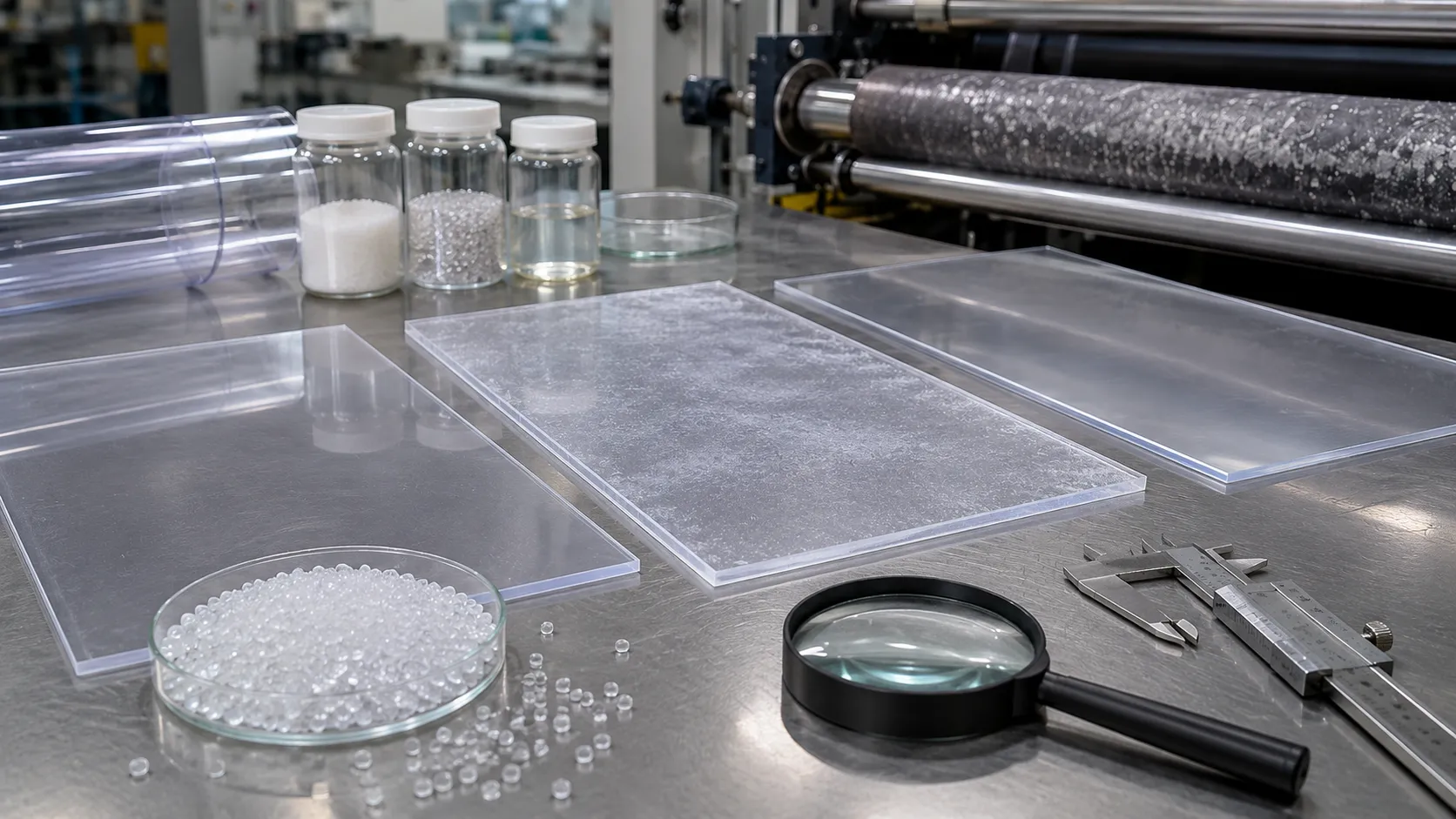
Additive Level Exceeds Compatibility
PVC can retain only a certain amount of each additive under specific conditions. When the concentration exceeds the formulation’s compatibility limit, part of the additive may separate and migrate to the surface.
Simply reducing the total additive level is not always the correct solution. The product may require a more compatible or higher-molecular-weight alternative.
Low-Molecular-Weight Lubricants
Low-molecular fractions in PE wax, paraffin, fatty acid derivatives or metal soaps can migrate more easily.
The quality and molecular-weight distribution of the lubricant may be as important as the dosage.
Plasticizer Migration
In flexible PVC, plasticizers may diffuse to the surface, evaporate or transfer into adjacent materials.
The result may include:
· An oily or sticky surface
· Dust attraction
· Reduced flexibility over time
· Adhesive or coating failure
· Changes in nearby rubber, foam or plastic
Plasticizer permanence, molecular size and compatibility with PVC should be evaluated.
Stabilizer or Metal-Soap Bloom
Some calcium-zinc stabilizer components or metal soaps may migrate if the stabilizer system is not compatible with the PVC formulation.
This does not mean all Ca-Zn stabilizers have the same blooming risk. Product form, co-stabilizer design, lubricant content and processing conditions all affect performance.
Storage Conditions
Higher storage temperatures generally increase additive mobility. Blooming may therefore appear during summer transport or warehouse storage even when products look acceptable immediately after production.
Contact with absorbent packaging, foam, adhesives or other plastics may also change migration behavior.
Common Causes of PVC Plate-Out
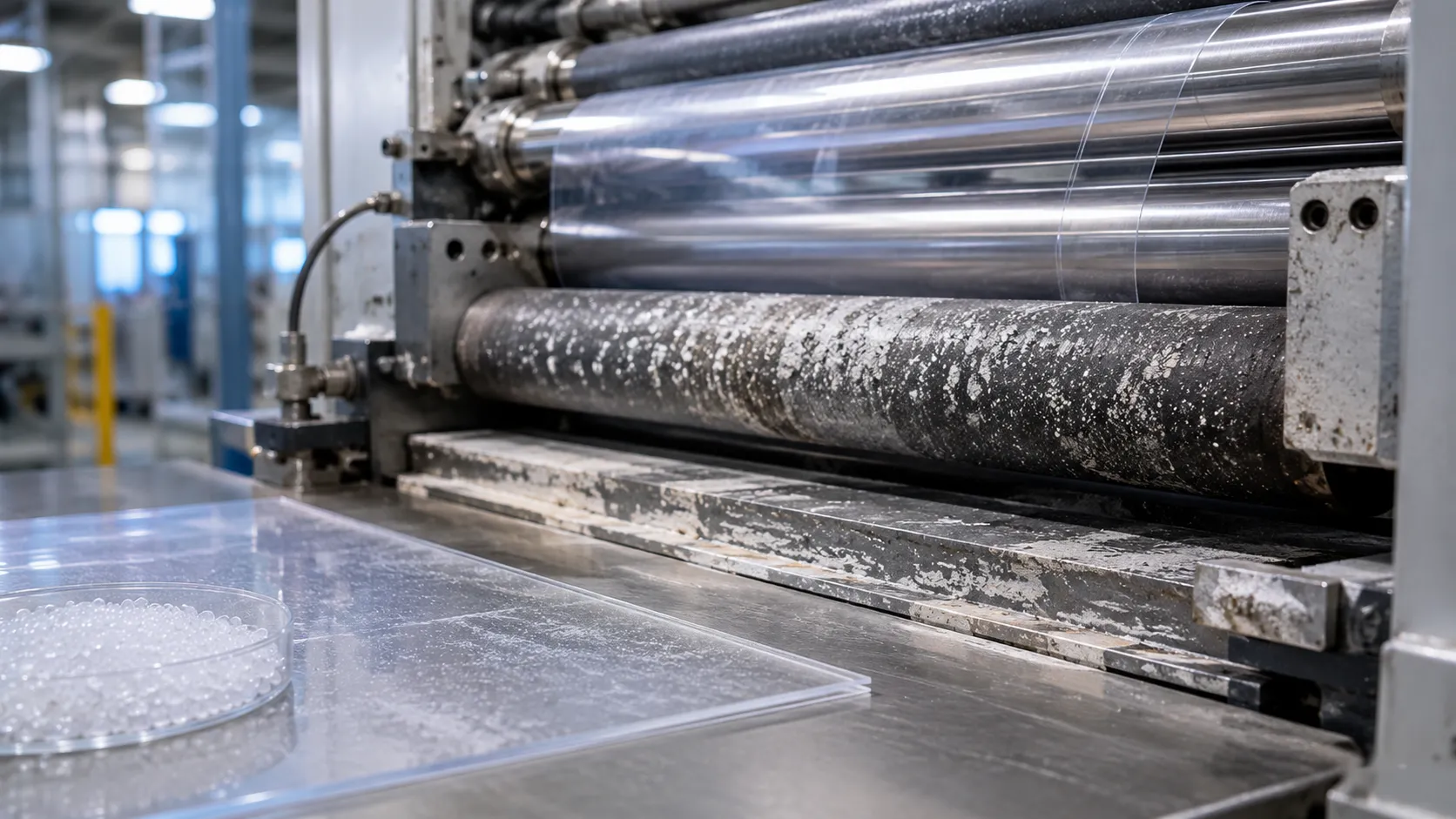
Lubricant Imbalance
Excessive external lubrication may delay fusion and encourage additives to separate from the PVC melt. Insufficient external lubrication may increase metal adhesion, friction heat and degradation.
Check the total lubricant system, including lubricants already incorporated into the PVC one-pack stabilizer.
Stabilizer and Lubricant Incompatibility
Changing the stabilizer can change:
· Fusion time
· Torque
· Melt viscosity
· Metal release
· Thermal stability
· Lubricant demand
Plate-out appearing after a stabilizer change may result from the new overall balance rather than a defective stabilizer.
Fillers and Pigments
Calcium carbonate and titanium dioxide can contribute to white or hard plate-out deposits.
Check:
· Particle size
· Surface coating
· Moisture
· Dispersion
· Dosage
· Supplier and batch changes
Moisture
Moisture in filler, recycled material or dry blend can contribute to agglomeration, poor fusion and deposits around vents or calibrators.
Dry-blend cooling and storage conditions should be reviewed.
Incomplete Fusion or Excessive Heat
Incomplete fusion may leave additives insufficiently incorporated into the PVC matrix. Excessive heat or residence time may consume the stabilizer and create degraded deposits.
Relevant processing data include:
· Fusion time
· Peak torque
· Equilibrium torque
· Melt temperature
· Head pressure
· Screw speed
· Output
· Residence time
Equipment Conditions
Dead zones, worn screws, rough die channels and damaged metal surfaces can trap material and promote accumulation.
If deposits repeatedly form in the same equipment location, inspect the machine before redesigning the entire formulation.
Can Blooming and Plate-Out Occur Together?
Yes.
A formulation can produce equipment plate-out during processing and product blooming after storage.
This is more likely when:
· A lubricant has limited PVC compatibility
· Low-molecular components are present
· The stabilizer package and lubricant system are unbalanced
· The additive concentration is near or above its compatibility limit
· The PVC is incompletely fused
· Storage temperature accelerates later migration
Plate-out transferred from a roll or die can also create a surface defect that looks like blooming. However, cleaning the product may remove the transferred material permanently, while true blooming may return as more additive migrates from inside the PVC.
To distinguish the two, examine the equipment during production and recheck cleaned products after controlled storage.
Diagnostic Tests for Blooming and Plate-Out
Test | Main Purpose |
Equipment inspection | Confirm whether plate-out occurs during processing |
Wipe test | Compare powdery, waxy and oily surface material |
Storage aging | Determine whether blooming develops over time |
Temperature cycling | Evaluate temperature-dependent migration |
Extended plate-out test | Measure deposit accumulation during production |
FTIR | Identify wax, plasticizer, ester or metal-soap components |
Ash test | Estimate the inorganic content of a deposit |
SEM-EDX or XRF | Identify elements such as Ca, Ti, Zn or Sn |
DSC | Compare melting and crystallization behavior |
Contact-angle testing | Detect surface changes before visible blooming appears |
GC-MS | Identify complex organic migration components |
Laboratory results should be compared with the original raw materials. A deposit spectrum alone may be difficult to interpret without reference samples.
Solutions for PVC Blooming
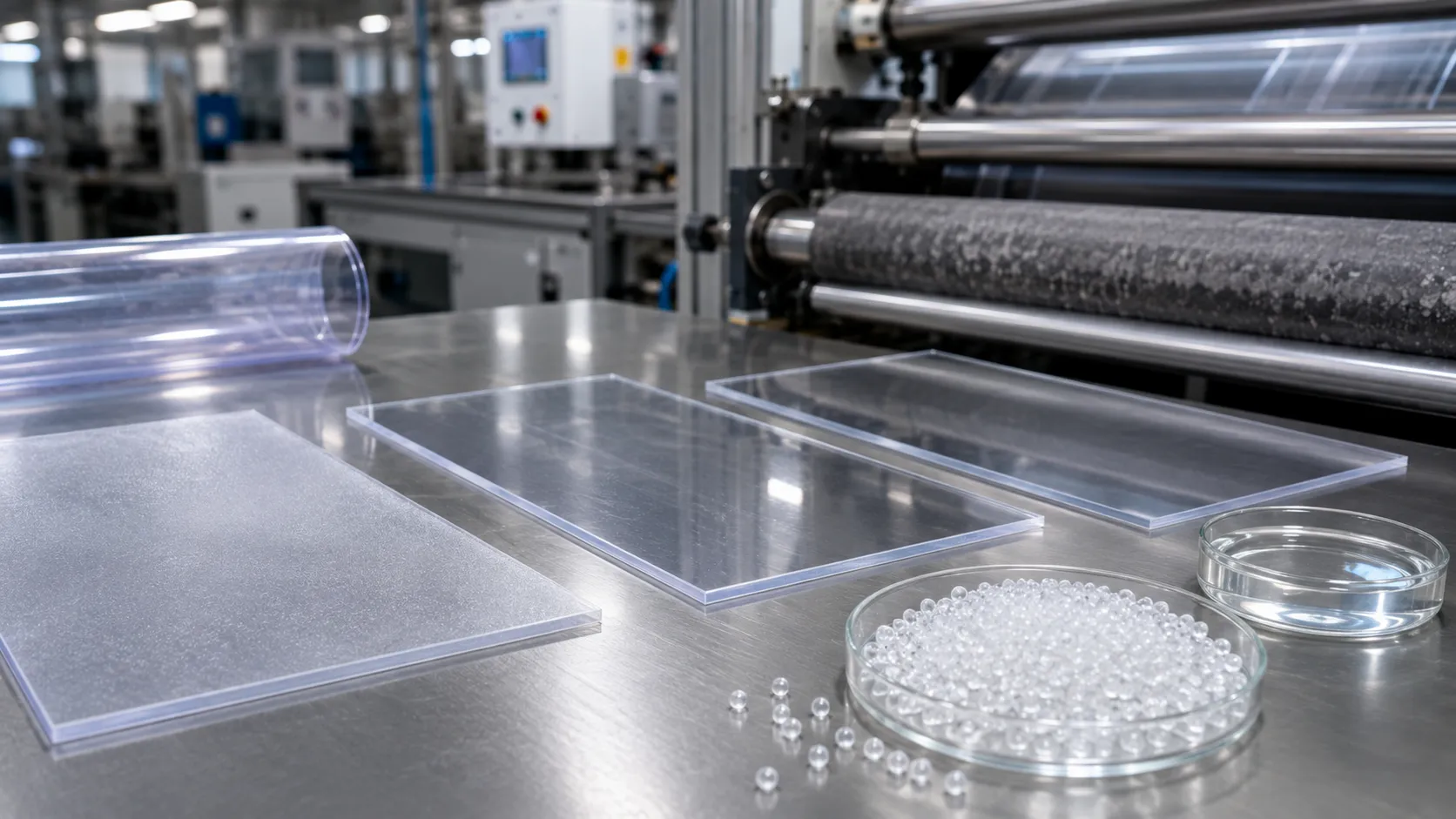
For Rigid PVC
· Review the total internal and external lubricant levels.
· Check whether the stabilizer already includes lubricating components.
· Use lubricants with suitable compatibility and molecular-weight distribution.
· Review metal-soap quality and low-molecular content.
· Improve fusion and additive dispersion.
· Avoid using more wax only to reduce torque.
· Conduct storage aging before approving the formulation.
For Flexible PVC
· Select a plasticizer with suitable permanence and PVC compatibility.
· Avoid exceeding the practical plasticizer or additive compatibility limit.
· Check liquid stabilizers, lubricants and other mobile components.
· Evaluate contact with adhesives, foams and packaging materials.
· Test printing, coating and bonding after storage, not only immediately after production.
· Use accelerated aging to compare candidate formulations.
Surface cleaning or corona treatment may temporarily improve printing or adhesion, but it does not stop additives inside the PVC from continuing to migrate.
Solutions for PVC Plate-Out
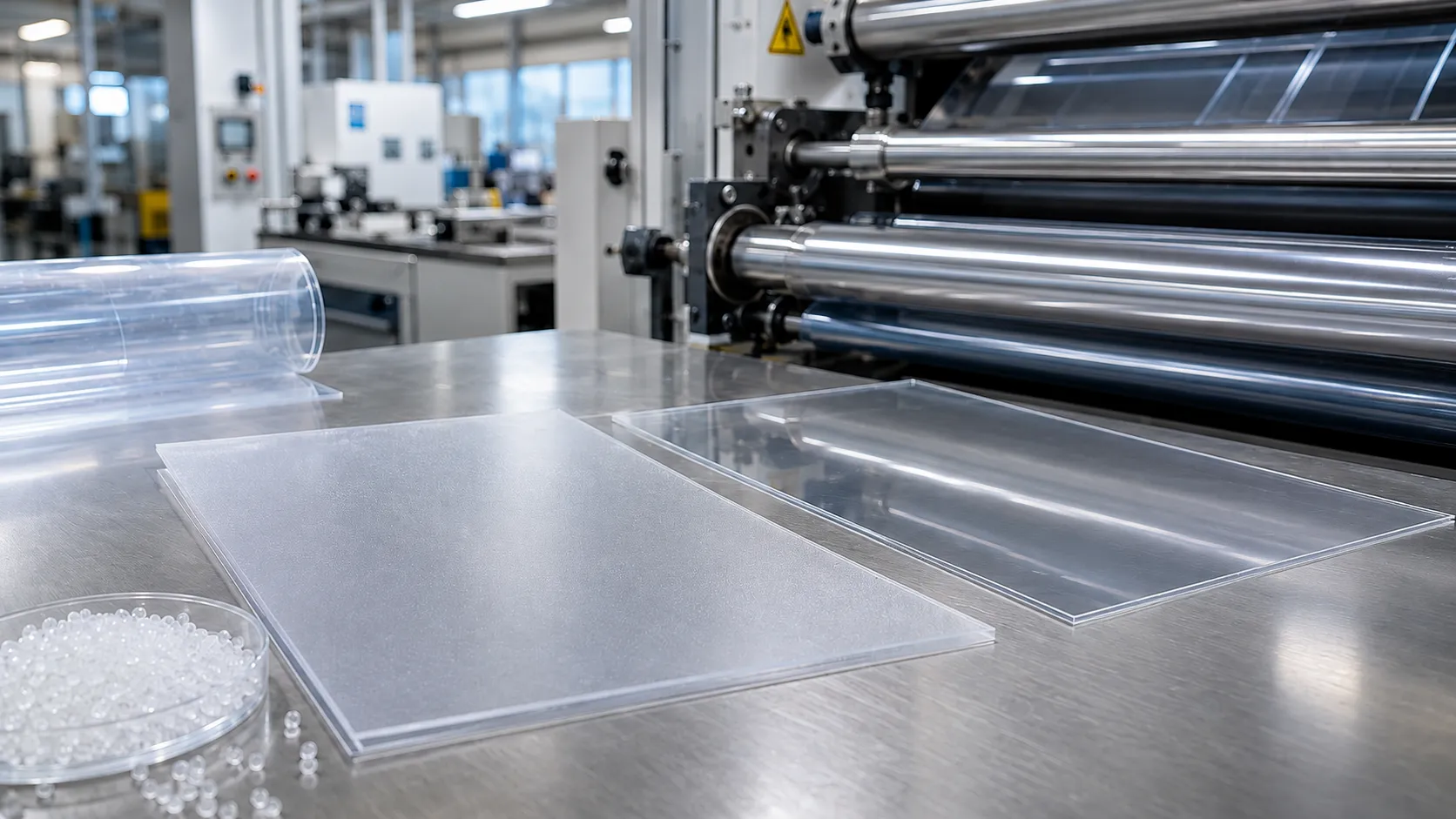
Formulation Adjustments
· Rebalance internal and external lubrication.
· Check the wax grade, melting range and low-molecular fraction.
· Compare the stabilizer and lubricant package under the same base formulation.
· Check filler, TiO₂ and metal-soap batches.
· Review recycled-material content and contamination.
· Change only one variable in each trial.
Processing Adjustments
· Confirm actual melt temperature, not only machine settings.
· Compare fusion time and torque.
· Reduce excessive residence time.
· Review screw speed and output.
· Check dry-blend temperature and moisture.
· Run the trial long enough for deposits to develop.
Equipment Adjustments
· Clean the line before each controlled comparison.
· Inspect screws, barrels, dies and calibrators.
· Remove dead zones and retained material.
· Check heating-zone consistency.
· Repair rough or damaged metal surfaces.
An anti-plate-out additive may help in some formulations, but it should not replace root-cause analysis.
How to Verify That the Problem Is Solved?
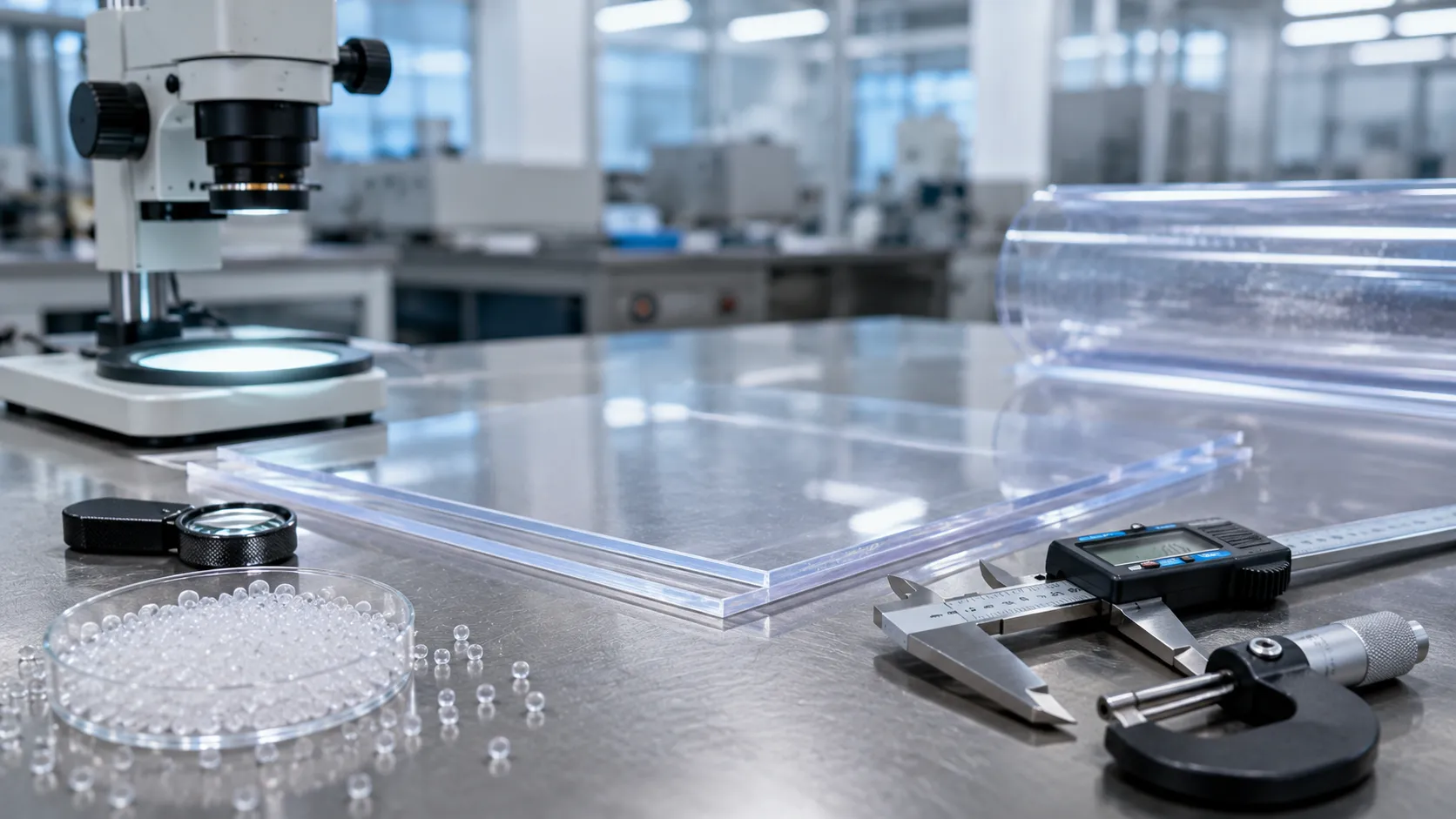
Blooming and plate-out require different verification methods.
Blooming Verification
Track:
· Surface appearance after storage
· Time before the layer reappears
· Gloss
· Surface tack
· Contact angle
· Print or coating adhesion
· Flexibility retention
· High-temperature storage performance
A product that looks clean immediately after processing but develops a film after aging has not passed the blooming evaluation.
Plate-Out Verification
Track:
· Time to first visible deposit
· Cleaning interval
· Deposit severity
· Deposit weight or area
· Die or roll cleanliness
· Head-pressure stability
· Production output
· Surface streaks
· Scrap rate
The plate-out solution should improve equipment cleanliness without reducing heat stability, fusion, output or finished-product quality.
Troubleshooting Matrix
Symptom | More Likely Problem | First Check |
White powder appears after storage | Blooming | Additive compatibility and storage temperature |
Product becomes oily or sticky | Plasticizer migration | Plasticizer type, dosage and contact materials |
Waxy film forms on a calender roll | Plate-out | Lubricant and stabilizer balance |
White scale forms on a calibrator | Plate-out | Filler, moisture and inorganic content |
Product has white streaks during production | Plate-out transfer | Die or roll deposits |
Cleaned surface becomes white again | Blooming | Internal additive migration |
Black specks appear after restart | Degraded material | Equipment dead zones and residence time |
Printing fails after several days | Blooming | Surface migration and contact angle |
Plate-out and product bloom appear together | Shared compatibility problem | Stabilizer, lubricant and additive concentration |
Frequently Asked Questions
What is the difference between PVC blooming and plate-out?
PVC blooming appears on the finished product after processing or storage. PVC plate-out forms on processing equipment during production.
Can blooming and plate-out happen at the same time?
Yes. The same poorly compatible additive may deposit on equipment during processing and later migrate to the finished-product surface.
Why does PVC develop a white powder after storage?
Possible causes include lubricant blooming, metal-soap migration, stabilizer-component migration or other additives exceeding their compatibility limit.
Is a waxy PVC surface caused by too much lubricant?
It may be, but lubricant quality, molecular weight, compatibility and processing conditions must also be checked.
Why does flexible PVC become oily or sticky?
Plasticizer or another liquid additive may be migrating to the surface. Contact materials and storage temperature can accelerate the problem.
Can a PVC stabilizer cause blooming?
A stabilizer component may contribute to blooming if the complete stabilizer and lubricant system is not compatible with the formulation. The stabilizer should be evaluated together with the other additives.
Can plate-out transfer onto the finished product?
Yes. Deposits from a roll, die or calibrator may transfer to the PVC surface and create streaks, haze or spots.
How do you test PVC blooming?
Compare fresh and stored samples, use controlled temperature aging, perform wipe and surface tests, and analyze the migrated material when necessary.
How do you analyze PVC plate-out?
Plate-out can be evaluated through extended production testing, deposit scoring, FTIR, ash testing, DSC and elemental analysis.
Conclusion
PVC blooming and plate-out may have related causes, but they occur at different stages and on different surfaces.
Blooming is an additive-migration problem that appears on the finished PVC product, often after storage. Plate-out is a processing deposit that accumulates on dies, screws, calibrators or rolls during production.
The correct diagnosis should begin with:
1. Where the material appears
2. When it appears
3. What it looks and feels like
4. Whether it returns after cleaning
5. Whether equipment deposits are present
6. What the material contains
Blooming solutions should be verified through storage aging and surface-performance testing. Plate-out solutions should be confirmed through extended production runs, cleaning intervals and process stability.
Send your PVC product photos, equipment-deposit photos, formulation and processing data to AIMSEA for a blooming or plate-out root-cause evaluation.