
One Pack Stabilizer Price: How to Calculate Real Cost in PVC Compounding
Read:336
Source:
Quick Answer
One pack stabilizer price should be calculated by unit price, dosage, scrap rate, downtime, cleaning, rework and batch consistency, not only by cost per kilogram.
Key Takeaways
·One pack stabilizer price is only one part of total PVC compounding cost.
·The best one pack stabilizer is not always the lowest-priced product; it should reduce rejects, downtime and processing instability.
·One pack stabilizer uses include simplifying dosing, improving lubrication balance and supporting stable PVC processing.
·PVC stabilizer cost should be calculated by dosage per formulation, not only supplier quotation.
·A complete price inquiry should include product type, formula, equipment, processing conditions, current defects and target compliance documents.
·A simple cost template can help buyers compare different stabilizer offers more accurately.Abstract
Many PVC processors compare stabilizer suppliers by price per kilogram. This is understandable, but it is not enough. In PVC compounding, the real cost of a one-pack stabilizer depends on dosage, formula compatibility, production stability, scrap rate, cleaning frequency, rework, downtime and batch consistency.
AIMSEA describes its polymer additives as all-in-one formulation solutions that combine stabilizing, lubricating and processing functions to simplify PVC production, improve processing efficiency and support more consistent product quality. AIMSEA also notes that the right PVC stabilizer depends on product type, processing method, formulation, heat stability needs, color requirements and environmental compliance standards.
This article explains how to calculate one pack stabilizer price from a real production-cost perspective and what information buyers should provide when requesting a quotation.
Why One Pack Stabilizer Price Is Not Just Unit Price?
When buyers ask for one pack stabilizer price, many start by comparing quotations per kilogram. This is useful as a first step, but it does not show the full cost in PVC production.
A lower unit price may look attractive, but if the stabilizer needs higher dosage, causes more rejects, increases die cleaning, or makes the batch less stable, the real cost may become higher. On the other hand, a slightly higher-priced stabilizer may be more economical if it improves processing stability, reduces waste and keeps the line running longer.
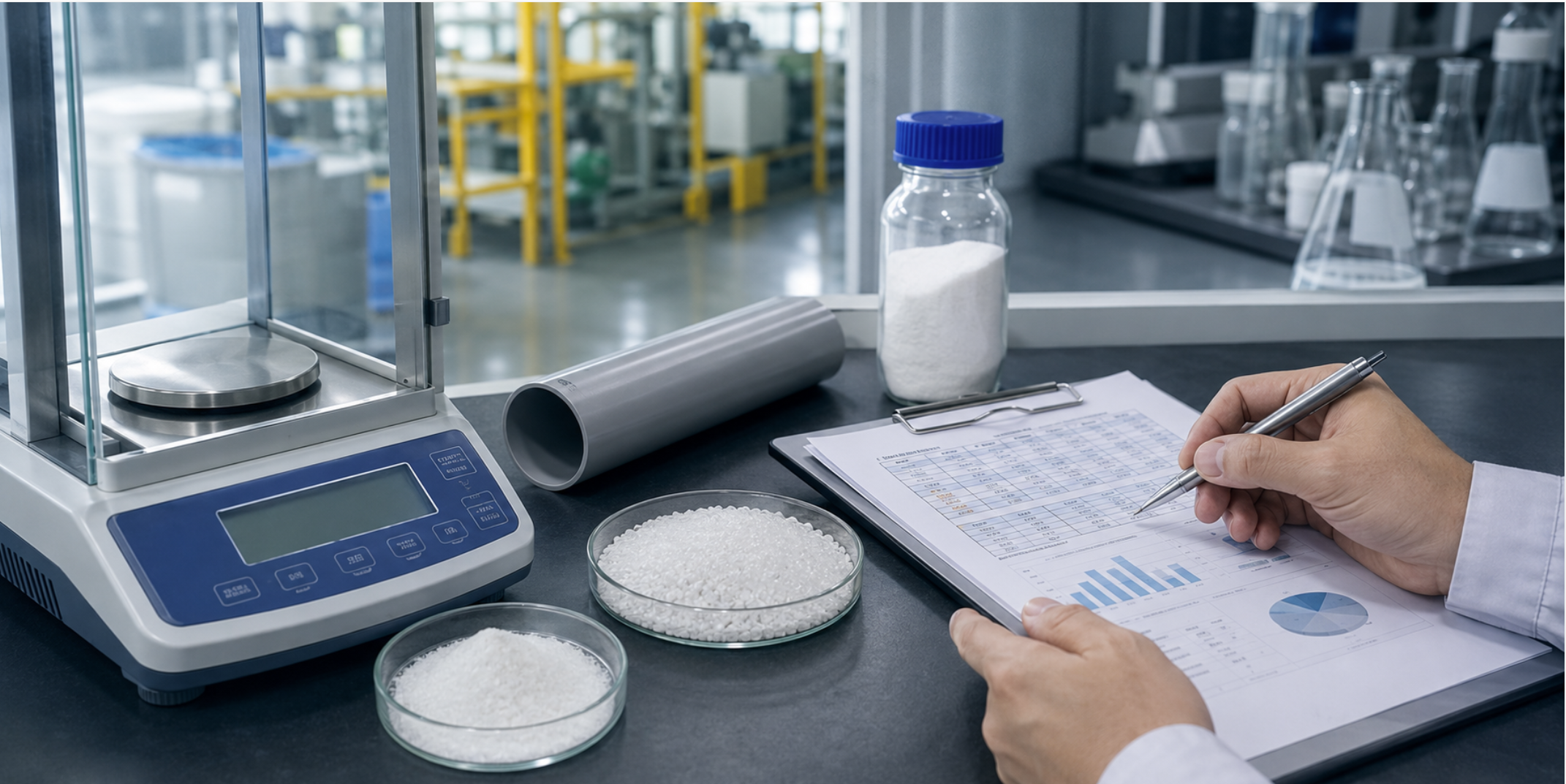
For PVC compounding, the better question is not “Which stabilizer is cheaper per kg?” The better question is: “Which stabilizer gives the lowest cost per qualified product?”
The real question is cost per stable production output
A stable PVC production line saves money in several ways. It reduces scrap, avoids repeated machine adjustment, lowers cleaning frequency and improves finished-product consistency. These savings are not always visible in the supplier quotation, but they directly affect production profit.
For example, a pipe, cable, flooring or calendering factory may lose more money from one hour of downtime than from a small difference in stabilizer unit price. Therefore, pvc stabilizer cost should always be evaluated together with production performance.
Main Factors That Affect PVC Stabilizer Cost
The real pvc stabilizer cost includes both direct and hidden cost. Direct cost is easy to calculate: unit price multiplied by dosage. Hidden cost includes scrap, downtime, cleaning, rework and batch fluctuation.
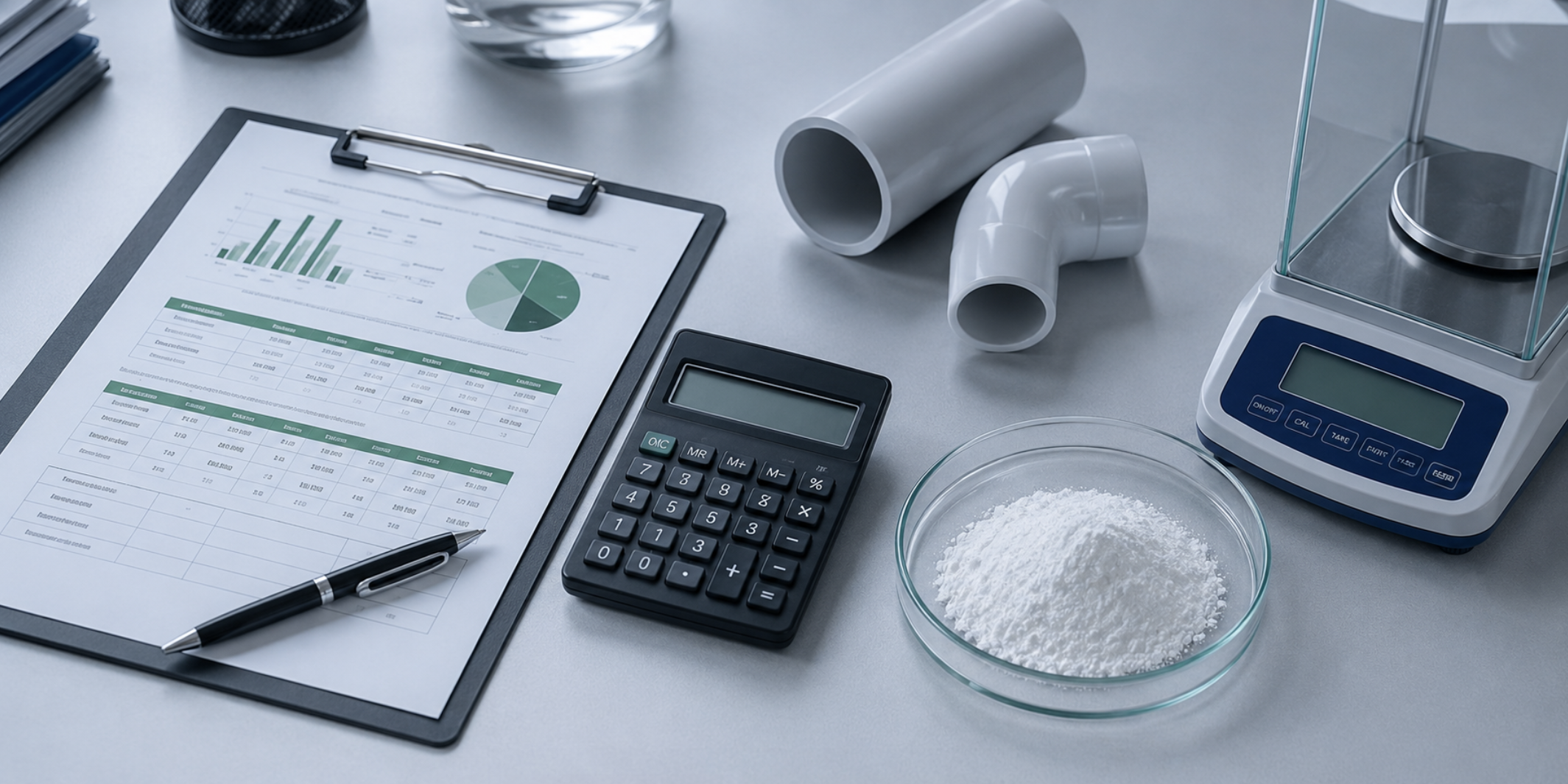
AIMSEA’s application page states that different PVC products require different stabilizer systems and that stabilizer choice should consider processing method, product performance, lubrication balance and regulatory requirements. This is also why price evaluation should be connected with application and production conditions.
Unit price, dosage and production loss should be calculated together
The main cost factors include:①stabilizer unit price;②recommended dosage in PHR;③actual dosage after trial adjustment;④scrap rate during production;⑤downtime caused by plate-out or cleaning;⑥rework caused by unstable color, surface or dimensions;⑦batch-to-batch variation;⑧compliance document requirements;⑨logistics, packaging and storage conditions.
A supplier may offer a lower unit price, but if the product requires more dosage, the cost advantage may disappear. Similarly, if a stabilizer causes more plate-out or unstable fusion, the real cost will increase through lost production time.
How the Best One Pack Stabilizer Reduces Hidden Cost?
The best one pack stabilizer should help the buyer produce qualified PVC products consistently. It should not only pass a basic heat-stability test. It should also support clean processing, stable lubrication balance, low plate-out, good color control and repeatable batch quality.
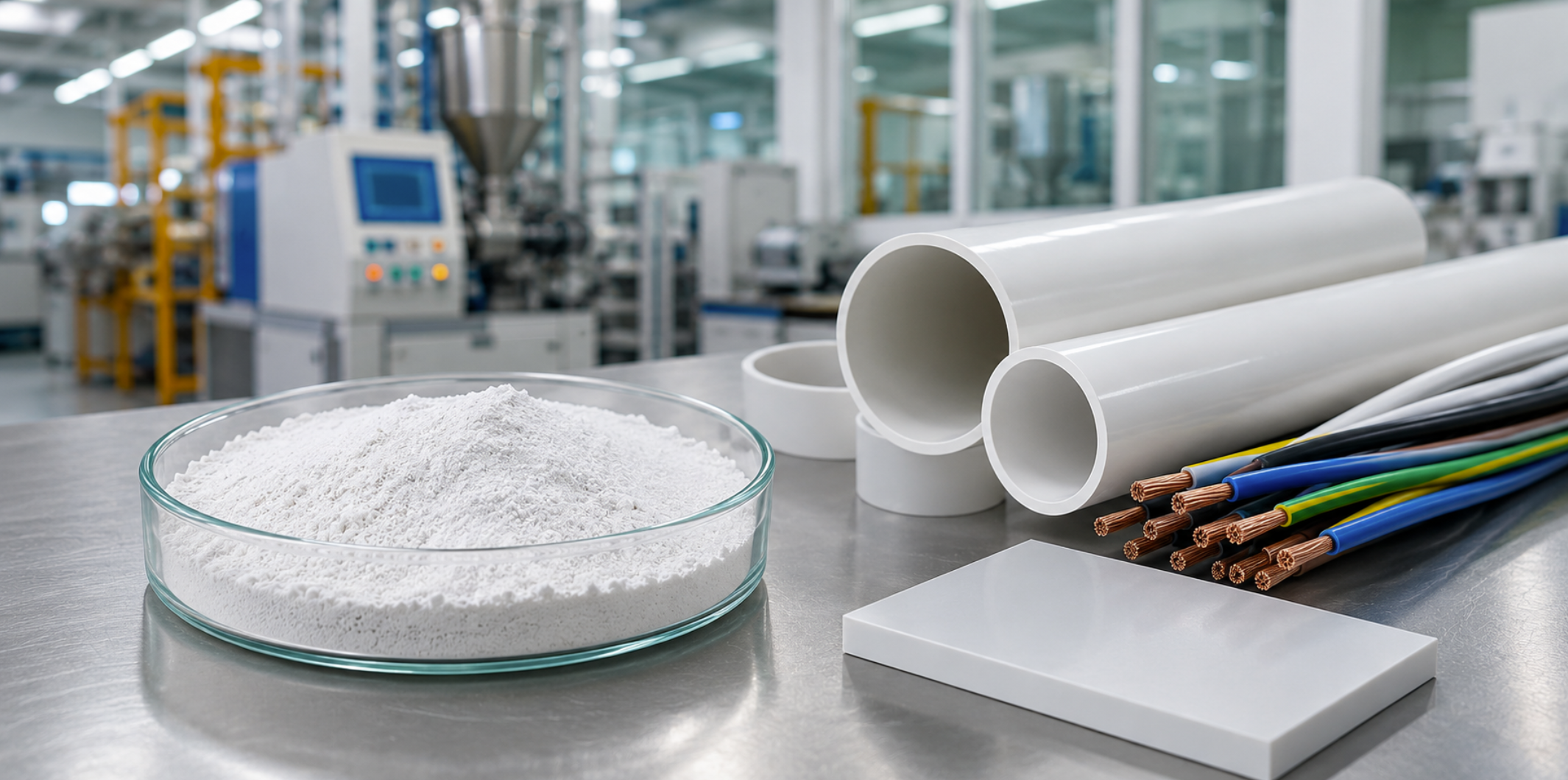
AIMSEA’s technical content on PVC stabilizer testing notes that Congo Red, oven aging and plate-out answer different questions, and that no single test is enough to evaluate a stabilizer for commercial use. This is important for cost calculation because production cleanliness and stability often decide the real cost.
Scrap, downtime, cleaning and rework are part of real cost
Hidden Cost Item | How It Increases Real Cost | What Buyers Should Check |
Scrap rate | More rejected products consume resin, filler, additives and labor | Compare reject rate during trial |
Downtime | Stopped lines reduce daily output | Record cleaning and adjustment time |
Die or roll cleaning | Plate-out causes maintenance and production interruption | Check deposits after long-run trial |
Rework | Poor color or surface may require reprocessing | Track rework quantity and labor |
Batch fluctuation | Inconsistent material increases adjustment frequency | Compare different batches if possible |
Customer complaint | Quality instability may cause return or claim risk | Check final product consistency |
This is why a slightly higher one pack stabilizer price may still be acceptable if it reduces hidden cost.
One Pack Stabilizer Uses in PVC Compounding
Common one pack stabilizer uses include pipe extrusion, profile extrusion, fittings, flooring, cable compounds, calendered film, sheet and other PVC applications. A one-pack system combines stabilizer, lubricant and processing-support components into one package.
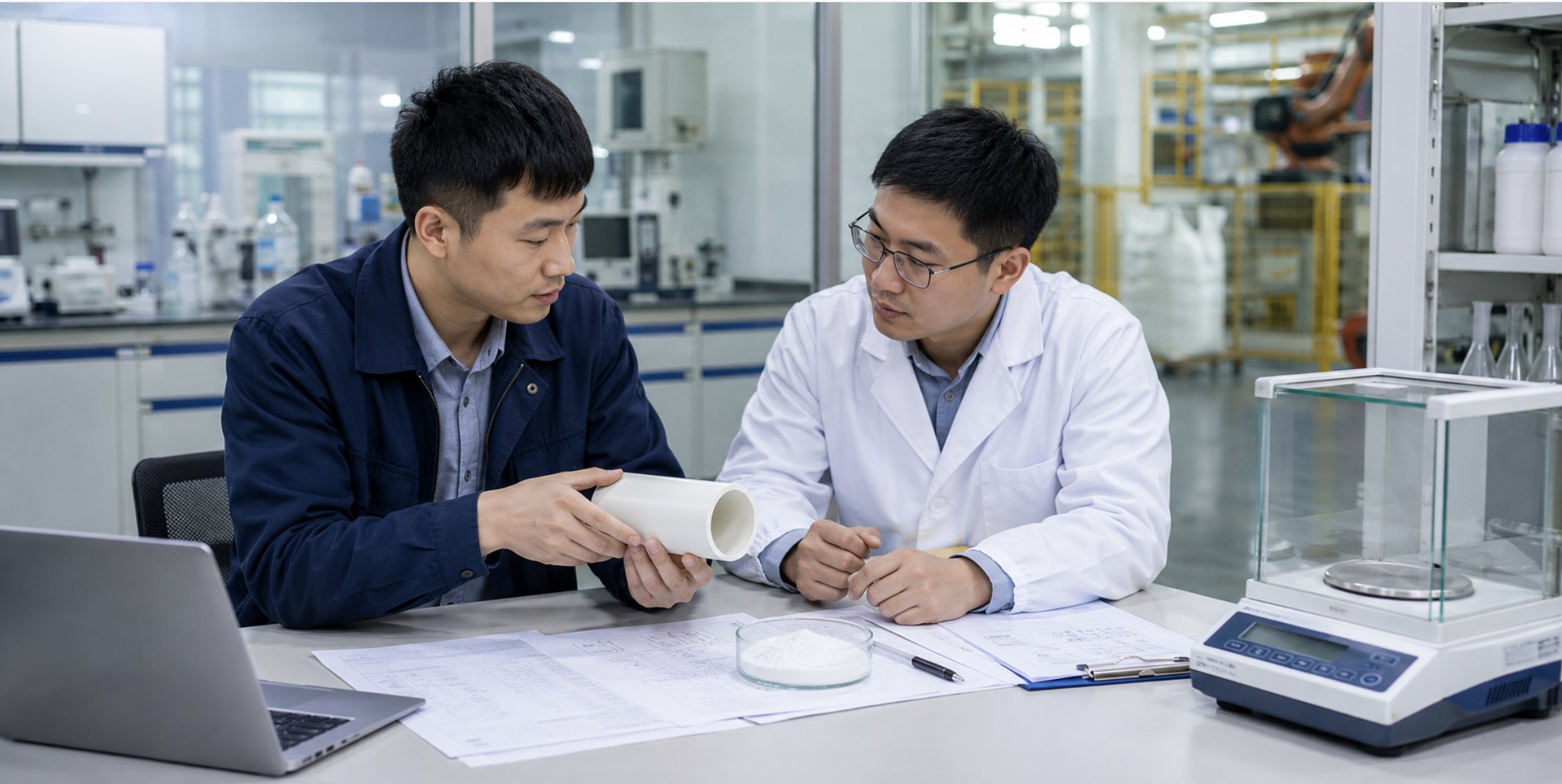
AIMSEA states that its polymer additives combine stabilizing, lubricating and processing functions to simplify PVC production and support consistent product quality. Its application page also covers PVC pipe and fittings, wire and cable, profiles, transparent PVC, flooring, foam, medical PVC and recyclable PVC applications.
Why one-pack systems help simplify production control?
In traditional PVC compounding, factories may add heat stabilizer, internal lubricant, external lubricant and other additives separately. This requires careful weighing and strong formula control. If one material is added incorrectly, the line may show poor fusion, high torque, yellowing, plate-out or surface defects.
A one-pack stabilizer helps simplify this process. When the formula is well designed, it can reduce weighing errors, improve batch consistency and make production easier to manage. This is especially valuable for factories that run multiple shifts or produce different PVC products on the same line.
Simple Calculation Template for One Pack Stabilizer Price
To compare two stabilizers fairly, buyers should calculate both direct cost and production impact. The direct cost can be calculated first, then adjusted by scrap, downtime and rework.
How to compare two stabilizer options fairly?
Cost Item | Formula or Input | Stabilizer A | Stabilizer B |
Unit price | Supplier quotation/kg | ||
Dosage | PHR or kg per 100 kg PVC resin | ||
Direct stabilizer cost | Unit price x dosage | ||
Scrap rate | Trial reject percentage | ||
Scrap cost | Scrap rate x compound cost | ||
Cleaning downtime | Hours per production cycle | ||
Downtime cost | Downtime hours x line cost/hour | ||
Rework cost | Reworked quantity x rework cost | ||
Total estimated cost | Direct cost + hidden cost |
A simple direct-cost example:
Direct stabilizer cost per 100 kg PVC resin = stabilizer price per kg x stabilizer dosage PHR
For example, if a one-pack stabilizer is USD 2.40/kg and the dosage is 3.5 PHR:
2.40 x 3.5 = USD 8.40 per 100 kg PVC resin
But this is only the direct stabilizer cost. If another stabilizer costs USD 2.60/kg but works at 3.0 PHR and reduces scrap, it may have a lower real production cost.
What Buyers Should Provide for a Price Inquiry?
A clear inquiry helps the supplier quote more accurately and recommend the right product faster. If the buyer only asks for “best price,” the supplier can only provide a general offer. But if the buyer provides formula and process details, the supplier can suggest a more suitable grade and dosage.
AIMSEA’s PVC stabilizer page states that stabilizer selection should be based on processing method, product type and compliance requirements. For price evaluation, the same logic applies.
Information needed before accurate quotation and sample matching
Information to Provide | Example Details |
PVC product type | Pipe, fitting, profile, cable, flooring, sheet, film |
PVC resin | K value, brand, suspension PVC type |
Current formula | PVC, filler, plasticizer, lubricant, pigment, stabilizer |
Filler details | CaCO3 dosage, particle size, moisture risk |
Processing method | Extrusion, injection molding, calendering, compounding |
Equipment data | Extruder, mixer, calender, injection machine model |
Processing conditions | Temperature, line speed, pressure, torque, cycle time |
Current problem | Yellowing, plate-out, high scrap, poor surface, unstable fusion |
Target market | Domestic, EU, US, Middle East, Southeast Asia |
Compliance needs | RoHS, REACH, heavy metal report, food-contact or customer standard |
Price target | Lower dosage, lower total cost, better processing stability |
With this information, the supplier can help calculate a realistic one pack stabilizer price based on both material cost and production performance.
FAQs About One Pack Stabilizer Price
Why is one pack stabilizer sometimes more expensive per kilogram?
A one-pack stabilizer may include heat stabilizers, lubricants and processing-support additives in one package. Its unit price may be higher than a single raw material, but it can reduce weighing errors, improve consistency and lower hidden production cost.
How can I know whether I am buying the best one pack stabilizer?
The best choice should be confirmed by production trial, not only supplier quotation. Check dosage, fusion behavior, extrusion pressure, surface quality, plate-out, scrap rate and batch consistency before bulk approval.
Does lower one pack stabilizer price always mean lower PVC compound cost?
No. A lower unit price may still lead to higher real cost if dosage is higher, production is unstable, scrap increases or cleaning downtime becomes more frequent.
What are common one pack stabilizer uses?
One-pack stabilizers are used in PVC pipe, fittings, profiles, flooring, cable compounds, calendered film, sheet and other PVC products where heat stability, lubrication and processing consistency are required.
What is the simplest way to estimate pvc stabilizer cost?
Start with: unit price x dosage. Then add production-related cost such as scrap, downtime, cleaning, rework and batch variation. This gives a more realistic total cost.
Conclusion
One pack stabilizer price should not be judged only by the number in a quotation. For PVC compounding, real cost depends on unit price, dosage, scrap rate, downtime, cleaning, rework and batch stability.
The best one pack stabilizer is the product that helps the factory produce qualified PVC products with stable processing and fewer hidden losses. A lower unit price may be attractive, but the final decision should be based on total production cost.
Before requesting a quotation, buyers should prepare product type, formula, equipment, processing conditions, current defects and compliance requirements. This allows the supplier to recommend a suitable grade, suggest a practical dosage and help calculate the real pvc stabilizer cost more accurately.