
One Pack Stabilizer for PVC Pipe: Dosage, Lubrication Balance and Production Trial Checklist
Read:397
Source:
Quick Answer
A one pack stabilizer for PVC pipe should be selected by dosage range, fusion behavior, extrusion pressure, lubrication balance, surface quality and real production trial results.
Key Takeaways
·A one pack stabilizer for PVC pipe helps simplify dosing by combining stabilizing, lubricating and processing-support functions.
·PVC pipe production needs stable heat resistance, fast fusion, low precipitation and clean die performance.
·Dosage should not be fixed only by supplier recommendation; it must be adjusted by resin type, filler level, pipe standard and extrusion conditions.·Trial tests should check torque, extrusion pressure, melt appearance, surface quality, wall thickness and die build-up.
·Buyers searching for china one pack stabilizer for PVC pipe or factory price one pack stabilizer for PVC pipe should compare both price and production stability.
·A good inquiry should include formula, equipment, pipe type, temperature profile, current defects and target compliance documents.
Abstract
PVC pipe manufacturers often use one-pack stabilizer systems because pipe production requires stable dosing, long-run extrusion consistency and balanced lubrication. A suitable one pack stabilizer for PVC pipe should protect PVC from heat degradation while also supporting fusion, melt flow, die release, surface smoothness and dimensional stability.
AIMSEA describes its polymer additive solution as an all-in-one formulation that combines stabilizing, lubricating and processing functions to simplify PVC production and support consistent product quality. It also provides calcium-zinc stabilizers and customized PVC additive packages for rigid, flexible, transparent and recycled PVC applications. For PVC pipe and fittings, AIMSEA highlights heat-stable and cost-effective stabilizer systems for water pipes, drainage pipes, conduits and injection-molded fittings.
This article explains how to evaluate dosage, lubrication balance and trial performance before approving a one pack stabilizer for PVC pipe.
Why PVC Pipe Manufacturers Use One Pack Stabilizer for PVC Pipe?
PVC pipe extrusion is a continuous process. Once production starts, the material must maintain stable fusion, color, wall thickness and surface quality for hours. If the stabilizer and lubricant balance changes, the pipe line may face high torque, unstable pressure, rough surface, die build-up or yellowing.
A one pack stabilizer for PVC pipe helps reduce these risks by combining multiple additive functions into one pre-balanced package. Instead of separately weighing stabilizer, internal lubricant, external lubricant and other processing aids, the factory can use one integrated system. This reduces weighing errors and improves production consistency.
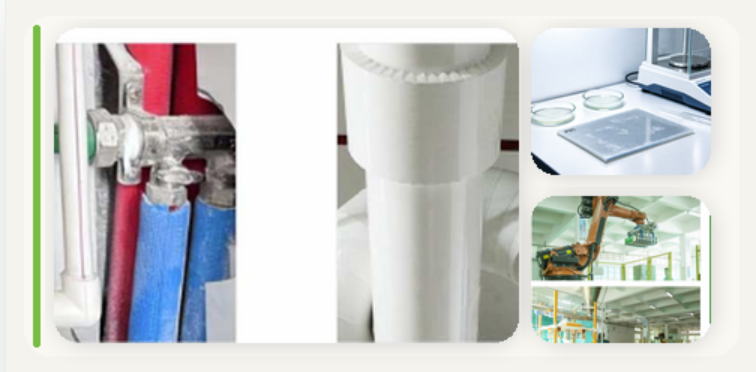
For pipe producers, this is especially useful when production shifts change frequently or when the factory wants to simplify formula management. A one-pack system can also make sample testing easier because the supplier can adjust the whole additive package according to the pipe formula and equipment conditions.
How one-pack systems simplify pipe production?
AIMSEA’s product information states that polymer additives combine stabilizing, lubricating and processing functions, helping simplify PVC production and support more consistent product quality. This matches the practical needs of PVC pipe extrusion, where stable feeding, fusion and die performance are important for continuous production.
Dosage Logic for One Pack Stabilizer for PVC Pipe
The dosage of a one pack stabilizer for PVC pipe should not be decided only by a general range. It must be confirmed by pipe type, resin K value, calcium carbonate level, lubricant demand, processing temperature, line speed and pipe standard.
For pipe-grade Ca-Zn stabilizers, AIMSEA’s PVC pipe and fittings page lists product examples such as AIMSTA-C500P for water supply pipe production with a dosage range of 2.5-4.5 PHR, and AIMSTA-C506 for conduit pipe production with a dosage range of 3-4 PHR. These ranges are useful references, but the final dosage still needs to be validated in the buyer’s actual formula.
Why dosage must be confirmed by formulation and trial?
If the dosage is too low, the pipe may show yellowing, poor long-term heat stability or unstable fusion. If the dosage is too high, the cost may increase and lubrication balance may shift, causing plate-out, delayed fusion or weak mechanical performance.
The practical approach is to start from supplier recommendation, then test two or three dosage points in the same formula. For example, a trial may compare standard dosage, slightly lower dosage and slightly higher dosage. The best dosage is not always the lowest dosage. It is the dosage that gives stable extrusion, smooth surface, acceptable pressure, clean die performance and finished-product quality.
Lubrication Balance in One Pack Stabilizer for PVC Pipe
Lubrication balance is one of the most important parts of a pipe stabilizer system. In PVC pipe extrusion, internal lubrication helps melt flow and fusion, while external lubrication helps metal release and die cleanliness. If these two sides are not balanced, the line may become unstable.

A good one pack stabilizer for PVC pipe should help the compound fuse at the right time. Fast fusion can improve output and surface quality, but excessive fusion speed may increase torque and heat build-up. Delayed fusion may reduce melt strength and cause rough pipe surface or poor wall stability.
AIMSEA’s pipe and fittings page highlights low precipitation, viscosity stability, uniform wall thickness, fast fusion and broad thermal window as key pipe stabilizer advantages. These are exactly the performance points that a pipe producer should observe during a one-pack stabilizer trial.
Internal and external lubrication should work together
If external lubrication is too strong, PVC may fuse too slowly, and the pipe may show weak surface compactness or unstable mechanical strength. If external lubrication is too weak, the melt may stick to the die and increase pressure. If internal lubrication is not enough, torque may rise and processing may become difficult. If internal lubrication is excessive, melt strength may drop.
This is why one-pack systems should be adjusted by actual extrusion behavior instead of only laboratory aging data.
Recommended Tests for One Pack Stabilizer for PVC Pipe
A production trial should evaluate both material stability and extrusion behavior. The pipe may look acceptable in a short run but fail during longer production because of pressure increase, die deposits or surface changes. Therefore, buyers should record machine data and product appearance together.
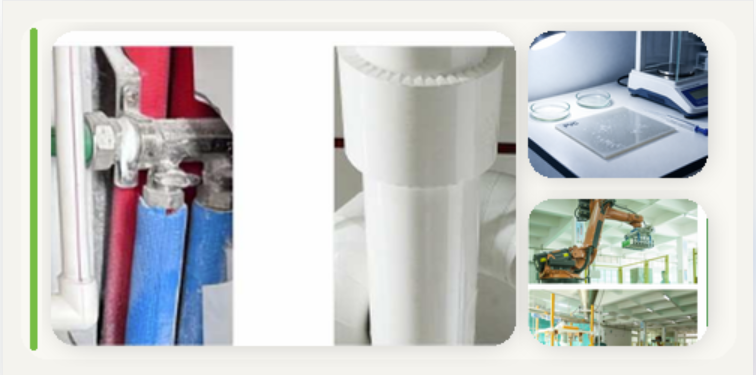
Torque, extrusion pressure and surface quality
Test Item | What It Shows | What to Watch During Trial |
Torque / fusion behavior | Whether the compound plasticizes properly | Too high, too low or unstable torque |
Extrusion pressure | Die flow stability and lubrication balance | Pressure rise, fluctuation or sudden drop |
Melt appearance | Fusion uniformity and degradation risk | Unmelted particles, burning or rough melt |
Pipe surface | Finished appearance quality | Gloss, roughness, die lines, yellowing |
Wall thickness | Dimensional stability | Uneven wall or unstable sizing |
Die build-up | Plate-out and precipitation tendency | Deposits after continuous running |
Static heat aging | Thermal stability margin | Early yellowing or rapid discoloration |
Finished pipe test | Final performance | Impact, pressure or application-specific test |
A simple trial flow can be used:
Formula Review -> Lab Mixing -> Initial Extrusion Trial -> Dosage Adjustment -> Long-Run Observation -> Finished Pipe Test -> Document Review -> Bulk Approval
Common Failure Reasons in PVC Pipe Trial Production
When a one pack stabilizer for PVC pipe does not perform well, the cause may not be the stabilizer alone. Pipe production depends on the interaction between PVC resin, filler, lubricant, processing aid, screw design, temperature profile and line speed.

For example, yellowing may come from weak heat stability, but it may also come from excessive barrel temperature or long residence time. High extrusion pressure may indicate insufficient external lubrication, but it may also be caused by poor filler dispersion or low processing temperature. Die build-up may be related to lubrication imbalance, poor compatibility or excessive filler moisture.
What to check when trial results are unstable?
Trial Problem | Possible Cause | Adjustment Direction |
Yellowing | Low stabilizer dosage, high temperature, long residence time | Increase stability margin or reduce processing temperature |
High torque | Insufficient lubrication or fast fusion | Adjust lubrication balance or reduce shear heat |
Low torque / poor fusion | Excessive external lubrication or low temperature | Reduce external lubrication or increase processing temperature |
Rough surface | Poor fusion, filler dispersion issue or unstable melt | Check formula, mixing and die temperature |
Die build-up | Plate-out, precipitation or poor compatibility | Adjust external lubricant and stabilizer compatibility |
Pressure fluctuation | Inconsistent feeding, moisture or poor dispersion | Check material drying, mixing and feeding stability |
Uneven wall thickness | Melt instability or sizing problem | Check extrusion pressure, vacuum sizing and cooling |
This table should be used with trial records. The supplier can give a more accurate recommendation if the buyer shares machine data, photos and production conditions.
How to Compare China One Pack Stabilizer for PVC Pipe Suppliers?
Many buyers search for china one pack stabilizer for PVC pipe because China has many PVC additive manufacturers and competitive supply options. However, supplier comparison should not focus only on price per kilogram. For pipe production, a low-cost stabilizer may become expensive if it causes output loss, die cleaning, high reject rate or unstable pipe quality.
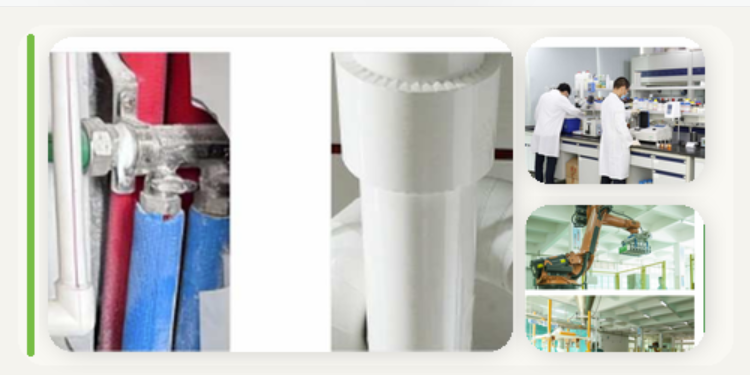
A good supplier should help the buyer compare actual cost per ton of PVC compound, not only stabilizer unit price. If one product has a slightly higher price but offers lower dosage, cleaner die performance and fewer rejects, the total production cost may be better.
Factory price should be reviewed with performance data
When evaluating factory price one pack stabilizer for PVC pipe, buyers should ask for TDS, SDS, COA, recommended dosage, application data and sample testing support. AIMSEA’s product page states that it offers customized stabilizer solutions and sample testing support, including free samples up to 5 kg for production testing.
For export projects, compliance also matters. AIMSEA’s REACH article notes that lead-free PVC stabilizer demand has become a practical market-access requirement for Europe, with buyers increasingly asking for documentation, traceability and compatibility with regulatory expectations.
Inquiry Checklist for Factory Price One Pack Stabilizer for PVC Pipe
A clear inquiry helps the supplier recommend the right stabilizer faster. “We need one-pack stabilizer for PVC pipe” is not enough because different pipes have different resin, filler, extrusion and compliance requirements.

What buyers should submit before sample recommendation
Information to Submit | Example Details |
Pipe type | Water supply pipe, drainage pipe, conduit pipe, pressure pipe |
PVC resin | K value, brand, suspension PVC type |
Current formula | PVC, CaCO3, lubricant, processing aid, pigment, stabilizer dosage |
Filler details | CaCO3 dosage, particle size, surface treatment, moisture risk |
Equipment | Twin-screw extruder model, screw diameter, die type |
Temperature profile | Barrel zones, adaptor, die temperature |
Production data | Line speed, output, extrusion pressure, torque |
Current problem | Yellowing, die build-up, rough surface, pressure fluctuation |
Target performance | Wall thickness stability, pressure rating, impact, surface gloss |
Compliance needs | RoHS, REACH, heavy metal report, potable-water requirement |
Sample target | Lower cost, better processing, cleaner die, lead-free replacement |
With this information, the supplier can judge whether the main issue is stabilizer dosage, lubrication balance, filler compatibility, processing temperature or equipment condition.
Conclusion
A one pack stabilizer for PVC pipe should be chosen by real extrusion performance, not only by price or general dosage. The right product should support heat stability, fast but controlled fusion, stable extrusion pressure, clean die performance, smooth surface and consistent finished-pipe quality.
For buyers searching for china one pack stabilizer for PVC pipe, supplier comparison should include production trial data, dosage range, quality consistency, compliance documents and technical support. For buyers focused on factory price one pack stabilizer for PVC pipe, the better question is not only “How much per kilogram?” but “How stable is the pipe production per ton of compound?”
The best approval method is clear: share formula and equipment parameters, test different dosages, monitor torque and pressure, inspect surface quality, observe long-run die build-up and confirm compliance documents before bulk order.
FAQs About One Pack Stabilizer for PVC Pipe
What is a one pack stabilizer for PVC pipe?
A one pack stabilizer for PVC pipe is an integrated additive system that combines heat stabilizer, lubricant and processing-support components in one package. It helps simplify dosing, reduce weighing errors and improve extrusion consistency in PVC pipe production.
How much one pack stabilizer should be used in PVC pipe?
The dosage depends on PVC resin type, pipe standard, filler level, processing temperature, extrusion speed and target performance. A supplier’s recommended range can be used as a starting point, but the final dosage should be confirmed through extrusion trials.
Why does lubrication balance matter in PVC pipe stabilizer systems?
Lubrication balance affects fusion, torque, extrusion pressure, die release and surface quality. If internal and external lubrication are not balanced, the pipe may show high pressure, rough surface, die build-up, delayed fusion or unstable wall thickness.
What tests should be done before approving one pack stabilizer for PVC pipe?
Recommended tests include torque or fusion behavior, extrusion pressure, pipe surface inspection, wall thickness stability, die build-up observation, static heat aging and finished-pipe performance tests such as impact or pressure-related evaluation.
Can one pack stabilizer reduce production cost?
Yes, but cost should be evaluated by total production performance, not only price per kilogram. A suitable one pack stabilizer may reduce weighing errors, improve output stability, lower reject rate and reduce die cleaning frequency.
What information should buyers provide before requesting samples?
Buyers should provide pipe type, PVC resin grade, current formula, filler level, lubricant system, extruder model, temperature profile, line speed, current production problems and required compliance documents such as RoHS or REACH.