
One Pack PVC Stabilizer Manufacturing Process: Formula Design, Mixing and Quality Control
Read:444
Source:
Quick Answer
The one pack pvc stabilizer manufacturing process includes formula design, raw material matching, controlled mixing, dispersion testing, batch inspection, proper packaging and sample validation.
Key Takeaways
·A pvc one pack stabilizer combines stabilizing, lubricating and processing-support functions in one additive package.
·A good one pack stabilizer formula should be designed around PVC application, processing method, resin type and compliance target.
·A calcium zinc one pack stabilizer must balance heat stability, lubrication, dispersion and long-term product consistency.
·Mixing uniformity is critical because poor dispersion may cause yellowing, plate-out, unstable fusion or surface defects.
·Batch quality control should include appearance, moisture, heat stability, dispersion, particle size and application trial checks.
·Packaging and storage affect powder flow, moisture control and batch stability before production use.
Abstract
A one pack PVC stabilizer is designed to simplify PVC production by combining several additive functions into one controlled package. Instead of weighing stabilizer, lubricant and processing-support additives separately, manufacturers can use a pre-balanced system to improve dosing accuracy and production consistency.
AIMSEA describes its polymer additive solution as an all-in-one formulation that combines stabilizing, lubricating and processing functions, helping simplify PVC production, improve processing efficiency and support more consistent product quality. AIMSEA also provides lead-free calcium-zinc PVC stabilizers and customized heat stabilizer solutions for pipes, fittings, profiles, flooring, cables, transparent products and recycled PVC applications.
This article explains the one pack pvc stabilizer manufacturing process from formula design to mixing, dispersion, quality control, packaging and sample validation.
What Is a PVC One Pack Stabilizer?
A pvc one pack stabilizer is an integrated additive system used in PVC processing. It usually combines heat stabilizers, lubricants and auxiliary processing components into one ready-to-use package. The purpose is to make production easier, reduce weighing errors and improve batch-to-batch consistency.

In traditional PVC compounding, a factory may need to add several materials separately. If one component is weighed incorrectly, the final product may show poor fusion, yellowing, plate-out, rough surface or unstable processing. A one-pack system reduces this risk by using a pre-designed additive balance.
For PVC processors, the value of one-pack systems is not only convenience. The real value is stable production. When the formula is well matched, a one-pack stabilizer can help improve processing efficiency, reduce operator variation and make quality control easier.
Why one-pack systems simplify PVC production
AIMSEA’s product information explains that one-pack polymer additives combine stabilizing, lubricating and processing functions to simplify PVC production and support more consistent product quality. This is especially useful for pipe, fitting, profile, flooring, cable and calendering factories that need stable output across long production runs.
One Pack Stabilizer Formula Design Logic
A good one pack stabilizer formula starts from the final PVC product. The formulation for PVC pipe is not the same as the formulation for cable, transparent sheet, medical tubing or calendered film. Each application has different requirements for heat stability, lubrication, color, transparency, flexibility, surface finish and compliance.
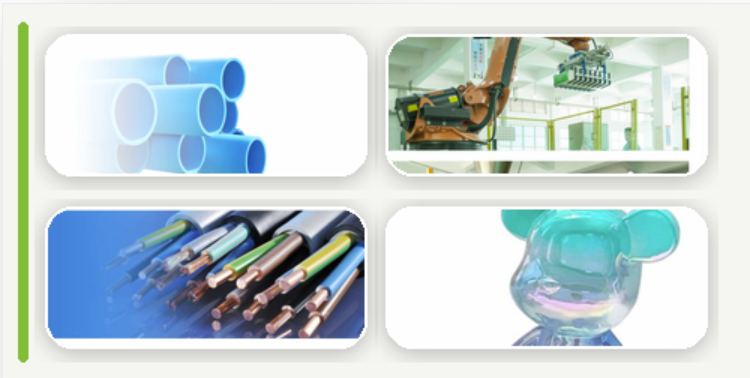
AIMSEA’s application information shows that different PVC applications have different needs for heat stability, transparency, lubrication, weather resistance, plate-out control and environmental compliance. This means one-pack stabilizer design should begin with application analysis, not only raw material cost.
How application and processing method affect formulation
For rigid PVC pipe, the formula should focus on thermal stability, fusion control and low precipitation. For injection-molded fittings, mold release and surface quality become more important. For calendering PVC, roll cleanliness and plate-out control are key. For transparent PVC, clarity, odor and yellowing resistance should be prioritized. For wire and cable, heat aging and electrical performance are important.
A practical design logic is:
Application -> PVC resin type -> Processing method -> Heat stability target -> Lubrication balance -> Surface requirement -> Compliance need -> Trial validation
This logic helps avoid a common mistake: using one universal stabilizer for all PVC products without adjusting dosage or lubricant balance.
Raw Material Selection for Calcium Zinc One Pack Stabilizer
A calcium zinc one pack stabilizer normally uses calcium-zinc stabilizing components as the main heat-stability system, supported by lubricants and other functional additives. The exact formula depends on whether the product is rigid or flexible, transparent or opaque, high-filler or low-filler, extrusion-grade or injection-grade.

Calcium-zinc stabilizers are widely used in lead-free PVC applications. AIMSEA describes its calcium zinc stabilizers as lead-free and eco-friendly solutions for PVC products that require reliable heat stability, durability and safe processing performance.
Stabilizers, lubricants and co-additives
Component Group | Main Function in One-Pack System | Common Performance Focus |
Calcium-zinc stabilizing system | Helps protect PVC from heat degradation | Initial color, long-term heat stability |
Internal lubricant | Improves melt flow and fusion behavior | Processing smoothness, torque control |
External lubricant | Supports metal release and surface finish | Mold release, die cleanliness, plate-out control |
Co-stabilizer / antioxidant | Improves stability margin | Color retention, aging resistance |
Processing support additive | Helps dispersion and production stability | Surface quality, output stability |
Application-specific additive | Adjusts formula for pipe, cable, transparent or calendering PVC | Customized performance target |
The formula should not only be stable in the laboratory. It must also be practical for real production, including feeding behavior, powder flow, storage stability and compatibility with the customer’s PVC formulation.
Mixing and Dispersion in the One Pack PVC Stabilizer Manufacturing Process
Mixing and dispersion are the core steps in the one pack pvc stabilizer manufacturing process. Even if the formula is well designed, poor mixing can cause unstable performance. When stabilizing components and lubricants are not evenly distributed, the customer may see color variation, fusion fluctuation, surface defects or inconsistent plate-out behavior.

The manufacturing process usually includes raw material inspection, accurate weighing, pre-mixing, main mixing, temperature control, cooling, sieving or classification, in-process inspection and final packaging. For powder-type one-pack stabilizers, powder flow and uniformity are especially important.
Why uniformity controls product performance?
Uniformity affects how the one-pack stabilizer performs in the customer’s mixer, extruder, calender or injection molding machine. If one part of the batch contains more lubricant and another part contains more stabilizer, the finished PVC product may not process consistently.
Good dispersion helps ensure that each bag or batch provides the same stabilizing and lubricating effect. This is one of the biggest differences between a simple additive blend and a controlled pvc one pack stabilizer manufacturing process.
A simple production flow can be shown as:
Raw Material Check -> Formula Weighing -> Pre-Mixing -> Main Mixing -> Cooling -> Sieving -> Batch Testing -> Packaging -> Sample Validation
Batch Quality Control for PVC One Pack Stabilizer
Quality control should be built into every stage of production. A qualified batch should not be released only because the materials were mixed for a certain time. It should be checked against physical, chemical and application-related standards.

AIMSEA’s company information highlights in-house R&D and advanced testing facilities, which supports the importance of testing and formula validation in PVC additive production.
What should be tested before release?
QC Item | Why It Matters | Typical Check Method |
Appearance | Confirms color, contamination and visible uniformity | Visual inspection |
Moisture | Prevents clumping, poor flow and processing defects | Moisture test |
Particle size / powder flow | Affects feeding and dispersion | Sieve or flowability check |
Mixing uniformity | Confirms stable distribution of components | Sampling from different batch points |
Heat stability | Verifies stabilizing performance | Static aging or Congo red-related test |
Processing behavior | Checks fusion and lubrication balance | Lab mixing, torque or trial processing |
Batch record | Supports traceability | COA and production record |
For B2B buyers, batch consistency is often more important than a single excellent sample. A good one-pack stabilizer should perform consistently across repeat batches, because PVC production lines depend on predictable processing behavior.
Packaging and Storage for One Pack PVC Stabilizer
Packaging is part of the production process. A well-made pvc one pack stabilizer can still lose usability if it absorbs moisture, becomes compacted, leaks during transport or is exposed to poor storage conditions.

The packaging should protect the powder from moisture and contamination. It should also support easy handling in the customer’s factory. For export orders, labels, batch number, production date, net weight and storage instructions should be clear.
How to keep powder stable before use
A one-pack stabilizer should be stored in a dry, cool and ventilated warehouse. The bag should be sealed after opening, especially in humid environments. Long-term exposure to moisture may affect flowability, weighing accuracy and dispersion during PVC mixing.
Customers should also follow first-in, first-out stock management. This helps keep quality stable and prevents old materials from staying in the warehouse too long.
Sample Validation for Calcium Zinc One Pack Stabilizer
Sample validation is the final step before commercial use. A calcium zinc one pack stabilizer should be tested in the customer’s actual formula and equipment, because resin grade, filler level, lubricant system, pigment, recycled content and processing temperature can all change performance.

AIMSEA’s application information notes that stabilizer choice depends on processing method, product type, heat stability, lubrication balance, transparency, weather resistance and regulatory requirements. This is why sample validation should reflect real production, not only lab conditions.
From lab trial to production approval
Validation Step | Customer Action | What to Confirm |
Formula review | Share PVC resin, filler, plasticizer, lubricant and current stabilizer | Compatibility and dosage direction |
Lab trial | Run small-scale mixing or sheet test | Initial color, fusion, dispersion |
Processing trial | Test on extruder, calender or injection machine | Processing window and surface quality |
Performance test | Check aging, strength, clarity, electrical or dimensional results | Finished-product suitability |
Compliance review | Check TDS, SDS, COA, RoHS, REACH and heavy metal documents | Export and customer approval readiness |
Bulk approval | Confirm grade, dosage, packaging and lead time | Stable supply and repeatability |
The customer should send complete production information before sample recommendation, including product type, processing method, temperature profile, current formula, current defect, target market and compliance requirements. This helps the supplier adjust the one pack stabilizer formula more accurately.
Conclusion
The one pack pvc stabilizer manufacturing process is not just simple powder blending. It is a controlled process that includes formula design, raw material selection, mixing, dispersion control, batch testing, packaging and sample validation.
A good pvc one pack stabilizer should combine heat stability, lubrication and processing support in a balanced way. For lead-free applications, a calcium zinc one pack stabilizer can help manufacturers simplify dosing, improve consistency and support safer PVC processing when the formula is matched correctly.
For buyers, the key is to test the stabilizer in real production conditions. A reliable one pack stabilizer formula should not only pass lab checks, but also deliver stable color, smooth processing, low plate-out, good surface quality and consistent finished-product performance.