
Calcium-Zinc Heat Stabilizer for PVC Fittings: Processing Window, Surface Quality and Trial Tests
Read:319
Source:
Quick Answer
A calcium-zinc heat stabilizer for pvc fitting should be selected by heat stability, lubrication balance, surface quality, injection molding window and real trial test results.
Key Takeaways
·PVC fittings need a stabilizer system that supports both heat stability and mold release.
·A good calcium-zinc heat stabilizer for pvc fitting should reduce burning, yellowing, silver streaks and plate-out during injection molding.
·Calcium zinc stabilizer for pvc pipe can be a reference, but PVC fittings require stronger attention to flow, release and surface reproduction.
·A pvc heat stabilizer for pipes fittings should be tested under real processing temperature, cycle time and mold conditions.
·One pack pvc heat stabilizer for pvc fitting can simplify dosing and improve consistency when the formula is properly matched.
·Buyers should submit resin grade, formulation, filler level, lubricant system, machine type and temperature profile before sample recommendation.
Abstract
PVC fittings are usually produced by injection molding, where the material experiences short heating cycles, high shear, complex mold flow and repeated demolding. This makes stabilizer selection more demanding than basic pipe extrusion. A suitable calcium-zinc heat stabilizer for pvc fitting should protect PVC from thermal degradation while also balancing lubrication, fusion, mold release and surface quality.
AIMSEA provides PVC stabilizer solutions for pipe and fittings, including heat-stable and cost-effective systems for water pipes, drainage pipes, conduits and injection-molded fittings. Its pipe and fittings page highlights low precipitation, good processing performance, fast fusion and a broad thermal window for rigid PVC applications. AIMSEA’s application page also notes that stabilizer choice should consider processing method, product performance, lubrication balance and regulatory requirements.
This article explains how to choose and test a pvc heat stabilizer for pipes fittings by processing window, surface quality, trial validation and customer-supplied technical parameters.
Why Calcium-Zinc Heat Stabilizer for PVC Fitting Selection Matters?
PVC fittings are different from straight PVC pipes. Pipes are mainly produced by continuous extrusion, while fittings are often made by injection molding. During injection molding, the compound must flow into complex cavities, fill corners, release from the mold and maintain dimensional stability after cooling.
A calcium-zinc heat stabilizer for pvc fitting should therefore do more than prevent PVC degradation. It should also help the compound maintain proper melt flow, reduce sticking, avoid surface defects and keep color stable during repeated molding cycles.
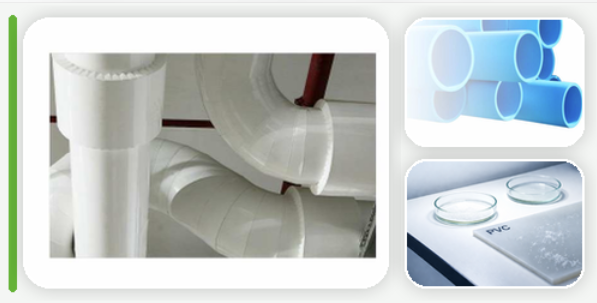
If the stabilizer system is not suitable, the fitting may show early yellowing, black spots, poor gloss, silver streaks, white precipitation, unstable shrinkage or difficult demolding. These problems often appear during real production, even when the lab sample looks acceptable.
PVC fittings need heat stability and mold release together
For PVC fittings, heat stability and lubrication must work together. If heat stability is weak, the material may discolor or burn at the gate, corner or high-shear area. If lubrication is not balanced, the product may stick to the mold, show flow marks or develop surface precipitation after continuous production.
A good fitting-grade stabilizer should support:
·stable initial color;
·sufficient long-term thermal stability;
·smooth fusion and melt flow;
·clean mold release;
·low plate-out and low precipitation;
·stable surface gloss;
·reliable finished-product strength.
Heat Stability and Lubrication Balance in PVC Heat Stabilizer for Pipes Fittings
A pvc heat stabilizer for pipes fittings must be designed around both stabilization and lubrication. In rigid PVC processing, stabilizers protect PVC against heat degradation, while lubricants control fusion, melt viscosity, metal release and surface smoothness.
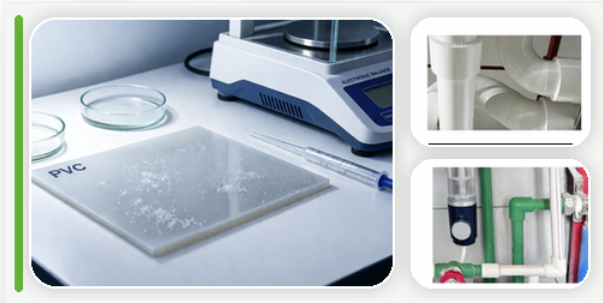
Too little lubrication may cause high torque, poor flow, sticking and burning. Too much external lubrication may delay fusion and cause weak surface bonding, poor strength or plate-out. Too much internal lubrication may make the melt too soft or unstable, leading to flow marks or dimensional variation.
Why balance matters more than single performance?
For fittings, a stabilizer with high heat stability but poor lubrication balance may still fail in production. For example, the fitting may not yellow quickly, but the mold may become dirty after several hours. Or the product may release well, but the surface may become dull or show white deposits.
AIMSEA’s pipe and fittings product information includes a fitting-related grade described with excellent heat stability, good lubrication balance and good release ability for fittings and other injection molding products. This reflects the key point: fitting stabilizers should be judged by combined processing performance, not by thermal stability alone.
Common Defects When Choosing Calcium-Zinc Heat Stabilizer for PVC Fitting
When testing a calcium-zinc heat stabilizer for pvc fitting, buyers should record visible defects carefully. Many production issues are not caused by the stabilizer alone, but the stabilizer system often affects how serious the defect becomes.
Burning, yellowing, silver streaks and plate-out
Problem | Possible Cause | What to Check During Trial |
Burning or black spots | Local overheating, poor heat stability, long residence time | Barrel temperature, gate area, static aging, machine cleaning |
Yellowing | Weak initial color stability or excessive processing temperature | Color change at normal and higher temperature settings |
Silver streaks | Moisture, volatile release, poor dispersion or trapped gas | Raw material drying, filler moisture, injection speed, venting |
White precipitation / plate-out | Lubricant imbalance or poor compatibility | Mold surface, product surface, long-run deposits |
Flow marks | Poor fusion, low melt uniformity or unstable injection flow | Fusion behavior, injection pressure, melt temperature |
Difficult demolding | Weak release effect or unsuitable external lubrication | Mold release, cycle stability, ejector marks |
Dull surface | Poor compatibility or over-lubrication | Surface gloss, lubricant level, filler dispersion |
This defect table should be used together with production records. A supplier can adjust the stabilizer more accurately if the buyer provides temperature settings, defect photos, formula details and the time when the defect appears.
Calcium Zinc Stabilizer for PVC Pipe vs PVC Fitting Stabilizer
A calcium zinc stabilizer for pvc pipe and a fitting-grade calcium-zinc stabilizer may share similar chemistry, but the performance focus is not exactly the same.
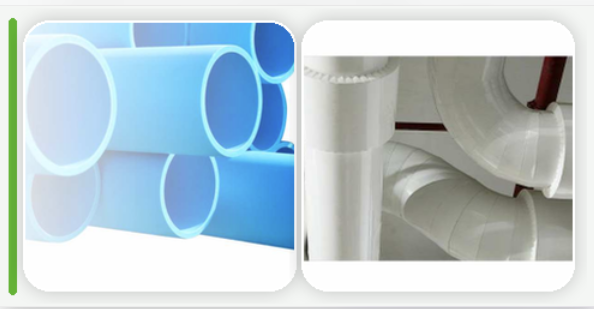
For PVC pipe extrusion, the stabilizer needs to support continuous output, uniform wall thickness, low die build-up and long-run heat stability. For PVC fittings, the stabilizer must also support short-cycle injection molding, mold filling, release behavior and surface reproduction.
Why pipe and fitting trials should not be treated as the same
A stabilizer that works well in pipe extrusion may not automatically work well in fittings. Pipe extrusion is continuous and easier to observe through torque, output and die deposits. Fitting production is more sensitive to mold structure, injection pressure, cooling time and demolding.
Therefore, a fitting sample should be tested on actual injection molding equipment. Buyers should not approve a calcium-zinc heat stabilizer for pvc fitting only because it performs well in a pipe formula. The final decision should be based on fitting surface quality, cycle stability, mold cleanliness and finished-product inspection.
When to Use One Pack PVC Heat Stabilizer for PVC Fitting?
A one pack pvc heat stabilizer for pvc fitting combines stabilizing, lubricating and processing-support functions into one integrated system. It is suitable for factories that want simpler weighing, fewer formulation errors and more stable batch production.
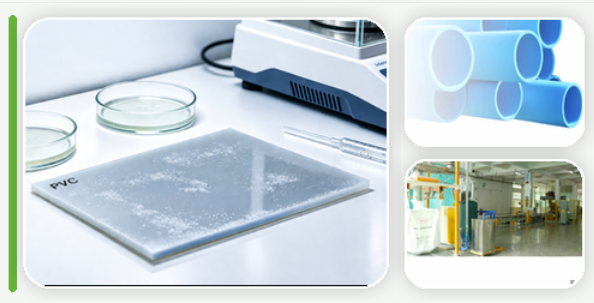
AIMSEA states that it provides calcium zinc stabilizers, one-pack stabilizer solutions and customized PVC additive packages for rigid, flexible, transparent and recycled PVC applications. For fitting producers, this type of integrated solution can be useful when the plant wants to reduce daily adjustment work.
Simpler dosing and more stable production control
One-pack systems are especially helpful when production teams want to reduce separate dosing of stabilizer, lubricant and processing aid. Since the additive package is pre-balanced, the formula may be easier to control across shifts.
However, one-pack does not mean “one grade fits all.” Resin K value, CaCO3 content, recycled material ratio, pigment, mold structure and processing temperature can all affect performance. Before selecting a one-pack system, the customer should provide full formula and equipment information.
Trial Tests for Calcium-Zinc Heat Stabilizer for PVC Fitting
Trial testing should verify whether the stabilizer can work under real production conditions. A good trial is not only a short sample run. It should include lab comparison, normal production settings, higher-temperature challenge, surface inspection and long-run observation.
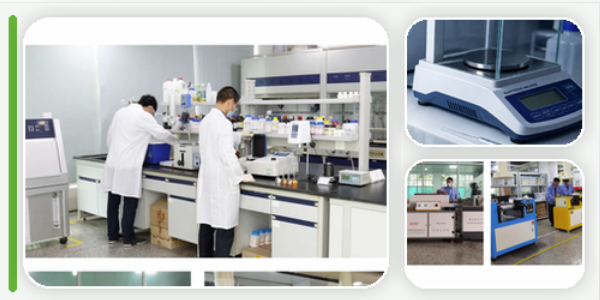
How to verify processing window and surface quality
Trial Stage | What to Do | What to Observe |
Lab formula review | Check resin, filler, lubricant, pigment and stabilizer dosage | Compatibility risk and initial recommendation |
Static heat aging | Heat sample under controlled condition | Initial color and thermal stability margin |
Injection molding trial | Run normal temperature and cycle settings | Flow, demolding, surface gloss and color |
Processing window test | Slightly adjust temperature and cycle time | Yellowing, burning, sticking or flow marks |
Long-run test | Continue production for several hours if possible | Mold deposits, plate-out, reject rate |
Finished fitting check | Inspect size, surface, impact or pressure-related performance | Final product quality and stability |
Document review | Check TDS, SDS, COA, RoHS, REACH and heavy metal documents | Export and customer approval readiness |
A simple approval flow can be used:
Formula Review -> Lab Aging Test -> Injection Trial -> Processing Window Check -> Long-Run Observation -> Finished Product Inspection -> Document Review -> Bulk Approval
What Customers Should Submit Before Sample Recommendation?
A stabilizer supplier cannot accurately recommend a pvc heat stabilizer for pipes fittings with only the product name. PVC fitting production is sensitive to formula, equipment and processing conditions. The more complete the information, the faster the supplier can recommend the right grade.
AIMSEA’s application page also notes that different processing methods such as extrusion, injection molding, calendering and foaming require different lubrication and stabilization systems. This is why technical parameters are important before sample selection.
Formula and equipment parameters for accurate matching
Information to Submit | Example Details |
Product type | Elbow, tee, coupling, valve fitting, drainage fitting, conduit fitting |
PVC resin | K value, brand, suspension PVC or other resin type |
Filler system | CaCO3 type, dosage, particle size, surface treatment |
Current stabilizer | Type, dosage, supplier, current problem |
Lubricant package | PE wax, paraffin, stearic acid, internal/external lubricant dosage |
Other additives | Processing aid, impact modifier, pigment, recycled material |
Equipment | Injection molding machine model, screw size, mold cavity |
Temperature profile | Barrel zones, nozzle temperature, mold temperature |
Processing settings | Injection speed, pressure, holding time, cooling time, cycle time |
Current defects | Burning, yellowing, silver streaks, plate-out, sticking, poor gloss |
Target market | Domestic, EU, Middle East, Southeast Asia, potable water-related market |
Compliance needs | RoHS, REACH, heavy metal report, customer-specific standard |
With these details, the supplier can judge whether the issue is mainly heat stability, lubrication balance, filler compatibility, moisture, temperature profile or equipment-related shear.
Conclusion
A calcium-zinc heat stabilizer for pvc fitting should be selected by actual fitting production performance, not only by price, dosage or chemistry name. PVC fittings need a stabilizer system that can protect against heat degradation, support smooth flow, improve mold release and maintain clean surface quality.
A calcium zinc stabilizer for pvc pipe may provide a useful reference, but injection-molded fittings require specific trial validation. Buyers should check burning, yellowing, silver streaks, plate-out, demolding behavior and long-run mold cleanliness before approval.
For factories that want simpler operation, a one pack pvc heat stabilizer for pvc fitting can be a practical option. The key is to submit complete formula and equipment parameters, then verify the stabilizer through lab tests, injection trials and finished-product inspection.