
Liquid vs Powder Calcium-Zinc Stabilizer for Calendered PVC Film and Artificial Leather
Read:305
Source:
Abstract
Choosing between a liquid calcium zinc stabilizer and a powder calcium zinc stabilizer is not a one-size-fits-all decision. For calendered PVC film and PVC artificial leather, the right stabilizer depends on line speed, product thickness, transparency, color requirement, odor control, VOC target, roll cleanliness, dosing method, existing equipment and customer compliance needs.
This guide compares liquid and powder Ca-Zn stabilizer systems from a practical processing perspective. It also explains which data buyers should provide to a PVC stabilizer supplier before requesting a sample or replacing an existing stabilizer package.
Liquid vs Powder Calcium-Zinc Stabilizer: What Is the Real Difference?
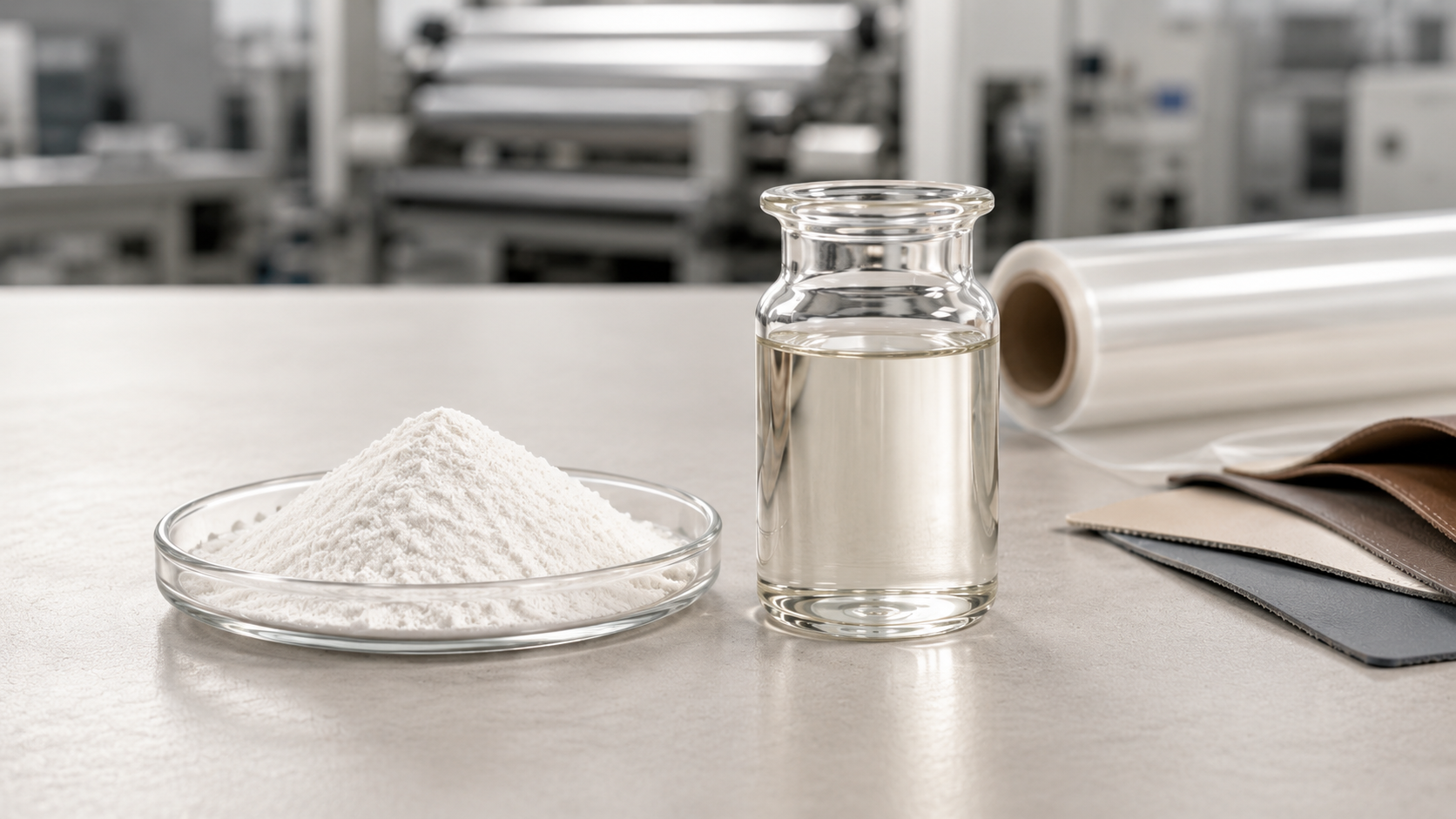
A calcium zinc stabilizer for PVC film is used to protect PVC from heat degradation during mixing, calendering and downstream processing. For exporters and manufacturers moving away from lead-based systems, Ca-Zn stabilizers are often selected because they support lead-free PVC formulation and restricted-substance control.
In film and artificial leather production, the stabilizer must do more than prevent thermal degradation. It should also help control initial color, surface quality, roll cleanliness, odor, VOC performance and processing stability.
AIMSEA provides lead-free calcium-zinc stabilizers, customized PVC heat stabilizer solutions and one-pack additive systems for different PVC processing applications. For calendered PVC film and artificial leather, the key is not simply choosing liquid or powder. The real goal is to match the stabilizer form and package design with the actual production line.
Why calcium zinc stabilizer for PVC film is widely used in lead-free formulas?
PVC film and artificial leather are often used in visible, indoor or customer-facing products. This means manufacturers need to consider appearance, odor, compliance and processing performance at the same time.
A lead-free PVC stabilizer direction is especially important for exporters serving customers who request RoHS, REACH or customer-specific restricted substance documents. A calcium-zinc system can support this direction, but the final approval should still be based on the actual product grade, formula compatibility and finished-product testing.
Why liquid and powder systems behave differently in calendering?
Liquid and powder PVC heat stabilizer systems differ in carrier form, dispersion behavior, dosing method and interaction with plasticizers, lubricants and fillers.
Liquid systems may disperse more easily in some plasticized PVC formulas and can be attractive for soft PVC film or artificial leather. Powder systems may be more convenient for dry blending, storage stability and one-pack formulation design.
However, the final decision should not be based only on the stabilizer form. A high-speed film line, a thick artificial leather line and a transparent film line may need different stabilizer designs even if they all use calcium-zinc technology.
Comparison Table: Liquid vs Powder Ca-Zn Stabilizer for Calendered PVC Film
The following comparison can help buyers evaluate liquid calcium zinc stabilizer and powder calcium zinc stabilizer options for calendered PVC film and artificial leather. It is a selection guide, not an absolute rule.
Evaluation Point | Liquid Calcium-Zinc Stabilizer | Powder Calcium-Zinc Stabilizer | Buyer Should Check |
Suitable process | Often suitable for plasticized PVC, soft film and leather systems | Often suitable for dry blend, semi-rigid film and one-pack systems | Mixer type, feeding system and existing formula |
Soft / rigid product fit | Usually easier to integrate with soft PVC and plasticizer-rich formulas | Often easier for semi-rigid or powder-blend systems | Resin, plasticizer and filler ratio |
Transparency | May support good clarity if compatible with the formula | Can support clarity if dispersion and particle compatibility are controlled | Haze, transmittance and early color |
Initial color | Depends on stabilizer design and co-stabilizer balance | Often adjustable through one-pack formula design | Initial whiteness and yellowing index |
Low odor / VOC | Needs careful carrier and raw material selection | May help reduce liquid carrier-related odor concerns | Odor test, VOC target and customer standard |
Roll cleanliness | May reduce some dispersion issues but can affect roll surface if compatibility is poor | May need strong dispersion and lubricant balance to reduce deposits | Roll sticking, plate-out and surface marks |
Metering convenience | Convenient for liquid dosing systems | Convenient for powder weighing and dry blending | Factory dosing equipment |
Storage and handling | Needs attention to leakage, viscosity and temperature sensitivity | Usually easier for bag storage and transport | Storage temperature and shelf life |
Cost structure | May vary with carrier and active content | May be cost-effective in one-pack systems | Cost per ton of finished PVC, not only unit price |
Best-fit direction | Soft film, artificial leather, plasticized systems | Semi-rigid film, dry blending, one-pack production | Confirm through trial testing |
How to compare transparency, color, VOC, roll cleanliness and cost?
A good comparison should use finished-product results instead of only laboratory descriptions. Buyers should compare film transparency, haze, initial color, oven aging, odor, VOC, roll surface condition and cost per ton of finished product.
For transparent film, haze and transmittance are important. For artificial leather, odor, surface feel and embossing stability may matter more. For colored decorative film, batch color consistency and roll cleanliness are often more important than absolute transparency.
Why no single PVC heat stabilizer fits every film or leather line?
A high-speed calendering line, a low-speed artificial leather line and a transparent film line may all use Ca-Zn stabilizer, but their requirements are different.
A thin transparent film may prioritize clarity and initial color. A colored decorative film may care more about batch color consistency and roll cleanliness. Artificial leather may require softness, low odor, embossing stability and surface feel.
The correct stabilizer should match the real PVC processing window, not only the product name.
How to Choose for Calendered PVC Film?
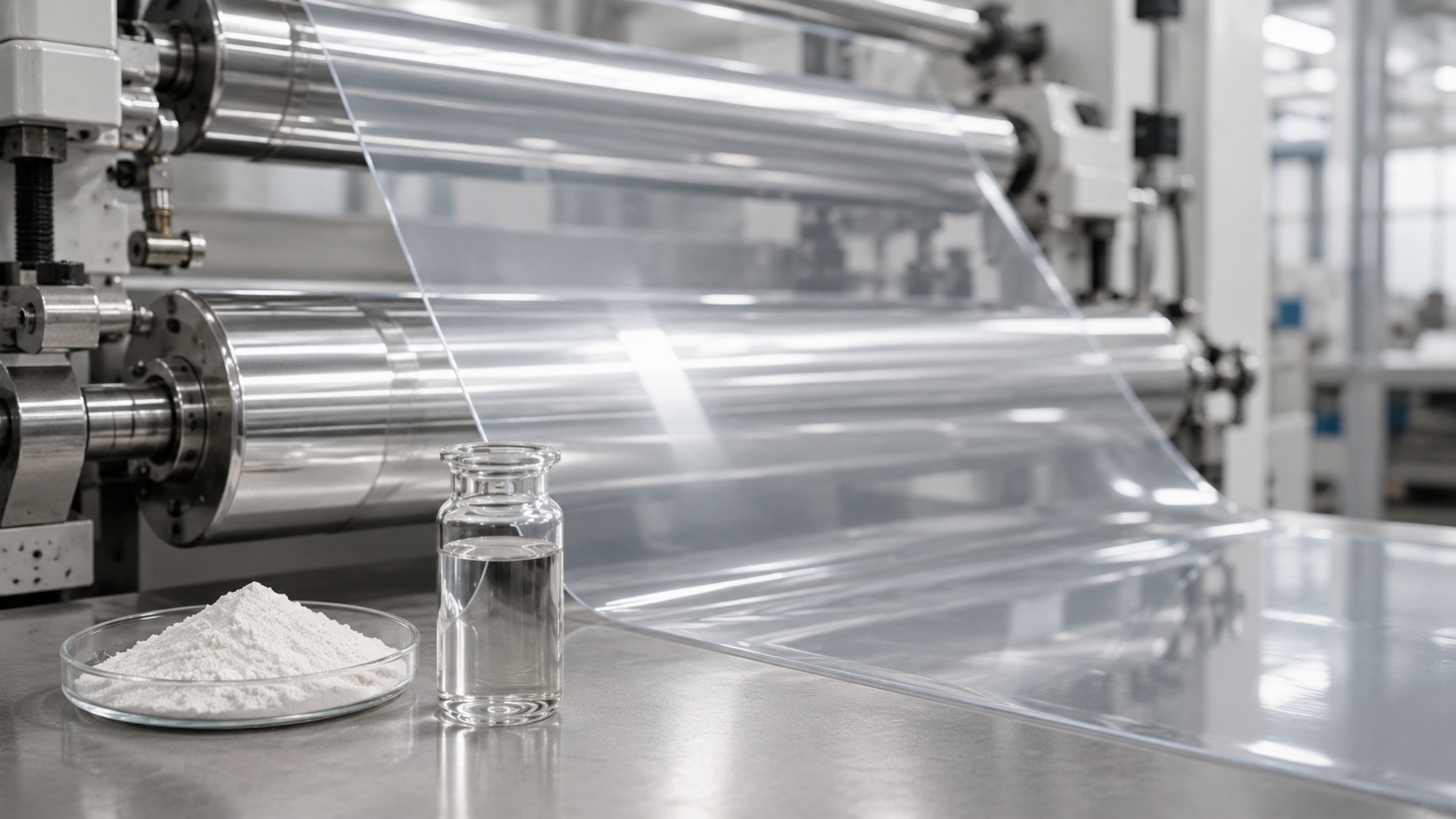
For calendered PVC film, the stabilizer must support heat stability while keeping the roll surface clean. Calendering creates long contact between hot PVC and metal rolls, so poor stabilizer compatibility can lead to sticking, PVC plate-out, haze, streaks or unstable color.
The choice between liquid and powder calcium-zinc stabilizer should be tested under actual line conditions, including roll temperature, line speed, product thickness, formula type and target appearance.
Thin transparent film and PVC color stability
For thin transparent film, PVC color stability and clarity are major concerns. The buyer should compare liquid and powder systems by testing:
Initial color
Yellowing after oven aging
Haze
Transmittance
Gel particles
Roll marks
Odor after cooling
A liquid system may be considered when the formula is highly plasticized and needs fast dispersion. A powder system may be considered when the factory wants dry blending convenience, cleaner storage and integrated one-pack control.
Colored decorative film and roll surface control
For colored film, transparency may be less critical, but color uniformity and surface cleanliness are still important. Roll deposits can create streaks, black dots, gloss differences or unstable printing performance.
In this case, the stabilizer package should be evaluated together with pigments, fillers, waxes, plasticizers and processing aids. A one-pack PVC stabilizer may help simplify weighing and improve batch consistency, especially when the factory runs multiple colors or frequent production changes.
How to Choose for PVC Artificial Leather?
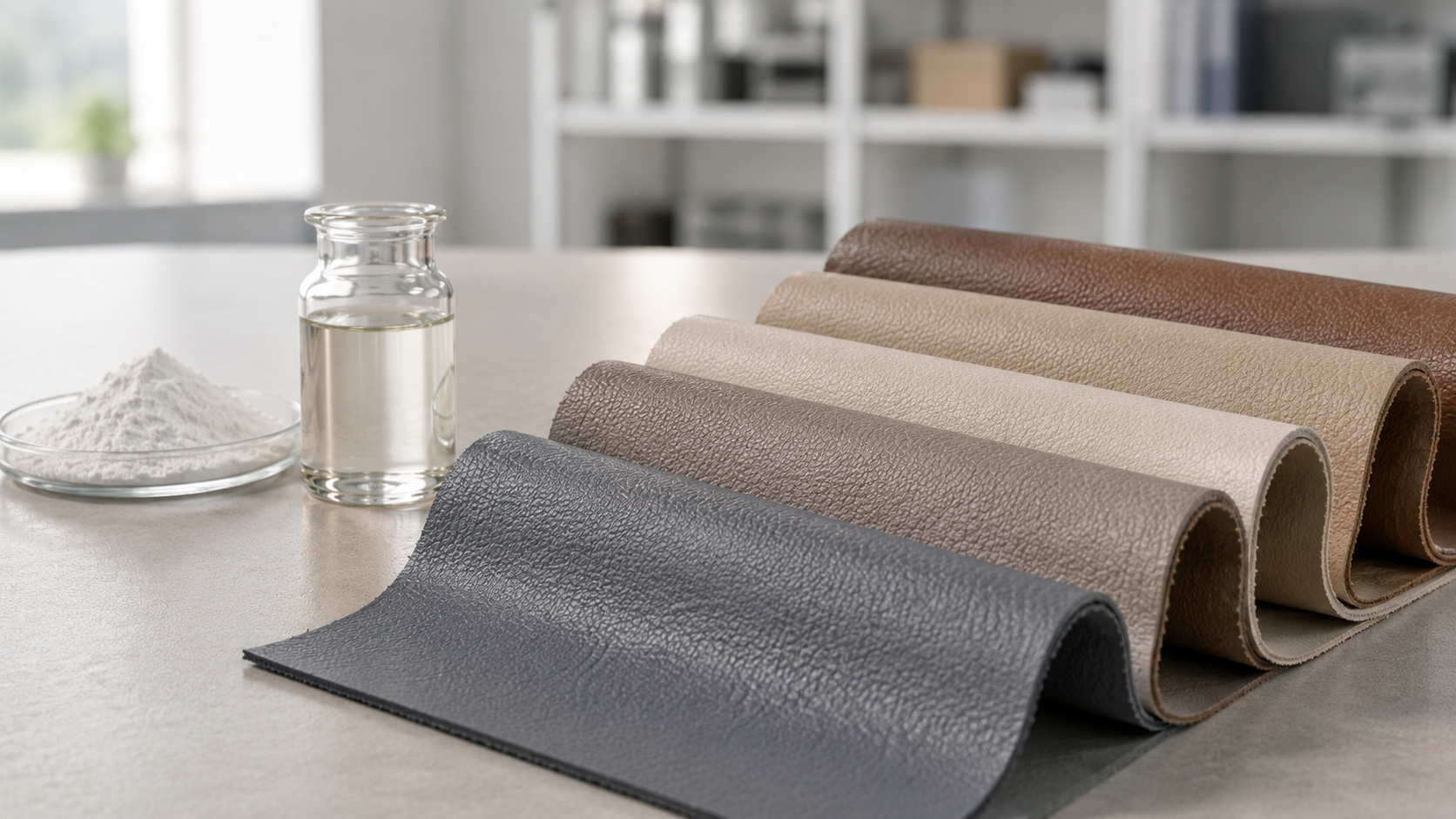
PVC artificial leather stabilizer selection is usually more complex than simple film stabilization. Artificial leather may include base fabric, foaming layers, surface layers, pigments, plasticizers, embossing and coating steps. The stabilizer must work with the entire formula.
For artificial leather manufacturers, the key comparison is not only liquid versus powder. The more important question is whether the stabilizer can support stable fusion, low odor, smooth surface, good embossing, acceptable VOC performance and customer-required compliance.
Soft PVC artificial leather, low odor and VOC requirements
Soft artificial leather often contains higher plasticizer content. This makes compatibility between stabilizer, plasticizer and lubricant especially important.
A liquid calcium zinc stabilizer may be easier to disperse in some soft PVC formulas, but it must be checked for odor, viscosity, carrier compatibility and storage stability.
A powder calcium zinc stabilizer may be preferred when the factory wants powder handling, one-pack dosing or lower concern about liquid carrier odor. However, it must disperse well enough to avoid specks, haze or poor surface finish.
For furniture, automotive interiors, footwear or indoor decoration, low VOC PVC stabilizer selection should be combined with plasticizer selection and finished-product odor or VOC testing.
Why thickness, line speed and embossing affect stabilizer choice?
Artificial leather thickness can vary widely. Thicker products experience more heat history and may need stronger dynamic stability. Faster line speed may require faster fusion and better roll release. Embossing can expose surface defects that are not obvious before texture formation.
This means the stabilizer should be tested under real production conditions, including line speed, roll temperature, cooling method, embossing pressure and product thickness.
Key Tests Before Approving a PVC Stabilizer Supplier
A reliable PVC stabilizer supplier should help buyers test both processing performance and final product quality. The best stabilizer is not always the one with the lowest dosage or lowest unit price. It is the one that gives stable output, acceptable cost and customer-approved performance.
Before changing from liquid to powder, or from powder to liquid, buyers should run a structured trial.
Test Item | Why It Matters |
Static heat aging | Checks color hold and thermal stability |
Dynamic heat stability | Simulates real processing stress |
Haze and transmittance | Important for transparent film |
Roll cleanliness | Checks plate-out, sticking and deposits |
Odor test | Important for artificial leather and indoor products |
VOC test if required | Supports customer or export requirements |
Torque / fusion behavior | Shows process stability |
Surface inspection | Checks streaks, specks, gloss and roll marks |
Cost per ton of finished product | Compares real economic value |
Testing PVC plate-out, initial color and dynamic heat stability
PVC plate-out is a common problem in calendering. It may come from poor compatibility, excessive external lubricant, filler interaction, pigment dispersion issues, stabilizer imbalance or processing temperature problems.
When testing a new stabilizer, buyers should not only check color. They should observe roll surface cleanliness, die or roll deposits, surface streaks, gloss change and production stability over time.
Initial color should also be tested together with aging performance. Some formulas look acceptable immediately after production but yellow quickly after heat exposure or storage.
Customer information checklist for AIMSEA stabilizer recommendation
To recommend a suitable calcium zinc stabilizer for PVC film or artificial leather, buyers should provide:
Information to Provide | Why It Matters |
Product type | Transparent film, colored film, leather surface layer or foam layer |
Product thickness | Affects heat history and stabilizer demand |
Line speed | Determines processing stress |
Roll temperature | Helps evaluate heat stability requirement |
Current stabilizer type | Liquid, powder, tin, Ba-Zn or other system |
Current dosage | Supports cost and performance comparison |
Plasticizer type and dosage | Important for compatibility and VOC |
Transparency target | Needed for haze and transmittance control |
Color requirement | Helps adjust initial color and aging resistance |
Odor / VOC requirement | Important for indoor, automotive and furniture use |
Plate-out problem | Helps adjust lubricant and stabilizer package |
Compliance documents | REACH, RoHS or customer-specific requirements |
How AIMSEA Supports Film and Artificial Leather Applications?

AIMSEA provides lead-free calcium-zinc stabilizers, one-pack additive systems and customized PVC heat stabilizer support for rigid, flexible, transparent and recycled PVC applications.
For film and artificial leather producers, the key value is not simply choosing liquid or powder. It is matching the stabilizer package to the actual formula, process and customer requirement.
Custom stabilizer direction for calendering PVC
For calendering, AIMSEA can support buyers by focusing on lubricant balance, plate-out control, color stability and dynamic heat resistance. This is especially useful for factories that face roll deposits, surface streaks, yellowing, unstable gloss or inconsistent film quality.
Lead-free Ca-Zn stabilizer for export projects
For export-oriented film and artificial leather projects, a lead-free PVC stabilizer direction can help buyers respond to customer requirements for safer additives and restricted-substance control.
The final approval should still be based on the actual product grade, test report and finished-product trial. A stable formulation should meet processing requirements, appearance targets and customer compliance expectations at the same time.
FAQ About Liquid vs Powder Calcium-Zinc Stabilizer
Is liquid calcium-zinc stabilizer always better for PVC artificial leather?
No. A liquid calcium zinc stabilizer may disperse well in some soft PVC systems, but it is not automatically better. The final decision depends on plasticizer type, odor target, line speed, product thickness, roll cleanliness and existing equipment.
Is powder calcium-zinc stabilizer better for calendered PVC film?
Not always. A powder calcium zinc stabilizer can be convenient for dry blending and one-pack systems, but dispersion and roll cleanliness must be tested. Transparent film also needs haze and transmittance comparison.
Which stabilizer is better for low VOC artificial leather?
Low VOC performance depends on the full formula, not only the stabilizer. Buyers should review stabilizer carrier, plasticizer type, lubricant, coating system and final product odor or VOC test results.
What causes plate-out on calender rolls?
PVC plate-out may come from poor compatibility, excessive external lubricant, filler interaction, pigment dispersion issues, stabilizer imbalance or processing temperature problems. The stabilizer package should be adjusted together with the full formula.
What should buyers test before replacing an existing stabilizer?
Buyers should test initial color, heat aging, dynamic stability, roll cleanliness, haze, odor, VOC if required, surface quality and cost per ton of finished product.
Conclusion
The choice between liquid and powder calcium zinc stabilizer for PVC film should be made through application-based testing, not by assuming one form is always superior. Liquid systems may fit some soft, plasticized and artificial leather formulas, while powder systems may suit dry blending, semi-rigid film and one-pack production control.
For calendered PVC film and PVC artificial leather, the key decision factors are line speed, product thickness, transparency, color stability, odor, VOC target, roll cleanliness, dosing convenience, cost and compliance requirements.
AIMSEA’s lead-free Ca-Zn stabilizer, customized PVC heat stabilizer and one-pack PVC stabilizer solutions can help manufacturers compare liquid and powder directions based on real production data, finished-product testing and customer approval requirements.