
Clear PVC Yellowing and Haze: Stabilizer, Lubricant and Processing Checklist
Read:427
Source:
Abstract
Clear PVC products are expected to show high transparency, stable color and low haze. When transparent PVC yellowing or clear PVC haze appears, the problem should not be blamed on one additive immediately. A practical troubleshooting process should begin with processing temperature and residence time, then move to the stabilizer system, lubricant compatibility, additive dispersion, refractive index matching, aging results, haze and transmittance data.
This guide provides a step-by-step checklist for transparent PVC sheet, film, hose, packaging, calendered sheet and rigid transparent products. It also includes a transparent PVC test data table to help buyers submit formula and testing information before requesting a stabilizer recommendation.
Why Clear PVC Yellowing and Haze Should Be Checked in Order?
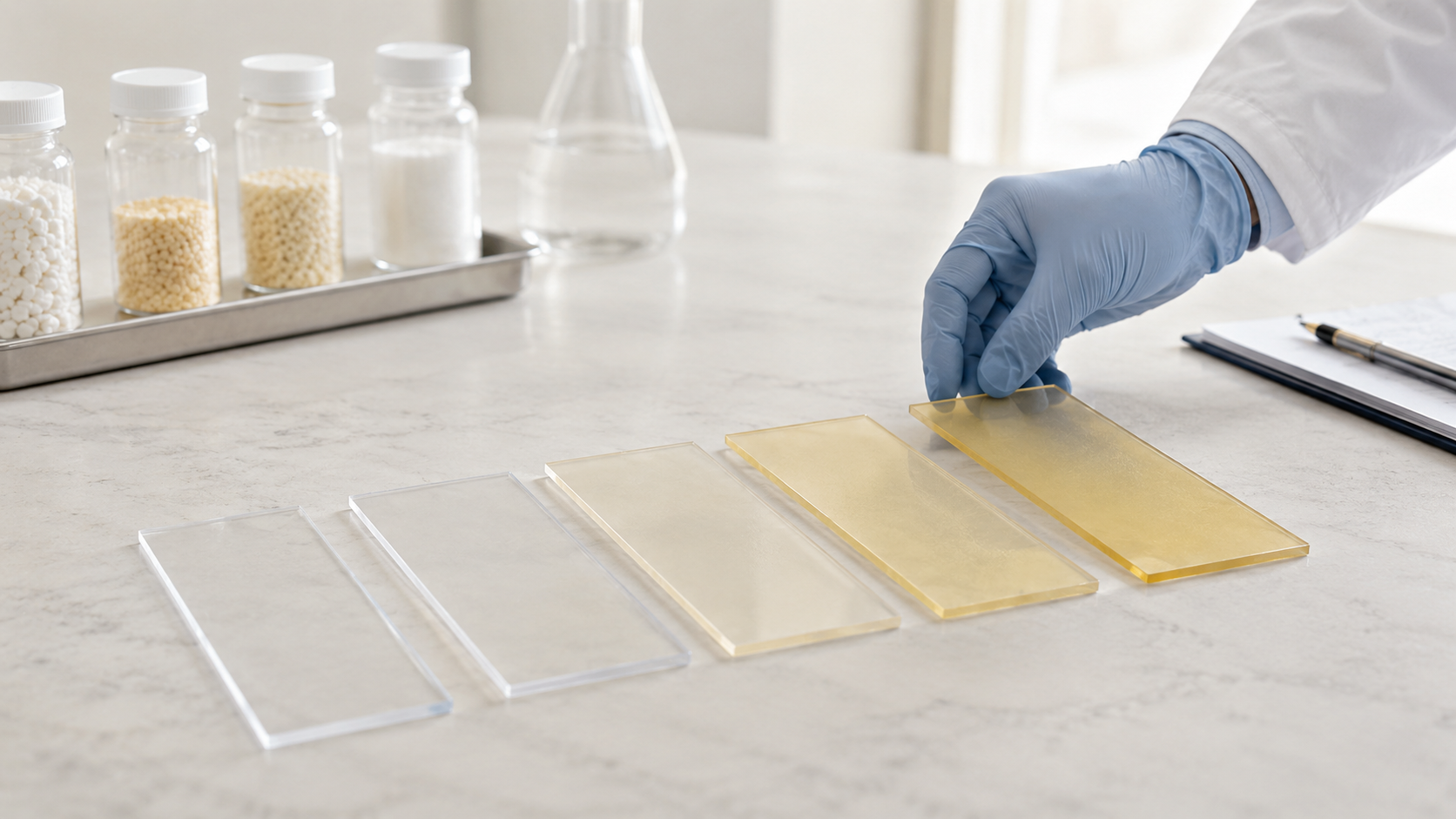
Clear PVC troubleshooting should follow a logical sequence. If the processor adjusts the transparent PVC stabilizer before checking temperature, residence time or lubricant balance, the same defect may return in the next trial.
Transparent PVC is sensitive to heat, shear, additive compatibility and dispersion. A stable formula should not only resist yellowing but also maintain low haze, good transmittance, clean surface quality and acceptable odor during real production.
Why transparent PVC yellowing usually starts with heat history?
Transparent PVC yellowing is closely related to thermal degradation. Under excessive heat or long processing time, PVC may release HCl and form structures that cause visible color change. The product may gradually shift from clear or light-colored to yellow, orange, brown or even dark.
This means the first question should be: did the material experience excessive temperature, long residence time, local overheating or too much shear before yellowing appeared?
If the answer is yes, changing the stabilizer alone may not solve the root cause. The processing window must be reviewed first.
Why clear PVC haze is not always caused by the stabilizer?
Clear PVC haze may come from poor stabilizer compatibility, but it may also come from lubricant precipitation, filler contamination, poor dispersion, gel particles, moisture, degraded material or mismatched additive refractive index.
PVC itself can have good transparency, but additives can affect clarity depending on their compatibility, dispersion state and optical behavior. When additives are not well dispersed or are not suitable for transparent PVC, they may scatter light and increase haze.
Step 1: Check PVC Processing Temperature and Residence Time
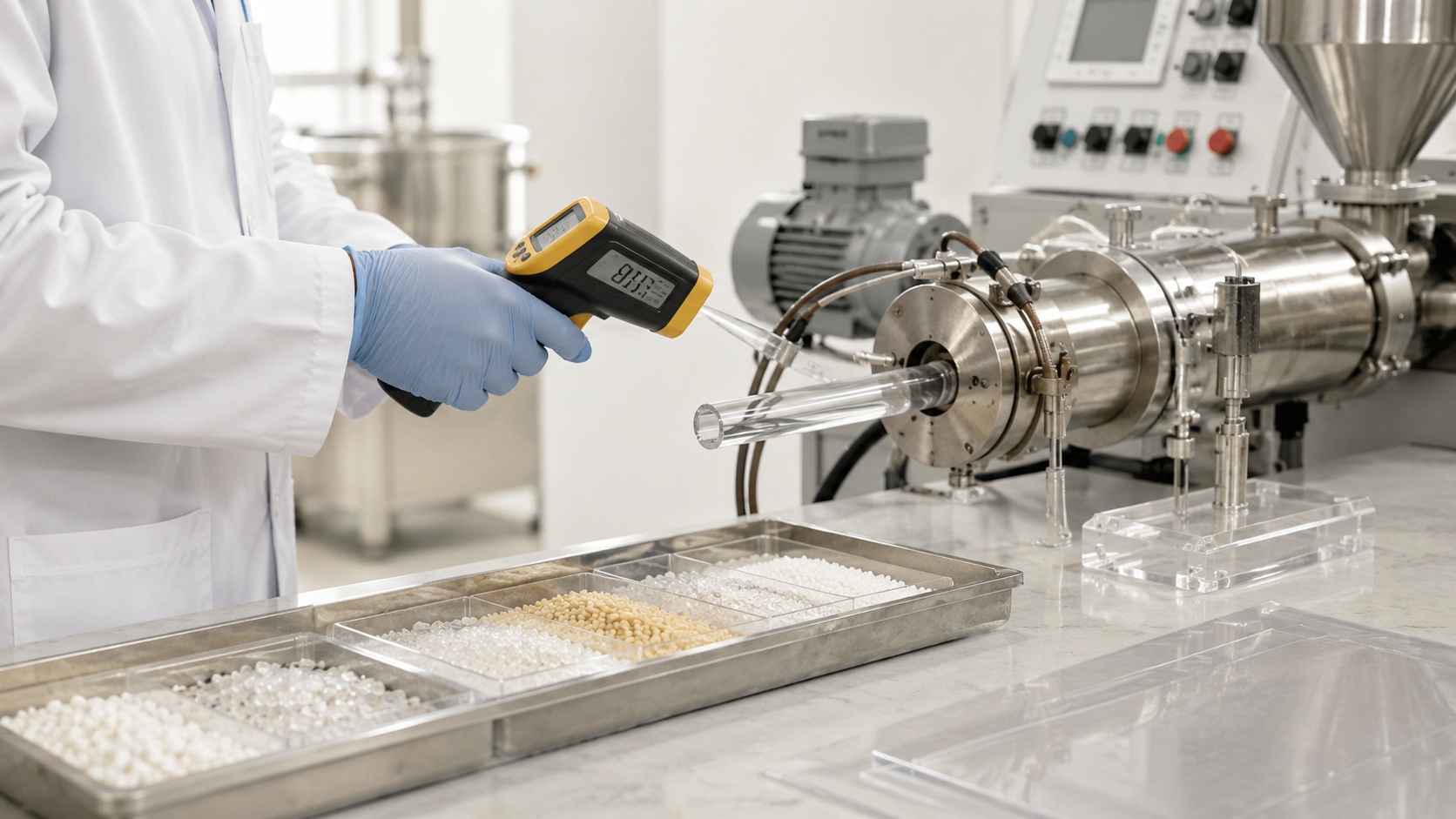
Before changing the stabilizer package, processors should first check the real processing conditions. Temperature settings on the control panel may not reflect the true melt temperature. Local overheating can occur at the screw, die, roll surface, mold or dead corners.
How PVC processing temperature affects color change?
High PVC processing temperature can accelerate degradation and make transparent products yellow faster. For rigid transparent sheet, film or hose, even a small increase in actual melt temperature may affect initial color, haze and aging performance.
The processor should record the main temperature points during production.
Process Area | What to Check | Why It Matters |
Mixer | Discharge temperature | Prevents early heat history before molding or extrusion |
Extruder barrel | Zone temperature and melt temperature | Identifies overheating zones |
Die or mold | Actual die or mold temperature | Controls yellowing, flow marks and surface clarity |
Calender rolls | Roll temperature | Affects clarity, sticking and plate-out |
Cooling section | Cooling speed and uniformity | Reduces haze from uneven solidification |
A transparent PVC trial should include both set temperature and actual measured temperature wherever possible.
Why PVC residence time increases yellowing risk?
Long PVC residence time gives the material more exposure to heat. This can happen when production stops, screw speed is too low, output is unstable, dead corners exist in the die, or material remains too long in the barrel.
For transparent PVC, residence time should be checked together with color change. If yellowing becomes worse after machine stoppage or during low-speed production, the issue may be related to heat history rather than stabilizer type alone.
A good trial should compare normal production, slow-speed production and restart conditions.
Step 2: Review the Transparent PVC Stabilizer System
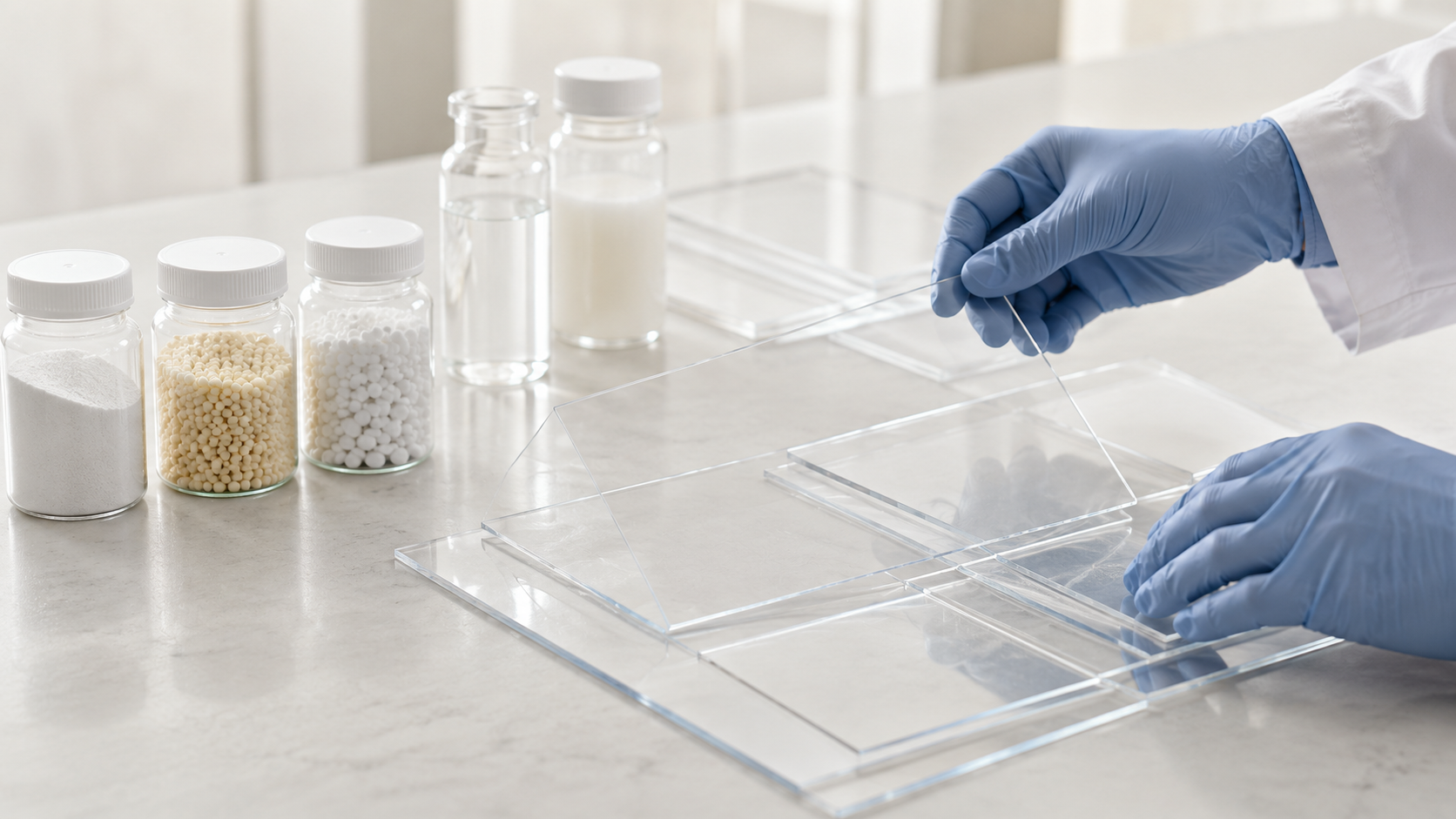
After confirming processing conditions, the next step is reviewing the stabilizer system. The PVC heat stabilizer must protect PVC during heating, support initial color and delay discoloration during aging.
How a PVC heat stabilizer controls early color and aging?
A good transparent PVC stabilizer should provide stable early color, resist yellowing during oven aging and remain compatible with plasticizers, lubricants and other additives.
For clear PVC products, buyers should compare:
Initial color
Yellowing index
Static oven aging
Dynamic heat stability
Haze
Transmittance
Odor
Plate-out tendency
Long-run production stability
The stabilizer should be evaluated in the actual formula, not only as an isolated additive. A stabilizer that performs well in one transparent PVC formula may not deliver the same result if the lubricant, plasticizer, processing aid or pigment system changes.
When to compare Ca-Zn, organotin and booster systems?
For high-clarity rigid PVC, organotin stabilizers are often used because they can provide strong transparency and heat stability. However, cost, odor and compliance requirements may lead some buyers to test Ca-Zn stabilizer or organotin booster systems.
A Ca-Zn stabilizer may be considered when buyers need a lead-free direction, lower odor or improved environmental positioning. An organotin stabilizer booster may be considered when the factory wants to reduce tin dosage while maintaining acceptable clarity and processing performance.
The key point is not to assume one system is always better. Transparent PVC stabilizer selection should be based on product clarity target, processing window, customer regulation, odor requirement and real machine trial results.
Step 3: Check Lubricant Compatibility and Plate-Out
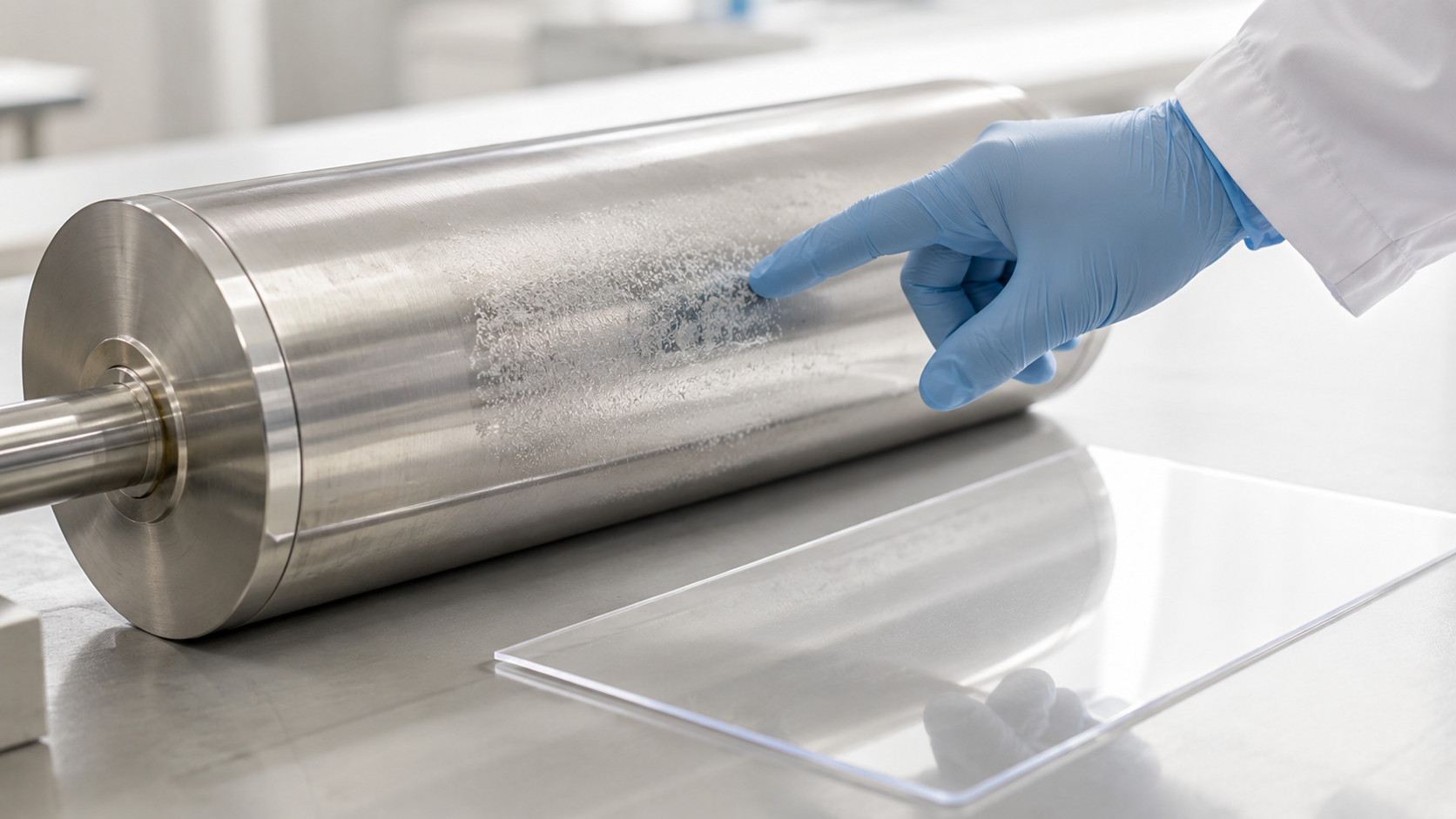
Lubricants are essential for PVC processing, but they can also cause haze, streaks, deposits or surface defects if the balance is wrong. In transparent PVC, excessive or incompatible lubricant may migrate, bloom or form deposits.
How PVC lubricant compatibility affects haze and surface quality?
PVC lubricant compatibility should be checked together with the stabilizer. Too much external lubricant may improve release but reduce fusion or create surface deposits. Too much internal lubricant may change melt behavior and affect clarity.
Typical symptoms include:
Symptom | Possible Cause | What to Check |
White haze | Lubricant precipitation or poor dispersion | Lubricant type, dosage and compatibility |
Surface streaks | Plate-out or uneven flow | Roll, die or mold deposits |
Gel particles | Poor fusion or contamination | Mixing, filtration and resin quality |
Gloss loss | Surface deposit or cooling issue | Surface cleanliness and cooling uniformity |
Yellow streaks | Local overheating | Dead corners, screw speed and residence time |
When haze appears, buyers should not only ask whether the stabilizer is strong enough. They should also check whether the lubricant system is compatible with transparent PVC.
Why roll, die and mold cleanliness should be recorded?
PVC plate-out can affect clarity and production stability. It may appear on calender rolls, extrusion dies or molds. A formula may look acceptable in a short trial but fail after several hours due to gradual deposits.
During production testing, processors should record:
Time before deposit appears
Location of deposit
Surface streaks or gloss change
Color change after long running
Cleaning frequency
Whether deposits increase after line stoppage
This data helps the supplier judge whether the issue comes from stabilizer compatibility, lubricant balance, filler contamination or processing temperature.
Step 4: Review Additive Refractive Index and Dispersion
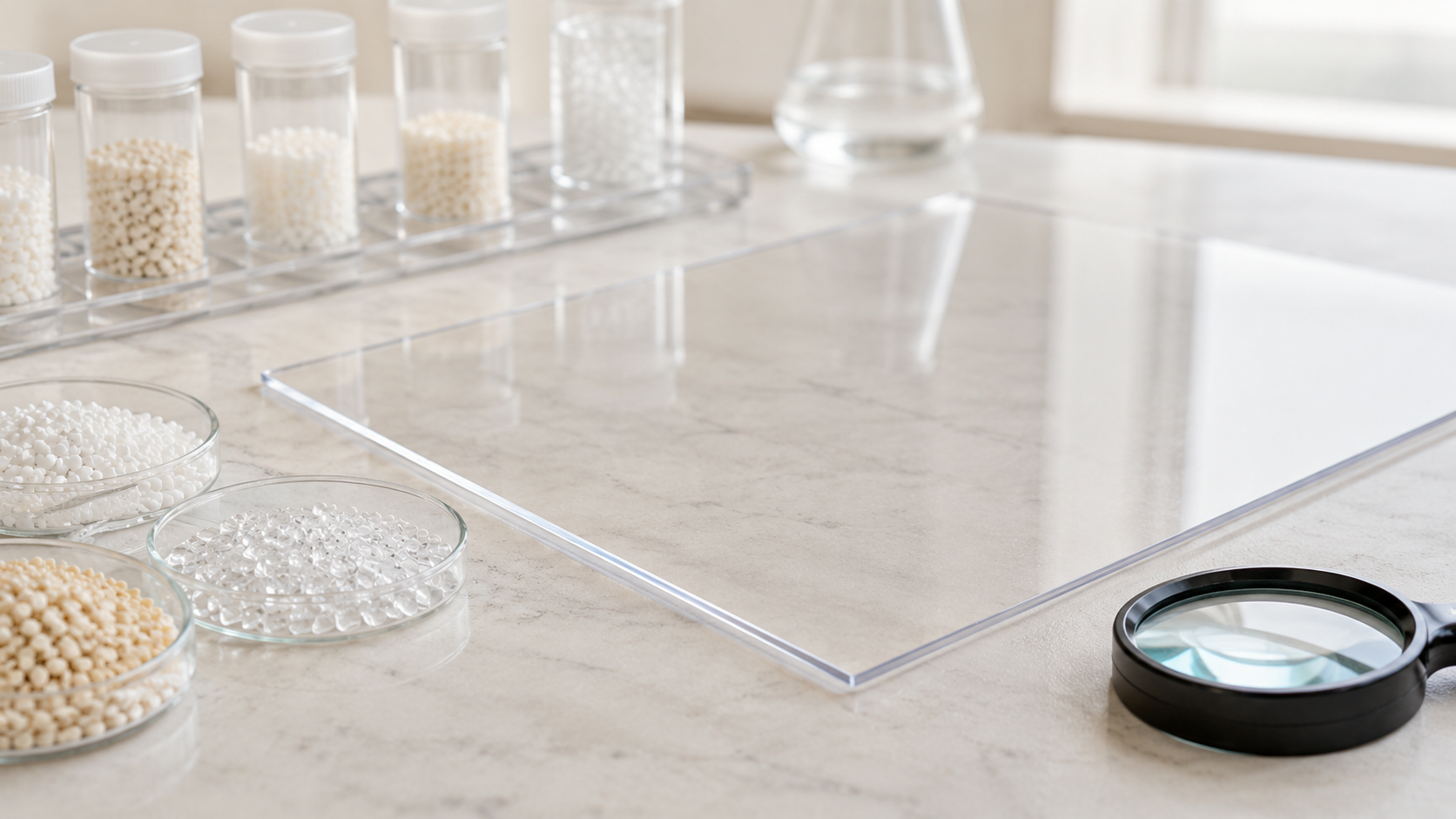
Transparent PVC is sensitive to additive compatibility. Even if the stabilizer works chemically, the final product may still show haze if additives are poorly dispersed or have poor optical compatibility.
Why additive refractive index matters for clear PVC haze?
The optical performance of transparent PVC depends on whether additives scatter visible light. If additive particles are well dispersed and their refractive index is close to PVC, they are less likely to reduce transparency. If the difference is large, or if particles are too large or poorly dispersed, haze may increase.
This is why stabilizers, lubricants, fillers, pigments, processing aids and impact modifiers should be checked as a complete system.
Why dispersion should be checked before increasing stabilizer dosage?
If haze is caused by poor dispersion, simply increasing stabilizer dosage may not solve the problem. It may even worsen plate-out or surface deposits.
Processors should check:
Mixing time and temperature
Feeding sequence
Powder dispersion
Liquid additive compatibility
Moisture control
Filtration condition
Gel and speck levels
Additive particle size where relevant
For transparent PVC, a small dispersion problem can become a visible optical defect in the finished product.
Step 5: Measure Haze, Transmittance and Aging Results
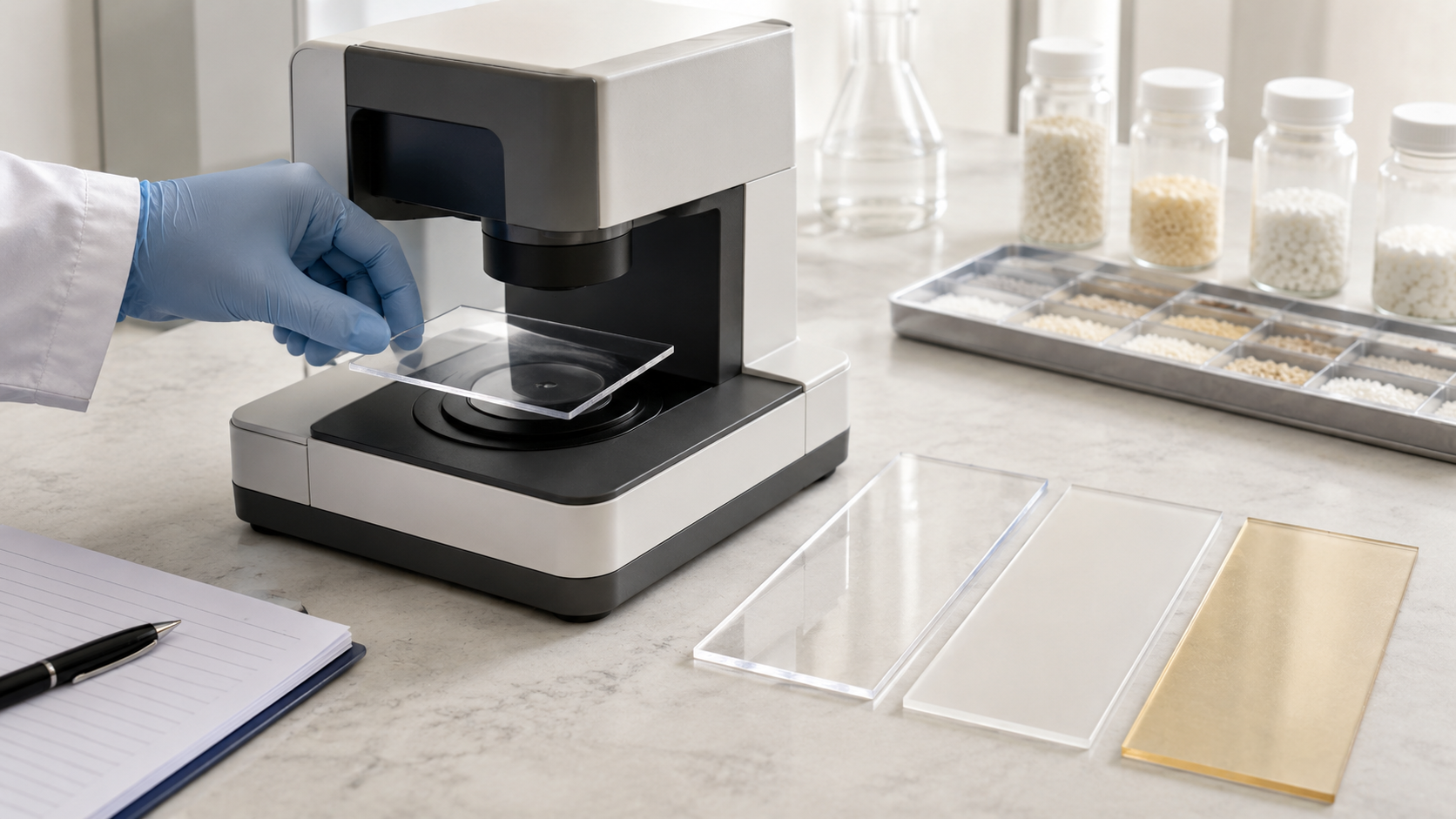
Visual inspection alone is not enough for clear PVC. Buyers should measure PVC haze and transmittance with consistent test methods and compare results before and after aging.
What haze and transmittance show?
Haze indicates how much light is scattered. Higher haze usually means lower visual clarity. Transmittance shows how much light passes through the material. A clear PVC product may need both low haze and high transmittance.
For transparent PVC, buyers should not compare stabilizers only by transmittance. A sample can have high transmittance but still look cloudy if haze is too high.
Why aging results should be compared with optical data?
A transparent PVC product may look clear immediately after production but yellow after aging. Therefore, oven aging should be combined with haze, transmittance and visual color evaluation.
Suggested aging comparison:
Test Stage | What to Record | Decision Value |
Fresh sample | Initial color, haze, transmittance | Checks starting clarity |
After short aging | Early yellowing | Shows initial stability |
After long aging | Color retention | Shows long-term heat resistance |
After cooling | Surface haze and odor | Shows final product acceptability |
After storage | Blooming or haze change | Shows compatibility stability |
This structure helps buyers compare stabilizers based on real performance instead of subjective visual judgment only.
Transparent PVC Test Data Table for Buyers
To help a PVC stabilizer supplier recommend the right stabilizer, buyers should submit complete formula and test data instead of only saying “yellowing” or “high haze.”
Information to Provide | Example / Notes |
Product type | Transparent sheet, film, hose, rigid sheet or packaging |
PVC resin grade | K value, polymerization degree or resin type |
Current stabilizer | Organotin, Ca-Zn, Ba-Zn, booster or other system |
Stabilizer dosage | PHR or kg per batch |
Lubricant system | Internal and external lubricant type and dosage |
Plasticizer if used | Type and dosage |
Other additives | Impact modifier, processing aid, filler or pigment |
Processing method | Extrusion, calendering, injection or mixing |
Processing temperature | Barrel, die, roll or mold temperature |
Residence time | Normal run, shutdown time or hold-up risk |
Current problem | Yellowing, haze, specks, plate-out, odor or gloss loss |
Haze value | Before and after aging |
Transmittance value | Before and after aging |
Aging condition | Temperature and time |
Customer requirement | Transparency, low odor, food contact, RoHS or REACH |
Sample photos | Fresh sample and aged sample comparison |
Complete data helps reduce trial errors and makes stabilizer adjustment more accurate.
How AIMSEA Supports Transparent PVC Stabilizer Selection?

AIMSEA provides PVC stabilizer solutions for transparent PVC, calendered film, rigid sheet, flexible PVC and other applications. For clear PVC yellowing and haze problems, AIMSEA’s value is not only offering a stabilizer grade, but helping customers review the stabilizer, lubricant and processing system together.
Application-based transparent PVC stabilizer support
For transparent products, AIMSEA can support buyers by reviewing:
Heat stability requirement
Initial color target
Haze and transmittance data
Lubricant compatibility
Plate-out tendency
Processing temperature and residence time
Odor and compliance needs
Cost-performance balance
This application-based approach is important because transparent PVC defects are usually caused by the combined effect of formula and process.
When AIMSEA may recommend Ca-Zn, tin or hybrid direction?
For some high-clarity rigid products, organotin may remain a strong option. For projects that need lower odor, lower cost or improved compliance positioning, AIMSEA may help test Ca-Zn stabilizer, organotin stabilizer booster or hybrid solutions, depending on clarity tolerance and processing conditions.
The final decision should be based on side-by-side trial results, not only stabilizer name or dosage.
FAQ About Clear PVC Yellowing and Haze
What causes transparent PVC yellowing?
Transparent PVC yellowing is often caused by excessive processing temperature, long residence time, insufficient heat stability, poor stabilizer compatibility, local overheating or previous thermal history.
What causes clear PVC haze?
Clear PVC haze may come from poor additive dispersion, lubricant precipitation, incompatible stabilizer, filler contamination, moisture, gel particles, poor cooling or refractive index mismatch.
Can adding more stabilizer solve yellowing?
Not always. More stabilizer may improve heat stability in some cases, but if yellowing is caused by overheating, long residence time or poor lubricant balance, the formula and processing conditions must be adjusted together.
What tests should buyers run for transparent PVC?
Buyers should test haze, transmittance, initial color, oven aging, dynamic stability, plate-out, odor, gel particles and long-run production stability.
What information should I send before requesting a transparent PVC stabilizer sample?
Send the full formula, stabilizer dosage, lubricant system, processing temperature, residence time, current defect photos, haze value, transmittance value and aging results.
Conclusion
Clear PVC yellowing and haze should be solved with a structured checklist, not random additive changes. The correct order is to check processing temperature and residence time first, then review the stabilizer system, lubricant compatibility, additive refractive index, dispersion, aging results, haze and transmittance.
For transparent PVC processors, the best stabilizer is not simply the one with the lowest dosage or highest heat stability claim. It is the one that keeps the product clear, controls yellowing, reduces haze, runs cleanly on the actual equipment and meets the customer’s performance and compliance requirements.
AIMSEA can support transparent PVC manufacturers with application-based PVC heat stabilizer, Ca-Zn stabilizer, organotin partner and customized stabilizer package solutions when buyers provide complete formula and test data.