
Posted by Grayson
in blog
Marketing
Updated 2026-09-17
How to Choose a PVC Stabilizer for Pipes and Fittings
Read:146
Source:
Understanding how to choose a PVC stabilizer for pipes and fittings starts with the finished product, formulation, processing method, and actual production conditions—not simply with stabilizer chemistry, supplier descriptions, or price per kilogram. A system that performs well on one rigid extrusion line may behave differently in another compound, while injection-molded fittings introduce processing requirements that cannot be judged from a pipe extrusion trial alone.
For buyers and formulation engineers, the practical question is therefore not “Which stabilizer is best?” but “Which stabilizer fits this formulation and can be validated under this production process?” A useful selection process connects the application, compound design, processing window, controlled trial, and finished-product requirements before a material is approved for regular production.
Start with the Pipe or Fitting Application
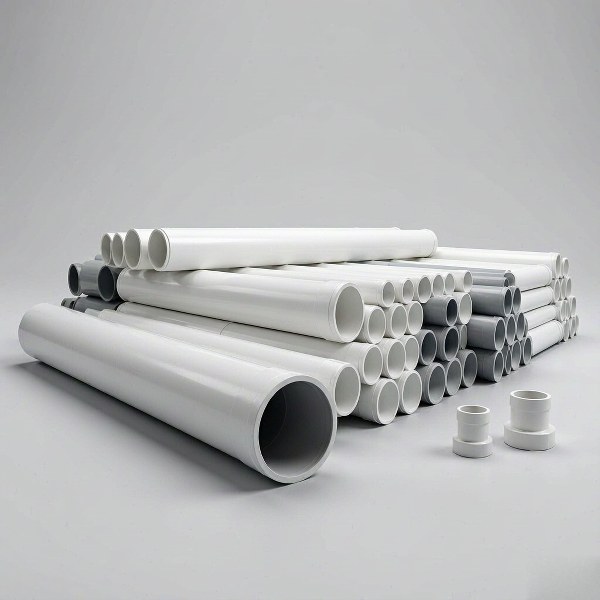
The first selection decision is to define exactly what is being produced. Pressure pipes, drainage pipes, conduits, and injection-molded fittings may all fall under the broad category of pipe and fitting products, but they do not create the same processing environment.
Continuous extrusion places more emphasis on stable fusion, line consistency, die cleanliness, and behavior over a longer production run. Injection molding introduces different concerns around mold filling, release behavior, repeated molding cycles, and part appearance. Stabilizer selection should therefore begin with both the finished product and the process used to make it.
This distinction is also important when reviewing PVC pipe and fittings production because products within the same broad application category can still require different formulation priorities and trial conditions.
Pressure and Water Pipes
For pressure or water-pipe production, the stabilizer should be evaluated as part of the complete compound rather than as an isolated heat-stability additive. Resin characteristics, filler content, processing aids, and the lubricant system all influence how the material behaves during extrusion.
Thermal protection is important, but it does not by itself confirm that a candidate system is suitable for the line. The production team also needs to observe how the compound fuses, whether the extrusion remains stable over time, how the surface develops, and whether the finished pipe meets the applicable quality requirements.
Where the end product must comply with specific market or application standards, supplier data should be treated as supporting information rather than final approval. The finished compound and pipe still need to be validated under the manufacturer's own quality-control system.
Drainage Pipes and Conduits
Drainage pipes and conduits are also commonly produced through rigid extrusion, but their formulation priorities can differ from those of pressure-pipe systems. Filler levels, appearance requirements, production speed, and cost targets may all influence the most appropriate stabilizer package.
This is why transferring a material directly from one pipe formula into another can produce unexpected changes. Even when two products use a similar stabilizer chemistry, differences in the compound may change fusion behavior, line pressure, surface appearance, or deposit formation.
The useful question is not whether a stabilizer is generally “for pipe,” but whether it works with the specific resin, additive package, and extrusion window used on that production line.
Injection-Molded Fittings
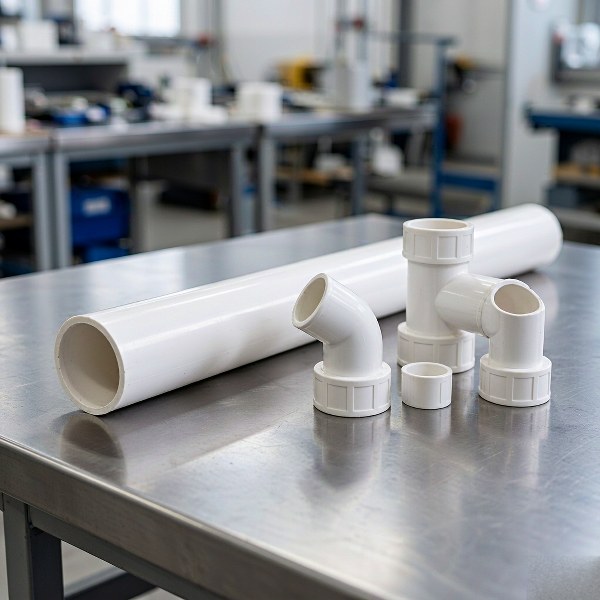
Injection-molded fittings need to be evaluated differently from continuously extruded pipe. Melt flow into the mold, filling behavior, release, cycle consistency, and surface reproduction can become more important when the material is processed through repeated molding cycles.
A stabilizer that performs acceptably in a pipe extrusion trial should therefore not be approved automatically for fittings. Injection molding places greater emphasis on these process-specific factors, so they should be evaluated under the actual molding cycle when selecting a calcium-zinc heat stabilizer for PVC fittings.
The underlying principle is simple: similar base chemistry does not mean identical processing requirements.
Match the Stabilizer to the Formulation and Processing Window
Once the application has been defined, the next task is to understand the existing compound and the operating window of the production line.
A stabilizer does not work independently from the rest of the formulation. Resin characteristics, fillers, processing aids, pigments, lubricants, and other additives determine the environment in which the stabilizer system must perform. Equipment design and production settings add another layer of variation.
This explains why two manufacturers producing similar products may still need different stabilizer solutions. A candidate that performs well in one plant may require further adjustment when the compound, screw configuration, production rate, or lubricant system changes.
Heat Stability, Fusion and Lubrication Must Be Read Together
One of the most common mistakes in PVC pipe stabilizer selection is to treat thermal stability as the only meaningful criterion.
A laboratory heat-stability result can help screen candidates, but it does not tell the full story of how the compound will behave on an extrusion line. Rigid compounds also need an appropriate balance of fusion and lubrication. If that balance changes, the production team may see differences in torque, pressure behavior, surface quality, output consistency, or deposit formation even when thermal protection appears adequate.
This is especially relevant when evaluating a calcium-zinc stabilizer for pipe production. The stabilizer package can contribute to the overall lubrication behavior of the compound, so replacing an existing system may change the processing balance even when other raw materials remain unchanged.
For this reason, heat stability, fusion, and lubrication should be interpreted together. A candidate should not be approved because it performs strongly in one isolated test while creating new problems elsewhere in the process.
Why Resin, Filler and the Existing Lubricant System Matter
The resin determines the basic processing environment, while fillers, lubricants, and processing aids influence how the compound fuses, flows, and interacts with the equipment. These interactions are especially important when a manufacturer is changing from an established stabilizer package to a new one.
If the existing system contributes differently to lubrication, the replacement may alter processing behavior without any intentional change to the rest of the formula. A line that previously ran within a comfortable processing window may suddenly require different settings or show changes in pressure, fusion, or surface appearance.
That does not automatically mean the new stabilizer is unsuitable. It does mean the comparison needs to be made within the context of the complete formulation.
Before recommending a candidate, the supplier therefore needs enough information to understand the compound and production environment. This does not require a manufacturer to disclose every proprietary detail, but the major formulation characteristics should be clear enough to design a meaningful trial.
Let the Production Problem Guide the Selection
A stabilizer trial becomes more useful when it starts with a clearly defined production problem. Instead of asking whether one material is generally “better,” the engineering team should identify what needs to improve and decide in advance what evidence would demonstrate that improvement.
These symptoms should not be treated as proof that the stabilizer alone is responsible.
Plate-out, for example, can be influenced by the interaction among the stabilizer package, lubricants, fillers, processing temperature, and equipment conditions. Replacing one ingredient without examining the rest of the system may simply shift the problem instead of solving it.
The same principle applies to unstable output. Pressure fluctuation or inconsistent material behavior can involve fusion, formulation balance, processing settings, or equipment condition. A useful selection process first defines the problem, then uses the trial to determine whether changing the stabilizer improves that specific production behavior.
Compare Candidate Stabilizers Through a Controlled Trial
When two candidates look similar on paper, the production trial should decide.
A comparison is useful only when the major variables are controlled closely enough for the team to understand what caused the difference. Resin, filler, major additives, machine configuration, and baseline processing conditions should remain as consistent as practical while the stabilizer is being evaluated.
The purpose is not to create an artificial laboratory condition. It is to make the comparison interpretable under conditions that reflect normal production.
Keep Major Variables Controlled
If the stabilizer is changed at the same time as the filler, lubricant level, processing temperature, and machine settings, the result may be impossible to interpret. An apparent improvement could come from any of those changes, while a failure might be attributed to the stabilizer even when another variable caused it.
The existing production formula therefore provides the most useful benchmark. Where an adjustment is necessary to accommodate a candidate, it should be recorded so the engineering team can distinguish stabilizer effects from process changes.
This is particularly important when comparing a current material with a potential replacement. The real question is not whether the new product can run under some ideal condition, but whether it can meet the required processing and product targets within a practical operating window.
Observe Steady-State and Restart Behavior
A short start-up test can identify obvious incompatibility, but it may not reveal problems that appear only after the line reaches steady state.
Where production conditions allow, the comparison should continue long enough to observe line consistency and die cleanliness under representative operating conditions. A compound that appears stable during the first stage of extrusion may behave differently after a longer heat history.
Stop-and-restart behavior can also provide useful information. After a normal interruption, the production team can observe whether color, pressure, flow, or surface appearance changes when the line resumes. These observations may expose differences between candidate stabilizer systems that are easy to miss in a brief trial.
The purpose is not to create a universal test duration. The trial should simply be long enough and realistic enough to reveal the behaviors that matter on that particular line.
Judge Processing and Finished-Product Results Together
A successful trial needs to answer two separate questions.
First, does the material process consistently? The team should observe line stability, pressure or torque behavior where relevant, deposit formation, color development, and whether frequent adjustments are needed to maintain production.
Second, does the finished pipe or fitting meet the manufacturer's requirements? Smooth processing is not enough if the final product fails dimensional, appearance, mechanical, or market-specific criteria.
Technical data sheets, safety documents, compliance information, and supplier recommendations can help screen potential candidates, but they should not replace production approval. The manufacturer's own formulation, equipment, trial observations, and finished-product requirements ultimately determine whether a stabilizer is suitable.
What to Provide Before Requesting a Stabilizer Sample
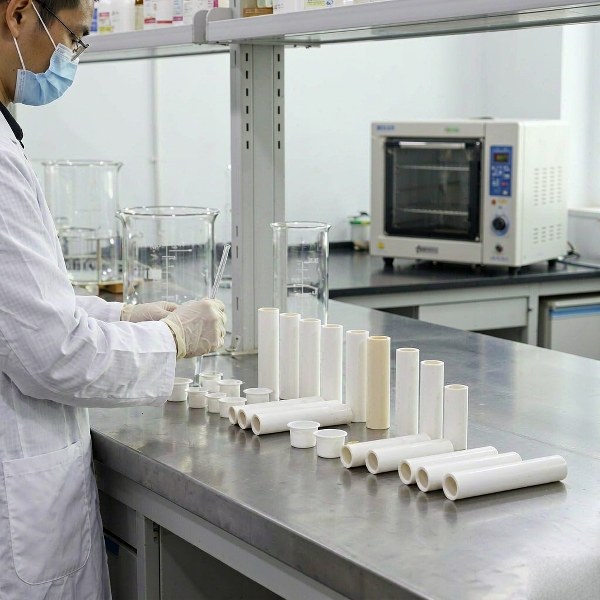
A sample request is much more useful when the supplier receives enough information to understand the production environment. For a pipe or fitting project, four information groups are especially helpful:
- Product and application
Identify whether the product is a pressure pipe, drainage pipe, conduit, or injection-molded fitting, and describe any important end-use requirements. - Current formulation
Provide the relevant resin, filler, lubricant system, processing aids, and other major formulation characteristics that may affect processing. - Processing conditions
Explain whether the process is extrusion or injection molding, the general equipment setup, the normal processing window, and any notable line behavior. - Current problem and target
Define the issue to be addressed, such as discoloration, plate-out, unstable processing, difficult release, surface defects, or another measurable production target.
This information gives the supplier a better basis for selecting a candidate and makes the trial more focused. It also reduces the risk of testing a material that is poorly matched to the production environment.
Make the Final Decision on Production Fit and Cost-in-Use
The final purchasing decision should be based on production fit, finished-product results, and cost-in-use rather than one specification or one price.
A candidate may show strong performance in a particular laboratory test yet require repeated adjustments when introduced to a different compound. Another system may not appear exceptional on one isolated parameter but may provide a more useful balance of thermal stability, fusion, lubrication, appearance, and line consistency.
Purchase price should be considered in the same way. If one candidate requires more frequent die cleaning, creates more off-spec material, or needs repeated process adjustment, a lower price per kilogram may not result in a lower production cost.
Cost-in-use is therefore more meaningful than unit price alone. Buyers should consider how the material behaves on the line, whether it supports stable production, whether it creates additional cleaning or adjustment work, and whether the finished product consistently meets requirements.
This also changes how suppliers should be evaluated. The most useful supplier is not simply the one offering the lowest price or the strongest marketing claim, but the one that can understand the application, review the relevant formulation conditions, support a controlled trial, and provide the documentation needed for the intended market.
If you are comparing PVC stabilizer solutions for a pipe or fitting line, the discussion should therefore begin with the production conditions and approval criteria rather than with a product name alone.
Frequently Asked Questions
Can the same stabilizer be used for PVC pipes and injection-molded fittings?
Possibly, but the same stabilizer should not be assumed to perform identically in both processes. Pipe extrusion is continuous, while fitting production involves repeated injection-molding cycles with different flow, filling, and release requirements. A material that passes a pipe trial should therefore be evaluated separately before being approved for molded fittings.
What information should I send before requesting a pipe stabilizer sample?
Provide the product type, main formulation characteristics, processing method, general equipment or operating conditions, and the production issue or target you want to address. Clear information about the current process allows the supplier to recommend a more relevant candidate and design a more useful trial.
Does plate-out always mean the stabilizer is wrong?
No. Plate-out can be affected by the interaction among the stabilizer system, lubricants, fillers, processing temperature, production conditions, and equipment. The complete compound and process should be reviewed before one additive is identified as the cause.
What should I compare during a pipe stabilizer trial?
Compare both processing behavior and finished-product performance. Useful observations include line stability, color and surface appearance, deposits, process adjustments, behavior during steady-state production and restart, and whether the final pipe or fitting meets the manufacturer's quality requirements. One heat-stability test should not be used as the only approval criterion.
Need to Evaluate a Stabilizer for Your Pipe or Fitting Line?
Share your product type, current formulation, processing method, and the production issue you want to solve. AIMSEA can use this information to discuss an appropriate stabilizer direction and plan a sample evaluation around your production conditions.