

Posted by Ms.Yan
in blog
Technical Engineer
Updated 2026-11-18
How to Choose a Heat Stabilizer for PVC Plastisol Applications?
Read:15
Source:
Choosing a suitable plastisol heat stabilizer is not simply a matter of selecting a stabilizer type. The right choice depends on the PVC formulation, processing conditions, required color stability, odor and volatility limits, and the performance expected from the final product.
For PVC Plastisol applications, a suitable PVC plastisol stabilizer should help control thermal degradation during processing while maintaining the required appearance and long-term performance of the finished product. Calcium-zinc systems can be considered for applications where lead-free formulations, low odor, color stability, and long-term thermal performance are important.
The most reliable approach is to evaluate the stabilizer within the complete formulation and confirm its performance through laboratory trials before production.
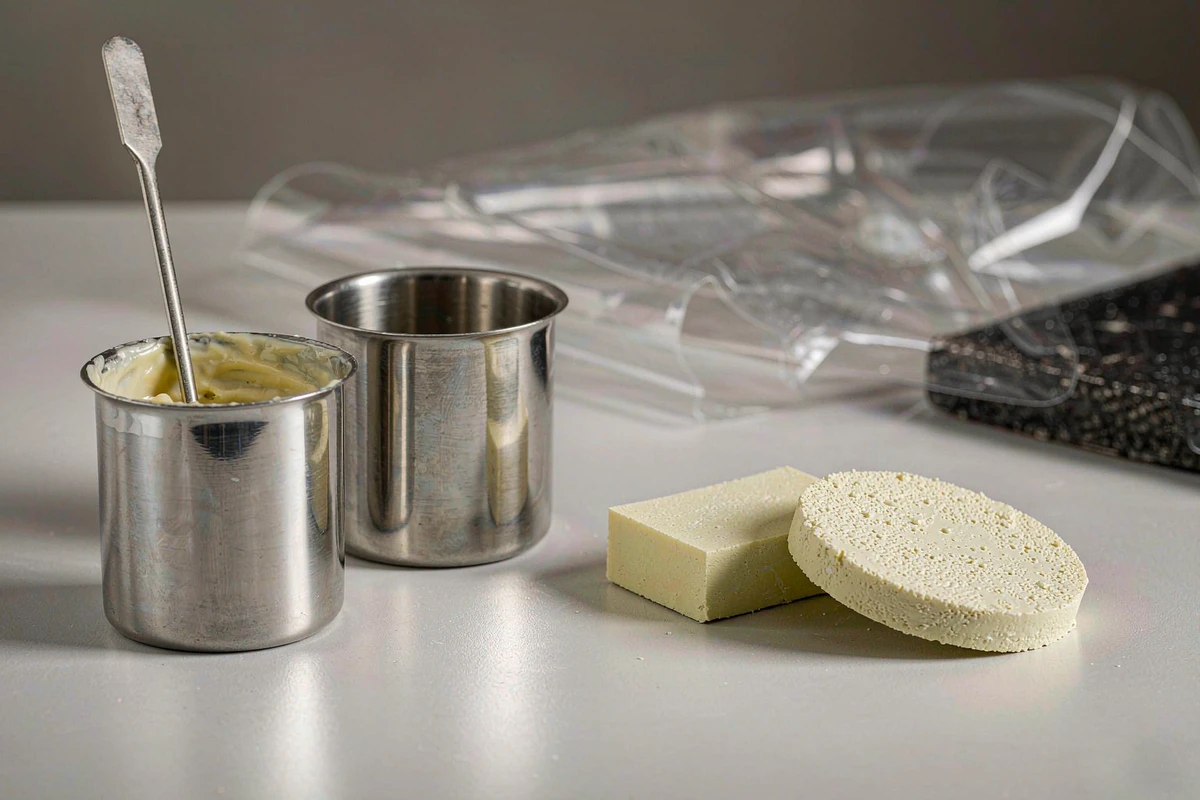
Figure 1. PVC plastisol formulation and heat stabilizer testing environment.
Why Does PVC Plastisol Need a Heat Stabilizer?
PVC begins to undergo thermal degradation when exposed to processing heat. Dehydrochlorination can generate hydrogen chloride and form conjugated structures, which can gradually cause discoloration and affect the performance of the material.
A plastisol heat stabilizer helps control this degradation during processing and thermal exposure. However, thermal stability is not a single performance value. Depending on the application, the formulation may need to balance initial color stability, long-term thermal stability, residual stability, and dynamic processing stability.
For this reason, choosing a PVC plastisol stabilizer should start with the actual processing and end-use requirements rather than the stabilizer name alone.
What Should You Consider When Choosing a Plastisol Heat Stabilizer?
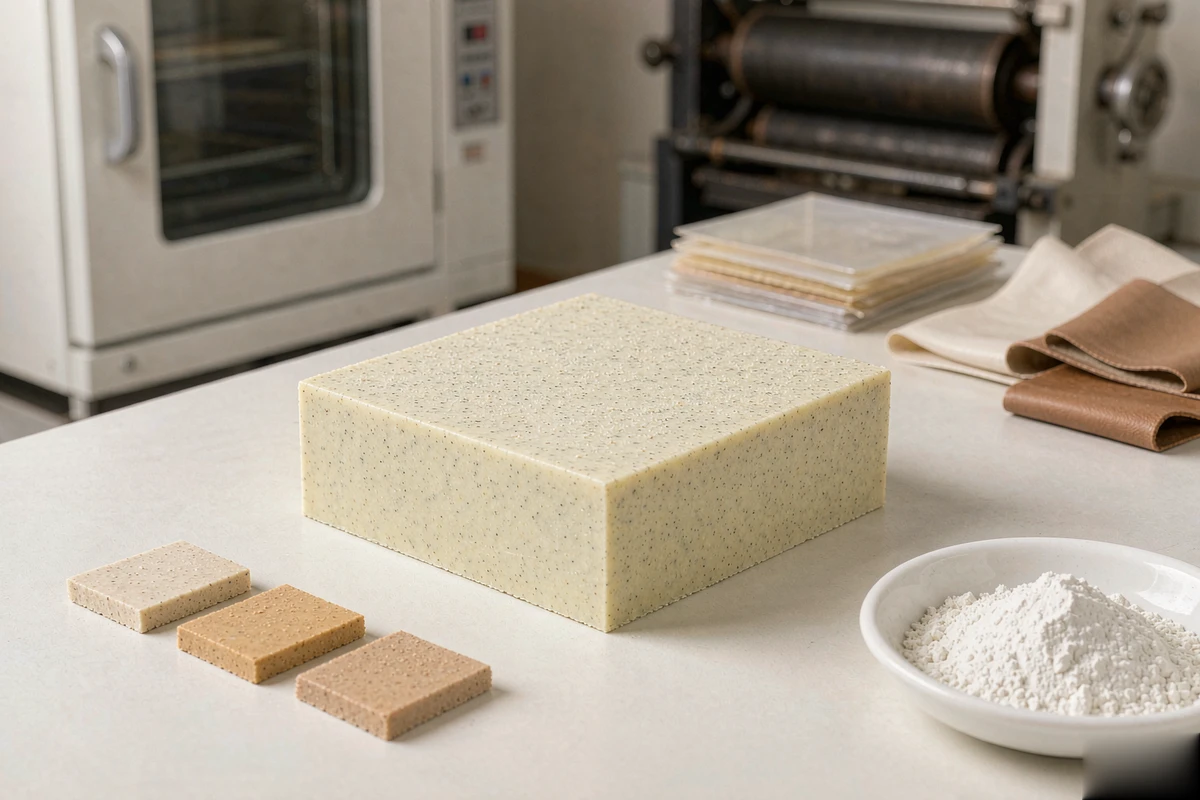
Figure 2. Key factors affecting PVC plastisol heat stabilizer selection.
Initial Color Stability
Color is an important consideration when processing light-colored, white, or appearance-sensitive PVC products.
Thermal degradation can cause the material to move from its original color toward yellow or darker shades. A stabilizer therefore needs to provide sufficient protection during the early stage of processing, especially when the finished product has strict appearance requirements.
This becomes particularly important for PVC leather, films, decorative materials, and other products where even a small color change can affect the finished appearance.
Long-Term Thermal Stability
Initial color is only one part of the selection process.
A PVC formulation may also experience thermal exposure during extended processing or subsequent use. A suitable stabilizer should therefore provide sufficient long-term thermal stability rather than only delaying the first visible color change.
The required balance depends on the processing temperature, residence time, formulation, and final application.
Odor and Volatility
For applications such as automotive interiors, odor and volatile components can become important material-selection criteria.
The stabilizer should be evaluated together with the other formulation components to determine whether it contributes to undesirable odor or volatility.
This is one reason why a stabilizer that performs well in one PVC formulation may not automatically be the best choice for another application.
Dynamic Processing Stability
PVC processing is not always a static heat exposure process.
Mixing, shearing, fusion, and continuous processing can place different thermal and mechanical demands on the formulation. A stabilizer therefore needs to perform under the actual processing conditions rather than only under a simple static aging test.
For engineering evaluation, parameters such as fusion behavior, torque development, processing time, and color change during dynamic mixing can provide useful information about the overall formulation.
Compatibility With the Complete Formulation
A stabilizer does not work independently.
PVC resin, plasticizers, fillers, pigments, processing aids, lubricants, and other additives can all influence the final thermal and processing behavior.
For this reason, PVC plastisol formulation should be considered as a complete system when selecting a stabilizer.
The same stabilizer may perform differently after the formulation, dosage, processing temperature, or processing time is changed.
How Do Different Stabilizer Systems Compare for PVC Applications?
Different stabilizer systems can provide different combinations of processing performance, color stability, environmental characteristics, and long-term protection.
Lead-Based Stabilizers
Lead-based stabilizers have historically been used in PVC because of their thermal stability and processing performance. However, applications with strict requirements for heavy metals and environmental compliance may require alternative stabilizer systems.
The suitability of any stabilizer should therefore be considered together with the requirements of the target market and final product.
Organotin Stabilizers
Organotin stabilizers can provide strong thermal stabilization and good color performance in certain PVC applications.
However, odor, volatility, formulation compatibility, and the requirements of the finished product should also be considered when evaluating an organotin system.
Calcium-Zinc Stabilizers
Calcium-zinc stabilizers are an important option for lead-free PVC formulations.
Depending on the formulation and application, a suitable calcium-zinc system can provide a combination of thermal stability, color protection, and long-term aging performance while supporting requirements for lead-free and low-odor PVC products.
However, calcium zinc stabilizer for plastisol should not be selected simply because it is a calcium-zinc system. The actual formulation, processing conditions, and required performance still need to be evaluated.
When Is a Calcium-Zinc Stabilizer Suitable for PVC Plastisol?
A calcium-zinc system can be considered when the application requires a lead-free stabilization system together with suitable thermal and color performance.
Several factors should be evaluated together.
Consider the Final Product Requirements
The finished product may have specific requirements for:
- Initial color
- Long-term color stability
- Odor
- Volatility
- Aging resistance
- Environmental compliance
For automotive-related PVC materials, these requirements can be particularly important because the material may be exposed to both processing heat and long-term service conditions.
Consider the Processing Conditions
The same formulation can behave differently when processing conditions change.
Temperature, processing time, shear, mixing conditions, and residence time can all influence thermal degradation. The stabilizer therefore needs to be evaluated under conditions that are reasonably close to the intended production process.
Evaluate the Complete Formulation
The stabilizer dosage cannot be considered separately from the rest of the formulation.
Plasticizer type and level, pigments, fillers, processing aids, and other additives may affect thermal stability and color development.
For this reason, laboratory trials using the actual or representative formulation are an important step before confirming a stabilizer for production.
How Does the Final Application Affect Stabilizer Selection?
The required stabilizer performance can change significantly depending on the final PVC product.
A rigid profile, cable compound, SPC flooring formulation, PVC film, and automotive interior material may have very different processing conditions and performance requirements.
For PVC Plastisol and flexible PVC applications, the final product requirements should be considered alongside the processing method.
Automotive PVC Leather
Automotive PVC leather is one example where stabilizer selection involves more than basic heat protection.
A typical formulation can contain PVC resin, plasticizer, stabilizer, pigments, fillers, and other additives. The material may then go through mixing, pre-plasticization, processing, and surface treatment.
The stabilizer therefore needs to work with the complete formulation while helping maintain color stability and thermal performance.
For automotive interior applications, odor, volatile components, aging resistance, and appearance can also become important considerations.
Application Example: Calcium-Zinc Stabilizer for Automotive PVC Leather
A practical formulation evaluation can provide more useful information than comparing stabilizers only by their product descriptions.
In one automotive PVC leather evaluation, two formulations were prepared with the same base formulation:
| Raw Material | Formulation 1 | Formulation 2 |
|---|---|---|
| PVC | 100 | 100 |
| Plasticizer 911 | 80 | 80 |
| Epoxidized soybean oil | 2 | 2 |
| Titanium dioxide | 10 | 10 |
| Imported stabilizer | 1.5 | — |
| AIMSTA-2913 | — | 1.5 |
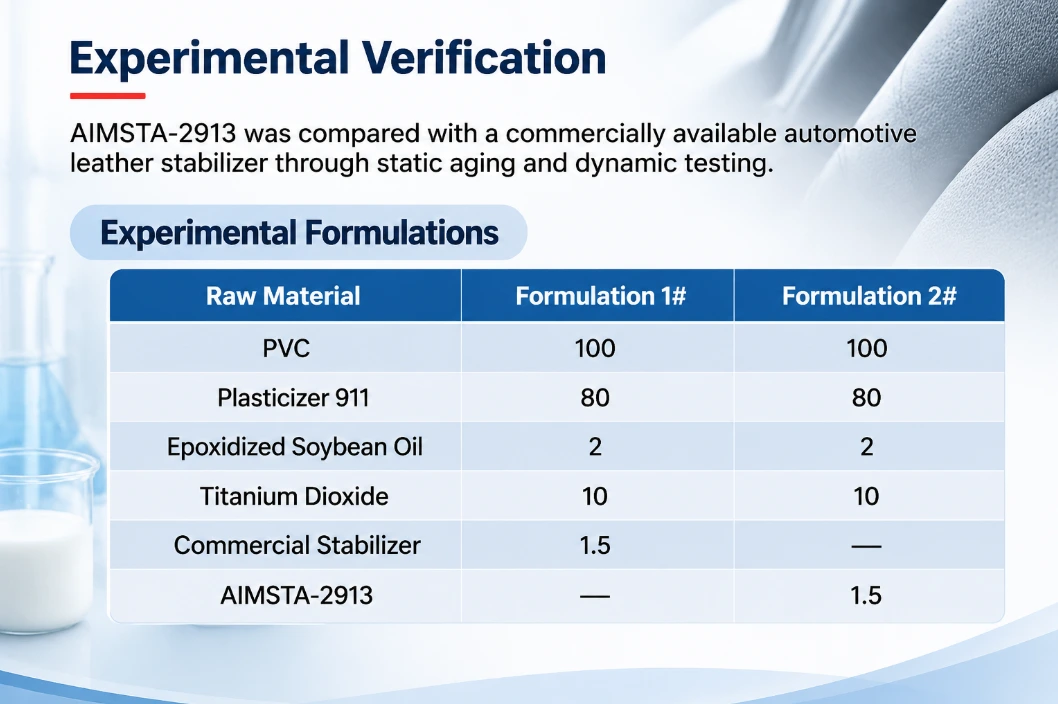
Figure 3. AIMSTA-2913 calcium-zinc stabilizer evaluation for automotive PVC leather.
The comparison focused on thermal aging and dynamic mixing behavior.
Static Aging Evaluation
The materials were mixed on an open mill at 165 ± 2°C for 3 minutes before being prepared for oven aging.
The samples were then exposed to 230 ± 1°C, with samples taken at two-minute intervals for comparison.
This type of evaluation helps examine how the formulation responds to severe thermal exposure and how quickly visible degradation develops.
Dynamic Mixing Evaluation
Dynamic behavior was evaluated by monitoring Lab values during mixing and comparing the change in the b value over time.
The formulation containing AIMSTA-2913 showed lower b-value development throughout the recorded test period than the compared formulation.
This type of test is useful because color development during dynamic processing can provide another indication of how the stabilizer performs under continuous thermal and mechanical conditions.
What Does the Evaluation Show?
The evaluation supports the use of AIMSTA-2913 as a calcium-zinc stabilizer for the tested automotive PVC leather formulation, with the formulation showing favorable behavior in the evaluated thermal aging and dynamic mixing tests.
The result should be understood within the stated formulation and test conditions rather than treated as a universal performance claim for every PVC Plastisol formulation.
For a new application, the stabilizer should still be evaluated using the customer's actual formulation and processing conditions.
How Should a PVC Stabilizer Be Tested Before Production?
Laboratory testing can help determine whether a stabilizer is suitable before moving to production.
Static Thermal Stability Testing
Static thermal stability can be evaluated through controlled heat-aging tests.
Oven aging and color-change observation can help identify the point at which significant thermal degradation or discoloration begins.
For formulations where color is critical, this can be an important first-stage screening method.
Dynamic Thermal Stability Testing
Dynamic testing provides a different view of stabilizer performance.
Torque rheometer testing, open-mill mixing, and continuous processing simulations can be used to evaluate changes during processing.
Parameters such as torque development, fusion behavior, fusion time, and color change can help identify differences between formulations.
Processing Performance
Thermal stability should not be evaluated separately from processing behavior.
A useful evaluation can consider:
- Fusion or plasticization time
- Torque development
- Processing temperature
- Color change during processing
- Long-term thermal stability
The objective is not simply to find the stabilizer with the best result in one test, but to identify a formulation that provides a suitable balance between processing performance and final-product requirements.
How to Select the Right Stabilizer for Your PVC Plastisol?
A practical selection process can follow six steps:
1. Identify the application
Determine whether the material is being used for automotive leather, film, flooring, cable, profiles, or another PVC product.
2. Define the formulation
Review the PVC resin, plasticizer, fillers, pigments, processing aids, and other additives used in the formulation.
3. Define the performance requirements
Identify the requirements for color, odor, volatility, thermal stability, aging resistance, and regulatory compliance.
4. Review the processing conditions
Consider processing temperature, mixing conditions, shear, residence time, and other relevant processing parameters.
5. Conduct formulation trials
Compare suitable stabilizer systems under controlled laboratory conditions using the actual or representative formulation.
6. Confirm before production
Select the stabilizer based on the combined test results and production requirements rather than on a single performance indicator.
AIMSEA PVC Stabilizer Solutions
AIMSEA develops PVC stabilizer systems for different PVC processing and application requirements, including calcium-zinc and one-pack stabilization solutions.
For a specific PVC formulation, stabilizer selection can be evaluated based on:
- PVC application
- Formulation composition
- Processing method
- Processing temperature
- Current stabilizer
- Main processing or performance issue
- Target product requirements
For applications where the existing stabilizer is causing problems such as yellowing, insufficient thermal stability, processing instability, odor, or color change, formulation-based evaluation can help identify a more suitable stabilization system.
Discuss Your PVC Stabilizer Requirements
Send us your PVC application, formulation, processing conditions, and current stabilization requirements. AIMSEA can evaluate the application and recommend a suitable stabilizer system for sample testing.
FAQ
What is a heat stabilizer used for in PVC Plastisol?
A heat stabilizer helps protect PVC from thermal degradation during processing and heat exposure. The appropriate system depends on the PVC formulation, processing conditions, and final-product requirements.
Can calcium-zinc stabilizers be used for PVC Plastisol?
Yes, calcium-zinc systems can be considered for suitable PVC Plastisol formulations, particularly where lead-free stabilization and requirements for color, odor, and long-term thermal performance are important. The final choice should be confirmed through formulation testing.
How does a stabilizer affect PVC Plastisol color?
Thermal degradation can cause PVC to develop yellow or darker coloration. A suitable stabilizer can help control this color change, but the final result also depends on the PVC formulation, pigments, plasticizers, processing conditions, and stabilizer dosage.
What factors affect PVC Plastisol stabilizer selection?
The main factors include the formulation, processing temperature, processing time, shear conditions, required initial color, long-term thermal stability, odor, volatility, aging resistance, and the requirements of the final product.
How do you test the thermal stability of a PVC stabilizer?
Static oven aging and dynamic processing tests can be used. Depending on the formulation, evaluation may include color change, torque behavior, fusion time, and thermal aging performance.
Can AIMSEA recommend a PVC stabilizer for a specific formulation?
Yes. Stabilizer selection can be evaluated based on the PVC application, formulation, processing method, processing conditions, current stabilizer, and the main performance requirements. Sample testing can then be used to confirm suitability before production.