

Posted by Ms.Yan
in blog
Technical Engineer
Updated 2026-11-19
How to Optimize High-Filler PVC Formulations for SPC Flooring Production?
Read:11
Source:
Introduction
Increasing calcium carbonate loading is a common approach to developing cost-effective SPC flooring formulations. However, incorporating a high proportion of mineral filler creates additional challenges for PVC compounding and extrusion.
As the filler content increases, manufacturers need to pay closer attention to the distribution of PVC resin throughout the compound, fusion behavior, melt processing and the balance between different additives. A formulation that works well at a lower filler loading may not deliver the same processing consistency when the calcium carbonate content increases significantly.
These challenges are not solved by simply adding more stabilizer or lubricant. They require a coordinated approach to raw material selection, additive compatibility and processing conditions.
For SPC flooring manufacturers, the key is to develop a high-filler PVC formulation that maintains suitable processing behavior while meeting the required properties of the finished flooring.
This article examines the main formulation challenges, commonly used additive approaches and how an integrated additive system such as AIMSEA M-STAB 2619 can be considered for high-filler SPC production.
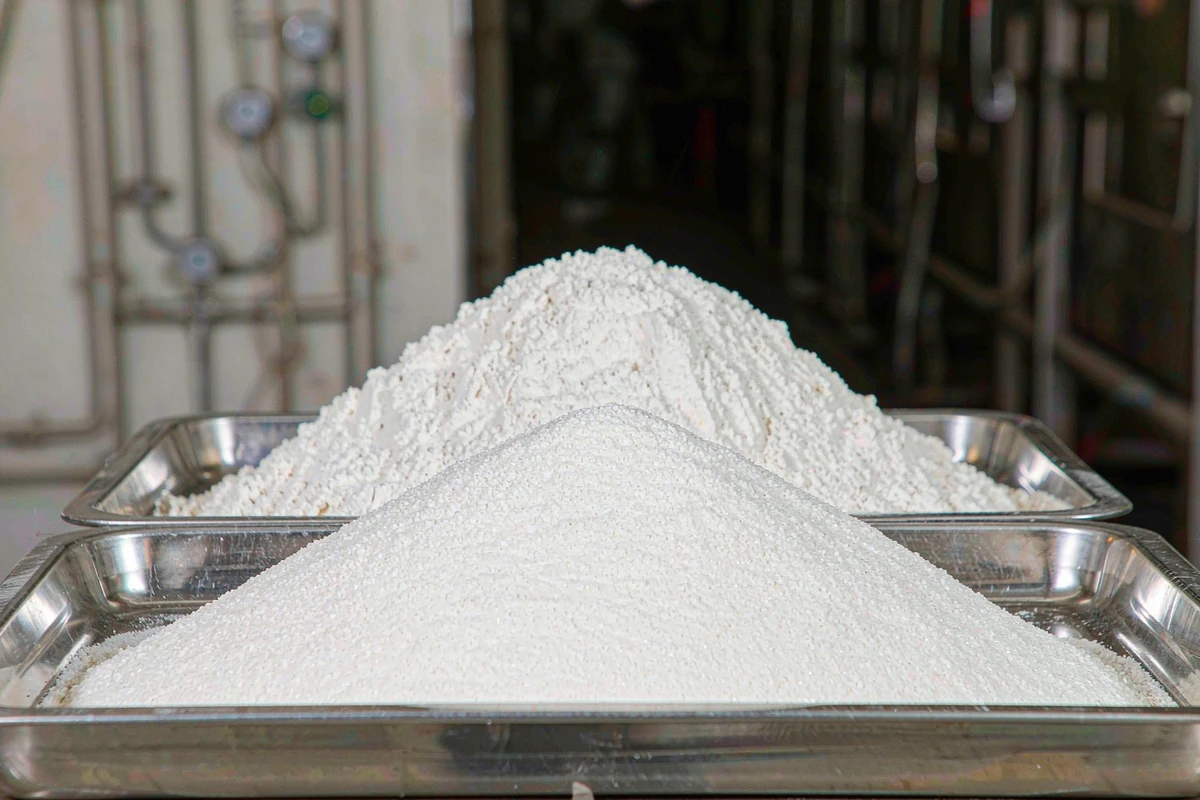
Figure 1. PVC resin and calcium carbonate used in high-filler SPC flooring formulations.
1. Understanding High-Filler PVC Formulations for SPC Flooring
SPC flooring compounds typically contain PVC resin, calcium carbonate, stabilizers, processing aids, lubricants and other functional additives. Some manufacturers also incorporate reclaimed materials into their formulations.
Compared with conventional rigid PVC compounds, high-filler SPC formulations contain a much larger proportion of mineral filler relative to the PVC resin.
For example, publicly available SPC formulation references include systems containing approximately 300 parts of calcium carbonate per 100 parts of PVC resin. The exact composition varies according to the flooring structure, raw materials and production requirements.
1.1 The Relationship Between PVC Resin and Calcium Carbonate
PVC resin forms the polymer matrix, while calcium carbonate provides the mineral filler component.
As calcium carbonate loading increases, the proportion of PVC resin available to bind and distribute the filler becomes relatively smaller.
This makes several formulation factors increasingly important:
- Compatibility between PVC resin and the filler.
- Uniform distribution of calcium carbonate.
- Appropriate PVC fusion during processing.
- Effective interaction between processing aids and lubricants.
The objective is not simply to maximize calcium carbonate content. Manufacturers need to maintain a workable balance between filler loading, compound processability and finished-product performance.
1.2 The Role of Reclaimed Materials
Reclaimed materials can be incorporated into SPC formulations to utilize recovered production materials and manage raw material costs.
However, reclaimed materials may differ in composition, previous thermal history and physical properties.
These variations can influence the consistency of the compound, especially when combined with high calcium carbonate loading.
Manufacturers should therefore evaluate reclaimed material quality, compatibility and consistency before determining the additive dosage.
A formulation developed for virgin PVC materials may require further adjustment when reclaimed materials are introduced or their proportion changes.
2. How High Calcium Carbonate Loading Affects PVC Fusion and Processing
One of the main technical challenges in high-filler PVC formulations is maintaining effective fusion while incorporating a large amount of mineral filler.
The presence of calcium carbonate changes the composition and flow behavior of the compound. This places additional demands on processing aids, lubricants and the overall additive system.
2.1 Filler Dispersion and PVC Matrix Interaction
Uniform calcium carbonate dispersion is important for maintaining consistent compound quality.
When mineral filler is not distributed effectively, localized differences in filler concentration may develop. These variations can affect material consistency and finished-product appearance.
The particle size, surface characteristics and moisture condition of calcium carbonate should be considered alongside the mixing process and additive selection.
A suitable processing system needs to support the distribution of filler throughout the PVC matrix rather than treating dispersion as an isolated mixing issue.
2.2 PVC Fusion in Highly Filled Formulations
PVC fusion describes the process through which PVC resin particles develop into a more continuous, cohesive melt during processing.
In high-filler formulations, the presence of a large amount of calcium carbonate makes it more challenging to maintain appropriate fusion behavior.
Insufficient fusion may affect the consistency and mechanical properties of the finished compound. Excessive processing conditions, on the other hand, can increase the risk of thermal degradation.
Arkema's technical work on highly filled vinyl flooring formulations illustrates the importance of processing aids in promoting PVC fusion when elevated limestone or calcium carbonate levels are used.
Its Plastistrength 562 process aid is specifically positioned for rigid LVT backing layers and vinyl substrates with high filler content.
This demonstrates that processing aids play an important role in maintaining processability in highly filled PVC flooring compounds.
For SPC manufacturers, the practical consideration is to select an additive system that supports the required fusion behavior under the actual formulation and extrusion conditions.
2.3 Melt Processing and Production Consistency
High calcium carbonate loading can change the processing behavior of the PVC compound.
Manufacturers may need to evaluate:
- Extrusion torque and pressure.
- Material flow and feeding consistency.
- Fusion behavior.
- Die pressure and material distribution.
- Surface appearance and product uniformity.
These indicators should be evaluated together. A change in extrusion torque, for example, does not independently establish whether the formulation has achieved better fusion or improved product performance.
The relationship between resin characteristics, filler properties, additive selection and equipment conditions needs to be considered as a whole.
3. Why Additive Balance Matters in High-Filler SPC Formulations
Traditional SPC formulations commonly use several additives to address different processing requirements.
A typical additive system may include:
| Additive | Main Function |
|---|---|
| Heat Stabilizer | Supports PVC thermal stability during processing |
| Processing Aid | Helps promote PVC fusion and processing consistency |
| Toughening Agent | Supports the required toughness of the compound |
| Internal Lubricant | Influences internal flow and processing behavior |
| External Lubricant | Adjusts flow and interaction with processing equipment |
| Calcium Carbonate | Provides mineral filler content |
The use of multiple additives allows manufacturers to adjust different formulation properties. However, these components must be compatible and properly balanced.
3.1 The Challenges of Traditional Multi-Additive Formulations
In a traditional formulation, stabilizers, processing aids, toughening agents and lubricants are often supplied and added separately.
For example, a publicly available SPC formulation from JUYEE includes:
| Raw Material | Reference Amount (PHR) |
|---|---|
| PVC Resin | 100 |
| Calcium Carbonate | 300 |
| Stabilizer | 8 |
| CPE Impact Modifier | 5 |
| ACR Processing Aid | 3.5 |
| PE Wax | 1.2 |
| Internal Lubricant | 1.2 |
| Recycled Material | 80 |
This is an example of one supplier's formulation, not a universal SPC recipe.
It illustrates how several functional additives may be combined to meet the processing and product requirements of a high-filler compound.
Although this approach provides flexibility in adjusting individual components, it also requires manufacturers to manage multiple small-quantity materials.
3.2 Why Additive Compatibility Is Important
The individual functions of stabilizers, processing aids and lubricants are interconnected.
For example:
- Processing aids influence PVC fusion behavior.
- Lubricants affect material flow and processing conditions.
- Stabilizers support thermal stability.
- Toughening agents contribute to the mechanical properties of the compound.
If one component is adjusted without considering the others, the overall formulation balance may change.
Therefore, high-filler SPC formulation optimization should focus on the combined performance of the additive system rather than simply increasing the dosage of an individual ingredient.
3.3 Simplifying Additive Preparation
Another consideration is the preparation process.
Traditional formulations may require manufacturers to weigh and pre-blend six or seven different minor additives before combining them with the main raw materials.
This adds weighing, batching and mixing steps to production management.
For manufacturers handling multiple SPC formulations, an integrated additive solution may provide a more streamlined approach to raw material preparation.
4. How to Optimize PVC Processing in High-Filler SPC Production
Optimizing a high-filler PVC formulation requires more than adjusting the amount of calcium carbonate or increasing the stabilizer dosage.
The following factors should be evaluated together.
4.1 Evaluate Calcium Carbonate Characteristics
Calcium carbonate particle size, particle distribution and surface treatment can influence its interaction with PVC resin.
Manufacturers should select filler grades according to the formulation and target product requirements.
A filler grade suitable for one SPC formulation may not deliver identical processing behavior in another system.
4.2 Maintain Appropriate PVC Fusion
PVC fusion should be evaluated under the actual extrusion conditions.
Resin characteristics, calcium carbonate loading, processing aids, lubricants and equipment parameters all influence fusion behavior.
Controlled formulation trials can help manufacturers identify an appropriate additive combination without relying on assumptions based on a single ingredient.
4.3 Balance Internal and External Lubrication
Lubrication is particularly important in high-filler PVC compounds.
An appropriate balance between internal and external lubrication helps manage material flow and the interaction between the compound and processing equipment.
Excessive or insufficient lubrication may affect fusion and extrusion behavior.
The required balance should be determined according to the complete formulation and equipment configuration.
4.4 Consider the Entire Additive System
When changing calcium carbonate loading, introducing reclaimed materials or replacing an existing additive, manufacturers should evaluate the complete system.
Relevant factors include:
- Thermal stabilization.
- Filler dispersion.
- PVC fusion.
- Processing and lubrication balance.
- Finished-product mechanical properties.
A coordinated formulation approach is more reliable than making isolated dosage adjustments without considering their interactions.
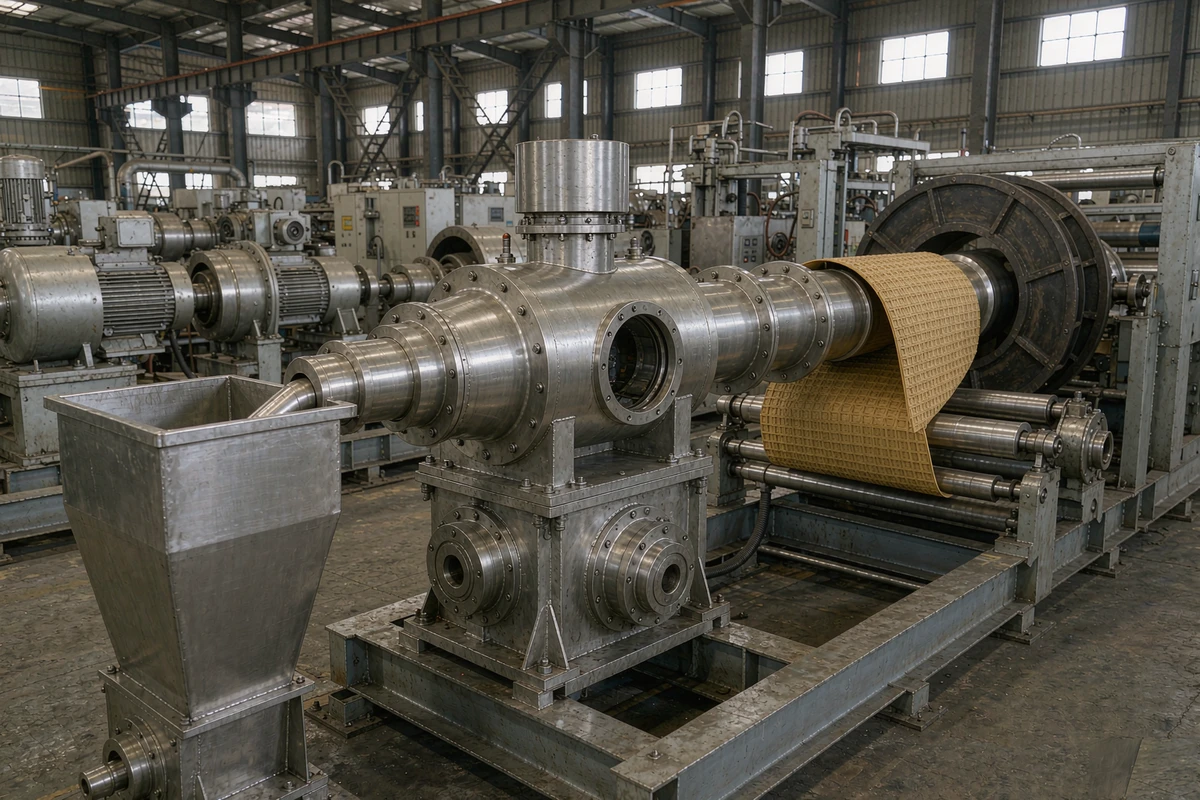
Figure 2. Twin screw extrusion process for high-filler SPC flooring production.
5. M-STAB 2619: A One-Pack Multifunctional Additive for SPC Flooring
To simplify traditional multi-additive SPC formulations, AIMSEA developed M-STAB 2619, a one-pack multifunctional additive designed for SPC flooring production.
Unlike conventional systems that use separate stabilizers, processing aids, toughening agents and lubricants, M-STAB 2619 integrates multiple functional groups into one additive system.
According to AIMSEA's technical documentation, processing, toughening and lubricating groups are introduced through synthesis, grafting and copolymerization.
This provides an alternative approach to traditional additive preparation.
5.1 Integrated Processing, Toughening and Lubricating Functions
M-STAB 2619 combines three key functions:
Processing Function
The integrated processing component is designed to support the processing requirements of high-filler PVC compounds.
Toughening Function
The formulation incorporates a toughening component intended to support the toughness of PVC-based compounds.
Lubricating Function
Lubricating functionality is incorporated into the additive system to support formulation and processing requirements.
By integrating these functions, M-STAB 2619 is designed to reduce the need for separately weighing and pre-blending several traditional functional additives.
The actual formulation should still be evaluated against the manufacturer's raw materials and production conditions.
5.2 Superdispersing Technology and Sea-Island Structure
AIMSEA's M-STAB 2619 technology incorporates a superdispersing additive.
According to the company's technical documentation, this component forms a dispersed phase within the continuous PVC phase, creating a sea-island structure.
The technical explanation is based on the distribution of separated particles within the continuous resin phase.
AIMSEA's documentation includes a scanning electron microscopy image of the resin structure at 5,000-times magnification.
The technology is intended to improve additive distribution within the PVC system and support the toughness of the resulting compound.
This approach is relevant when evaluating additive dispersion and the interaction between functional components and the PVC matrix.
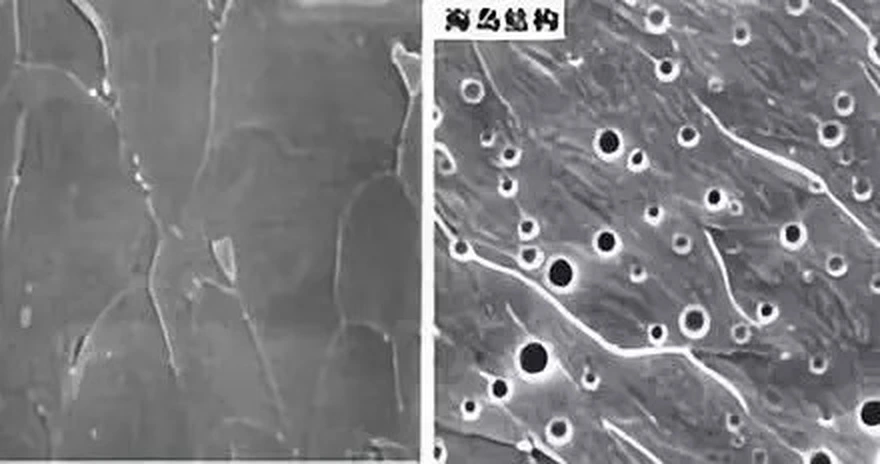
Figure 3. Sea-island morphology of the superdispersing additive in AIMSEA M-STAB 2619.
5.3 Hyperbranched Additive Technology
Another technology incorporated into M-STAB 2619 is a hyperbranched additive based on terminal hydroxyl polyester.
Hyperbranched polymers have highly branched molecular structures and a compact three-dimensional configuration.
AIMSEA's technical documentation describes how this structure is intended to interact with the PVC molecular system, reduce intermolecular interactions and promote molecular chain movement.
In high-filler SPC formulations, this technology is designed to help PVC resin powder combine more effectively with a large amount of calcium carbonate.
The intended benefits include supporting processing behavior, increasing filler incorporation potential and improving the efficiency of the overall stabilizer system.
Actual performance should be confirmed through formulation and production trials.
5.4 Compatibility with Different Extrusion Equipment
AIMSEA's product documentation identifies M-STAB 2619 for use with:
- 110 mm conical twin-screw extruders.
- 135 mm parallel twin-screw extruders.
The company also indicates that replacing the traditional additive system with M-STAB 2619 does not require major adjustments to the existing production process, mold temperature or haul-off speed.
However, actual operating conditions should always be verified on the manufacturer's production line.
6. AIMSEA M-STAB 2619 Recommended Formulation for SPC Flooring
AIMSEA provides a reference formulation for M-STAB 2619 in high-filler SPC applications.
| Raw Material | Recommended Formula |
|---|---|
| PVC | 75 |
| Calcium Carbonate | 225–250 |
| Reclaimed Materials | 100–120 |
| M-STAB 2619 | 8–10 |
The formulation demonstrates the use of M-STAB 2619 in a compound containing a high proportion of calcium carbonate and reclaimed materials.
The calcium carbonate content is approximately three to 3.33 times the PVC resin content by weight.
This is an AIMSEA reference formulation rather than a universal recipe for every SPC flooring production line.
Before commercial production, manufacturers should evaluate the formulation according to:
- PVC resin grade and characteristics.
- Calcium carbonate particle size and surface treatment.
- Reclaimed material composition and consistency.
- Required flooring properties.
- Extrusion equipment and production conditions.
AIMSEA can further evaluate the formulation according to the manufacturer's actual material and processing requirements.
7. How to Evaluate a High-Filler SPC Formulation
Selecting an additive system is only one part of formulation development.
Manufacturers should also establish a consistent evaluation process to determine whether the formulation meets production requirements.
7.1 Material Mixing and Filler Distribution
Evaluate the consistency of the dry blend and the distribution of calcium carbonate throughout the compound.
Raw material quality, mixing conditions and additive compatibility should be considered when comparing different formulations.
7.2 PVC Fusion and Extrusion Behavior
Monitor PVC fusion behavior and relevant extrusion parameters, including torque, pressure and material flow.
These indicators can help identify differences in processing behavior between formulations.
However, torque or pressure changes should not be interpreted independently as proof of improved fusion or product quality.
7.3 Finished Product Performance
Evaluate the finished SPC flooring according to its intended application and applicable product specifications.
Relevant factors may include:
- Surface appearance and uniformity.
- Mechanical strength and toughness.
- Product consistency.
- Dimensional stability under applicable test conditions.
Comparisons between a traditional additive system and M-STAB 2619 should use consistent raw materials, equipment settings and test methods.
This allows manufacturers to assess whether the integrated additive system meets their specific production requirements.
FAQs About High-Filler PVC Formulations for SPC Flooring
1. What Is a High-Filler PVC Formulation for SPC Flooring?
A high-filler PVC formulation contains a relatively large proportion of mineral filler, primarily calcium carbonate, compared with its PVC resin content.
Such formulations require careful coordination of filler dispersion, PVC fusion, additive compatibility and processing conditions.
2. How Does Calcium Carbonate Affect PVC Processing?
Increasing calcium carbonate content changes the relationship between the PVC resin and filler phases.
It can influence material flow, fusion behavior and the overall processing requirements of the compound. The actual effects depend on filler characteristics, resin grade and the additive system.
3. Why Is Filler Dispersion Important in SPC Flooring Production?
Uniform filler dispersion helps maintain consistent material composition throughout the compound.
Poor dispersion may contribute to differences in surface appearance, processing behavior and finished-product consistency.
4. How Can PVC Fusion Be Improved in High-Filler Formulations?
PVC fusion is influenced by resin characteristics, processing aids, lubrication and extrusion conditions.
A suitable additive system, combined with controlled processing parameters, can help manufacturers achieve the required fusion behavior.
5. What Additives Are Used in SPC Flooring Production?
Traditional SPC formulations may include heat stabilizers, processing aids, toughening agents and lubricants, in addition to PVC resin and calcium carbonate.
Their selection and dosage depend on the formulation, equipment and finished-product requirements.
6. What Are the Benefits of One-Pack Additives for SPC Flooring?
One-pack multifunctional additives integrate several functions into a single product.
AIMSEA M-STAB 2619 combines processing, toughening and lubricating functions, providing an alternative to separately weighing and pre-blending multiple traditional additives.
Conclusion
Optimizing high-filler PVC formulations for SPC flooring requires a coordinated approach to filler distribution, PVC fusion, lubrication and additive compatibility.
As calcium carbonate loading increases, manufacturers need to evaluate how the resin, filler and functional additives interact throughout compounding and extrusion.
Traditional multi-additive formulations provide flexibility, but they also require careful coordination of several individual components and preparation steps.
AIMSEA M-STAB 2619 offers an alternative through its one-pack multifunctional design, integrating processing, toughening and lubricating functions with superdispersing and hyperbranched additive technologies.
For manufacturers working with high-calcium-carbonate SPC formulations, it provides an option worth evaluating through formulation trials and production testing.
Looking to optimize your high-filler SPC formulation?
Share your PVC resin grade, calcium carbonate loading, reclaimed material content and extrusion equipment with AIMSEA. Our technical team can help evaluate the suitability of M-STAB 2619 for your SPC flooring production requirements.