

Posted by Ms.Yan
in blog
Technical Engineer
Updated 2026-11-19
How to Improve Color Stability in Flexible PVC After Gamma Sterilization?
Read:10
Source:
Introduction
Flexible PVC is widely used in medical tubing, infusion sets, drainage systems and other disposable medical components because of its flexibility, transparency and processability. However, maintaining its original appearance after sterilization can be challenging, particularly when gamma irradiation is used.
Some flexible PVC compounds develop yellow or darker tones during or after gamma exposure. For manufacturers producing transparent medical tubing, even a noticeable color change can affect visual quality and create additional formulation and product evaluation requirements.
This issue is not determined by the PVC stabilizer alone. Resin characteristics, plasticizer selection, stabilizer chemistry, antioxidants, irradiation dose and post-irradiation storage conditions can all influence the final result.
Therefore, improving PVC gamma irradiation discoloration requires a formulation-based approach rather than simply increasing the stabilizer dosage.
This article explains the mechanisms behind PVC discoloration, the formulation factors that influence radiation stability, and how medical PVC manufacturers can evaluate suitable stabilizer systems.
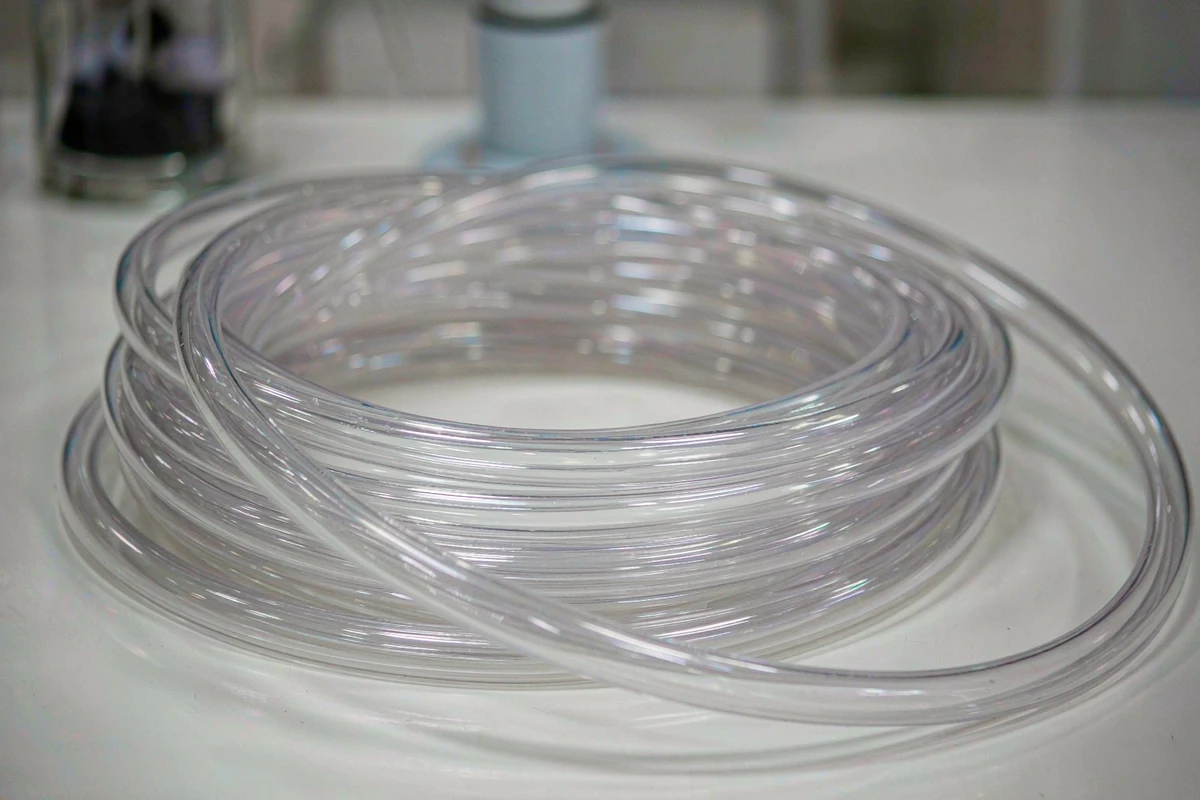
Figure 1. Transparent flexible medical PVC tubing for medical device applications.
1. Why Does Gamma Irradiation Cause PVC Discoloration?
Gamma irradiation uses high-energy photons to sterilize medical products. When flexible PVC is exposed to ionizing radiation, chemical reactions can occur within the polymer and its additive system.
These reactions may change the molecular structure and optical properties of the material, resulting in yellowing or darkening.
1.1 Dehydrochlorination and Polyene Formation
One important mechanism associated with PVC discoloration is dehydrochlorination.
During this process, hydrogen chloride (HCl) is released from the PVC molecular structure, leaving behind unsaturated carbon-carbon bonds.
As the reaction progresses, these bonds can form conjugated polyene sequences along the polymer chain.
Conjugated structures absorb light in the visible region, contributing to yellow, brown or darker coloration.
Although thermal degradation and radiation-induced degradation are not identical processes, both can involve chemical changes associated with PVC discoloration.
This helps explain why the color stability of flexible PVC depends on both its formulation and exposure conditions.
1.2 Oxidation and Changes in Additive Components
Ionizing radiation can also generate reactive species that initiate oxidation reactions.
Depending on the formulation, these reactions may involve:
- PVC polymer chains.
- Plasticizer components.
- Antioxidants.
- Other organic additives.
A 2026 study published in the European Journal of Pharmaceutical Sciences investigated three medical-grade PVC formulations exposed to gamma, X-ray and electron-beam irradiation.
The researchers used electron spin resonance, FTIR, colorimetry and HPLC to evaluate changes in the materials.
The study reported dose-dependent color changes and oxidation-related carbonyl growth, while the PVC backbone signatures remained stable under the investigated conditions.
This indicates that irradiation-related color changes should not automatically be interpreted as complete degradation of the PVC polymer backbone.
1.3 Why Can Yellowing Continue After Irradiation?
The appearance of irradiated PVC may continue to change during subsequent storage.
Radiation-induced reactive species can remain present after exposure, and their subsequent reactions may contribute to changes in color and chemical characteristics.
The extent of these changes depends on the formulation, irradiation conditions and storage environment.
For medical PVC manufacturers, this means that checking the material immediately after sterilization may not provide a complete picture of its long-term color stability.
A suitable evaluation program should include observations at defined intervals after irradiation.
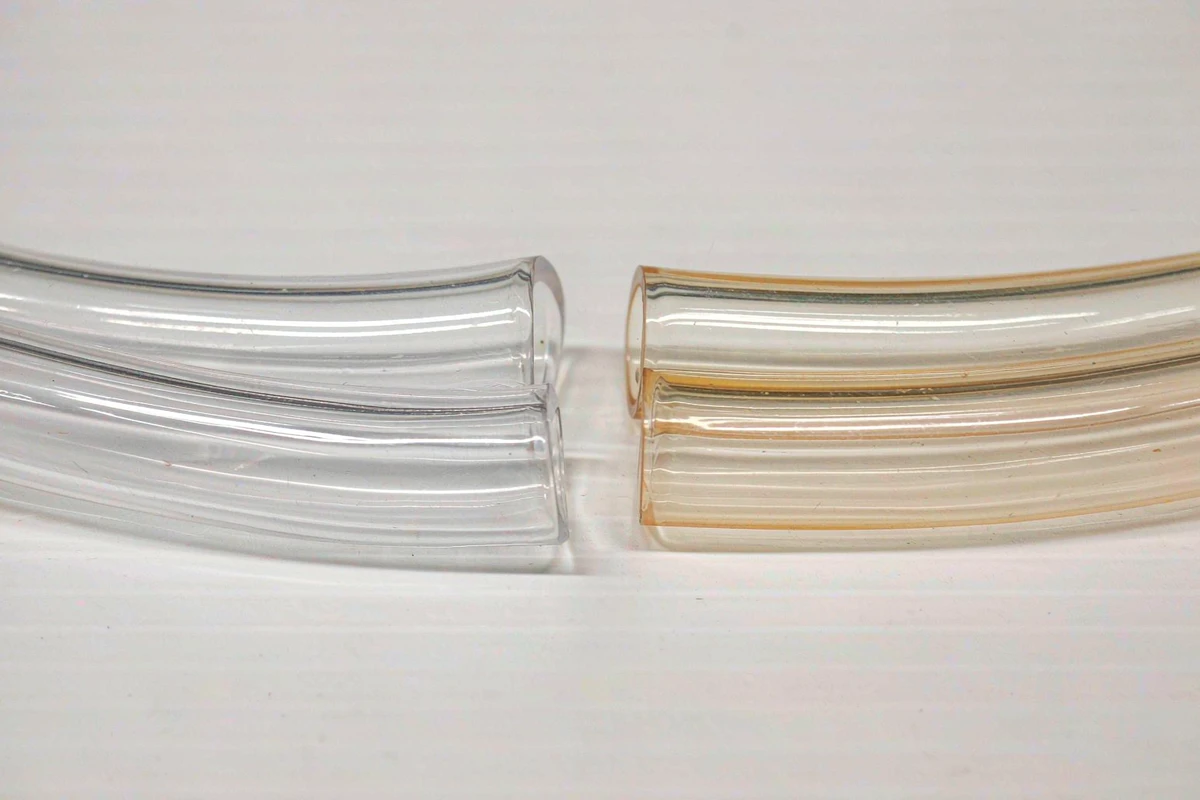
Figure 2. Conceptual illustration of transparent PVC tubing before irradiation and a mild yellow tone after gamma exposure. This is an AI-generated schematic for visual explanation, not an AIMSEA test result or a real before/after sterilization comparison.
2. Which Factors Affect PVC Color Stability After Irradiation?
Gamma irradiation does not produce identical results in every flexible PVC formulation.
Different resin grades, plasticizer systems and additive combinations can result in different levels of discoloration.
The following factors deserve particular attention.
2.1 PVC Resin Characteristics
PVC resin characteristics can influence the behavior of the compound during both processing and irradiation.
Molecular weight and resin structure are among the variables considered in published research on gamma-resistant flexible PVC.
Manufacturers should therefore evaluate resin grade and molecular characteristics when developing medical PVC formulations.
A stabilizer system that performs well with one resin grade may require adjustment when used with another.
2.2 Plasticizer Type and Loading
Plasticizers are essential for achieving the flexibility required in medical PVC tubing.
However, their chemical structures and concentrations can influence radiation-related reactions and the final appearance of the compound.
A 2002 study on gamma-irradiated nontoxic PVC formulations compared different plasticizer systems and reported differences in color changes among the tested formulations.
This demonstrates why plasticizer selection should be considered alongside the stabilizer system.
Manufacturers should evaluate:
- Plasticizer chemical type.
- Plasticizer loading.
- Compatibility with PVC resin.
- Interaction with the stabilizer and antioxidant system.
- Changes in color and mechanical properties after irradiation.
The objective is to achieve the required flexibility without compromising the other performance requirements of the finished medical component.
2.3 Stabilizer Type and Formulation Compatibility
PVC stabilizers are primarily used to control thermal degradation during processing.
However, their chemical composition and interactions with other formulation components may also influence the color behavior of irradiated PVC.
Research on nontoxic PVC formulations has demonstrated that different calcium-zinc stabilizer systems can produce different color results after gamma irradiation.
This means that manufacturers should not assume all calcium-zinc stabilizers provide the same radiation-related color performance.
The complete formulation should be evaluated under the intended sterilization conditions.
2.4 Antioxidant Selection
Antioxidants can help control oxidation reactions within polymer formulations.
Their effectiveness depends on their chemical structure, compatibility and interaction with other additives.
Research comparing different antioxidants in gamma-irradiated PVC found that antioxidant selection influenced color changes and extractable characteristics.
For this reason, the antioxidant system should be considered during formulation development rather than added as an isolated corrective measure after discoloration occurs.
2.5 Irradiation Dose and Storage Conditions
Irradiation dose is another important variable.
A formulation that maintains acceptable color at one dose may show different results at a higher exposure level.
The sterilization process should therefore be evaluated according to the actual dose range and conditions used by the medical device manufacturer.
Storage time and environmental conditions should also be controlled when comparing irradiated samples.
3. How Do Stabilizers, Plasticizers and Antioxidants Affect Radiation Stability?
Improving the color stability of flexible PVC requires a coordinated formulation strategy.
Stabilizers, plasticizers and antioxidants perform different functions, but their interactions influence the behavior of the complete compound.
3.1 The Role of PVC Stabilizers
PVC heat stabilizers help reduce degradation during processing by addressing unstable structures and limiting the progression of dehydrochlorination.
Their functions may include:
- Replacing unstable chlorine-containing sites.
- Neutralizing or absorbing released HCl.
- Limiting the growth of conjugated polyene structures.
- Supporting color retention during processing.
For transparent medical PVC, the selected stabilizer must also be compatible with the plasticizer and other formulation components.
A stabilizer designed for one rigid PVC application should not automatically be considered suitable for flexible medical tubing.
3.2 The Role of Plasticizers
Plasticizers provide the flexibility required by medical tubing and other soft PVC components.
Their selection affects:
- Flexibility and hardness.
- Processing behavior.
- Compatibility with PVC resin.
- Potential interactions with stabilizers and antioxidants.
- Color and appearance after sterilization.
When developing gamma stable PVC compounds, manufacturers should compare the complete plasticizer system rather than focusing only on its initial flexibility.
3.3 The Role of Antioxidants
Antioxidants help manage oxidative reactions that may occur during processing, irradiation and subsequent storage.
Different antioxidant types can provide different levels of protection depending on the formulation.
However, an antioxidant that performs well in one PVC system may not provide the same result in another.
Its compatibility, dosage and interaction with the stabilizer system should be evaluated through controlled testing.
3.4 Why the Complete Formulation Matters
The following table summarizes the main formulation variables and their evaluation priorities.
| Formulation Component | Main Function | Evaluation Focus |
|---|---|---|
| PVC Resin | Forms the polymer matrix | Resin grade and molecular characteristics |
| Plasticizer | Provides flexibility | Compatibility, loading and mechanical properties |
| Heat Stabilizer | Supports thermal stability during processing | Initial color, processing stability and post-irradiation appearance |
| Antioxidant | Helps control oxidation | Color change and oxidative behavior |
| Lubricant | Supports processing and flow | Compatibility, dispersion and surface condition |
A suitable formulation should be evaluated as a complete system.
Changing only the stabilizer may not resolve discoloration if the plasticizer, antioxidant or other additives are contributing to the observed changes.
4. Gamma vs. E-Beam vs. X-Ray for Medical PVC
Gamma irradiation, electron-beam irradiation and X-ray irradiation are all used in medical product sterilization.
Although these technologies use different radiation sources and delivery methods, all can influence the properties of radiation-sensitive polymer materials.
For medical PVC manufacturers, the choice should consider not only sterilization effectiveness but also the compatibility of the finished material with the intended process.
| Evaluation Factor | Gamma Irradiation | Electron Beam | X-Ray |
|---|---|---|---|
| Radiation Source | Radioactive isotope source | Accelerated electrons | X-ray generation system |
| Penetration | Generally suitable for dense and complex packaged products | Depends on electron energy and product thickness | High penetration capability |
| Exposure Characteristics | Product-dependent exposure time | Typically high dose rate | Depends on system configuration |
| PVC Color Change | May cause discoloration depending on formulation and dose | May cause discoloration depending on formulation and dose | May cause discoloration depending on formulation and dose |
| Material Evaluation | Color, mechanical and chemical properties | Color, mechanical and chemical properties | Color, mechanical and chemical properties |
A 2026 comparative study evaluated three medical-grade PVC formulations under gamma, X-ray and electron-beam irradiation at 50 and 100 kGy.
The research found that color changes were influenced mainly by dose and formulation. It also reported that differences among the three irradiation technologies remained within the study's defined equivalence margins for the investigated chemical-integrity parameters.
These findings do not establish that the three technologies produce identical results for every PVC formulation.
For manufacturers, the practical approach is to test the actual formulation using the intended sterilization method rather than assuming that a change in sterilization technology will automatically eliminate yellowing.
5. How to Evaluate PVC Color Stability After Sterilization
Selecting a suitable stabilizer is only one part of developing a radiation-compatible PVC formulation.
Manufacturers should establish a consistent testing procedure to evaluate the appearance and performance of the finished component before and after sterilization.
5.1 Establish a Baseline Before Irradiation
Before sterilization, record the initial characteristics of the PVC sample.
Recommended evaluation items include:
- Initial color.
- Transparency.
- Haze.
- Hardness.
- Tensile strength and elongation.
- Surface condition.
These measurements provide a reference for subsequent comparisons.
5.2 Evaluate Color Changes After Irradiation
Colorimetry can be used to measure changes in the appearance of PVC samples.
Common evaluation parameters include:
- L*: Lightness.
- a*: Red-green color coordinate.
- b*: Yellow-blue color coordinate.
- ΔE*: Overall color difference.
The yellowness index can also be used where appropriate.
Samples should be evaluated under consistent measurement conditions, including specimen thickness, instrument settings and measurement procedures.
5.3 Check Mechanical Properties
A change in appearance does not necessarily indicate the same degree of change in mechanical performance.
Depending on the medical component, manufacturers may need to evaluate:
- Tensile strength.
- Elongation at break.
- Hardness.
- Flexibility.
- Dimensional consistency.
These tests help determine whether the formulation continues to meet the requirements of the finished component.
5.4 Consider Post-Irradiation Storage
Immediate post-irradiation results may not represent the final condition of the material.
A controlled storage evaluation can help identify delayed color changes and other time-dependent effects.
The evaluation should use agreed storage conditions and defined observation intervals.
5.5 Compare Formulations Under Equivalent Conditions
When screening different stabilizers or additive systems, manufacturers should avoid changing multiple variables simultaneously.
A practical comparison process includes:
- Prepare a reference formulation.
- Replace or adjust the selected additive system.
- Maintain consistent processing conditions.
- Record initial color and physical properties.
- Apply the intended sterilization dose.
- Evaluate color and mechanical properties after irradiation.
- Repeat observations during the defined storage period.
This approach makes it easier to identify which formulation changes contribute to the observed results.
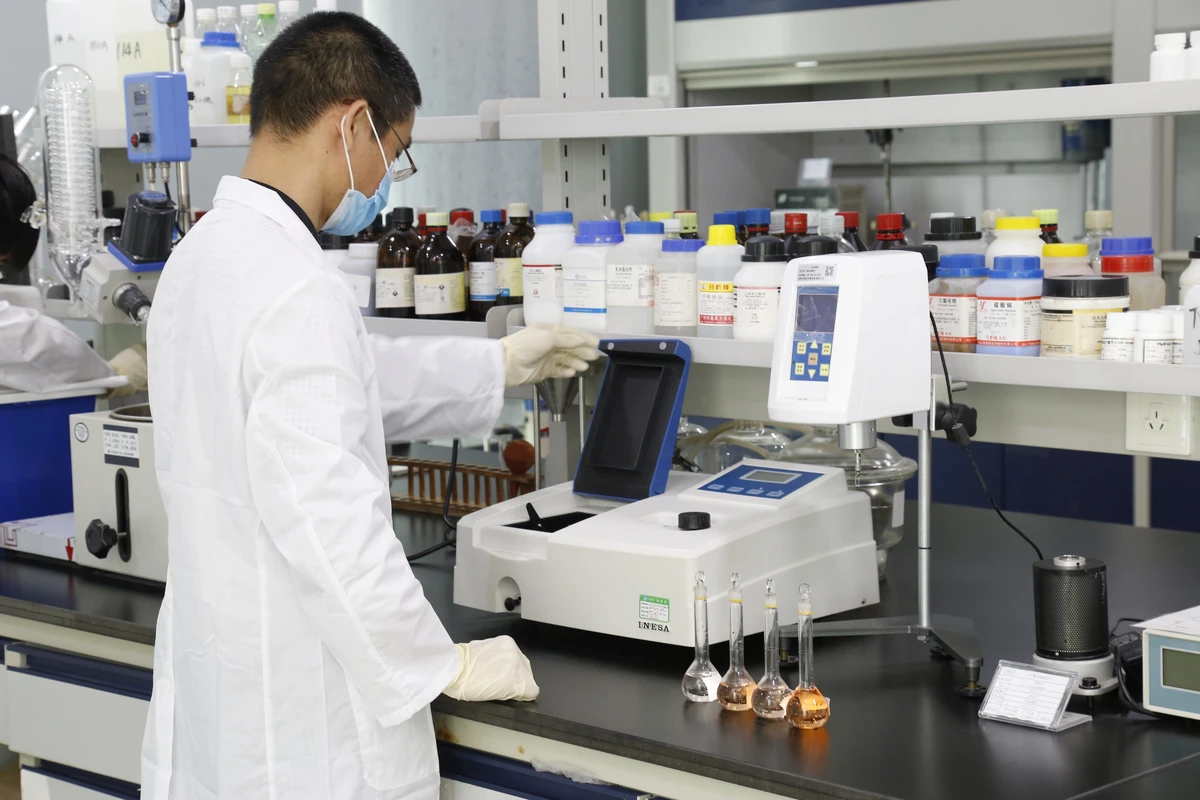
Figure 3. Color measurement and material testing equipment in AIMSEA laboratory. The instrument photo shows general testing capability and does not by itself demonstrate gamma yellowing resistance.
6. AIMSEA Medical PVC Stabilizer Options
For manufacturers developing flexible medical PVC tubing and transparent medical components, stabilizer selection should consider the complete formulation, processing method and intended sterilization conditions.
AIMSEA provides different PVC stabilizer options for medical and transparent PVC applications.
Rather than treating one stabilizer as a universal solution, manufacturers can evaluate different product forms according to their existing production processes.
6.1 AIMSTA-6111 Paste Stabilizer
AIMSTA-6111 is a paste-form PVC stabilizer listed for medical PVC applications.
According to AIMSEA's product information, its application characteristics include:
- Paste-form handling.
- No plate-out.
- No atomization.
- No precipitation.
- Application in medical PVC components.
It is an option for manufacturers producing flexible medical tubing and other soft PVC components using paste-compatible processing systems.
Reference dosage: 2–4 PHR.
6.2 AIMSTA-6809 Powder Stabilizer
AIMSTA-6809 is a powder-form stabilizer for dry-blended medical PVC compounds.
Its product information identifies medical PVC applications and transparent tubing-related material systems.
It may be considered by manufacturers whose production processes use powder feeding and dry blending.
Reference dosage: 1–2 PHR.
6.3 AIMSTA-6122 Paste Stabilizer
AIMSTA-6122 is a paste-form stabilizer used in transparent hoses, films, toys and related PVC medical components.
Its dispersibility and application direction make it an option for manufacturers evaluating transparent flexible PVC formulations.
Reference dosage: 2–4 PHR.
6.4 How to Select the Right Medical PVC Stabilizer
| Product | Form | Main Application Direction | Reference Dosage |
|---|---|---|---|
| AIMSTA-6111 | Paste | Flexible medical PVC tubing and soft components | 2–4 PHR |
| AIMSTA-6809 | Powder | Dry-blended medical PVC compounds | 1–2 PHR |
| AIMSTA-6122 | Paste | Transparent hoses, films and medical components | 2–4 PHR |
These dosage ranges are starting references from AIMSEA's current medical application information. The final dosage should be determined through formulation and production trials.
Importantly, the listed application directions do not independently establish gamma radiation resistance.
For projects involving gamma sterilization, manufacturers should evaluate the selected product in the complete PVC formulation under their intended irradiation dose and storage conditions.
Frequently Asked Questions
1. Why Does Medical PVC Tubing Turn Yellow After Gamma Sterilization?
Gamma irradiation can initiate chemical reactions in PVC and its additives. Dehydrochlorination, polyene formation and oxidation-related reactions may contribute to yellowing or darkening. The result depends on the formulation, irradiation dose and subsequent storage conditions.
2. Can PVC Stabilizers Prevent Gamma-Induced Yellowing?
A suitable stabilizer system may help improve formulation stability, but it cannot guarantee that discoloration will be eliminated. Resin characteristics, plasticizer selection, antioxidants and irradiation conditions also influence the result.
3. What Is a Gamma Stable PVC Compound?
A gamma stable PVC compound is a formulation developed and evaluated to maintain acceptable color and other required material properties after gamma irradiation under defined conditions. Its performance should be supported by testing rather than inferred from individual additive specifications.
4. Does Plasticizer Selection Affect PVC Radiation Stability?
Yes. Different plasticizer types and loading levels can influence color changes and other material properties after irradiation. Manufacturers should evaluate plasticizers together with the stabilizer and antioxidant systems.
5. Is E-Beam Better Than Gamma for PVC Tubing?
Not universally. Different irradiation methods can produce different results depending on the formulation, dose and processing conditions. Comparative testing on the actual finished component is necessary before changing sterilization methods.
6. How Can Manufacturers Test PVC After Gamma Irradiation?
A suitable evaluation program may include colorimetry, yellowness index, transparency, haze, tensile properties and other application-specific tests. Samples should be checked before irradiation, immediately afterward and during controlled storage.
Conclusion
Improving color stability in flexible PVC after gamma sterilization requires more than selecting a heat stabilizer with good initial color performance.
PVC resin characteristics, plasticizer selection, stabilizer chemistry, antioxidants, irradiation dose and post-irradiation storage can all influence the final appearance and performance of medical PVC components.
For manufacturers producing transparent medical tubing and flexible PVC devices, a coordinated formulation approach is essential.
AIMSEA offers AIMSTA-6111, AIMSTA-6809 and AIMSTA-6122 for different medical and transparent PVC application requirements. Each option can be evaluated according to the production process, formulation and intended sterilization route.
Looking for a suitable PVC stabilizer for medical tubing?
Share your PVC resin grade, plasticizer system, production process and sterilization requirements with AIMSEA. Our team can help identify an appropriate stabilizer option and discuss a controlled formulation trial for your medical PVC application.