
Recycled PVC Stabilizer Strategy: Lead Screening, Color Control and Processing Window
Read:213
Source:
Abstract
Recycled PVC can reduce material cost and support circular manufacturing, but it cannot be processed with the same formula logic as virgin PVC. Old PVC materials may carry different heat histories, residual stabilizers, pigments, fillers, plasticizers and even legacy lead risks. This makes recycled PVC stabilizer selection more complex than standard PVC compounding.
For manufacturers, the right strategy should begin with lead screening and raw material sorting, then move to color control, torque stability, processing window adjustment and customized stabilizer package design. This guide explains how PVC processors can evaluate recycled PVC before choosing a PVC heat stabilizer, and what information buyers should provide when requesting a stabilizer recommendation.
Why Recycled PVC Needs a Different Stabilizer Strategy?
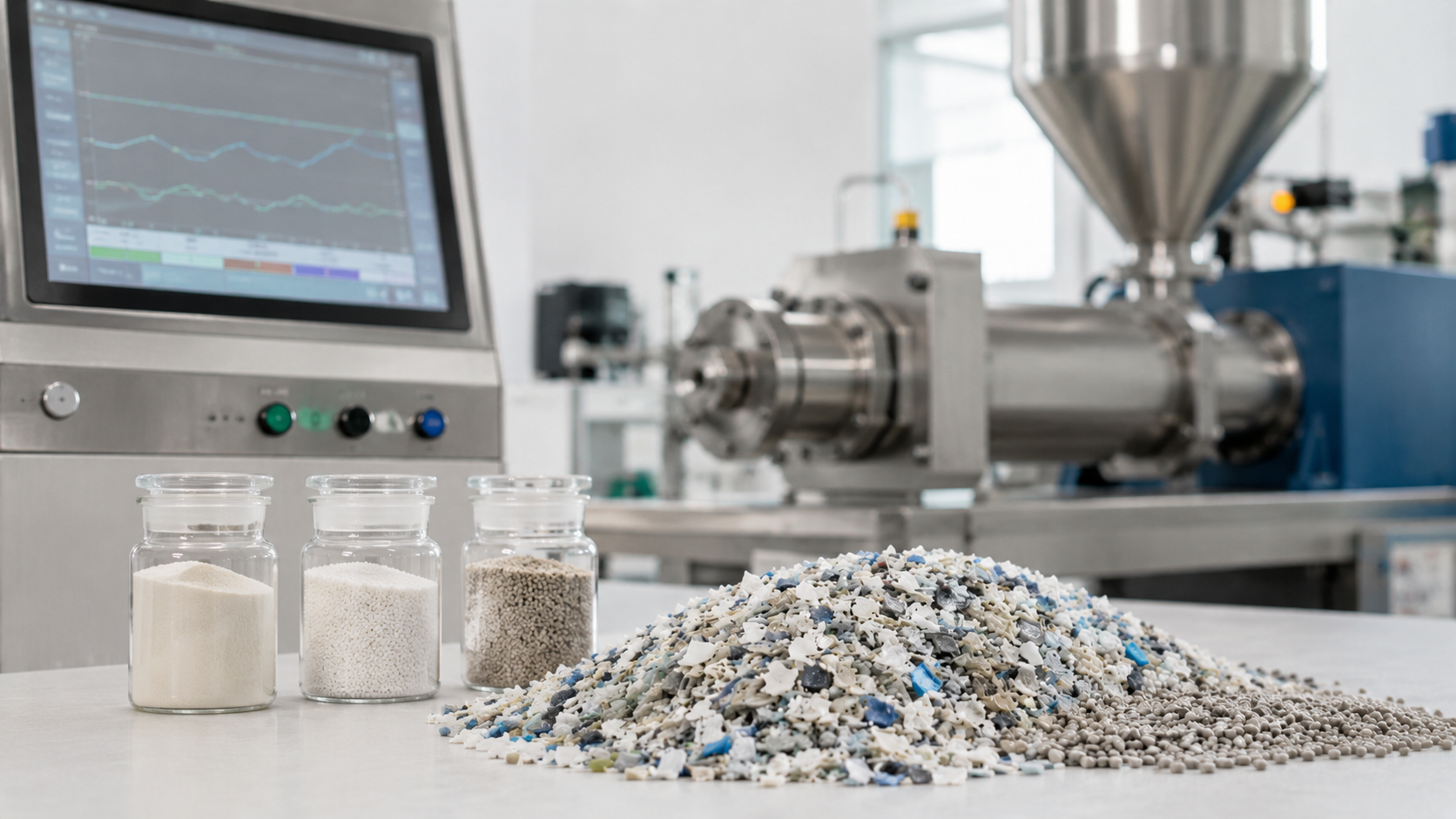
A recycled PVC stabilizer strategy should not start by copying a virgin PVC formula. Virgin PVC resin has more predictable purity, color, thermal history and additive background. Recycled PVC, however, may come from window profiles, pipes, flooring, cable compounds, sheets, films or mixed post-industrial scraps.
Each source may contain different stabilizer residues, fillers, pigments, lubricants and processing damage. This is why recycled PVC formulas often show unstable color, narrow processing tolerance, torque fluctuation, plate-out or poor fusion.
In many cases, the problem is not only the stabilizer dosage. It is the interaction between recycled raw material quality and the new PVC stabilizer package.
Why virgin PVC formulas cannot be copied directly?
A formula developed for virgin PVC usually assumes that the resin has no previous heat damage. Recycled PVC has already passed through at least one processing cycle. Part of the polymer may have experienced heat degradation, lubricant loss, color change or molecular damage.
If the same PVC heat stabilizer dosage is used without adjustment, the recycled compound may yellow faster, release more odor, show unstable fusion or create die build-up. The stabilizer system must therefore compensate for both new processing heat and previous material damage.
How thermal history affects recycled PVC stabilizer selection?
Thermal history refers to the heat exposure PVC has already experienced during extrusion, calendering, injection molding, pelletizing or reprocessing. The longer and hotter the previous processing cycle, the higher the risk of early discoloration and reduced processing stability.
For recycled PVC, stabilizer approval should include oven aging, color change, plate-out, torque behavior and real production stability. A single lab index is not enough to confirm whether the formula can run smoothly in continuous production.
Lead Screening for Recycled PVC Before Formulation
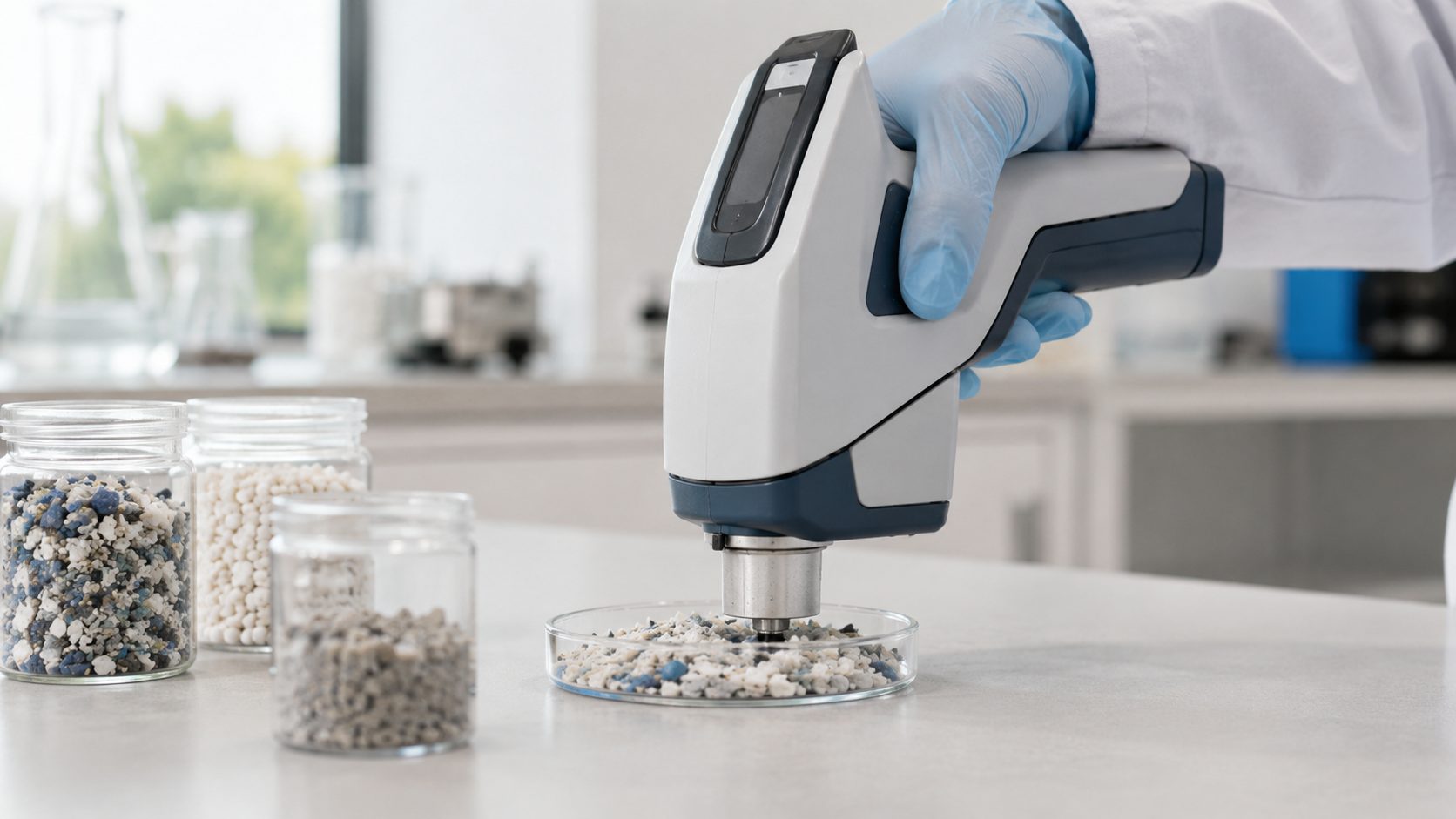
Lead screening for recycled PVC is one of the first steps before approving any recycled formulation. Many older PVC products were produced with lead-based stabilizers. Even if a manufacturer now uses a lead-free PVC stabilizer, the recycled input may still contain legacy lead from previous production generations.
This is especially important for exporters and manufacturers serving compliance-sensitive markets. Lead risk affects not only product quality, but also customer approval, restricted-substance review and export documentation.
Why lead risk is higher in recycled PVC?
Recycled PVC may contain post-consumer or post-industrial materials from older pipes, profiles, sheets, cables or flooring. If the source is unclear, the compounder cannot assume the material is lead-free.
Incoming recycled PVC should be tested, documented and separated before being blended into new production. For export projects, buyers should ask for heavy metal data and confirm whether the recycled stream has a known source.
How to separate recycled PVC streams by risk level?
A practical sorting system can divide recycled PVC into different risk groups.
Recycled PVC Stream | Typical Risk | Suggested Action |
Known in-house scrap | Lower risk if the original formula is controlled | Reuse with adjusted stabilizer dosage |
Supplier-certified recycled PVC | Medium risk | Request COA, heavy metal data and source information |
Mixed post-consumer recycled PVC | Higher risk | Conduct lead screening, color sorting and trial testing |
Old rigid profiles or pipes | Possible legacy stabilizer risk | Test Pb, Cd and ash before use |
Cable or flexible PVC scrap | Variable plasticizer and filler background | Check plasticizer, odor, color and heat aging |
This classification helps the buyer decide whether a calcium zinc stabilizer, one-pack solution or customized stabilizer package is more suitable.
Raw Material Sorting and Heat History Review
Before adjusting the stabilizer, processors should understand the recycled material itself. Sorting only by color is not enough. The supplier should review material source, rigidity, filler level, ash content, plasticizer background, previous application and possible contaminant risk.
Why source separation improves formula stability?
If mixed recycled materials are blended without sorting, the compound may show different fusion behavior from batch to batch. One batch may contain more filler and require stronger lubrication. Another batch may contain more degraded PVC and need higher heat stability. A third batch may contain pigments that shift the final color.
Source separation makes the PVC processing window easier to control. It also reduces unexpected torque changes, screw load variation and output instability.
Why ash and filler content should be checked?
Ash content helps estimate mineral filler and inorganic residue. High ash may indicate more calcium carbonate, titanium dioxide, stabilizer residue or other inorganic additives. This can change melt viscosity, surface quality and lubricant demand.
When ash is high, the stabilizer package may need better internal and external lubrication balance, improved dispersion support and stronger plate-out control.
Color Control in Recycled PVC Compounding
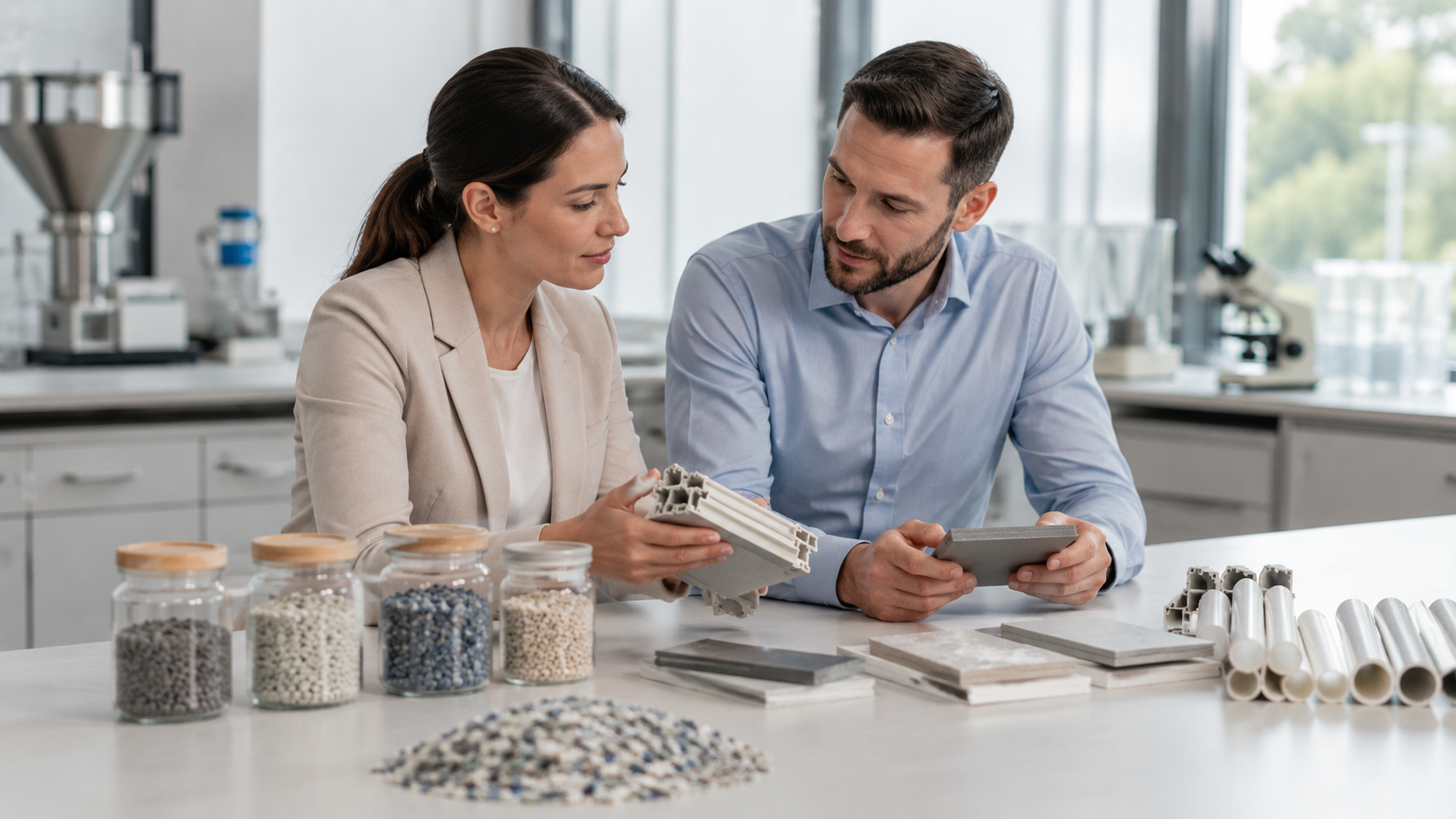
PVC color control is one of the most visible challenges in recycled PVC production. Even when mechanical performance is acceptable, customers may reject products because of yellowing, gray tone, black specks or inconsistent batch color.
Color problems usually come from several causes, including previous heat degradation, mixed pigments, residual contamination, unstable stabilizer background and excessive processing temperature.
Why recycled PVC shows yellowing or gray tone?
Yellowing often indicates thermal degradation. Gray tone may come from mixed recycled streams, carbon black contamination, old pigments or inconsistent filler levels. Black specks may come from burned material, poor filtration or degraded particles.
A Ca-Zn stabilizer can help support lead-free color stability, but the stabilizer alone cannot correct all recycled material problems. The formula must be supported by sorting, filtration, temperature control and color-matching discipline.
How stabilizer adjustment supports color consistency?
For recycled PVC, color control usually requires coordinated action between raw material control and stabilizer package design.
Color Problem | Possible Cause | Stabilizer Strategy |
Early yellowing | Poor thermal history | Increase early color protection and heat stability |
Gray tone | Mixed recycled sources | Improve sorting and use color correction carefully |
Brown streaks | Local overheating or poor fusion | Widen processing window and adjust lubrication |
Black specks | Burned particles or contamination | Improve filtration and reduce residence time |
Batch color drift | Variable raw material source | Separate sources and run batch-by-batch trials |
For export or visible applications, buyers should test color before and after oven aging, not only immediately after extrusion.
Processing Window, Torque and Stabilizer Package Adjustment
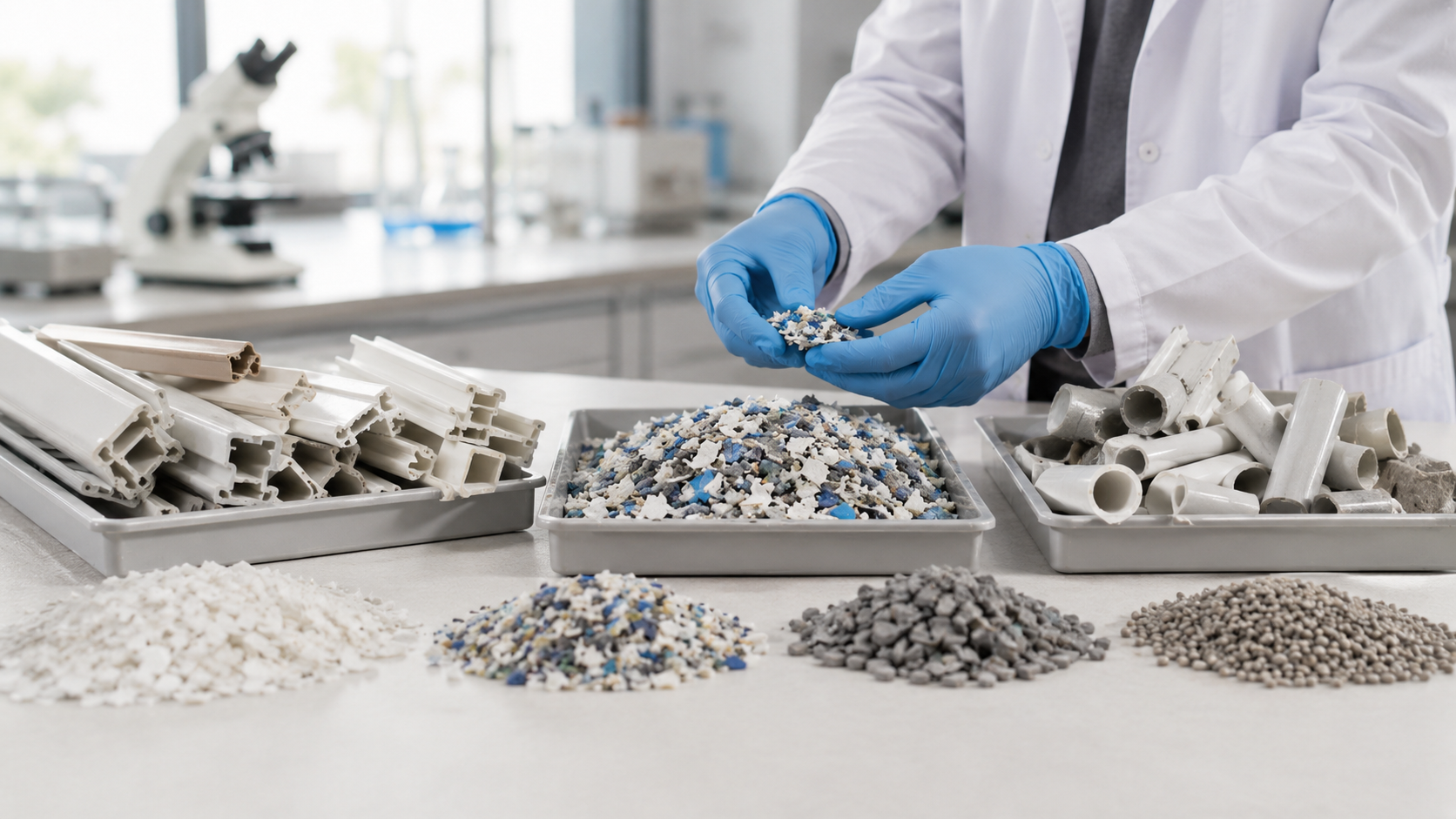
A stable PVC processing window means the formula can tolerate normal temperature, speed and residence time variation without burning, sticking, yellowing or losing output stability. Recycled PVC often has a narrower processing window because the material is already partially aged.
How recycled PVC affects fusion and torque?
Torque fluctuation may come from inconsistent filler, plasticizer residue, moisture, particle size, gelation level or lubricant background. If torque is too high, the material may overload the equipment or generate extra heat. If torque is too low, fusion may be incomplete and surface quality may decline.
A recycled PVC formula should therefore be tested under real production conditions, including screw speed, barrel temperature, die temperature, output rate and residence time.
How to adjust the PVC stabilizer package?
A customized PVC stabilizer package may include heat stabilizer, lubricant balance, processing aid support, antioxidant support, color control support or deodorizing additives, depending on the recycled material.
For stable production, processors should avoid adjusting only one factor. Increasing stabilizer dosage may improve heat stability, but it may not solve poor fusion, torque fluctuation or plate-out if the lubricant balance is wrong. A better approach is to evaluate the complete additive system.
Customer Information Checklist for Recycled PVC Stabilizer Trials
A PVC stabilizer supplier cannot recommend the right solution with only the phrase “recycled PVC.” Buyers should provide detailed material and process information so the supplier can design a more accurate trial plan.
Information to Provide | Why It Matters |
Recycled PVC source | Identifies lead, filler, plasticizer and contamination risk |
Rigid or flexible PVC | Determines stabilizer and lubricant direction |
Color and target color | Supports color control and whitening strategy |
Ash content | Indicates filler and inorganic residue level |
Lead risk or Pb test result | Supports compliance and material separation |
Existing stabilizer dosage | Helps avoid over-stabilization or under-stabilization |
Current formula | Shows interaction with filler, lubricant and pigment |
Processing method | Extrusion, calendering, injection or compounding |
Processing temperature | Defines actual heat exposure |
Torque or fusion problem | Guides lubricant and processing aid adjustment |
Current defects | Yellowing, plate-out, odor, specks or brittleness |
Target market | Defines REACH, RoHS or customer compliance needs |
This checklist helps both the buyer and supplier reduce trial errors and shorten the formula adjustment process.
How AIMSEA Supports Recycled PVC Applications?
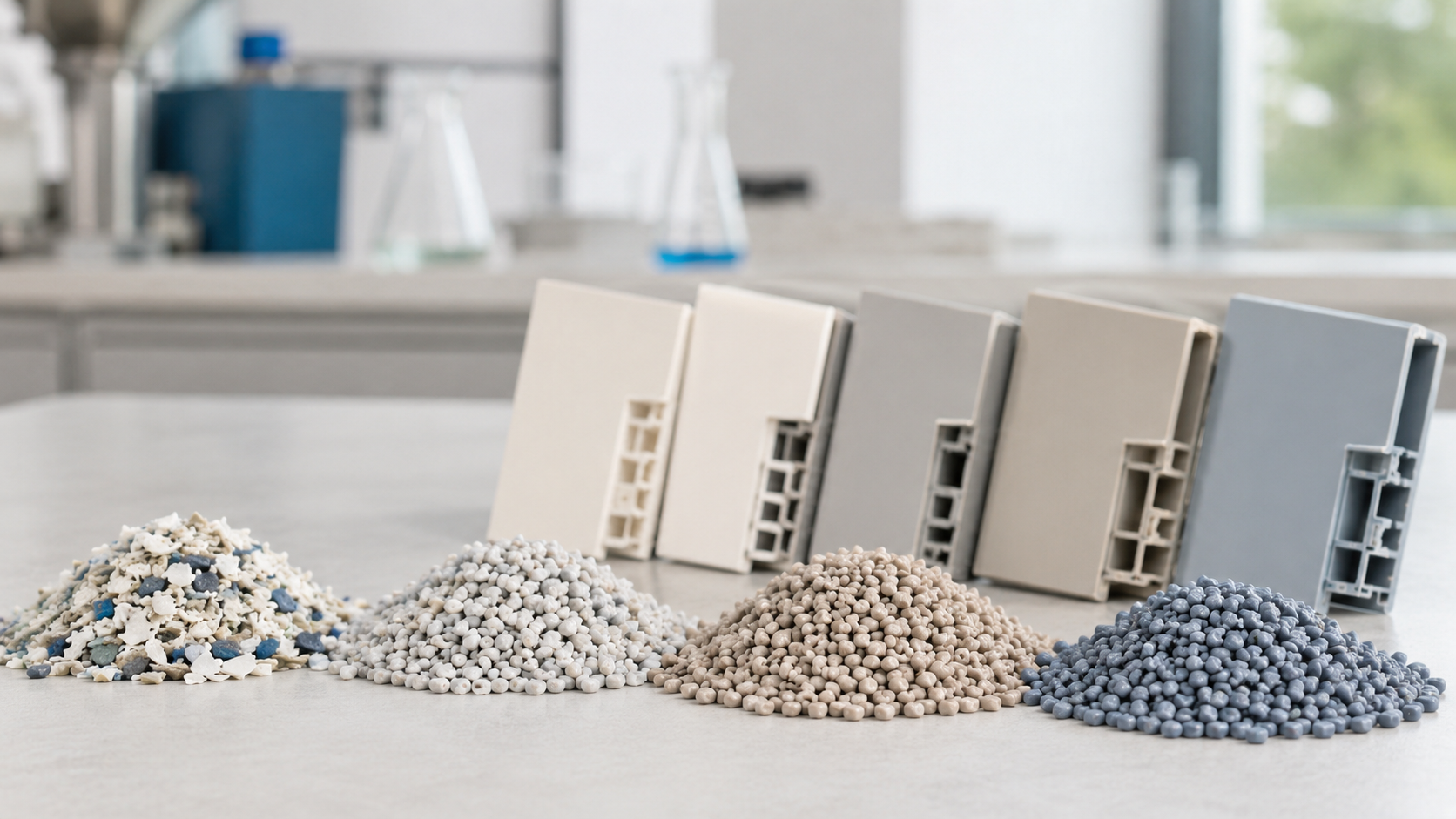
AIMSEA supports PVC processors with lead-free calcium-zinc stabilizers, customized PVC heat stabilizer solutions and one-pack additive systems for different PVC applications. For recycled PVC, the focus should be on lead-free direction, color stability, processing tolerance and batch consistency.
Lead-free calcium-zinc stabilizer direction
A calcium zinc stabilizer is often a practical direction for manufacturers moving away from lead-based systems. For recycled PVC, it should be evaluated together with lead screening and raw material sorting, because a lead-free new stabilizer cannot remove legacy lead already present in recycled feedstock.
One-pack PVC stabilizer for easier production control
A one-pack PVC stabilizer can be useful when the processor wants simpler dosing and more stable production. In recycled PVC, this can reduce daily weighing errors and help combine stabilization, lubrication and processing support in one package.
This approach is especially useful when recycled PVC batches vary slightly but the factory needs stable processing, surface quality and color performance.
Sample testing before bulk approval
For recycled PVC, sample testing should include:
Lead and heavy metal screening
Static oven aging
Dynamic heat stability
Color change comparison
Torque and fusion curve
Plate-out observation
Finished product surface check
Mechanical property check if required
Odor and VOC review if used indoors
Bulk approval should be based on both lab testing and real machine trials.
FAQ About Recycled PVC Stabilizer Strategy
Can recycled PVC use the same stabilizer as virgin PVC?
Not directly. Recycled PVC has previous heat history, unknown additive residues and possible contamination. The recycled PVC stabilizer should be adjusted after checking source, color, ash, lead risk and processing behavior.
Why is lead screening important for recycled PVC?
Older PVC products may contain lead-based stabilizers. If recycled feedstock contains legacy lead, the final compound may create compliance risks, especially for EU or export markets.
What causes color drift in recycled PVC?
Color drift may come from mixed sources, previous thermal degradation, pigment residues, filler variation, moisture, unstable processing temperature or insufficient stabilizer protection.
How can processors widen the PVC processing window?
Processors can improve sorting, reduce moisture, stabilize raw material batches, adjust the PVC heat stabilizer, balance internal and external lubrication, and test under real extrusion or calendering conditions.
What should buyers send before requesting a stabilizer sample?
Buyers should send recycled material source, color, ash content, lead risk, current formula, existing stabilizer dosage, processing method, temperature range and current production defects.
Conclusion
A successful recycled PVC stabilizer strategy starts before the stabilizer is added. Manufacturers should first screen for lead, separate recycled material streams, understand thermal history, check color stability and evaluate torque behavior. Only then can the stabilizer package be adjusted correctly.
For recycled PVC processors, the goal is not simply to use more stabilizer. The goal is to create a wider PVC processing window, more stable color, lower compliance risk and more predictable batch performance.
AIMSEA’s lead-free calcium zinc stabilizer, customized PVC heat stabilizer and one-pack additive solutions can support manufacturers working with recycled PVC, especially when buyers provide clear material data and real processing conditions before sample testing.