

Posted by Ms.Yan
in blog
Technical Engineer
Updated 2026-09-28
PVC Pipe UV Exposure: Should Sun-Exposed Pipe Be Rejected?
Read:13
Source:
PVC pipe UV exposure does not automatically mean a batch should be rejected. Surface fading or yellowing alone cannot establish whether the pipe meets its intended requirements. The decision should consider product identification, exposure history, physical condition, the manufacturer’s instructions and any inspection or testing required by the project.
Do not release visibly cracked, damaged or unidentified pipe simply because sunlight-related discoloration can be superficial. Equally, avoid scrapping an otherwise documented batch solely because its color has changed. Separate the appearance question from the performance question, then decide whether to accept, hold for investigation or reject the affected material.
This guide focuses on rigid PVC pipe awaiting installation and on the distinction between outdoor storage and permanent exposed service. Flexible tubing, CPVC and specially qualified outdoor products require their own documentation.
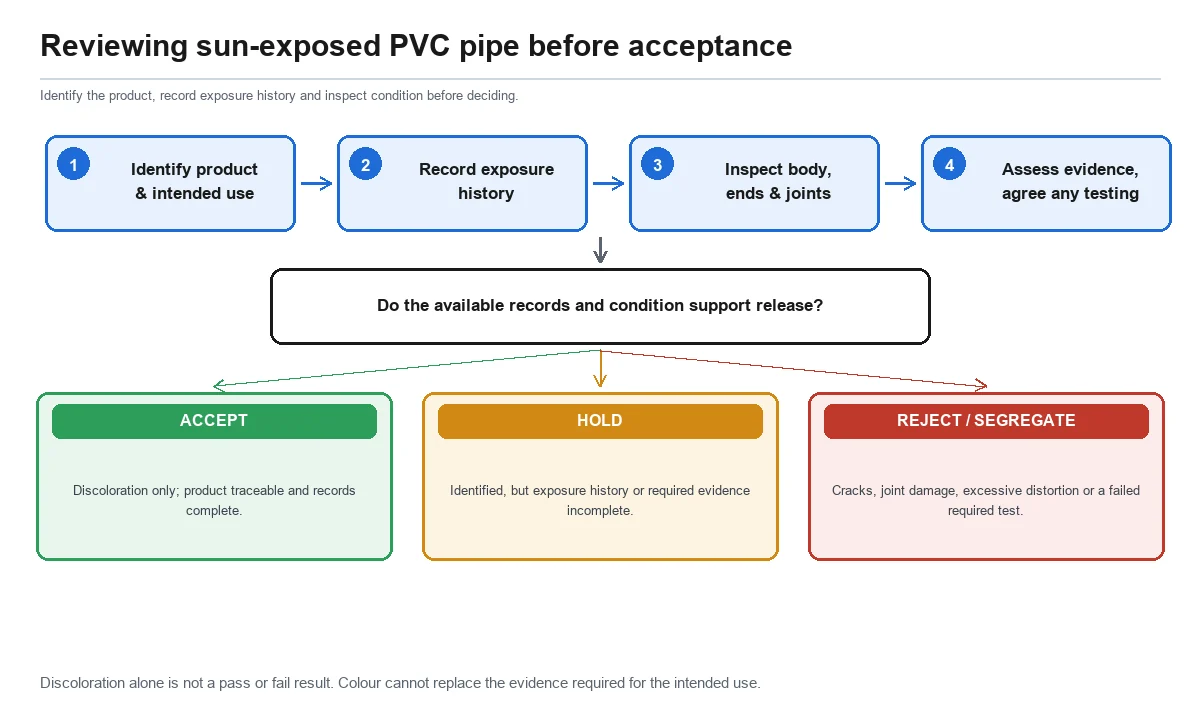
Figure 1. Review product identity, exposure history and condition before deciding whether to accept, hold or reject a batch.
What PVC Pipe UV Exposure Can Tell You About Condition
Discoloration is a reason to inspect and document the batch, not a complete diagnosis. Compare exposed and sheltered surfaces, photograph the pattern and check whether the change is limited to appearance or accompanied by cracks, distortion or handling damage.
The PVC Pipe Association’s 2020 technical brief summarizes a two-year exposure study on PVC sewer pipe. Tensile strength and modulus were reported as unaffected, while impact strength decreased; average impact performance remained above the requirement for new pipe in that study. This supports evaluating properties separately rather than treating color as a pass-or-fail test.
Separate Discoloration from Damage
Fading, yellowing and a chalky-looking surface should be recorded accurately. Avoid turning descriptions such as “sunburned” into conclusions about the pipe’s remaining strength. A photograph can establish visible appearance, but it cannot measure impact resistance or verify a pressure rating.
Cracks, damaged sockets, significant deformation or other defects require a separate disposition under the applicable product requirements. Do not assume they were caused by UV exposure: storage loads, handling and other conditions may also need investigation.
Assess PVC UV Stability Property by Property
PVC UV stability is not a single measurement. Color retention, impact behavior and suitability for the intended service answer different questions. Evidence that one property remained acceptable does not replace evidence required for another.
For an exposed batch, identify the actual concern before commissioning tests. Is the issue appearance under a customer specification, suspected mechanical damage, or suitability for a future outdoor installation? Each concern calls for different evidence and may involve a different decision-maker.
Distinguish Outdoor Storage from Permanent Outdoor Service
A pipe that spent time outdoors before burial has a different exposure history from one intended to remain above ground throughout service. Guidance for the first situation should not automatically be applied to the second.
Count Exposure History, Not Just Manufacturing Age
Build a timeline covering storage at the factory, distributor and jobsite. Record known periods in direct sunlight, protected storage and any intervals for which records are missing. The manufacturing date alone does not establish cumulative sunlight exposure.
Westlake’s bulletin PI-TB-004-US-EN-1224.1 specifies a two-year exposed-storage criterion for its standard PVC material products in the United States and Canada. It describes that period as cumulative exposed storage, not time since manufacture. This is manufacturer-specific guidance, not a universal expiry date or a guarantee for another pipe brand.
If exposure history is incomplete, record the uncertainty and ask the manufacturer what additional evidence is needed. Do not substitute a guessed number of months for missing records.
Ask What “UV Stabilized PVC Pipe” Actually Covers
When a supplier describes a product as UV stabilized PVC pipe, ask whether the claim concerns temporary storage, color retention or continuous outdoor service. Request documentation for the exact grade and application rather than relying on the phrase alone.
For permanent above-ground use, confirm the manufacturer’s installation and protection requirements. JM Eagle’s January 2009 technical bulletin recommends sunlight protection for permanent above-ground PVC pipe installations, while separately discussing specific conduit qualified for exposed use. A qualification for one product should not be transferred to a different pipe or fitting.
| Situation | Evidence to request | Decision boundary |
|---|---|---|
| Outdoor storage before buried installation | Product identification, exposure record and manufacturer’s storage guidance | Storage guidance does not establish permanent outdoor suitability |
| Permanent above-ground installation | Documentation for the exact product, installation conditions and protection method | “UV stabilized” alone is insufficient |
| Unknown storage history | Traceable batch details, condition record and manufacturer’s review | Missing history remains an uncertainty until resolved |
| Visible defects or damaged joints | Inspection against product requirements and an agreed disposition | General statements about discoloration do not override defects |
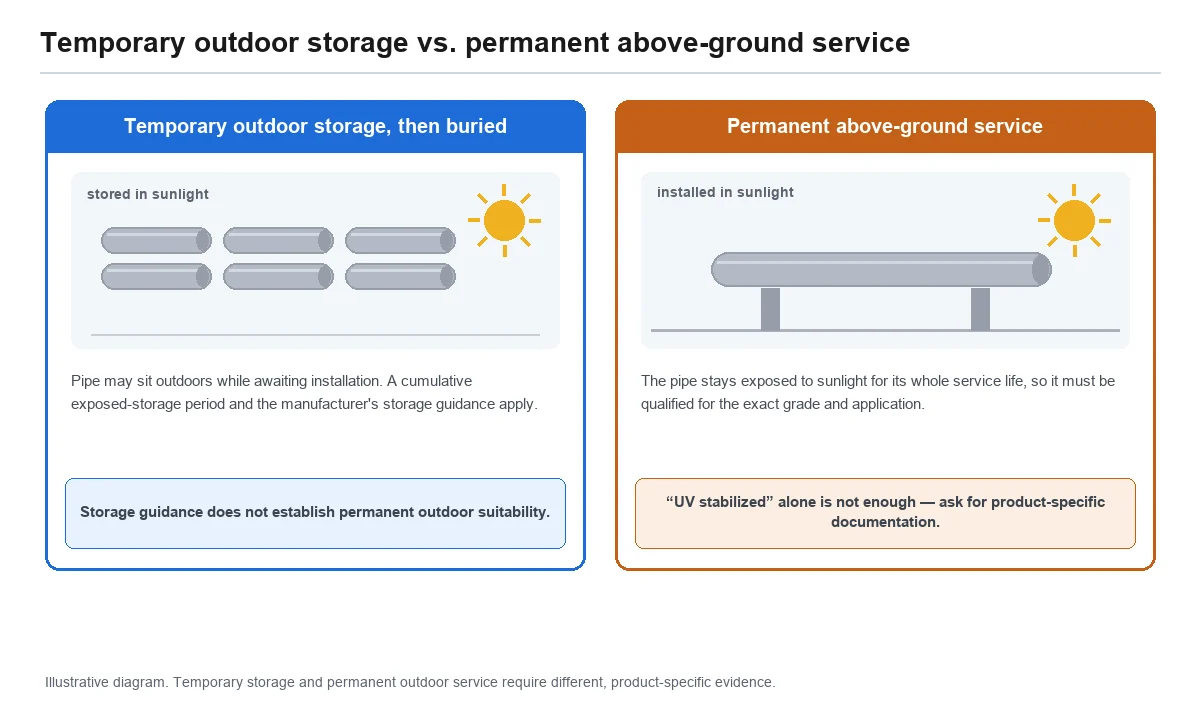
Figure 2. Temporary storage and permanent outdoor service require different product-specific evidence. Illustrative diagram.
Inspect Sun-Exposed PVC Pipe Before Acceptance
Start with traceability, then examine condition and determine whether the available evidence supports release. The following workflow is a suggested receiving-inspection approach; it does not replace the applicable specification or manufacturer’s instructions.
Confirm the Pipe and Its Intended Use
Record the manufacturer, product designation, batch markings, size, wall designation and applicable specification. Check the purchase documents against the material delivered. Identify whether it is pressure pipe, drainage pipe or conduit, and whether the planned installation is buried or exposed.
If sunlight or abrasion has made markings illegible, resolve identification through packaging and supplier records. Similar color and dimensions are not sufficient to establish that an unmarked length belongs to a documented batch.
Examine the Body, Ends and Joint Components
Inspect the exposed lengths for cracks, damage, distortion and changes around supports or contact points. Check sockets, spigots and sealing surfaces separately. Record where defects occur rather than giving the whole stack a single description.
For gasketed products, check the gaskets against the manufacturer’s criteria, including visible cracking or hardening. Pipe-wall appearance does not establish gasket condition. Keep affected components out of assembly until their disposition is resolved.
Handle questioned pipe according to the manufacturer’s guidance while the assessment is pending. Do not improvise a drop, bend or hammer test as a substitute for specified acceptance testing. An uncontrolled demonstration provides no defined acceptance basis and may damage usable material.
Agree on Any Additional Testing Before Sampling
Ask the manufacturer and project quality team which measurements are relevant to the concern. Depending on the product and requirements, the review may involve dimensional checks, impact evaluation, stiffness or pressure-related testing. These are possible categories, not a mandatory test package for every exposed batch.
Agree on sampling locations, sample quantity, conditioning, methods and acceptance limits before testing. If a shaded sample is available, it may help a comparison, but its appearance does not make it a qualified control automatically. Preserve the identity and history of every specimen.
Record who is authorized to release the material. A test report is evidence for that decision; its existence alone does not establish that every affected length is acceptable.
Make an Accept, Hold or Reject Decision
Use an inspection record that links observations to the applicable requirements. Avoid using color charts or time outdoors as standalone rejection thresholds unless the relevant product or project documents explicitly establish them.
| Finding | Suggested disposition | What must be resolved |
|---|---|---|
| Color change only, with traceable product and complete supporting records | Consider acceptance through the normal release process | Confirm all applicable requirements, including any appearance criteria |
| Product identified, but exposure history or required evidence is incomplete | Hold the affected batch | Obtain manufacturer’s guidance and complete the agreed assessment |
| Cracking, joint damage, excessive distortion or a failed required test | Segregate; reject or follow an approved corrective disposition | Apply the relevant criteria and document any permitted correction |
| Pipe proposed for permanent exposure without application evidence | Hold approval for that use | Confirm outdoor suitability or an approved protection arrangement |
For mixed stock, separate batches and exposure conditions. Do not apply a favorable report from one identified sample to unrelated stock without an agreed sampling basis. Keep the acceptance record with the lot so that installation personnel can distinguish released material from material still under review.
A Documented Manufacturer Example
Westlake’s bulletin PI-TB-004-US-EN-1224.1 reports an assessment of sun-exposed AWWA C900 8-inch DR25 pipe. The manufacturer states that the evaluated pipe continued to meet its required performance criteria after testing. This is a documented manufacturer example, not an AIMSEA project or proof that all discolored pipe passes.
Its practical value is the decision method: identify the product and evaluate the relevant requirements. Neither the pipe’s appearance nor another manufacturer’s favorable result can replace the evidence needed for your batch.
Protect Stored Pipe Without Treating It as a Repair
Once a batch has been assessed, reduce further unnecessary exposure while preserving suitable storage conditions. Use the pipe manufacturer’s covering and stacking instructions. Covering must allow the required ventilation; trapping excessive heat beneath an unsuitable cover creates a different storage problem.
Before applying paint or a wrap, confirm compatibility and the approved preparation method. JM Eagle’s guidance favors light-colored exterior water-based latex paint for protection and warns that oil- or solvent-based paints may damage the pipe or adhere poorly. Confirm suitability for the actual product before use.
Protection against future sunlight does not reverse existing damage or establish acceptance. Inspect and document the material before covering its surface. Keep identification accessible and preserve photographs where a coating would hide the original condition.
Where a PVC Pipe Stabilizer Fits into Future Production
For pipe manufacturers, recurring weathering complaints may justify reviewing both the formulation and the finished-product validation plan. However, a PVC pipe stabilizer used during manufacturing cannot be applied afterward to restore an exposed pipe.
Heat stabilization during processing and resistance to outdoor exposure are related formulation considerations, but they are not interchangeable claims. A successful extrusion trial or good initial color does not, by itself, demonstrate a defined outdoor service life.
AIMSEA’s stabilizers for PVC pipes and fittings include AIMSTA-C500P for water-supply pipe extrusion, AIMSTA-C501 for drainage pipe extrusion, AIMSTA-C506 for electrical conduit and AIMSTA-C508 for injection-molded fittings. These application categories help identify candidates for formulation trials; they do not establish a UV exposure allowance for finished pipe.
For a new formulation review, provide the resin and additive system, processing conditions, pipe application, initial quality results and intended exposure conditions. Agree separately on the weathering and finished-product evidence required. Select a candidate grade according to its documented application, then evaluate the complete formulation rather than attributing outdoor performance to one ingredient.
What to Send Before Requesting a Technical Review
Prepare a concise evidence pack for the pipe manufacturer or responsible project reviewer:
- Product and batch identification, purchase specification and intended use.
- Known storage locations, sunlight exposure periods and missing history.
- Photographs of markings, exposed surfaces, sheltered areas and any defects.
- Inspection results for the pipe body, ends, joints and gaskets where applicable.
- Existing test reports and the specific acceptance question that remains unresolved.
Ask for a decision tied to that product and application, including any additional inspection, testing or protection required. Retain the written response with the batch record.
If the issue concerns future pipe production rather than acceptance of existing stock, share the formulation and exposure requirements with AIMSEA for a stabilizer discussion. Batch release should remain with the pipe manufacturer and the responsible project authority. Keeping these responsibilities clear helps avoid both unnecessary rejection and unsupported acceptance.