
fajsdfjash ddsa dsa as sa sad sda sadfjsadjfl jsadjk fjasdlkfjaskdfdklsaj klf
jsadj
asjdklj falsdjf
jaklj
PVC Heat Stabilizer for Wire and Cable Compounds: What Tests Buyers Should Check for 90°C/105°C/125°C Insulation
Read:19
Source:
Quick Answer
A PVC heat stabilizer for wire and cable compounds should be approved by heat aging, Congo red, insulation resistance, water performance, extrusion stability and compliance documents.
Key Takeaways
·Select a PVC heat stabilizer for wire and cable compounds according to the cable temperature grade: 70°C, 90°C, 105°C or 125°C.
·Buyers should check thermal stability, heat aging, Congo red time, electrical performance, water absorption and plate-out risk.
·A PVC heat stabilizer must be tested in the buyer’s actual PVC compound, not only in a supplier’s standard formula.
·For export cable projects, buyers should review RoHS, REACH, SDS, TDS, COA and heavy metal test documents.
·AIMSEA can support stabilizer recommendation when buyers provide cable formula, target temperature grade, testing standard and current processing problems.
Abstract
For cable manufacturers, choosing a PVC heat stabilizer for wire and cable compounds is not only a purchasing decision. It directly affects extrusion stability, insulation performance, heat-aging retention, color control and compliance risk. This becomes more important when cable insulation moves from standard 70°C applications to 90°C, 105°C or 125°C grades.
AIMSEA’s PVC Wire & Cable application positioning highlights heat resistance, electrical performance, processing stability, low moisture absorption, high insulation resistance and longer Congo red performance for cable insulation and sheathing materials. The same application direction covers GB/VDE grades, UL 60–105 grades and automotive T1/T2/T3 grades, including 105°C and 125°C references. AIMSEA also positions its main stabilizer page around lead-free calcium-zinc PVC stabilizers and customized heat stabilizer solutions for cables, pipes, profiles, flooring, transparent PVC and recycled PVC applications.
Why Temperature Rating Changes the PVC heat stabilizer Test Plan?
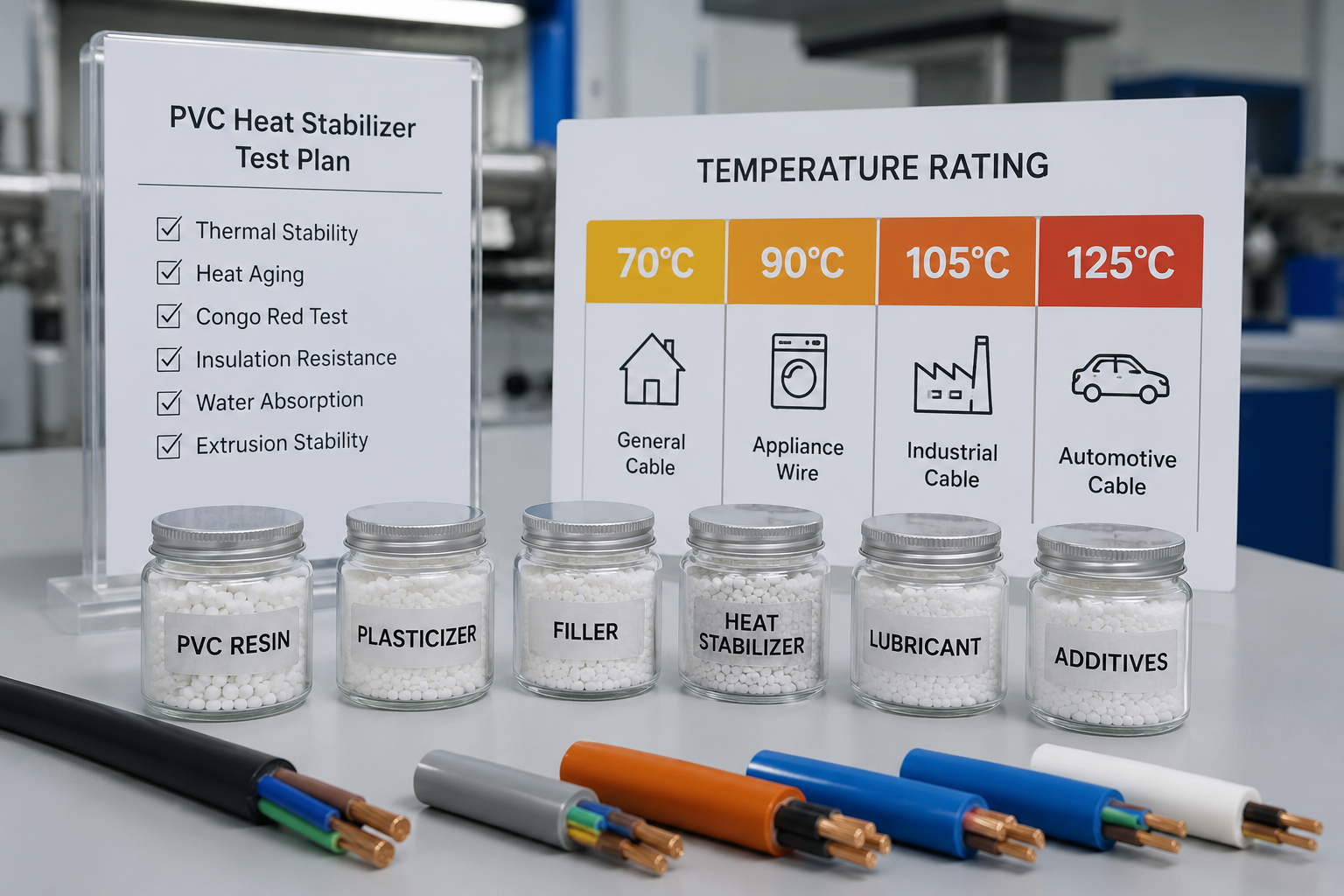
A 70°C PVC cable compound may run smoothly in extrusion but still fail when it is upgraded to 90°C or 105°C service. Higher temperature ratings usually require better heat-aging retention, lower volatility, stronger electrical stability and a wider processing window.
This is why buyers should not evaluate a PVC heat stabilizer for wire and cable compounds only by unit price or recommended dosage. A stabilizer with a lower price may narrow the processing window, increase scrap rate, cause poor color retention or create die deposits during long production runs.
International cable material testing also follows defined methods. For example, IEC 60811-405 specifies the procedure for thermal stability testing of PVC compounds used in insulation and sheath materials.
High-temperature PVC cable insulation needs system-level validation
For 90°C, 105°C and 125°C insulation, the stabilizer works together with the whole compound system. Buyers should review the complete formulation instead of isolating one additive.
| Formula factor | Why it matters for cable insulation |
PVC resin grade | Affects fusion, mechanical strength and processing behavior |
Plasticizer type | Influences flexibility, volatility and aging retention |
Filler and flame retardant | May affect insulation resistance, thermal stability and surface quality |
Lubricant balance | Controls extrusion smoothness and plate-out risk |
PVC additives package | Impacts processing stability, heat resistance, electrical performance and long-term aging |
Extrusion conditions | Temperature, residence time and line speed can change final performance |
A reliable PVC stabilizer should therefore be selected through both lab tests and production trial data.
70°C vs 90°C vs 105°C vs 125°C PVC Cable Insulation
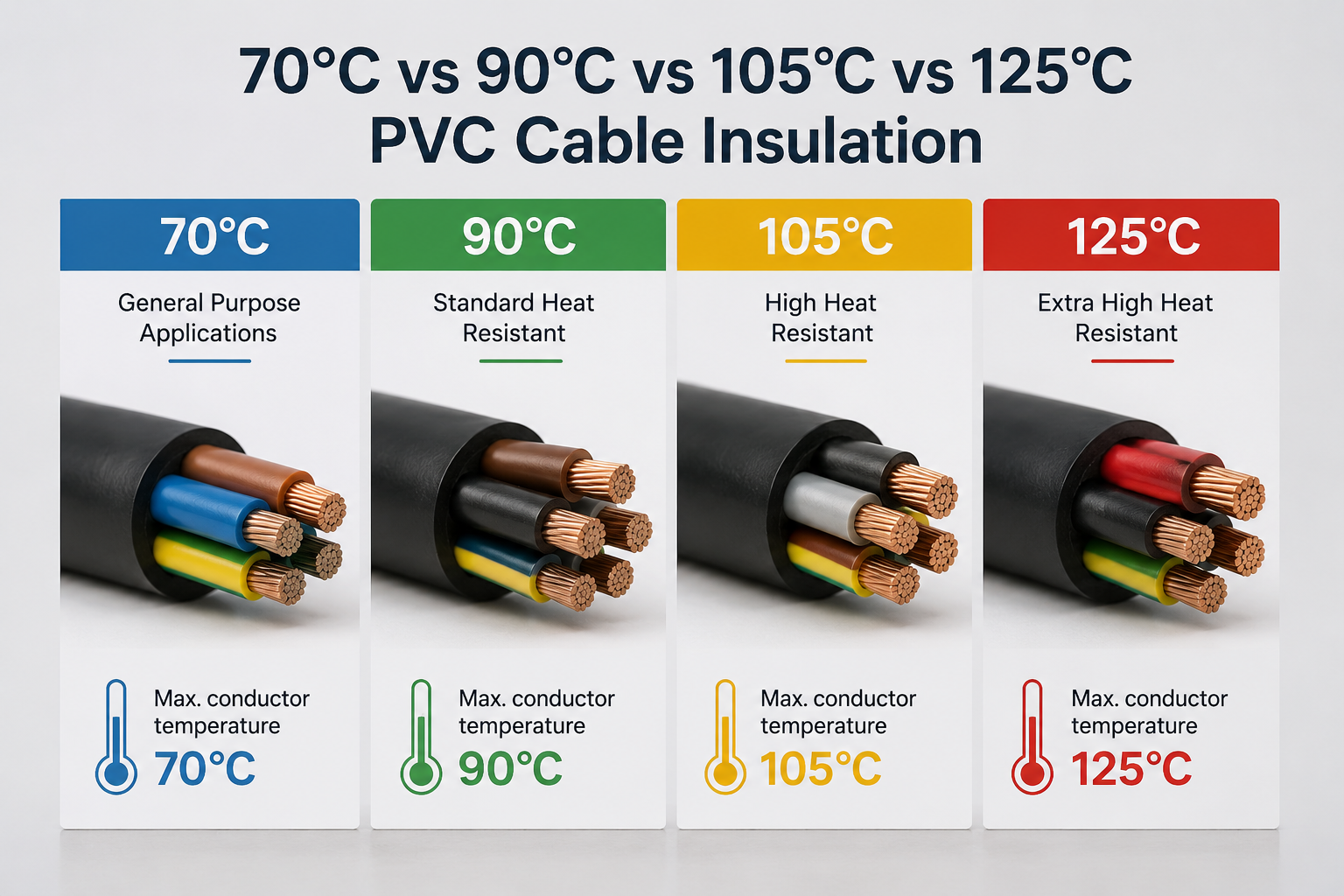
Different temperature grades have different buyer concerns. A standard 70°C insulation compound focuses more on stable extrusion and cost control, while high-temperature insulation requires stronger aging resistance and electrical reliability.
Cable insulation grade | Buyer’s main concern | Stabilizer selection focus | Tests to review |
70°C PVC cable | Stable extrusion, basic insulation performance, cost control | Initial heat stability and processing smoothness | Static heat stability, tensile/elongation, basic electrical test |
90°C PVC cable | Better heat resistance and long-term flexibility | Heat-aging retention and Congo red time | Oven aging, Congo red, insulation resistance |
105°C PVC cable | Appliance wire, UL cable or higher service temperature | Stronger stabilization, lower volatility, lower plate-out | Heat aging, loss of mass, electrical performance, continuous extrusion |
125°C PVC cable | Automotive or severe heat exposure | High-performance stabilizer package and strict process control | Extended aging, electrical performance, heat/oil resistance, plate-out monitoring |
The key point is that a buyer should not approve one PVC heat stabilizer for wire and cable compounds for all grades without checking the actual application, target standard and compound formula.
Key Tests Buyers Should Check Before Approving heat stabilizers for PVC
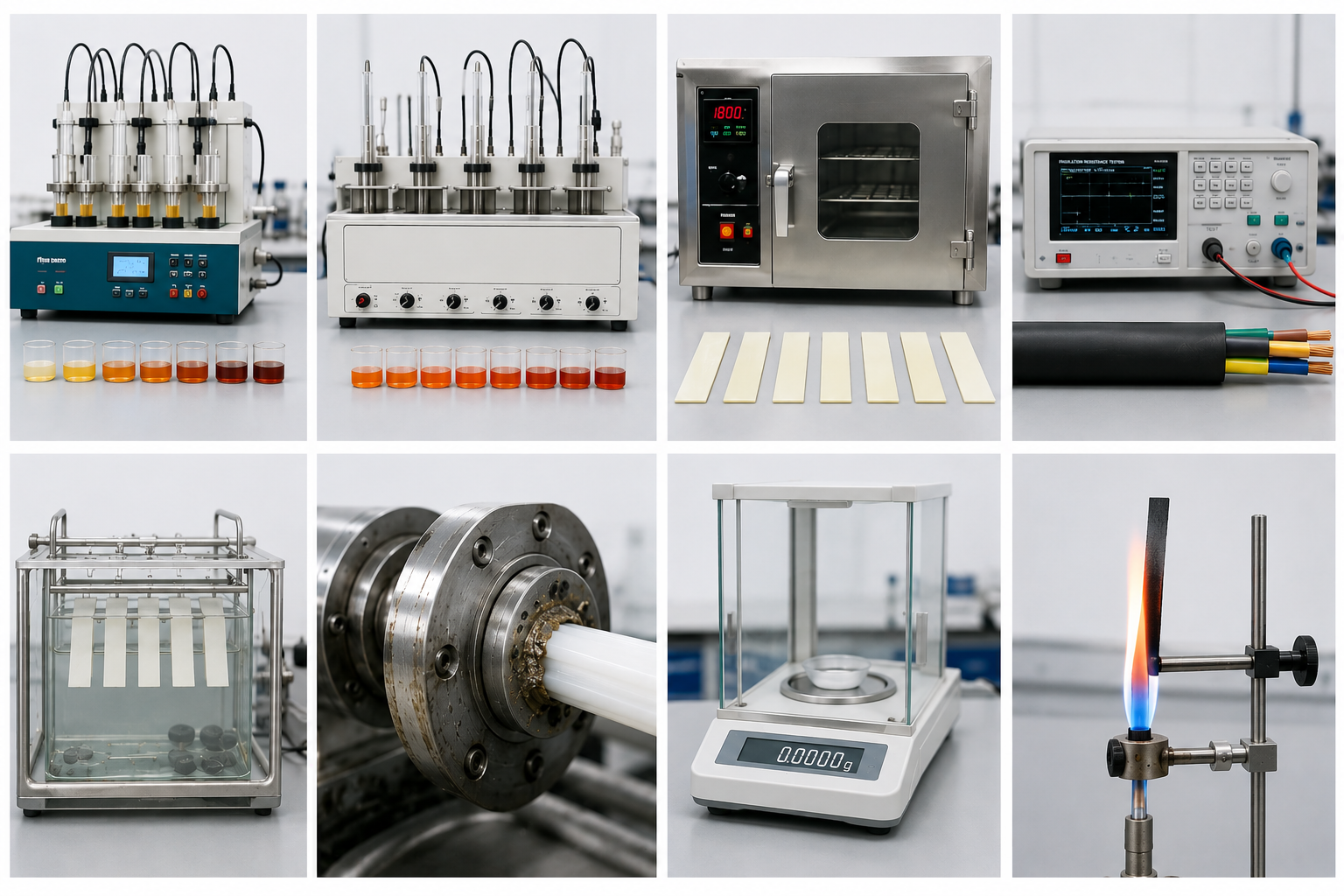
1. Thermal stability test for PVC insulation
Thermal stability testing is the first screen for PVC cable compounds. It helps buyers understand how the compound behaves under high processing or service temperatures. IEC 60811-405 is a key reference for thermal stability testing of PVC insulation and PVC sheath compounds.
Buyers should check not only the stability time but also the test temperature, sample form, stabilizer dosage and repeatability. A supplier’s dry-blend test may not fully represent a pelletized compound or finished insulation layer.
Question | Why it matters |
What test temperature was used? | Higher temperatures create a stricter comparison |
Was the test done on dry blend, pellet or finished insulation? | Sample form changes test relevance |
What was the stabilizer dosage? | Higher dosage may improve data but raise cost |
Were multiple batches tested? | Consistency matters for cable production |
For 105°C and 125°C cable insulation, buyers should compare different heat stabilizers for PVC under the same formula and processing conditions.
2. Congo red time and HCl release
The Congo red test is commonly used to evaluate PVC heat stability because PVC degradation releases hydrogen chloride, which accelerates further degradation. For buyers, longer Congo red time can indicate a wider processing safety margin.
AIMSEA’s wire and cable application positioning emphasizes long Congo red performance, low moisture absorption and good electrical performance for PVC wire and cable materials.
For a PVC heat stabilizer for wire and cable compounds, buyers should ask for the Congo red test condition, average value, minimum value and sample preparation method. The result should be compared with heat-aging and electrical data, not used alone.
3. Heat aging and mechanical property retention
Heat aging checks whether the insulation can retain tensile strength and elongation after high-temperature exposure. For cable buyers, this test is especially important for 90°C, 105°C and 125°C insulation.
A compound may look acceptable before aging but become brittle after oven exposure. In many cases, failure is caused by a combination of insufficient stabilization, plasticizer loss, excessive filler, poor filler dispersion or an unbalanced lubricant system.
When comparing a calcium zinc heat stabilizer with other stabilizer systems, buyers should review both original and aged mechanical properties. A strong initial value is not enough if the material loses flexibility after aging.
4. Insulation resistance and volume resistivity
Electrical performance is central to cable insulation. For power cable, appliance wire, automotive wire and industrial cable, buyers should confirm that the compound maintains stable insulation resistance after heat aging and water exposure.
AIMSEA highlights high insulation resistance and volume resistivity as part of its PVC wire and cable stabilizer value proposition, supporting reliable power and signal transmission.
Electrical test focus | What buyers should watch |
Insulation resistance | Whether values remain stable after aging or water exposure |
Volume resistivity | Whether the compound maintains electrical reliability |
Dielectric strength | Whether insulation performance meets the target cable standard |
Batch consistency | Whether test values remain stable across production lots |
A PVC stabilizer with good heat stability but poor moisture resistance may still create long-term electrical reliability risks.
5. Water absorption and wet-condition performance
Water absorption matters because moisture can reduce insulation performance, especially in outdoor cable, appliance cable, industrial wire and automotive cable. Buyers should check whether water immersion affects insulation resistance or dielectric performance.
This is especially relevant for high-temperature cable compounds, because moisture, heat and plasticizer migration may combine to create long-term performance decline. In this part of the approval process, the buyer should evaluate both the stabilizer and the full additives in PVC formulation.
6. Plate-out and continuous extrusion stability
Plate-out is a production problem that may not appear in short lab tests. It can show up as die deposits, surface streaks, unstable diameter, black spots or frequent cleaning downtime.
When approving a PVC heat stabilizer for wire and cable compounds, buyers should ask whether the stabilizer has been tested in continuous extrusion. A good lab result is not enough if the compound causes die build-up after several hours of production.
Common plate-out causes include excessive external lubricant, poor compatibility between stabilizer and plasticizer, filler interaction, high processing temperature and unstable raw material quality.
7. Flame resistance checks for cable compounds
For some wire and cable projects, flame resistance is also a key approval factor. Buyers working on flame retardant PVC cable applications should check whether the stabilizer package is compatible with flame-retardant additives, fillers and plasticizers.
The stabilizer should not negatively affect processing, surface quality, electrical performance or heat-aging retention. For this reason, flame-retardant cable compounds should be tested as a complete formula, not as separate additive comparisons.
Compliance Documents for Export Cable Projects
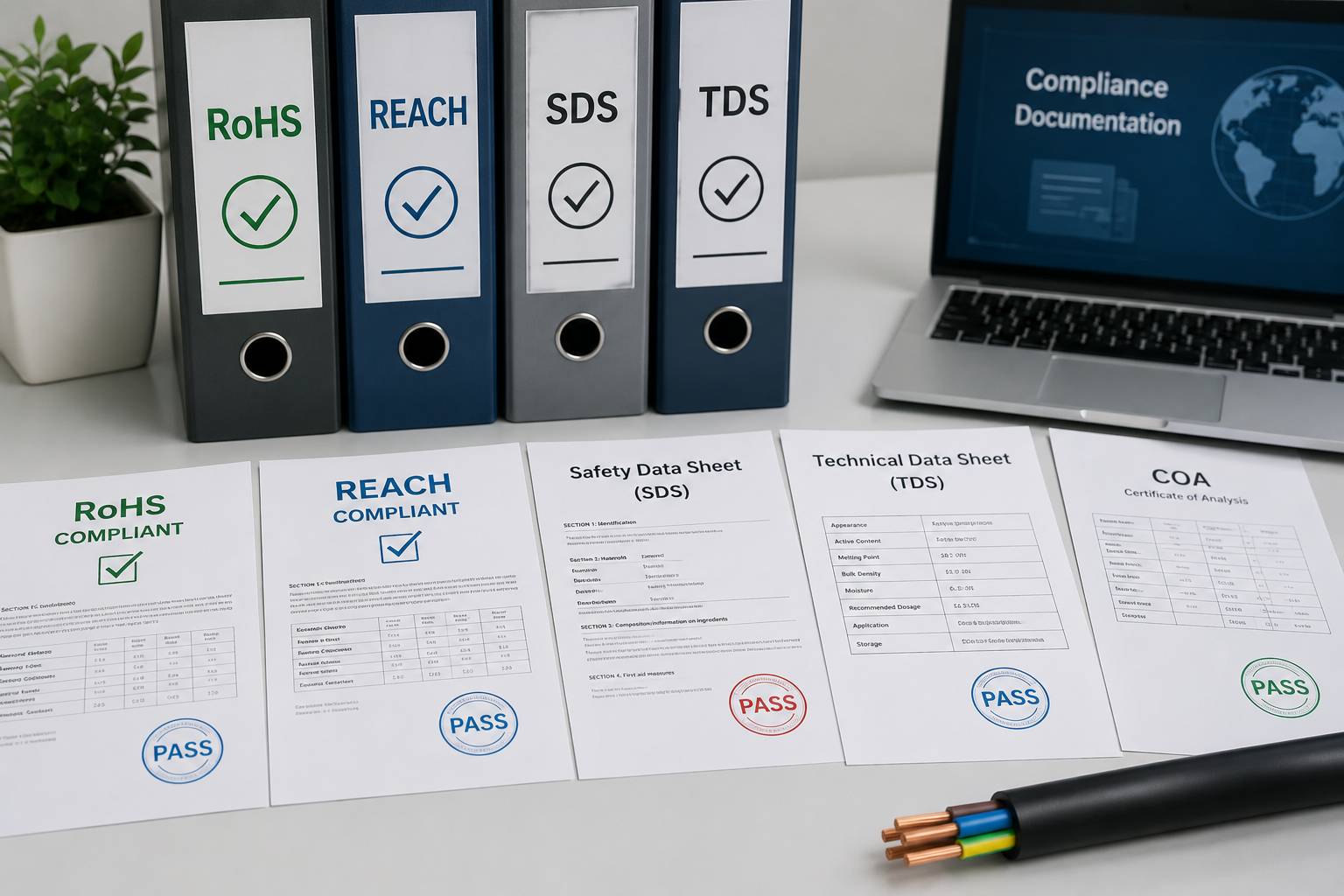
For export cable manufacturers, test performance is only one part of supplier approval. Compliance documentation should also be reviewed before bulk purchasing.
The EU RoHS Directive restricts hazardous substances in electrical and electronic equipment to protect health and the environment. REACH is the EU regulation covering registration, evaluation, authorization and restriction of chemicals, and it applies to chemical substances manufactured or imported into the EU market.
For buyers choosing a calcium zinc stabilizer or other calcium zinc stabilizers for PVC, compliance documents help reduce customer approval risk, especially for electrical, electronic, automotive and export cable projects.
Document | Why buyers should request it |
TDS | Confirms application, dosage range and processing guidance |
SDS | Supports safety handling, storage and internal approval |
RoHS statement | Helps verify restricted substance control for EEE supply chains |
REACH/SVHC statement | Supports EU market and customer compliance review |
COA | Confirms batch-level quality control |
Heavy metal test report | Supports lead-free and heavy-metal-control positioning |
What Buyers Should Send to a PVC stabilizer supplier
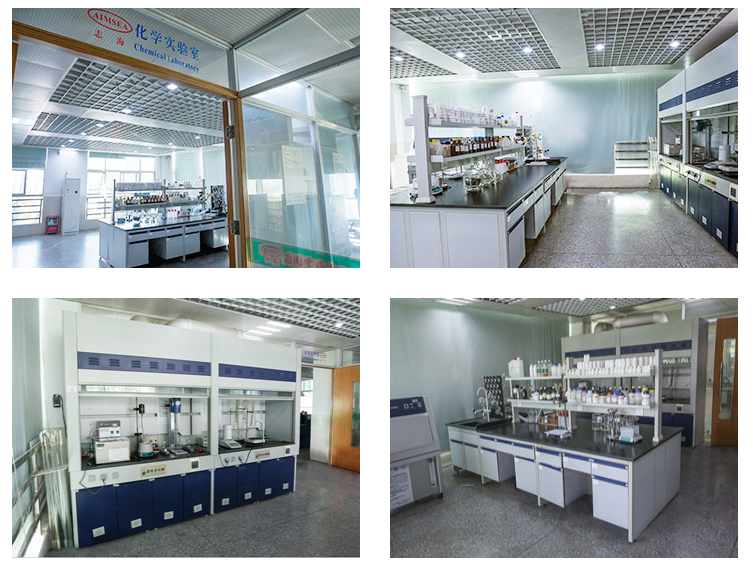
To recommend the right PVC heat stabilizer for wire and cable compounds, the supplier needs more than the cable type. Buyers should provide the formula background, target standard and current test problem.
Information to provide | Example |
Cable type | Insulation, sheath, automotive wire, appliance wire, flexible cord |
Temperature grade | 70°C, 90°C, 105°C or 125°C |
Target standard | UL, VDE, GB, IEC, SAE or OEM requirement |
Current formula | PVC resin, plasticizer, filler, flame retardant, lubricant, stabilizer dosage |
Processing conditions | Extruder temperature, screw speed, line speed, die design |
Current issue | Yellowing, poor Congo red, low insulation resistance, plate-out, odor, aging failure |
Existing test data | Original and aged tensile/elongation, Congo red time, water absorption, electrical values |
A professional PVC stabilizer manufacturer should use this information to recommend a suitable grade, dosage range and trial plan instead of offering only a generic product name.
FAQ for PVC Heat Stabilizer Buyers
What is the best PVC heat stabilizer for 105°C cable insulation?
There is no universal best grade. A suitable PVC heat stabilizer for wire and cable compounds for 105°C insulation should pass heat aging, maintain insulation resistance, control plate-out and match the buyer’s plasticizer, filler and flame-retardant system.
Is Congo red time enough to approve a stabilizer?
No. Congo red time is useful, but it should be reviewed together with thermal stability, oven aging, insulation resistance, water absorption, extrusion stability and finished cable requirements.
Can one stabilizer cover 90°C, 105°C and 125°C cable insulation?
Sometimes one stabilizer family can cover several temperature grades, but dosage, co-stabilizer package and lubricant balance may need adjustment. A 125°C or automotive project usually requires stricter validation than a 90°C general cable.
Why are calcium-zinc systems widely used in PVC cable compounds?
A calcium zinc stabilizer is often selected for PVC cable compounds because it can support lead-free formulation, heat stability, processing performance and compliance needs. However, final suitability still depends on the buyer’s actual formula, temperature grade and test standard.
Conclusion: Choose by Test Results, Not Only by Stabilizer Price
For 90°C, 105°C and 125°C cable insulation, a PVC heat stabilizer for wire and cable compounds should be evaluated by real test performance and production behavior. Buyers should compare thermal stability, Congo red time, heat-aging retention, electrical performance, water absorption, plate-out risk and compliance documentation before approval.
A practical approval process is simple: define the temperature grade, confirm the target standard, test the stabilizer in the actual formula, review both lab and extrusion data, and request compliance files before bulk purchase. For cable manufacturers, this is the safest way to choose reliable heat stabilizers for PVC while reducing rework, compliance risk and production downtime.
Table of Contents
Copyright © Shenzhen Zhihai Industrial Co., LTD.
Digital Marketing : CTMON


×
CONTACT US
×
fasdfasdfdsaf fsfsad dsa sadsda sad sdaadssdafshdafjhasdkhsadfhasdhfashkdfhask hdfjdskh
fkjashksah dkjh kdjsfhsakdhasjkhfsajkhfd jskdhf akshfjkash dkj hfdsajfh askjfh sdajfhsadjhf
kdsah fdkjsahf asjkh sjakdfhaskfdh asjkdfh jkdsafh asjdfhsajkdfhaskjdfhjk
fdaskfasdkjf kjsf sajkdf kjasdk jsa
fasdfasdfdsaf fsfsad dsa sadsda sad sdaadssdafshdafjhasdkhsadfhasdhfashkdfhask hdfjdskh fkjashksah dkjh kdjsfhsakdhasjkhfsajkhfd jskdhf akshfjkash dkj hfdsajfh askjfh sdajfhsadjhf kdsah fdkjsahf asjkh sjakdfhaskfdh asjkdfh jkdsafh asjdfhsajkdfhaskjdfhjk fdaskfasdkjf kjsf sajkdf kjasdk jsa fasdfasdfdsaf1 fasdfasdfdsaf2 fasdfasdfdsaf3 fasdfasdfdsaf5
fasdfasdfdsaf fsfsad dsa sadsda sad sdaadssdafshdafjhasdkhsadfhasdhfashkdfhask hdfjdskh fkjashksah dkjh kdjsfhsakdhasjkhfsajkhfd jskdhf akshfjkash dkj hfdsajfh askjfh sdajfhsadjhf kdsah fdkjsahf asjkh sjakdfhaskfdh asjkdfh jkdsafh asjdfhsajkdfhaskjdfhjk fdaskfasdkjf kjsf sajkdf kjasdk jsa fasdfasdfdsaf1 fasdfasdfdsaf2 fasdfasdfdsaf3 fasdfasdfdsaf5

loading...