

What Is the Shape of a PVC Profile?
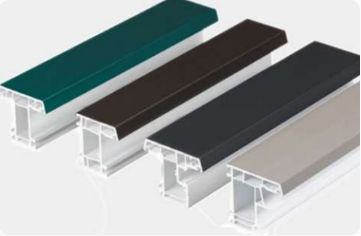
A PVC profile is defined by its continuous cross-section, created when molten PVC is pushed through a steel extrusion die and “frozen” by vacuum calibration. That cross-section can be as simple as a solid bar or as intricate as a multi-chamber window sash. During extrusion, the shape remains identical along the entire length—much like piping fresh dough through a pastry nozzle—so dimensional accuracy (±0.05 mm) is determined almost entirely by the die design and cooling discipline.
What Are the Different Types of PVC Profiles?
Commercial tooling has standardised a family of go-to geometries:
| Profile Type | Common Use Case | Design Note |
|---|---|---|
| U-Channel | Panel edging, cable trays | Equal wall thickness avoids warpage |
| J-Channel | Siding terminations, soffits | One leg shorter to shed water |
| L-Angle / Corner Trim | Inside & outside corners | Often co-extruded with a soft lip for sealing |
| T- & H-Joins | Connecting wall panels, expansion gaps | Symmetry critical for snap fit |
| Z-Profile / Drip Cap | Window head flashing | Steep “kick” diverts rain away |
| Solid Rod / Square Bar | Structural inserts, isolation spacers | Can be drilled or machined post-extrusion |
| Custom Co-Extrusion | Rigid spine + flexible gasket | Requires multi-manifold die for dual hardness |
Product Portfolio Overview
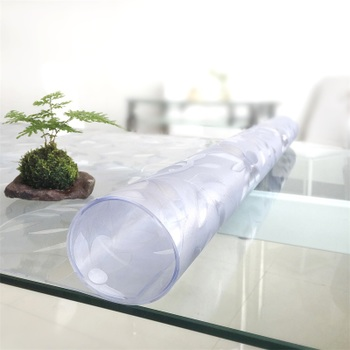
AIMSEA's calender-grade line targets three segments: C828 for coloured decorative film (0.06–0.15 mm), 836 for semi-rigid white film (0.08–0.18 mm) and 810A for synthetic-leather skins up to 1.2 mm. Each grade currently relies on organotin stabiliser for extreme heat reserve but can accept calcium-zinc blends without altering extrusion settings.
Why Evaluate Tin-to-Ca/Zn Blends?
Organotin delivers unrivalled clarity and thermal headroom, yet brings high odour, volatile tin pricing and potential toxicity. AIMSEA therefore developed CZ-186—a calcium-zinc one-pack designed to replace 50 % of tin content while keeping the same fusion window and gloss.
Laboratory Methodology
Formulations used K-67 PVC, DINP plasticiser and 50–60 phr CaCO₃ where required. Two stabiliser packages were compared on a torque rheometer and a pilot calender:
Reference – 100 % organotin.
Test Blend – organotin : CZ-186 = 1 : 1 by weight.
Key procedures included static torque at 190 °C/6 min, Congo-Red at 200 °C, 180 °C/168 h oven ageing, tensile tests per GB/T 15267-1994, and overall migration under GB 4806.7-2016.
Thermal-Stability Results
The blend improved early colour (YI 7 vs 8) and extended Congo-Red time from 110 to 118 min. Static torque peak fell from 38 N·m to 37 N·m, indicating faster fusion, while long-term oven ageing held 88 % tensile retention—matching full-tin.
Mechanical & Regulatory Performance
Transparent sheets from both stabiliser sets met “Premium” metrics in the Chinese standard: tensile ≥ 52 MPa, shrinkage ≈ 2 %, and zero plate-out. Migration for the Ca/Zn–tin blend measured 7.5 mg dm⁻², safely under the 10 mg dm⁻² food-contact limit.
Organotin PVC Stabilizer Characteristics
| Advantages | Drawbacks |
| Peak thermal stability for high-shear calendering. | Requires extra waxes due to poor self-lubrication. |
Superior transparency with no blooming. | Noticeable mercaptan odour imparts shop-floor comfort. |
Strong compatibility prevents die build-up. | Price volatility and potential toxicity of butyl-tin species. |
Cost & Process Implications
Switching half the tin to CZ-186 lowers stabiliser cost by roughly 30 %, cuts workplace odour rating from 4 to 2, and avoids any change in screw speed, barrel zones or lubricant ratio—making it a “plug-and-play” upgrade.
Practical Takeaways
Blend Strategy Wins – a 1 : 1 CZ-186/tin mix equals or outperforms full-tin on heat reserve and initial colour.
No Re-tooling Needed – calender dies, cooling rolls and take-off speeds stay identical.
Regulation Ready – the hybrid package passes RoHS heavy-metal limits and GB 4806.7 migration tests.
Ideal for Transparent Film – coloured and clear PVC sheets retain gloss, strength and low shrinkage.
Bottom line: CZ-186 lets processors cut tin usage in half while keeping premium optical and mechanical standards—delivering a greener, lower-odour, cost-efficient route for calendered PVC films and synthetic leather.