
Lead-Free PVC Stabilizer Under REACH: What Exporters to Europe Need to Know?
Read:582
Source:
Abstract
For exporters targeting Europe, pvc stabilizer selection is no longer just a formulation decision. Under EU REACH, lead and its compounds in PVC are restricted, and since 29 November 2024 PVC articles with lead at or above 0.1% by weight of the PVC material can no longer be placed on the market or used in the standard way, subject to limited derogations mainly tied to recovered PVC in specific applications. That is why lead-free pvc stabilizer demand is no longer a “green upgrade” but a practical market-access requirement. In real buying behavior, European customers increasingly ask not only for performance, but also for documentation, traceability, and compatibility with circular-economy goals. This article explains what exporters need to know, why calcium-zinc stabilizer and calcium-organic systems have become the main substitution path, and how to position a compliant solution for Europe.
What changed under REACH for PVC exporters?
The core rule exporters cannot ignore
The most important regulatory point is straightforward: Commission Regulation (EU) 2023/923 amended REACH Annex XVII regarding lead and its compounds in PVC. It states that PVC articles shall not be placed on the market or used if lead concentration is equal to or greater than 0.1% by weight of the PVC material, and this requirement applies from 29 November 2024. For exporters outside Europe, that means the rule is not only about manufacturing inside the EU; it directly affects imported PVC articles entering the European market.
Why the regulation matters beyond virgin PVC
Many exporters assume the issue is only about newly compounded lead-based formulations. In practice, the regulation is more nuanced because it also addresses recovered rigid PVC. There are limited derogations for certain recovered-rigid-PVC applications, including some multilayer pipes and fittings excluding drinking-water uses, with specific conditions such as lead limits, layer design, marking, and traceability. That nuance matters because European buyers increasingly ask whether a formulation works not only in virgin PVC but also in recycled-content strategies.
REACH point | What exporters should understand |
0.1% lead threshold | Standard PVC articles at or above this level are restricted |
Effective date | 29 November 2024 |
Recovered rigid PVC derogations | Limited, conditional, and not a free pass for conventional lead use |
Drinking water applications | Treated more strictly; some derogations exclude them |
Compliance implication | Formula + documentation + application fit all matter |
Why lead-free is now a real purchasing requirement?
European buyers are not just buying chemistry — they are buying risk reduction
In Europe, lead-free has moved from marketing language to procurement screening. Buyers now ask whether a pvc heat stabilizer system can help them avoid customs, compliance, retailer, and downstream-customer risk. Even before the 2023 restriction, the European PVC value chain had already largely phased out lead stabilisers voluntarily; VinylPlus notes that the European industry completed this replacement by the end of 2015, and TEPPFA says the substitution to calcium-zinc or calcium-organic systems was completed in European pipe applications more than a decade ago. The law therefore formalized a market direction that many European customers were already following.
Why “lead-free” now affects RFQs and audits
Today, a European customer is likely to ask three things very early:
1. Is the system lead-free and REACH-aligned?
2. Can the supplier provide SDS/TDS and compliance support?
3. Can the formulation remain stable in real production, including long runs and recycled-content scenarios?
That is why pvc stabilizer supplier evaluation is shifting from price-only comparison to documentation plus process reliability. AIMSEA’s own public material reflects this trend by emphasizing REACH/RoHS monitoring, documentation support, custom formulations, and application-oriented testing.
Which lead-free systems are replacing lead stabilizers in PVC?
Calcium-zinc stabilizer is the mainstream replacement path
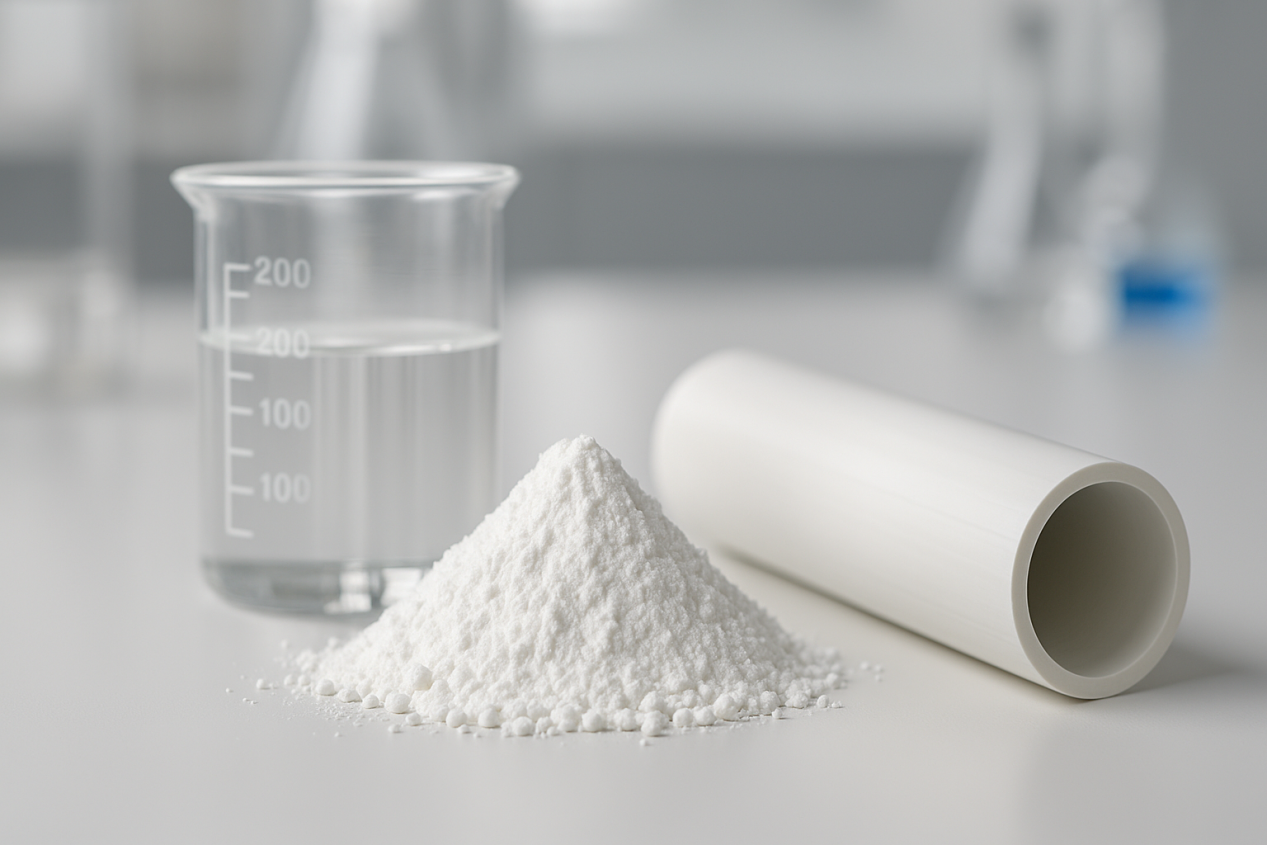
For many rigid PVC export applications, calcium-zinc stabilizer has become the most practical lead-free route. The reason is not only toxicity reduction. A well-designed Ca-Zn system can balance thermal stability, early color, long-run cleanliness, and regulatory acceptance across pipes, fittings, profiles, cable compounds, flooring, and other applications. European market language increasingly treats calcium zinc stabilizers for pvc as the default replacement category when talking about lead-free rigid PVC.
Why calcium-organic is also part of the conversation?
In Europe, “lead-free replacement” is not always a single chemistry story. TEPPFA specifically references both calcium-zinc and calcium-organic based stabilisers in the substitution background. That matters because buyers may use different wording depending on the application, performance target, or internal standards. Exporters should therefore avoid framing the discussion too narrowly as “lead vs Ca-Zn only.” In some cases, customers are really asking for a broader non-lead, low-risk, application-matched stabilizer package.
What exporters should not oversimplify?
A lead-free formula is not automatically market-ready. Buyers still compare plate-out behavior, color hold, process window, static thermal stability, weatherability, odor, and compound compatibility. This is where a capable pvc stabilizer manufacturer has an advantage: not just offering a lead-free label, but tuning the system for the actual product and line conditions. AIMSEA’s published materials also position their offer around custom formulation, testing capability, and multiple PVC applications rather than one generic recipe.
System direction | Main export relevance to Europe |
lead stabilizers in pvc | High compliance risk for standard EU-facing PVC articles |
calcium-zinc stabilizer | Mainstream lead-free option for many rigid PVC uses |
Calcium-organic systems | Important alternative in specific substitution contexts |
one pack pvc stabilizer | Attractive when buyers want simplified dosing and consistency |
Tailored compound package | Best fit when buyer needs process + compliance + documentation together |
How European buyers evaluate a pvc stabilizer supplier?
Common buyer questions now sound like search intent
The current search and buying landscape shows a pattern: customers are not only looking for pvc additives or a generic plastic additives vendor. They are asking practical questions such as:
·Is this pvc stabilizer REACH-ready for Europe?
·Can calcium-zinc stabilizer replace lead in my pipes or fittings?
·Do you offer a one pack pvc stabilizer for easier production control?
·Can you support recycled PVC without hurting stability?
These are essentially the same issues that dominate present European market discussions: compliance, substitution, circularity, and production reliability. Recent VinylPlus communication also highlights recycled PVC integration, processing stability, and digital optimization as active industry themes.
What a strong supplier signal looks like
A stronger offer to Europe usually includes:
·application-specific formulation, not a universal pitch;
·compliance documents ready before shipment;
·test data that matches the buyer’s real process concerns;
·support for both virgin and recycled-content scenarios;
·consistent communication around non-toxic, sustainable positioning.
AIMSEA’s website already aligns with much of this structure through REACH/RoHS messaging, documentation support, custom development, and applications spanning pipe & fittings, wire & cable, profiles, flooring, and recyclable PVC.
A practical compliance checklist before exporting to Europe
Pre-shipment checklist for exporters
Before quoting a European buyer, check the following:
Check item | Why it matters |
Confirm the stabilizer is lead-free | Basic market-entry expectation for most new EU-facing PVC articles |
Review final article application | Some recovered-PVC derogations are application-specific |
Verify lead concentration assumptions | The legal threshold is article/material based |
Prepare SDS, TDS, declaration of conformity | Buyers increasingly request them early |
Clarify recycled-content use | Circularity is a growing purchasing topic |
Match formulation to end use | Pipe, fitting, profile, cable, flooring, and transparent products differ |
The strategic point
For exporters, Europe is no longer the place to defend old lead-based formulations. It is the place to prove that your pvc stabilizer system is safer, documented, and commercially practical. The winning message is not “we can also do lead-free”; it is “our lead-free system is already built for European compliance and application reality.”
AIMSEA Lead-Free Stabilizer Solutions
Calcium-Zinc Stabilizers for PVC
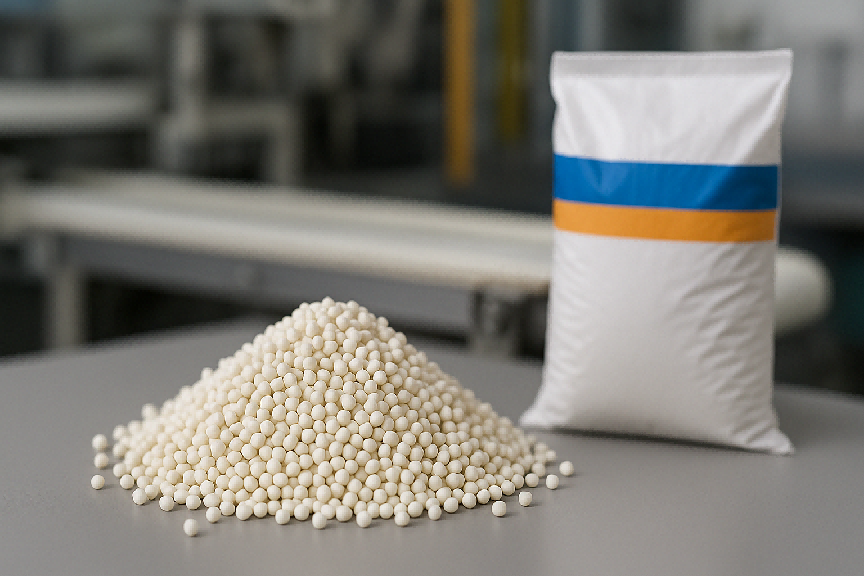
AIMSEA’s calcium-zinc stabilizer portfolio offers high thermal stability, long die-cleaning intervals, and compatibility across a wide range of rigid and flexible PVC products, including pipes, fittings, profiles, and films. These stabilizers are fully REACH-compliant and compatible with circular economy initiatives, supporting recycled-content PVC while maintaining mechanical and aesthetic performance.
One-Pack PVC Stabilizers for Production Efficiency
For simplified production, AIMSEA provides one pack pvc stabilizer solutions
Tailored Solutions for Recycled and Virgin PVC
AIMSEA offers application-specific formulations for both virgin and recycled PVC, optimizing pvc additives and plastic additives performance while ensuring REACH compliance. Services include technical evaluation, sample testing, and full documentation for EU market entry. This ensures that exporters can confidently meet buyer requirements for thermal stability, plate-out control, and compatibility with recycled content.
Application | AIMSEA Solution |
PVC Pipes & Fittings | calcium-zinc stabilizer, one-pack options |
Profiles & Sheets | Lead-free solutions compatible with recycled PVC |
Flexible / Transparent PVC | Tailored pvc heat stabilizer blends |
Recycled PVC | Application-specific formula with compliance documentation |
Conclusion
Under REACH, lead in PVC is no longer a background issue for exporters to Europe. It is a frontline market-access issue. The commercial consequence is clear: lead-free pvc stabilizer has become a realistic purchasing baseline, not a niche preference. In most cases, the substitution conversation centers on calcium-zinc stabilizer and related lead-free systems, supported by stronger documentation, cleaner compliance language, and better fit with Europe’s circular-economy direction.
AIMSEA provides fully compliant calcium-zinc stabilizer and one pack pvc stabilizer solutions optimized for pipes, fittings, profiles, flexible PVC, and recycled content applications. Buyers prioritize compliance, documentation, performance, and circular economy compatibility. Early adoption of AIMSEA’s lead-free solutions positions exporters competitively in Europe’s evolving PVC market.